Below the Surface
Modernizing a house from the early 1900s rarely begins where the eye can see. It begins in the ground.
For decades, water moved through the house in the simplest possible way. From the kitchen sink, it travelled through a narrow pipe and emptied directly into a nearby stream, an unrefined but once entirely natural solution. There were no hidden systems, no layers of control. Just gravity, landscape, and use.
When we took over the house in 2019, the question was not how to change it, but how to let it continue, under different conditions.
The answer lay beneath the surface.
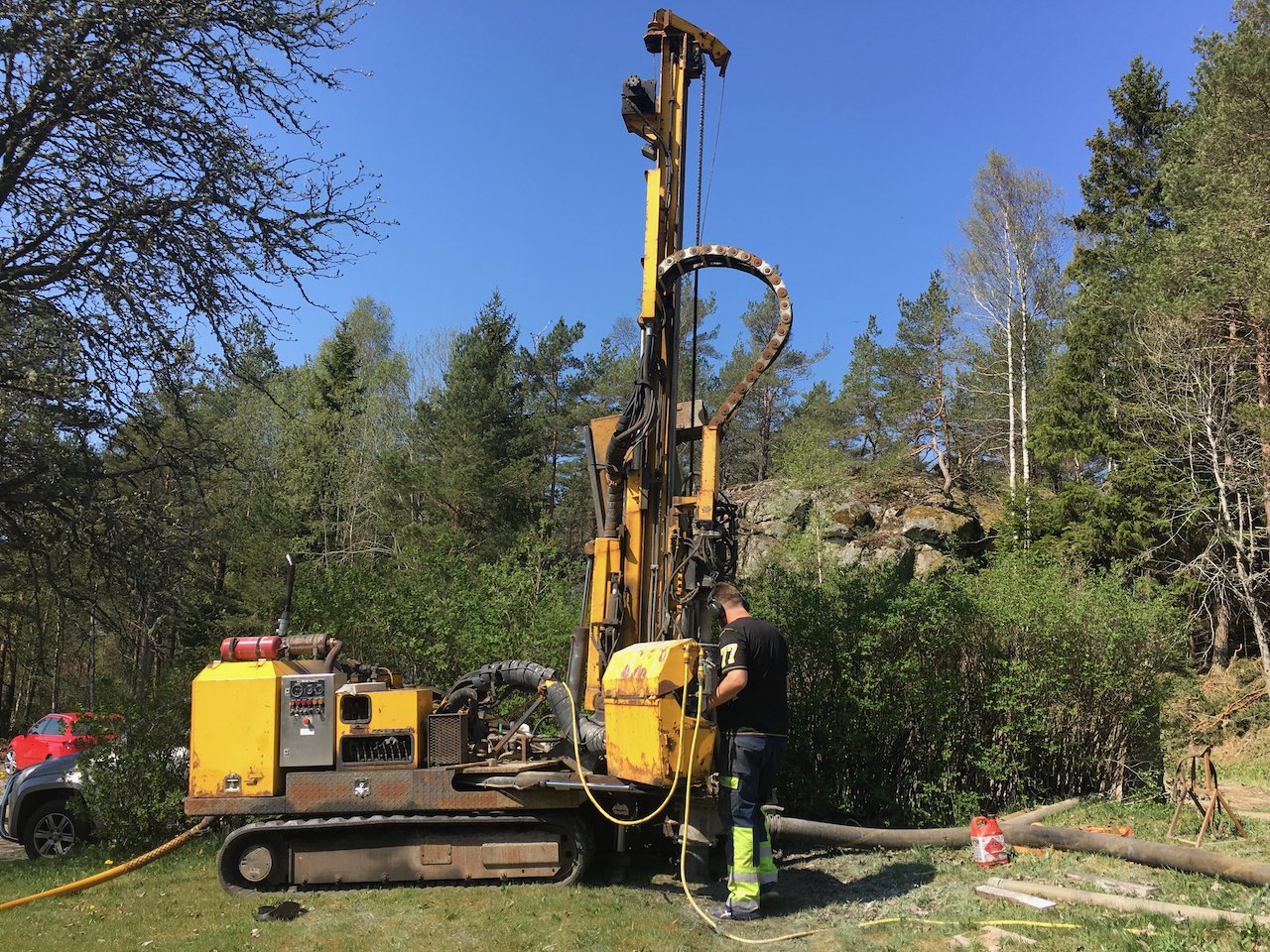
Drilling for water in the garden
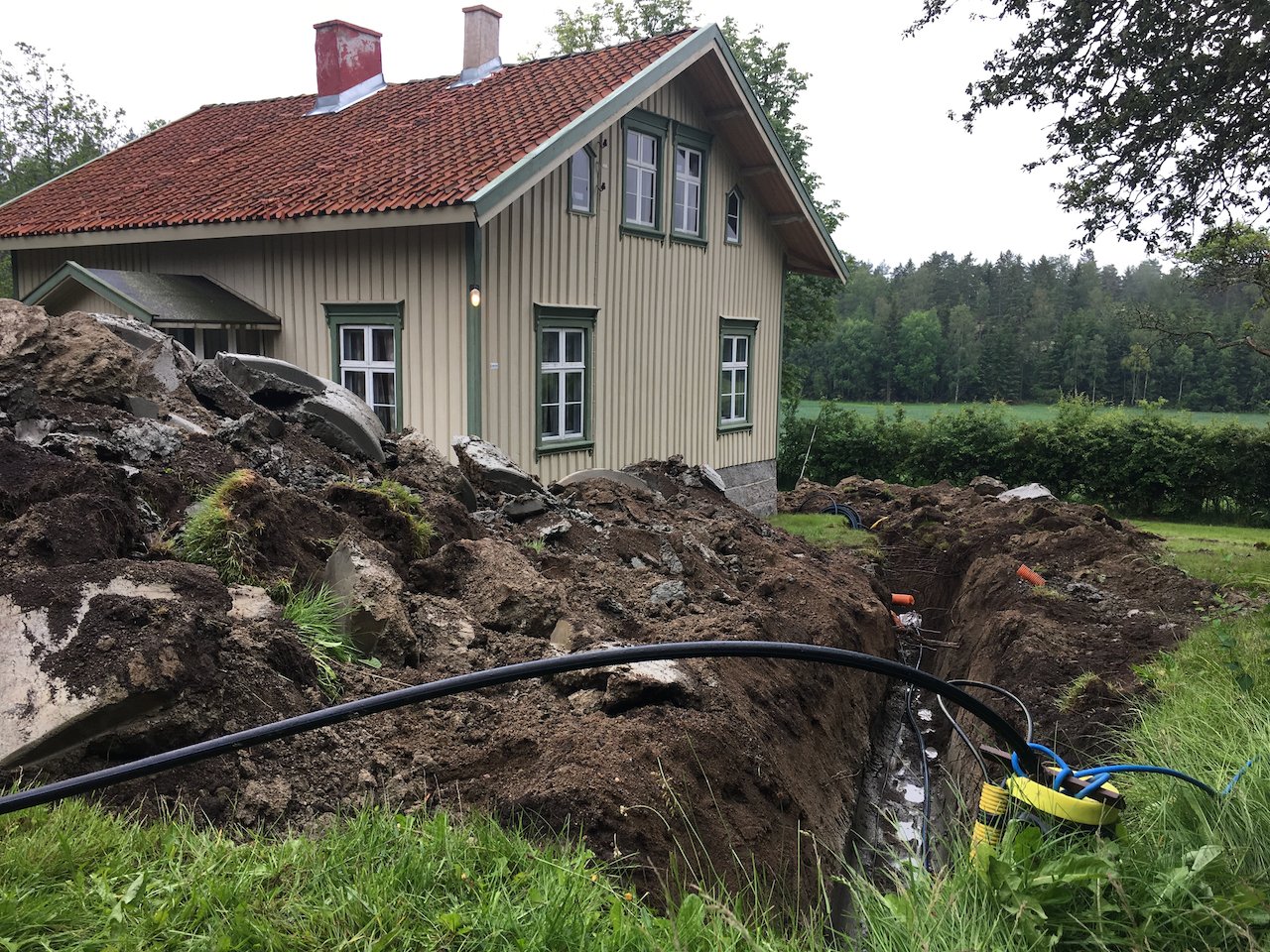
Water pipes from the drilled water-well
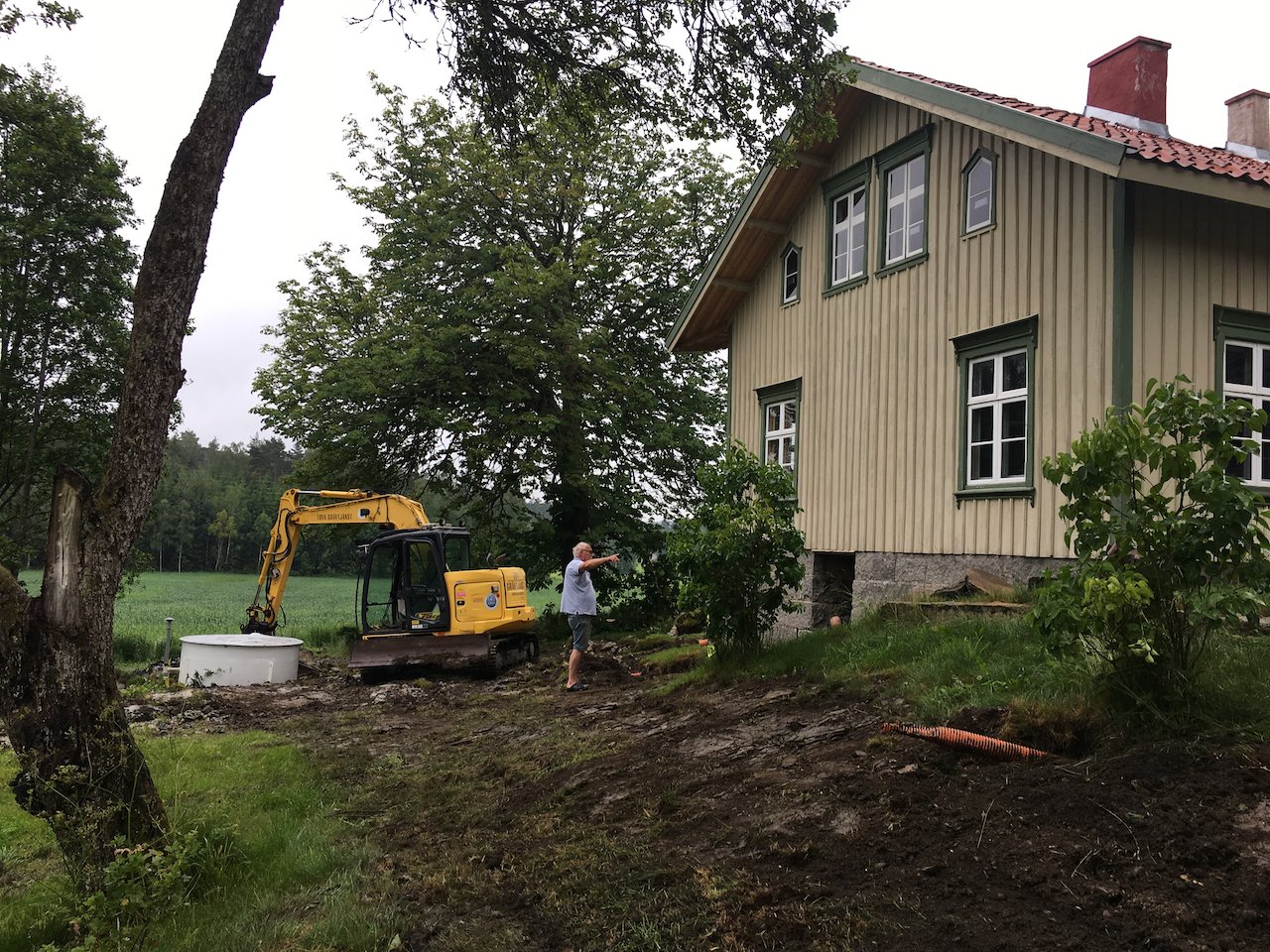
Digger working in the garden
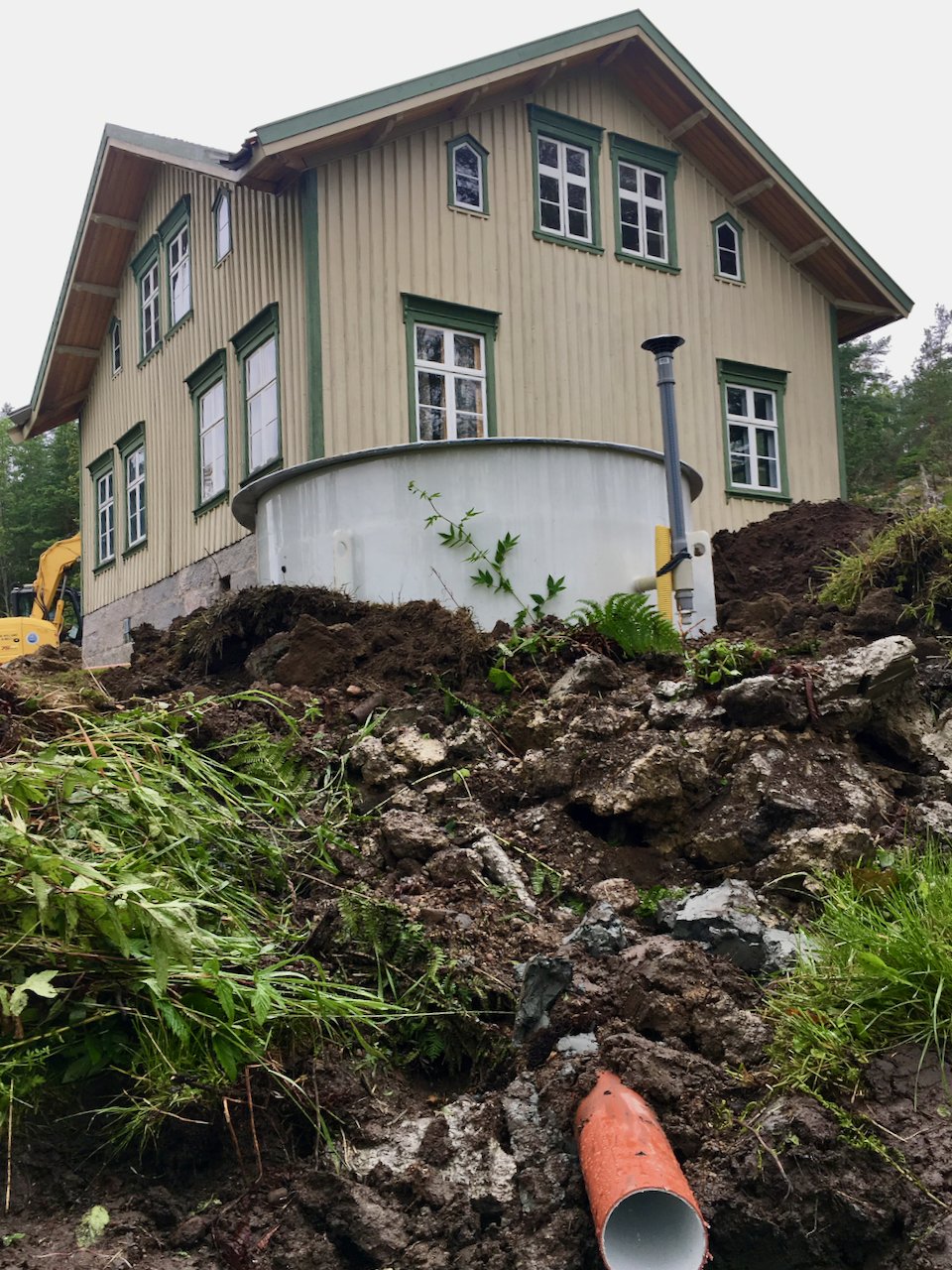
Wastewater treatment system is installed
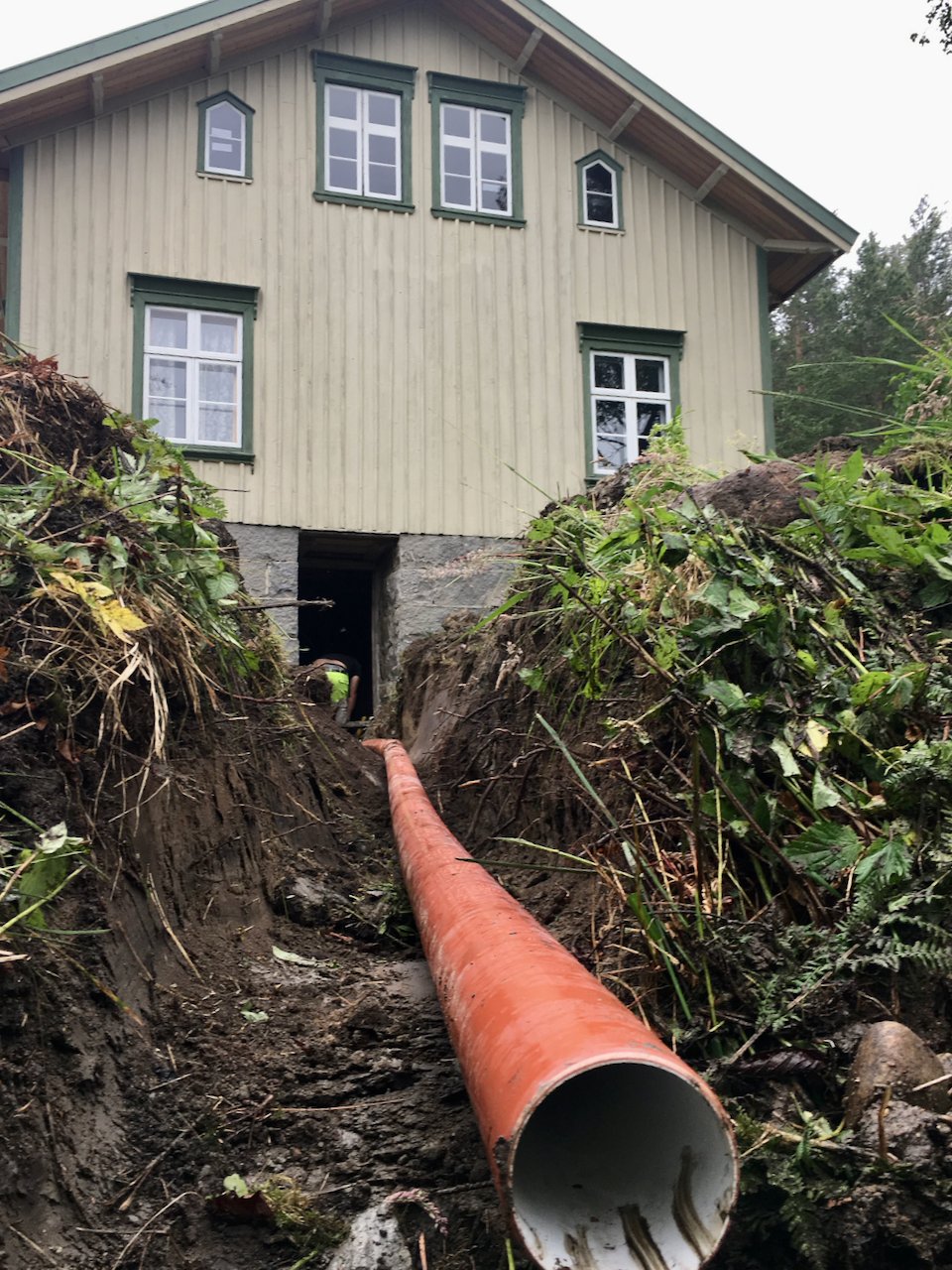
Drainage for the basement
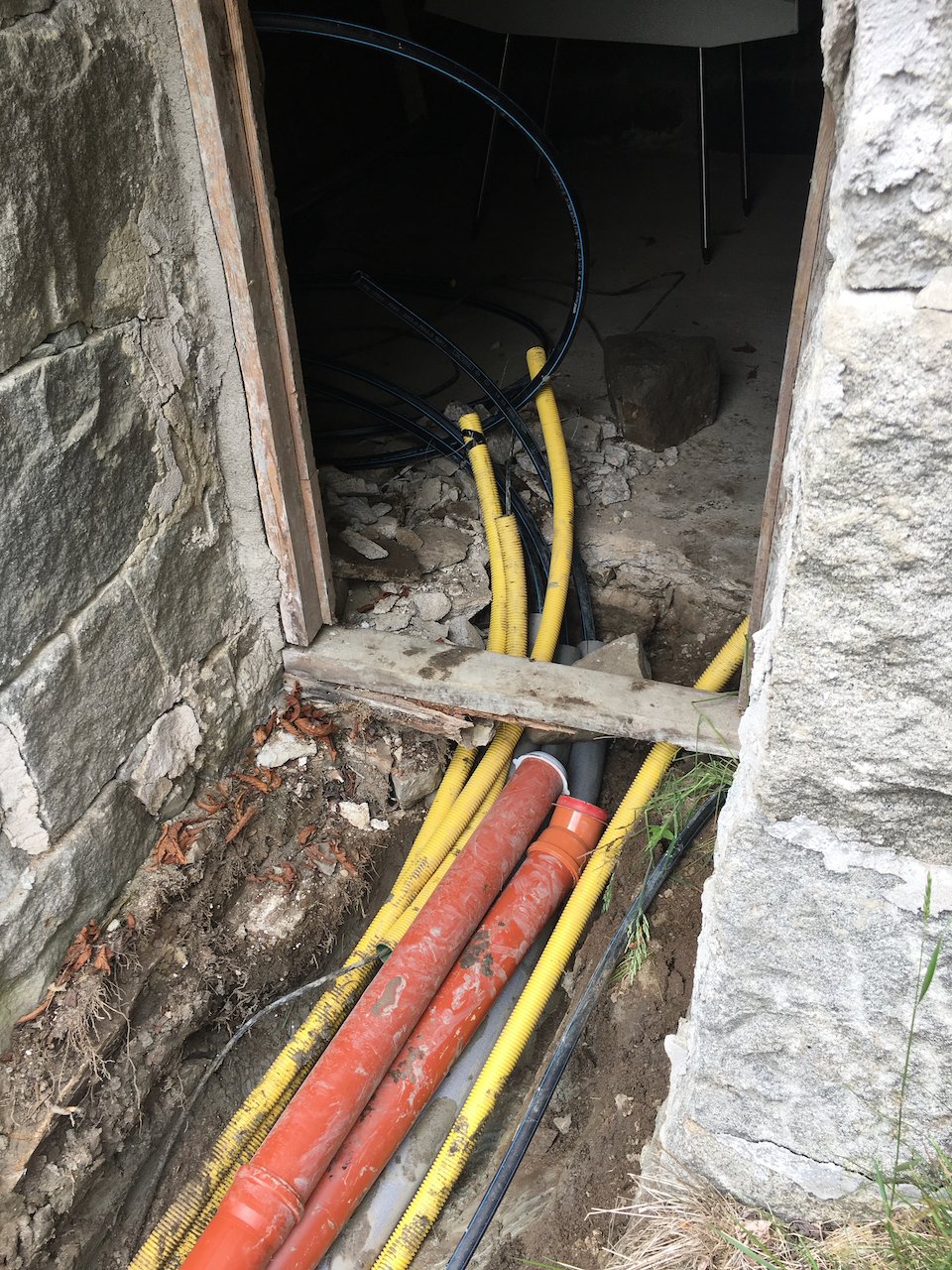
Pipings going into the basement
A deep-drilled well was introduced, reaching down into the bedrock to access clean, stable groundwater. It replaced uncertainty with quiet reliability, without altering the visible life of the house. Water, now pressurized and consistent, arrives as if it always had.
Equally transformative was the installation of a compact wastewater treatment system. Where water once left the house untreated, it is now returned to the landscape with care, filtered, slowed, and considered. What was once a direct discharge has become a closed, conscious cycle. All approved by the local Swedish Municipality.
Between these two points, extraction and return, it runs an entirely new infrastructure. Pipes were laid in the property’s ground. The work was deliberate, almost surgical. Nothing more than necessary, nothing exposed.
Together with the modernization of the electrical system, these interventions form a new foundation, one that remains largely invisible, yet defines how the house is lived in today.
Back to: Restoring the Past→