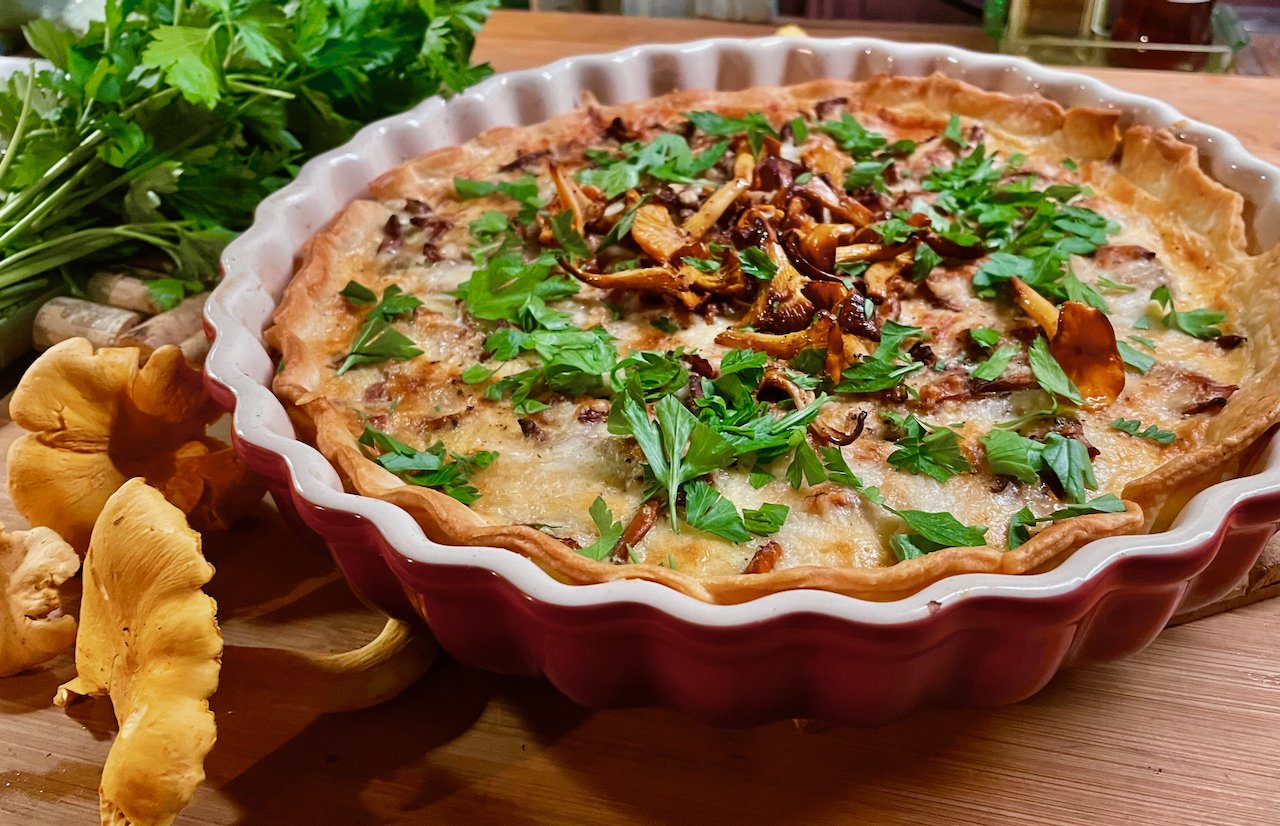
Scandi Food
Nordic food begins with what is at hand.
Season, place, and simplicity guide what is prepared and how.
From garden and forest to table, each ingredient carries its origin.
This is not really a conventional recipe collection, but a reflection of Scandinavian living, where food, like architecture, is shaped by climate, materials, and time.
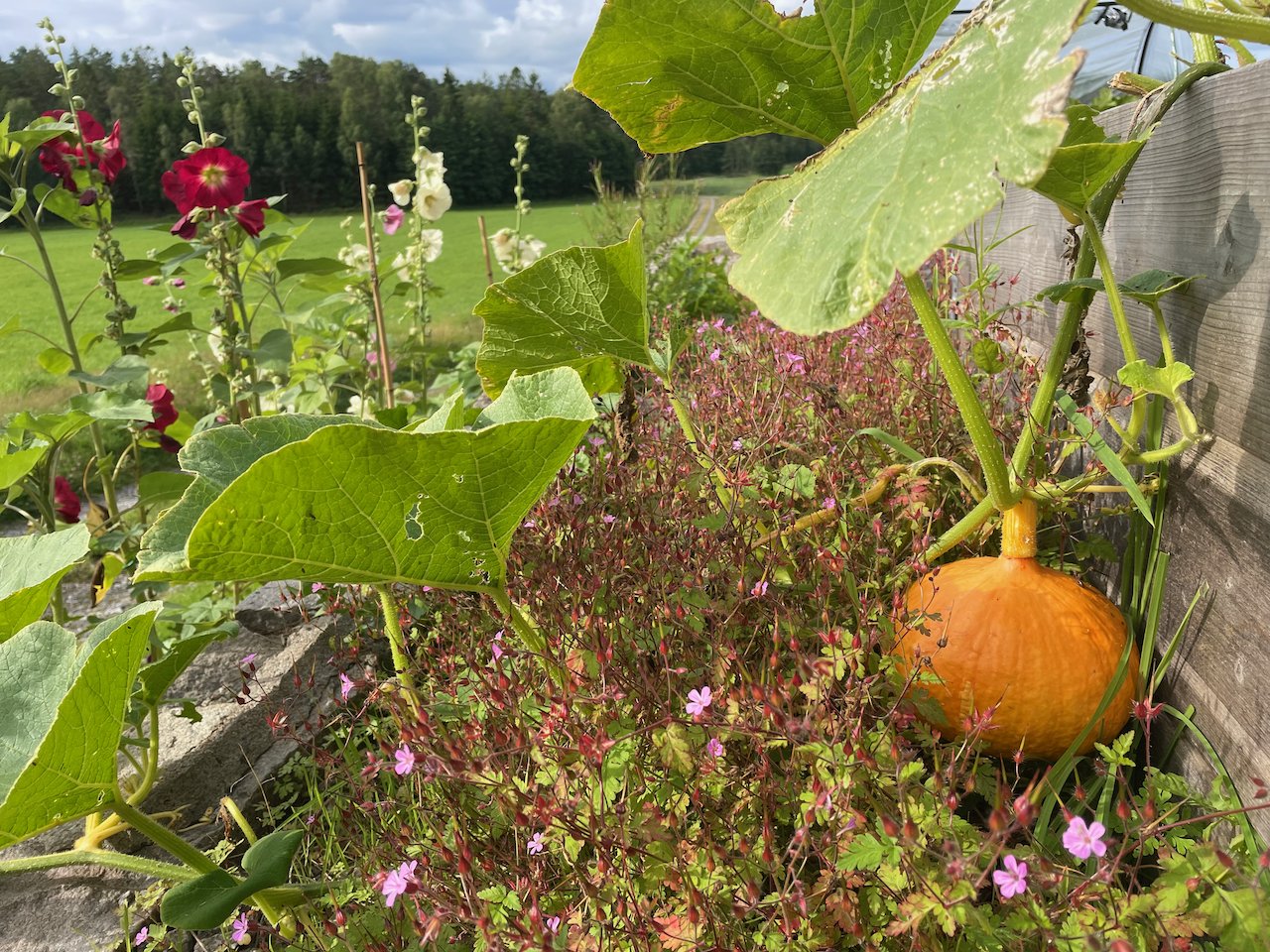
Pumpkins in the Nordic Garden
Pumpkin is not always the first ingredient associated with Nordic cooking, yet it belongs naturally to a climate defined by patience, light, and long seasonal cycles. Like many crops in northern landscapes, it asks for time, and in return, it offers depth, sweetness, and a quiet richness that suits both the kitchen and the garden.

Food at Scandinavian Pantry begins with place.
It follows the same principles as the restoration of the house and garden, guided by season, shaped by the landscape, and rooted in Nordic food traditions. Ingredients are chosen for their quality and origin, often local and seasonal, and prepared with restraint in the spirit of Scandinavian cooking.
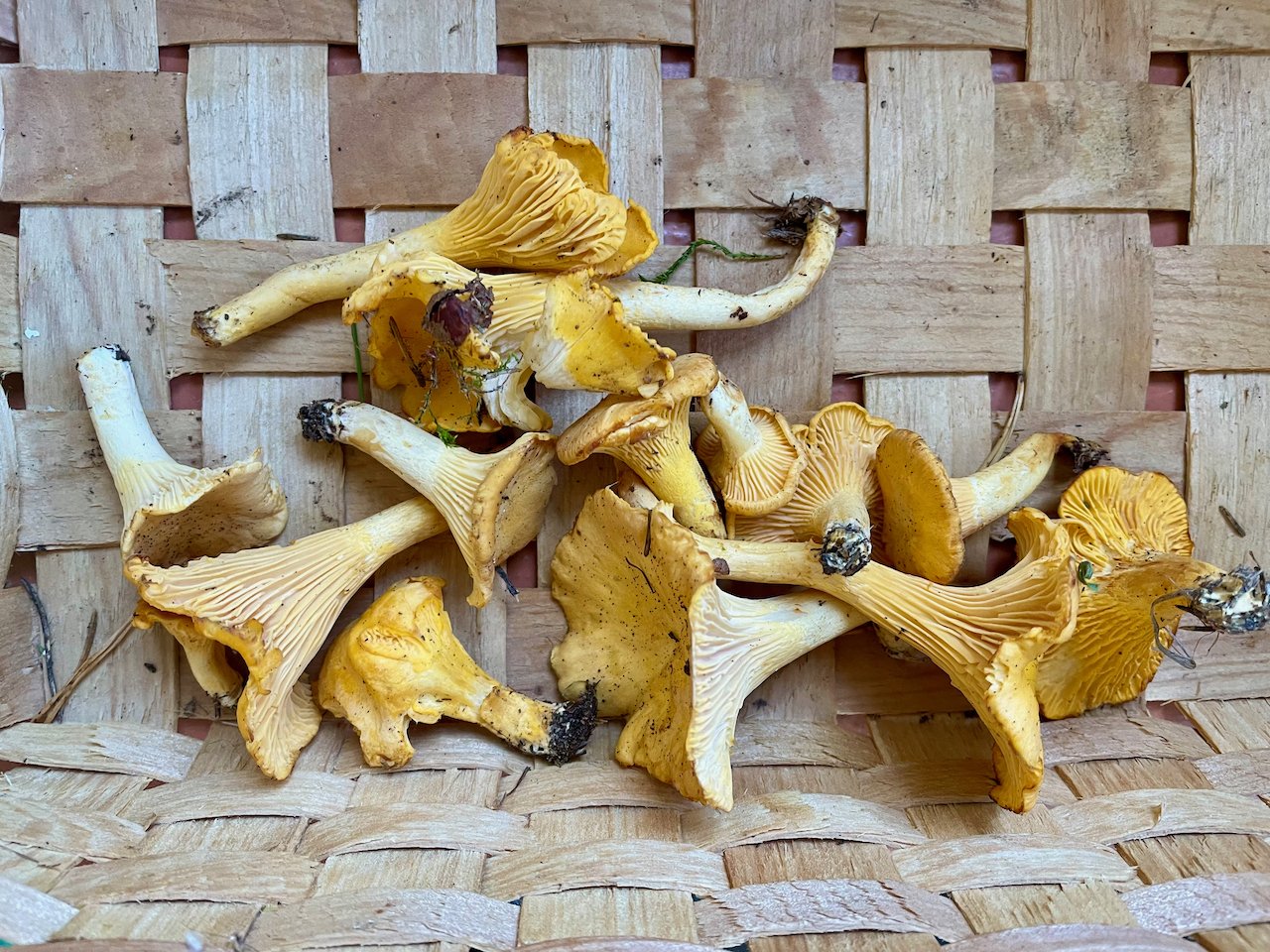
Chanterelles in the Nordic Forest
Chanterelles are among the most defining flavours of the Nordic landscape. They appear quietly, often in late summer, emerging from moss and forest floor in shades of gold that seem to hold the light of the season itself. Like so many elements of Nordic nature, they are not cultivated or controlled, but found, gathered with patience and an understanding of place.
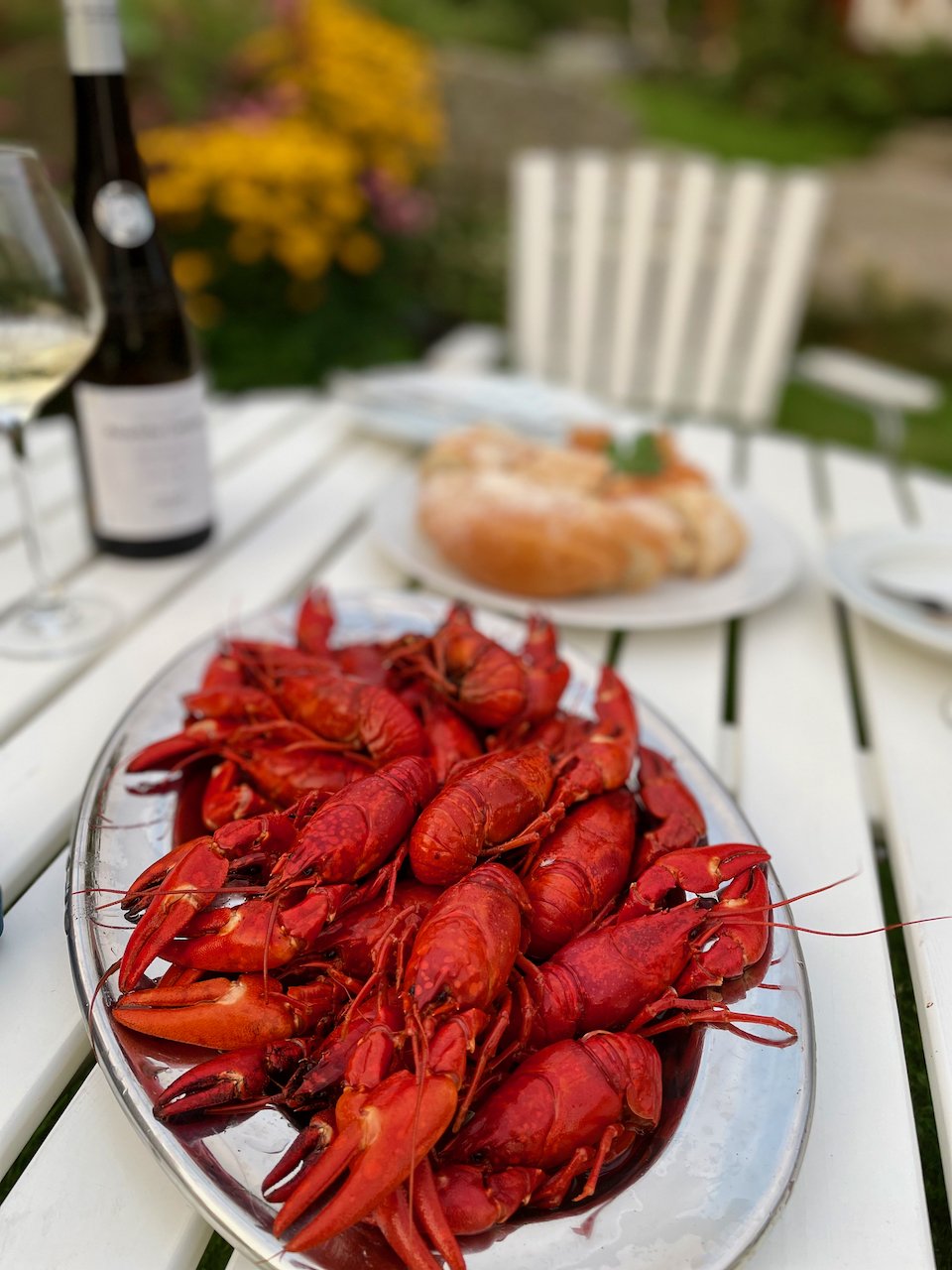
Swedish Crayfish in Late Summer
Swedish crayfish belong to a very specific moment in the Nordic calendar. They appear at the end of summer, when the light begins to soften and the evenings grow longer, marking a quiet transition between seasons. More than a dish, crayfish are part of a tradition, an annual gathering that brings together food, landscape, and time.
That same perspective continues here.
Cooking is not approached as performance, but as part of daily life. Traditional methods such as open-fire cooking, slow baking, and preserving are used not as trends, but as practical and enduring techniques.
Recipes, when they appear, are guided less by precision and more by an understanding of ingredients, timing, and environment.
Don’t worry, there are also some traditional Swedish recipes for you to try at home.
Enjoy!
Nordic Flavours - Scandi Food
-
![]()
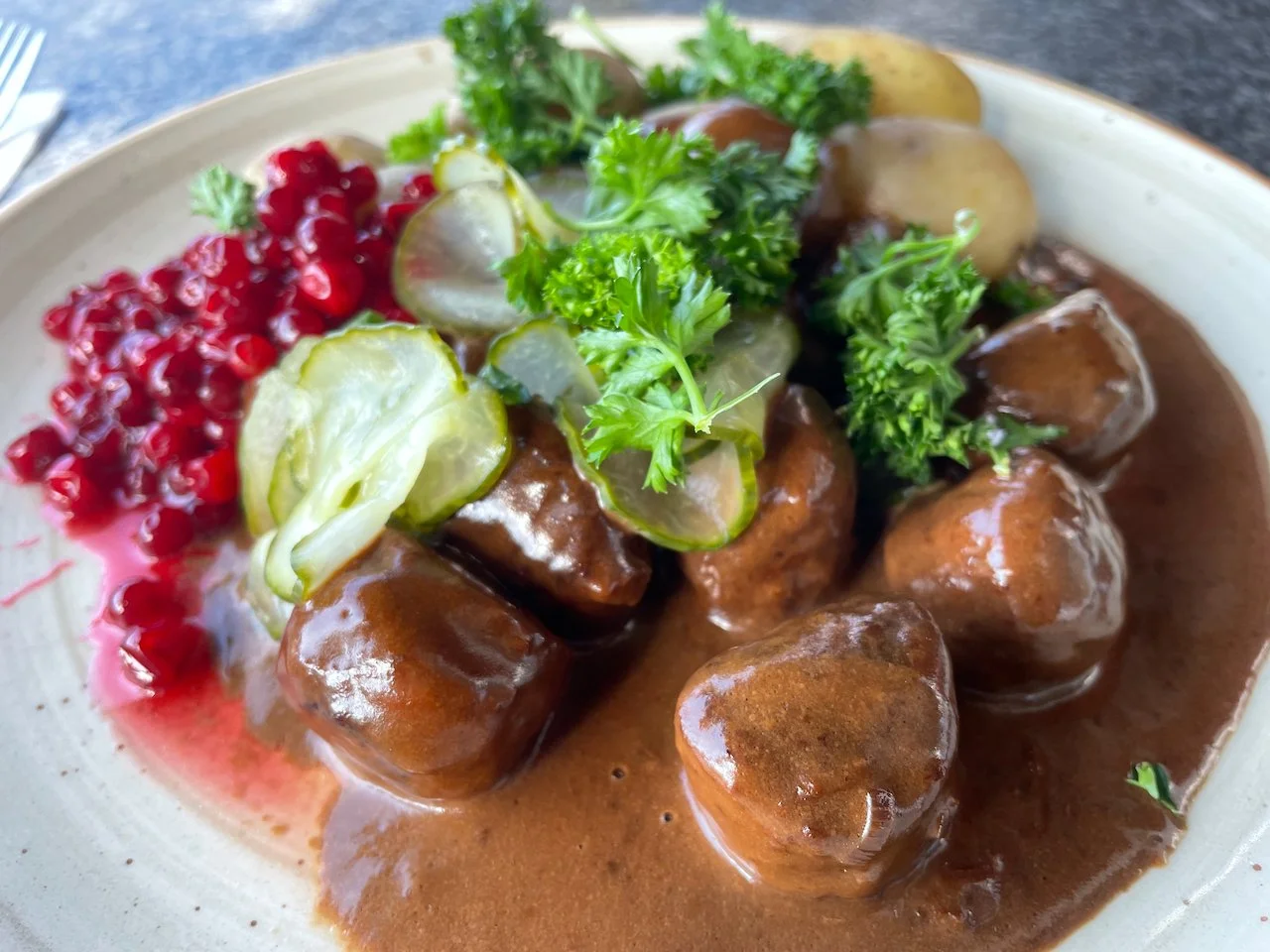
Swedish Classic Meatballs
Try to make your own Swedish meatballs at home. Made from a simple blend of minced meat, cream, and gentle seasoning, they rely not on complexity but on balance, soft in texture, rich in flavour, and deeply familiar. They carry a quiet sense of tradition, shaped by generations of careful cooking rather than invention.
-
![]()
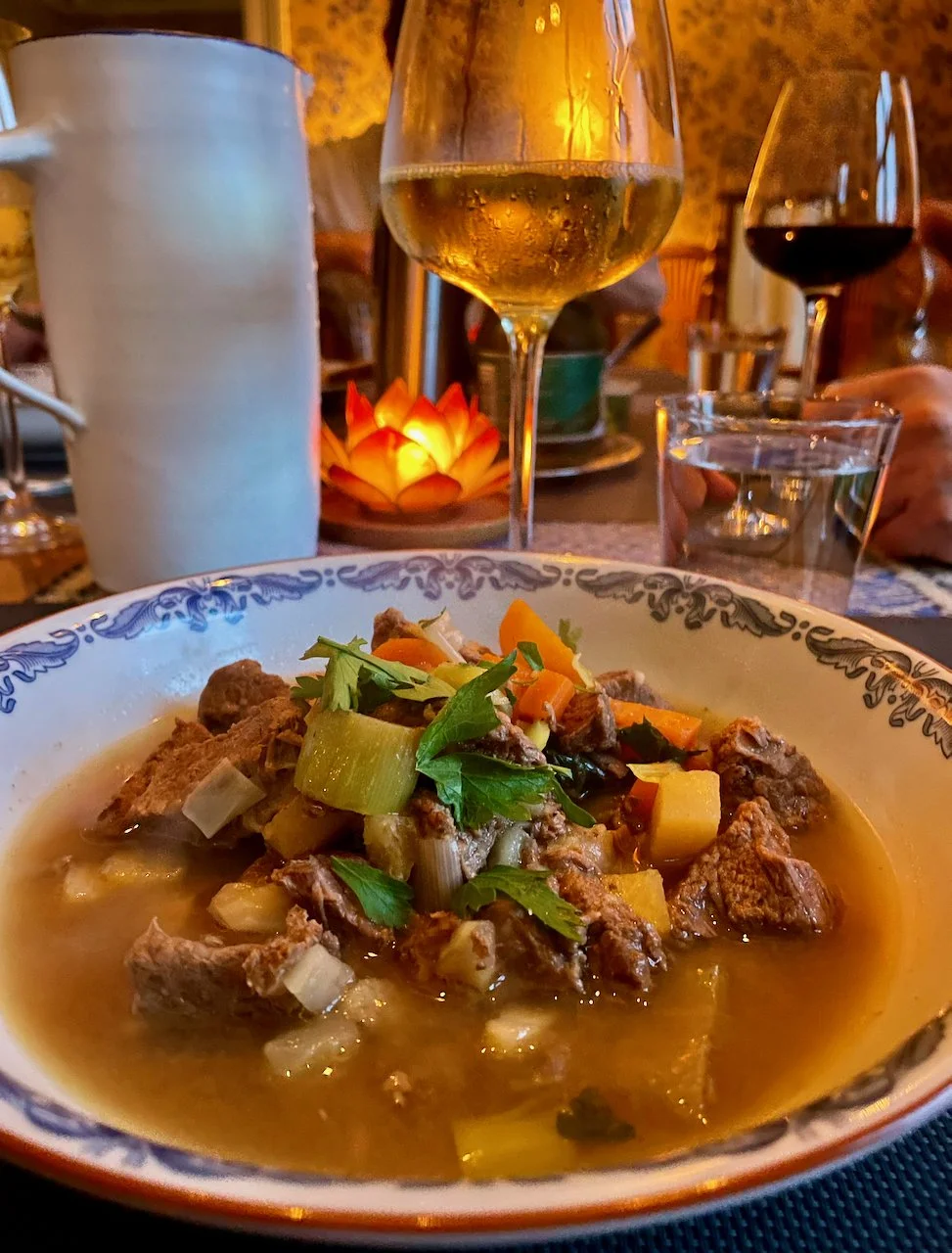
A Hearty Meat Stew
A slow-cooked meat stew speaks of patience more than precision. Built on simple cuts and humble roots: carrots, parsnips, perhaps a turnip or two. The dish draws its depth from time rather than technique. As it simmers, flavours settle and soften, becoming something whole and reassuring. -
![]()
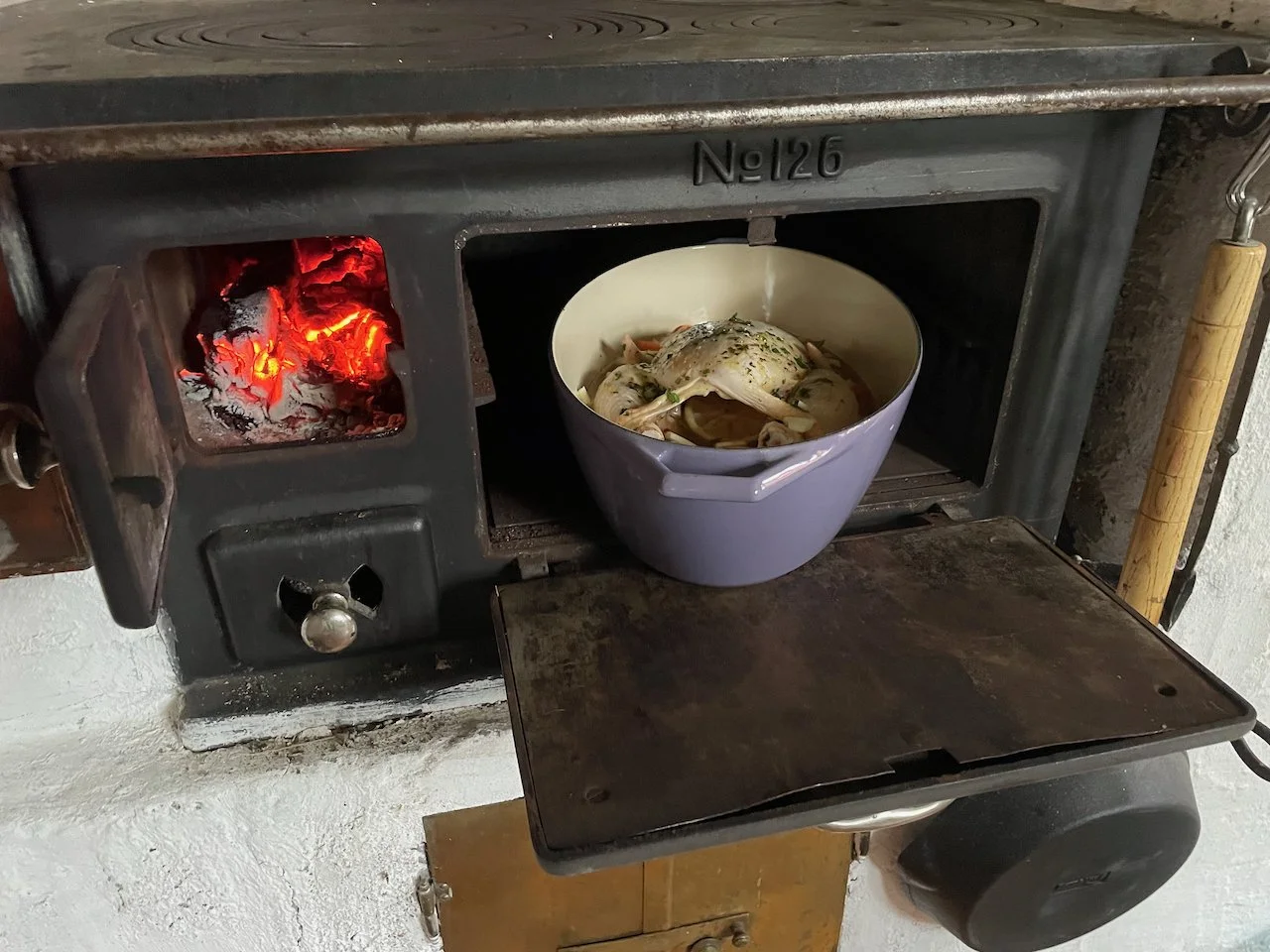
Roasted Chicken in a Wood-Fired Oven
A chicken roasted in a wood-fired oven carries with it the character of the fire itself. The heat is never entirely even, never predictable, and that is where its beauty lies. The skin crisps slowly, the meat stays tender, and a faint trace of smoke settles into every bite. -
![Dish with meat, sweet corn, potatoes with a bottle and kitchen in the back]()
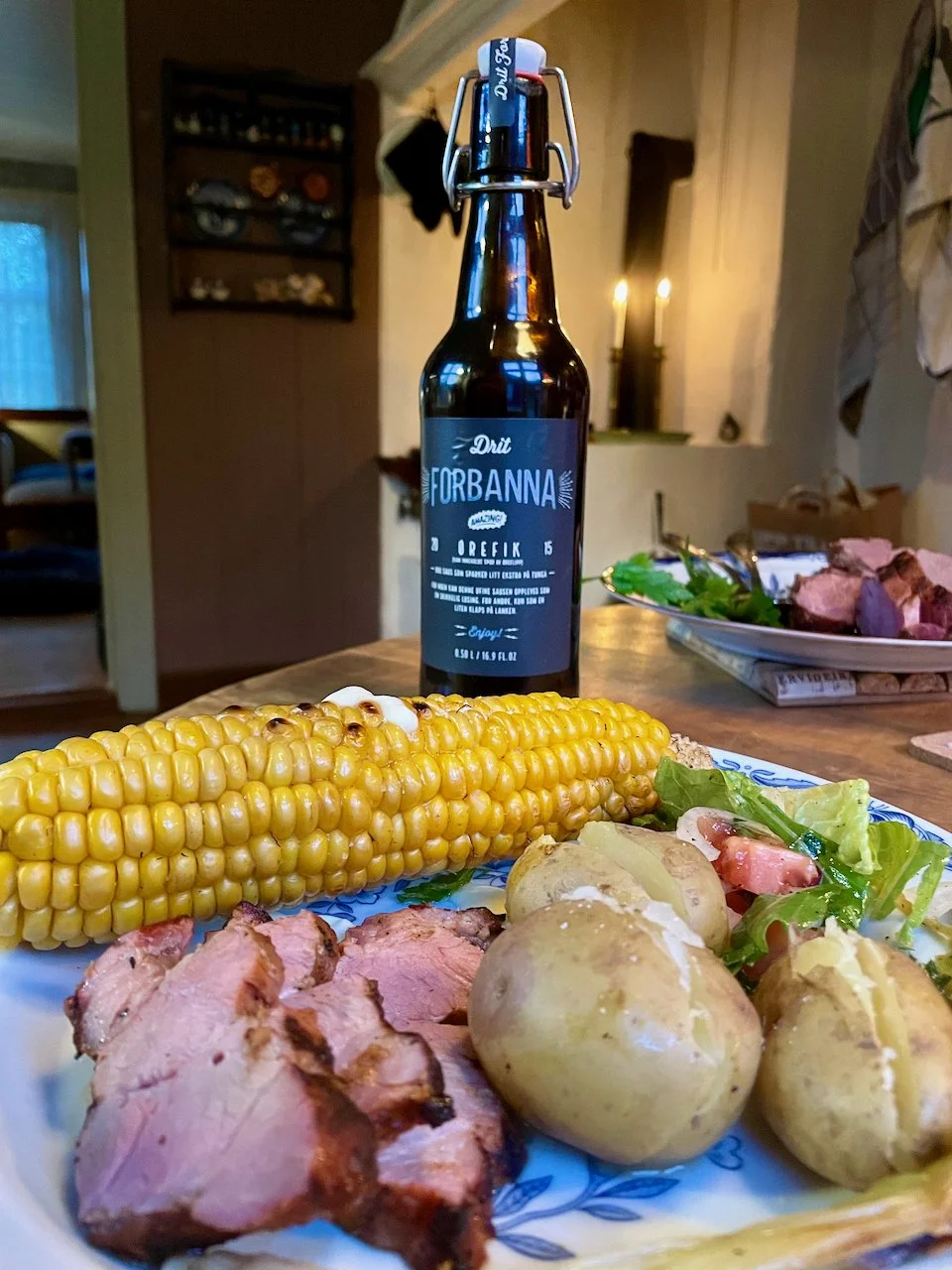
Beef Knuckle with Home-Grown Sweet Corn
Beef knuckle is a cut that rewards slow and thoughtful preparation. Lean yet full of character, it benefits from time. Roast it gently or cook it until tender. You should allow its texture to soften and its flavour to deepen.
-
![Artichoke just out of a boiling pan]()
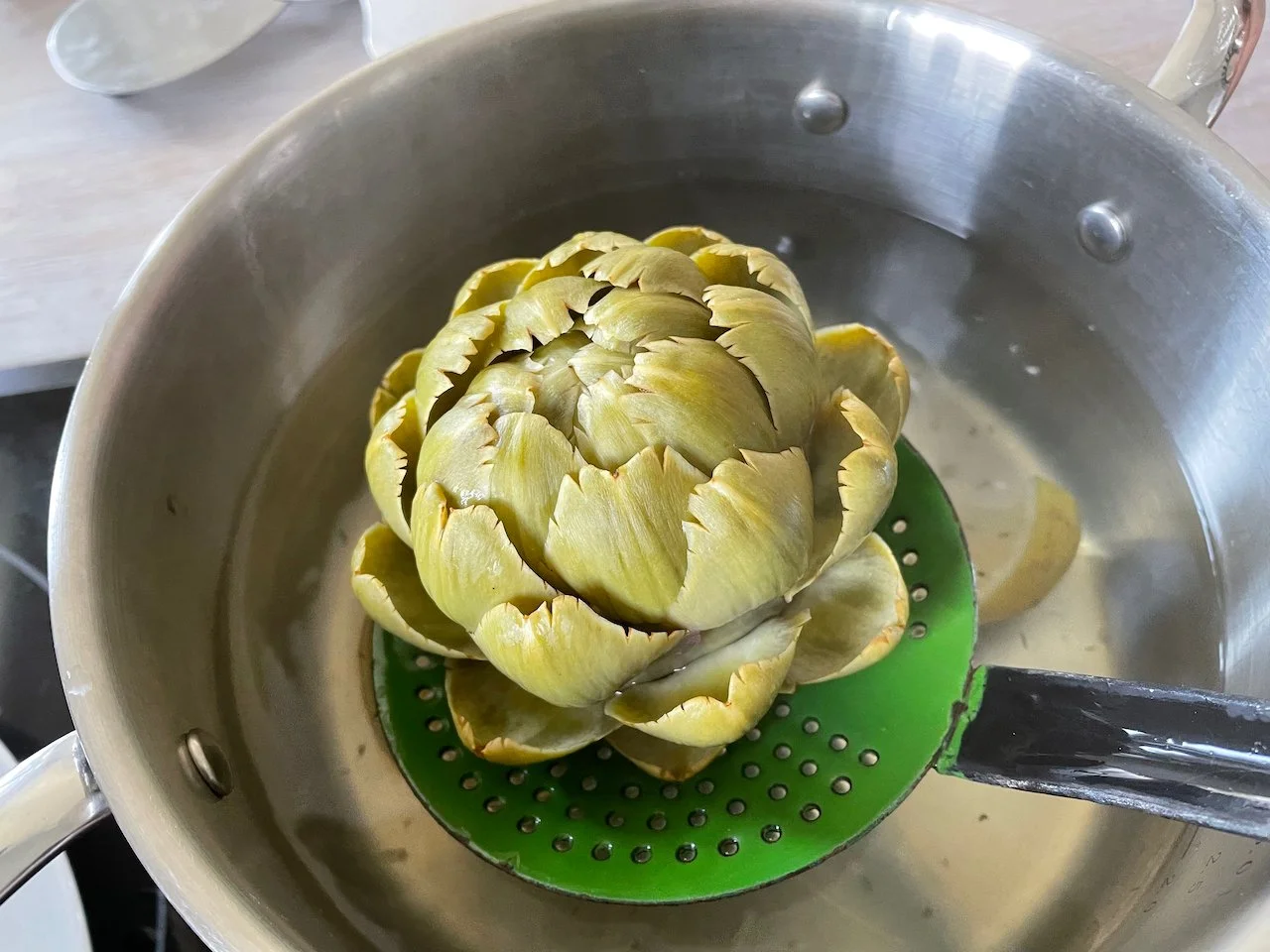
Artichoke In the Nordic
Artichokes are not shaped by haste. In the Nordic climate, they demand time, warmth, and careful attention. The growing season often stretches across the full sommer, before they are ready to be brought in. Their presence in the garden is patient, almost architectural, standing firm as the months pass.
-
![]()
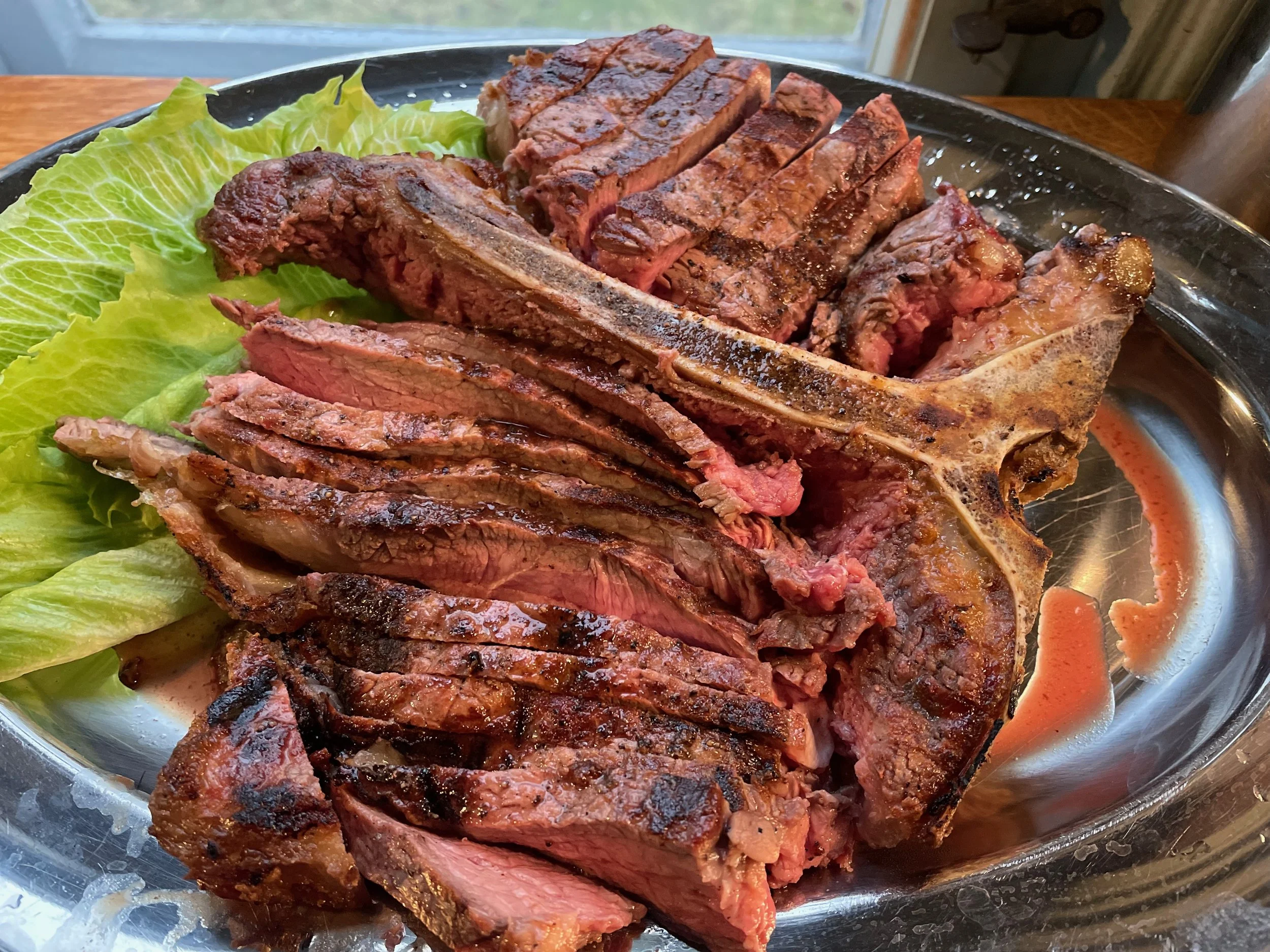
T-Bone Steak on the Grill
A T-bone steak carries a certain presence, defined by its structure as much as its flavour. With tenderloin on one side and strip on the other, it brings together two textures in a single cut.
-
![Two sea bream on the grill]()
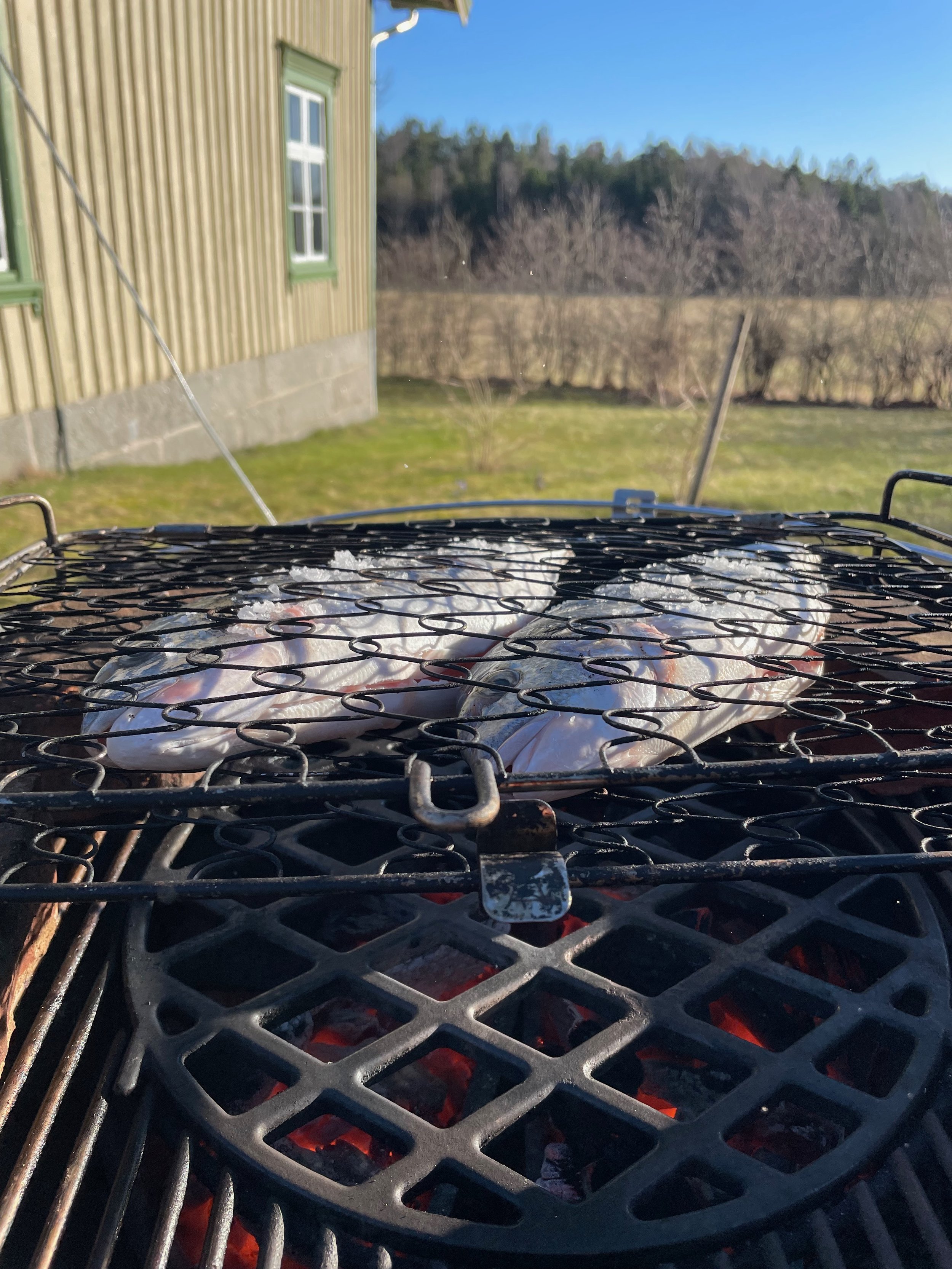
Grilled Dourada (Sea Bream)
Dourada, or sea bream, carries a quiet clarity. It is firm in texture, delicate in flavour, and naturally suited to the open grill. It asks for very little in return. Prepared simply, it reflects the essence of Nordic cooking, where restraint, balance, and respect for the ingredient guide every step from fire to table.

Our Story