Inside the Home
Nordic interiors shaped by light, memory, and quiet craftsmanship.
The Nordic home is defined by light and restraint.
Materials are allowed to speak, and spaces are shaped for everyday life.
It is not designed to impress, but to endure.

Historic Interiors

In a residence dating back to 1912, the interiors unfold as a sequence of atmospheres rather than statements. Each room holds its own character, shaped by color, light, and the quiet accumulation of time.

The Dining Room - A Room for Gathering
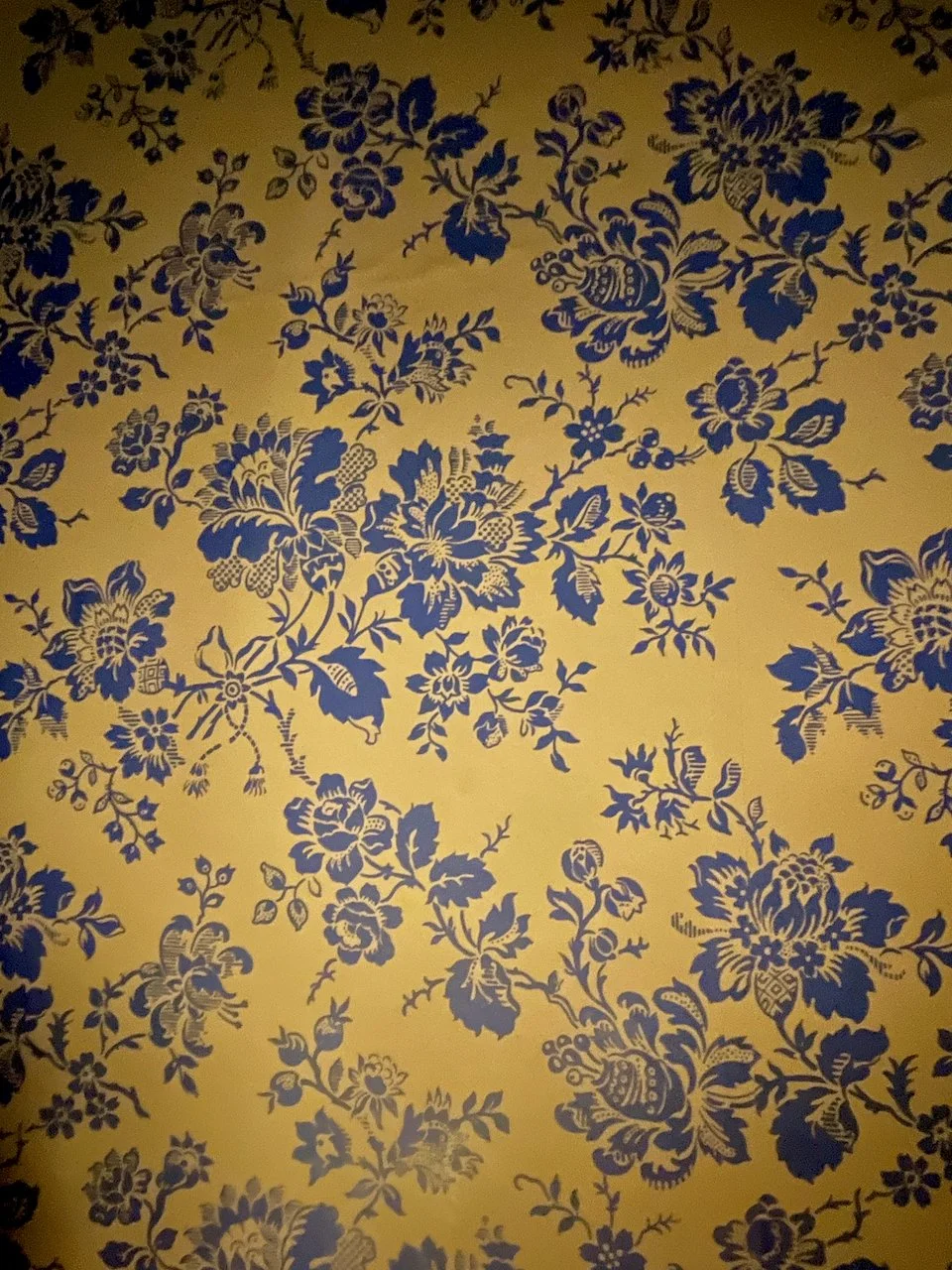
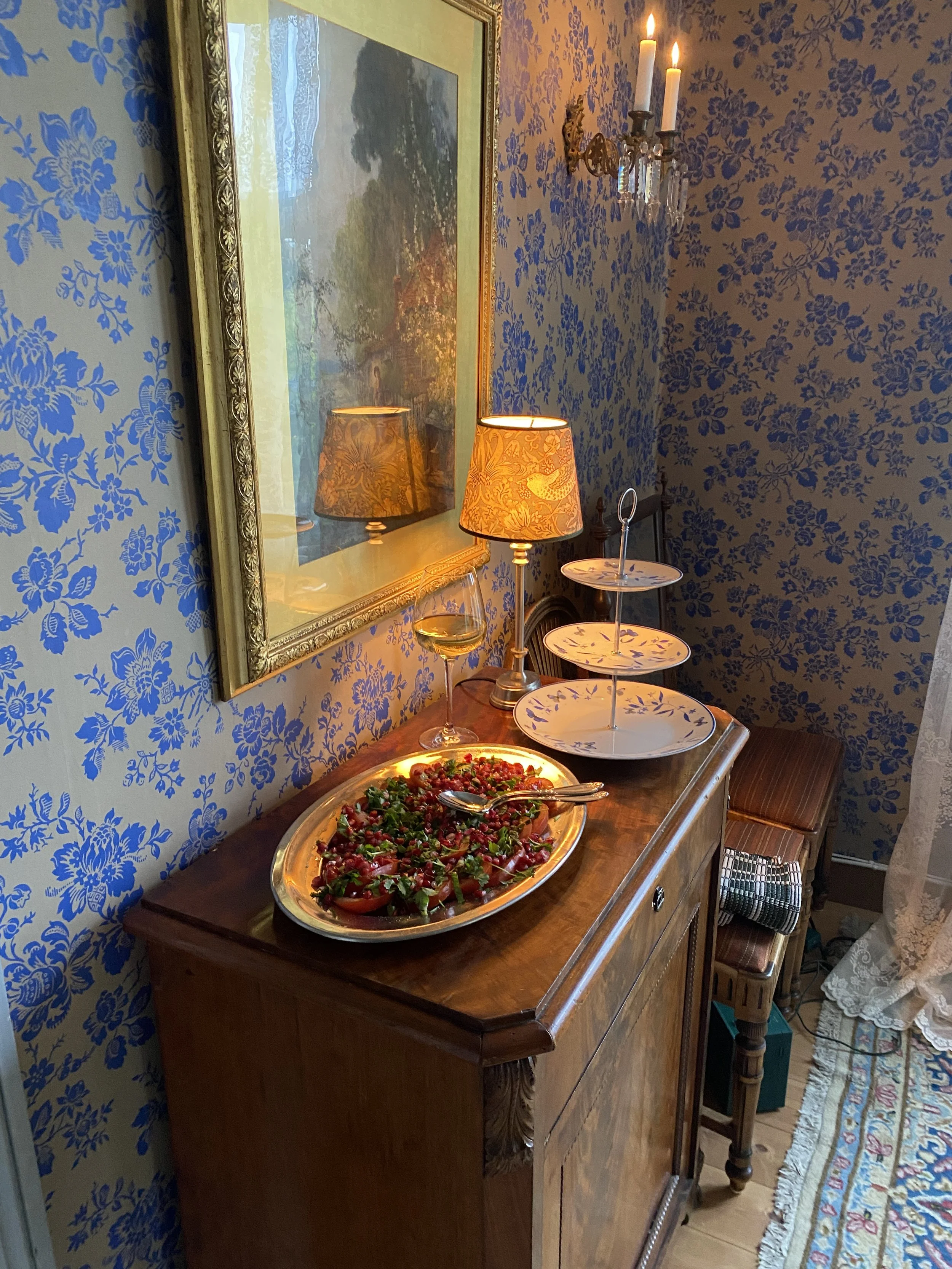
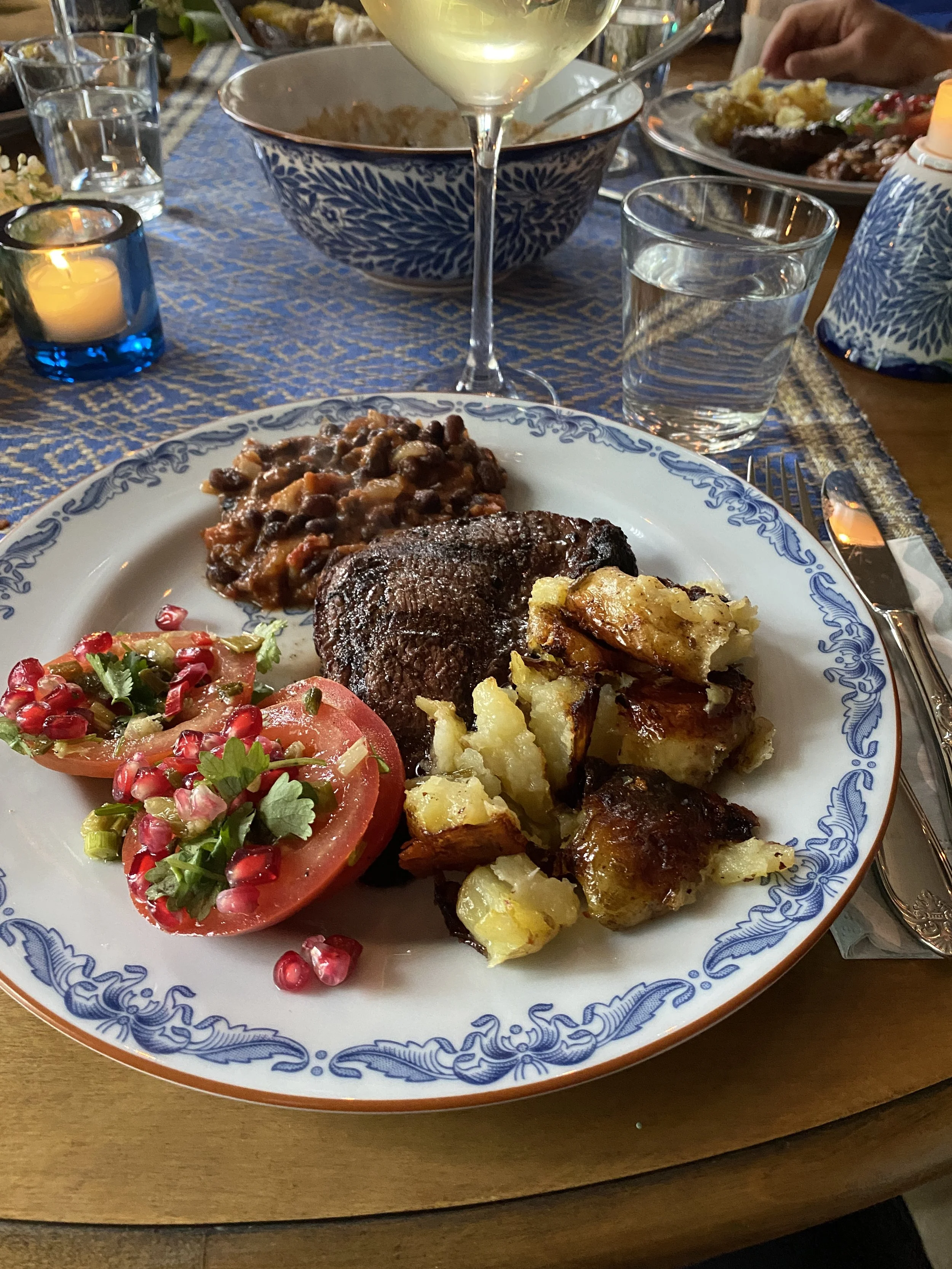
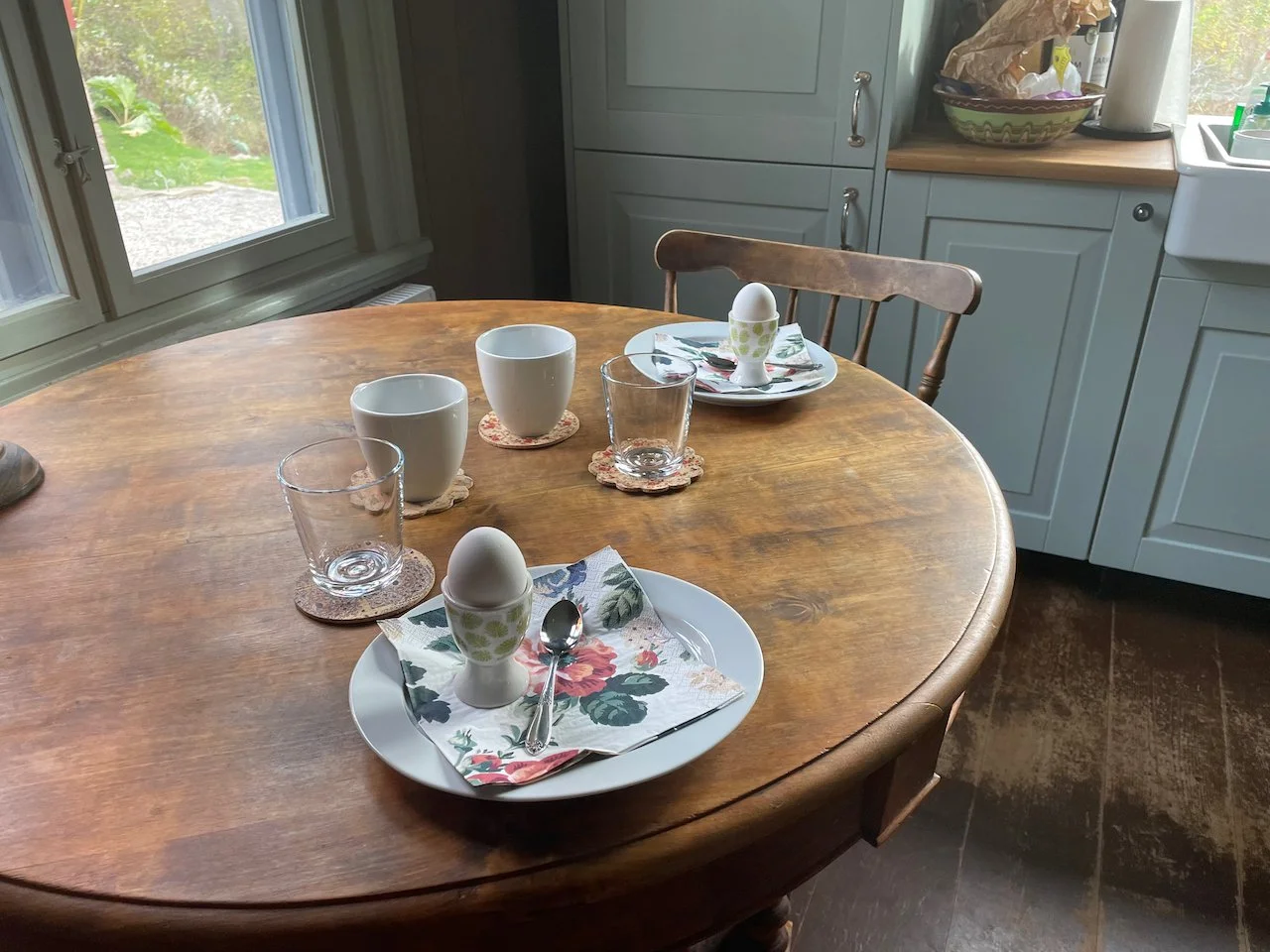
The dining room is both intimate and expressive. Deep blue patterned wallpaper wraps the space, balanced by a softly painted ceiling and carefully framed windows and doors.
The dining room is anchored by a restrained interpretation of the Gustavian style, light in proportion, with carved details that quietly define the space.
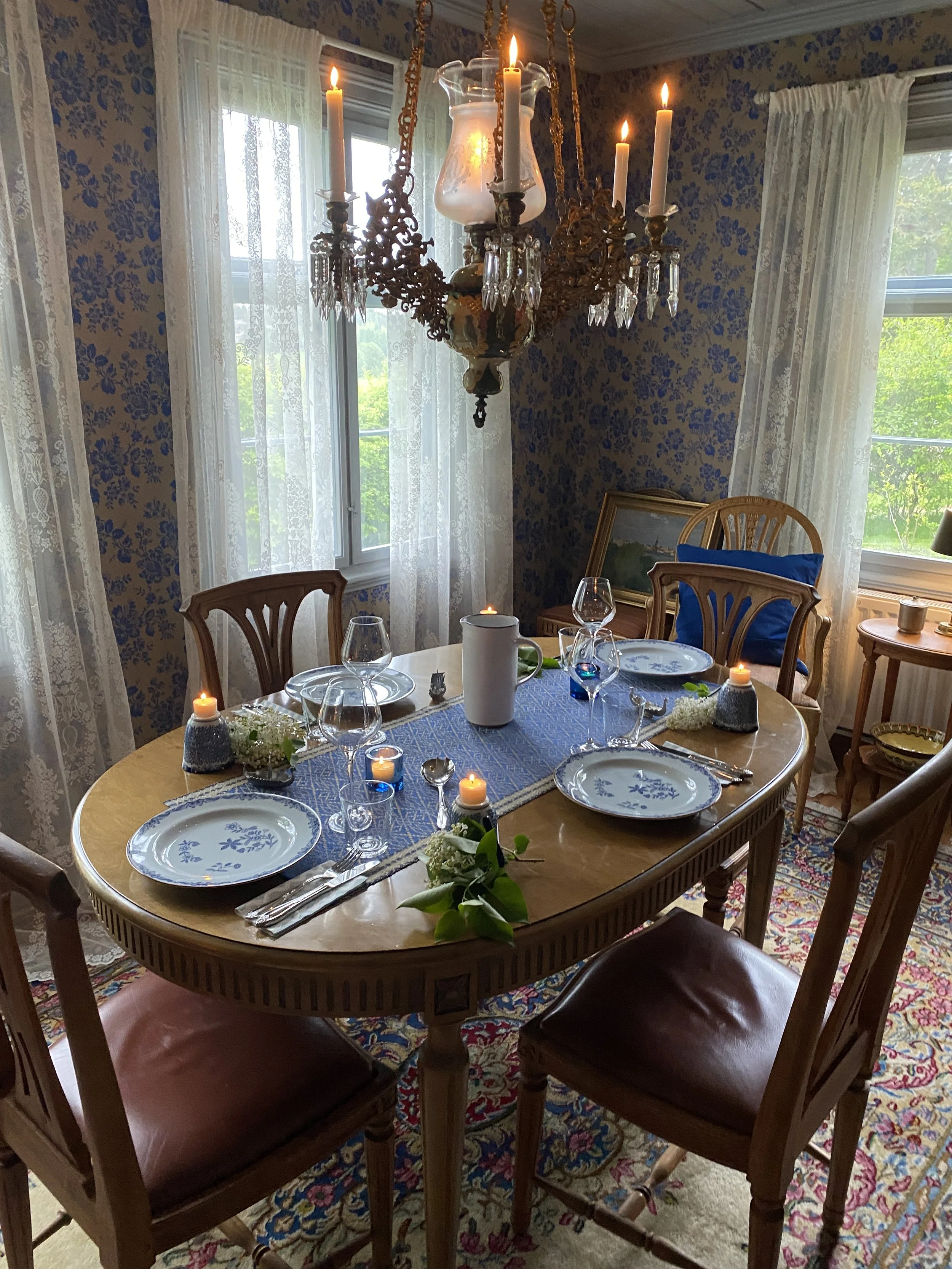
At the core of the home is a search for balance, between function and beauty, simplicity and richness.
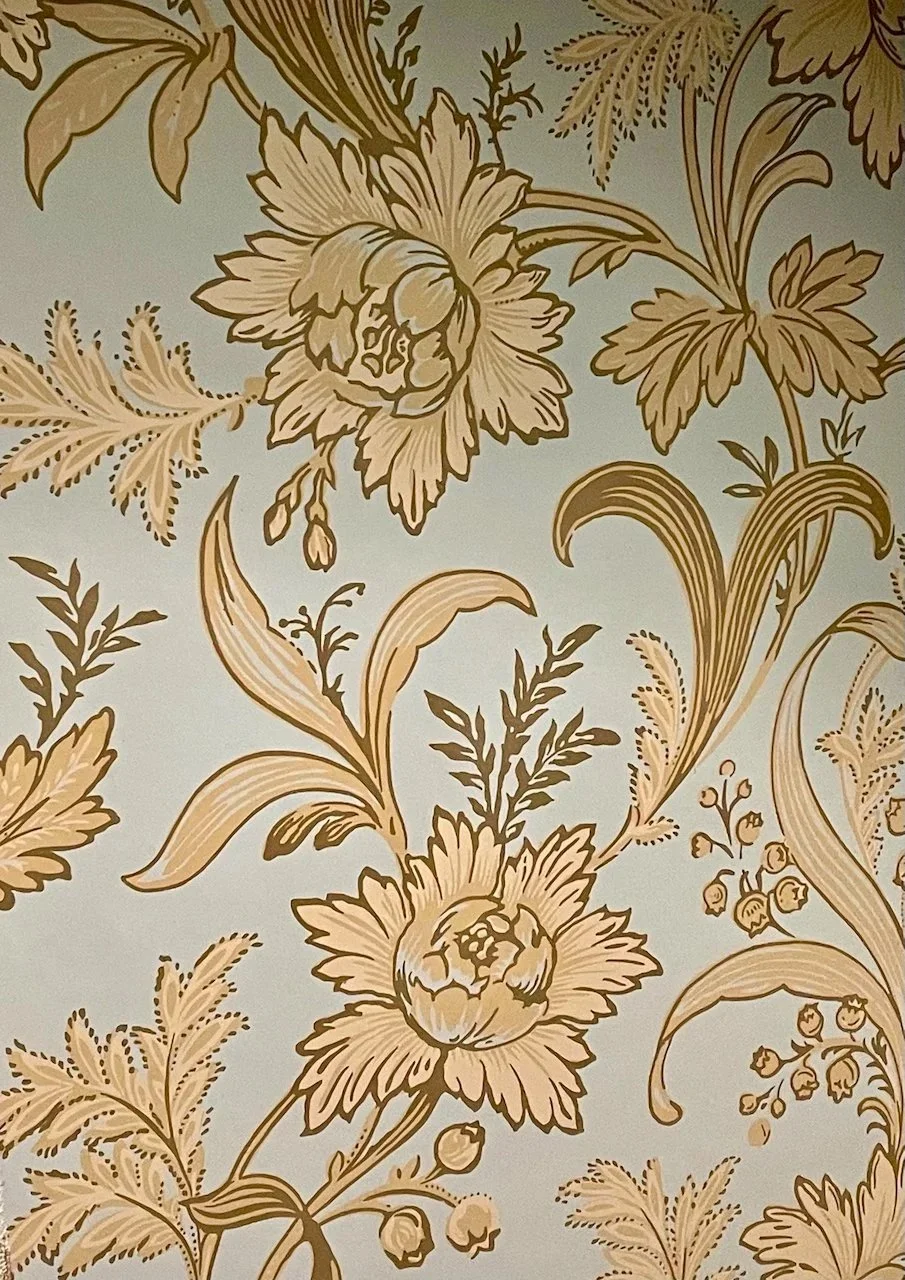
Wallpapers draw from nature, with patterns that add rhythm without overwhelming.
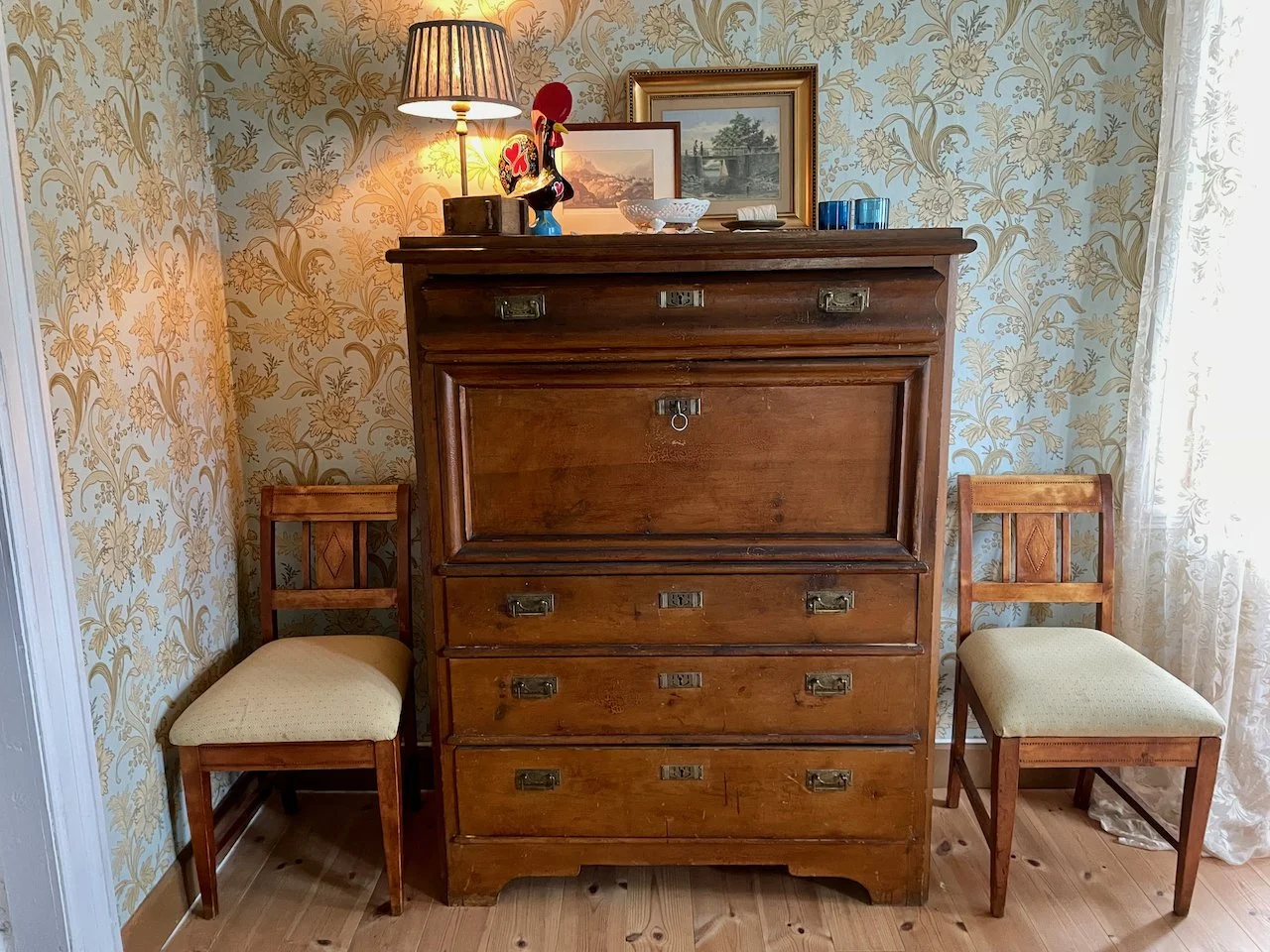
Furniture is gathered rather than styled, with heirlooms, flea market finds, and Scandinavian design icons coexist naturally.
Refurbishing an old home is not about recreating a single moment in time. It is a process of understanding what already exists, and allowing new elements to settle in with respect.
Every layer, from architectural features to individual objects, contributes to a cohesive whole.
Interior & Design: Nordic Light
The Living Room - Everyday Comfort
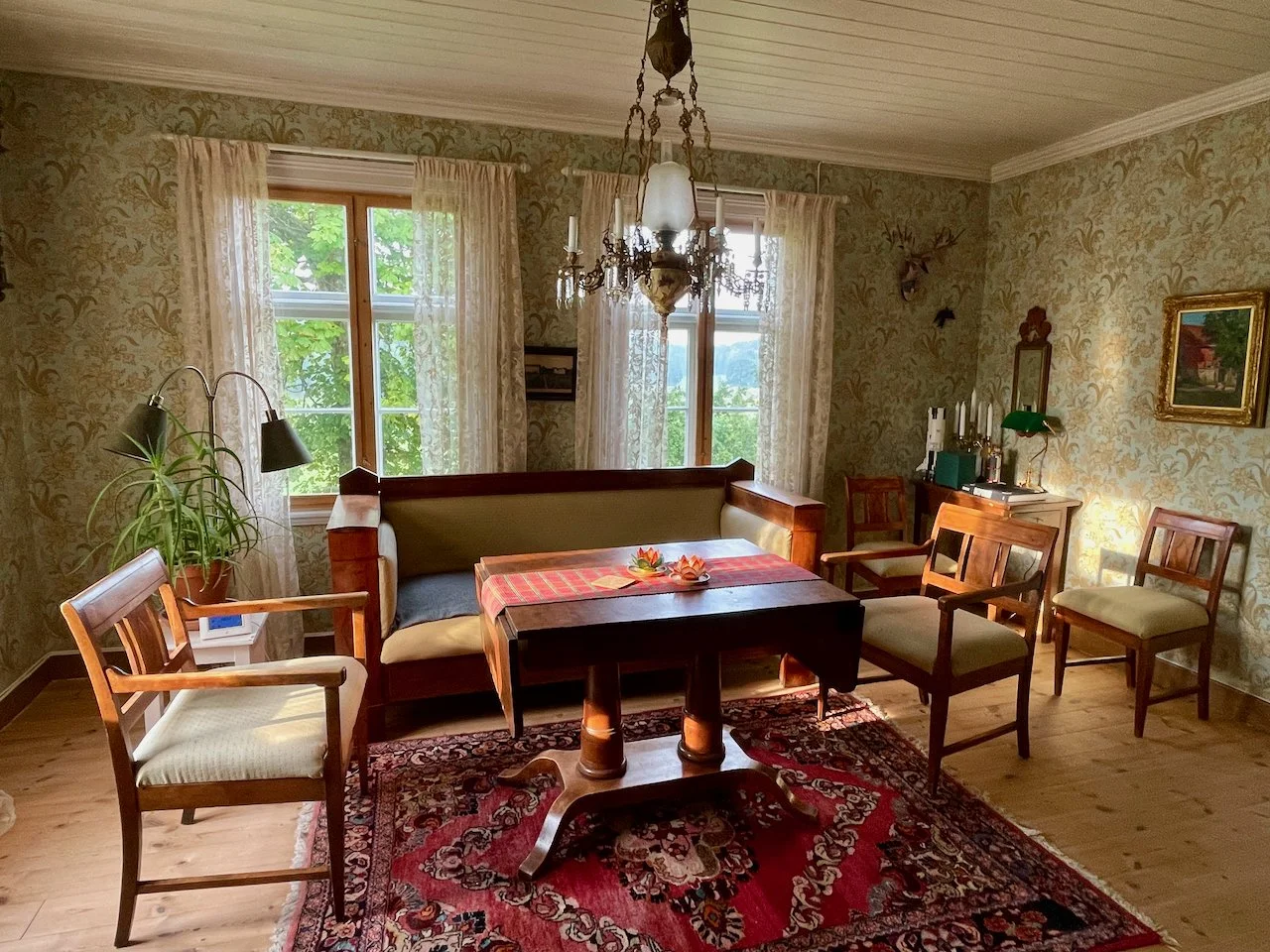
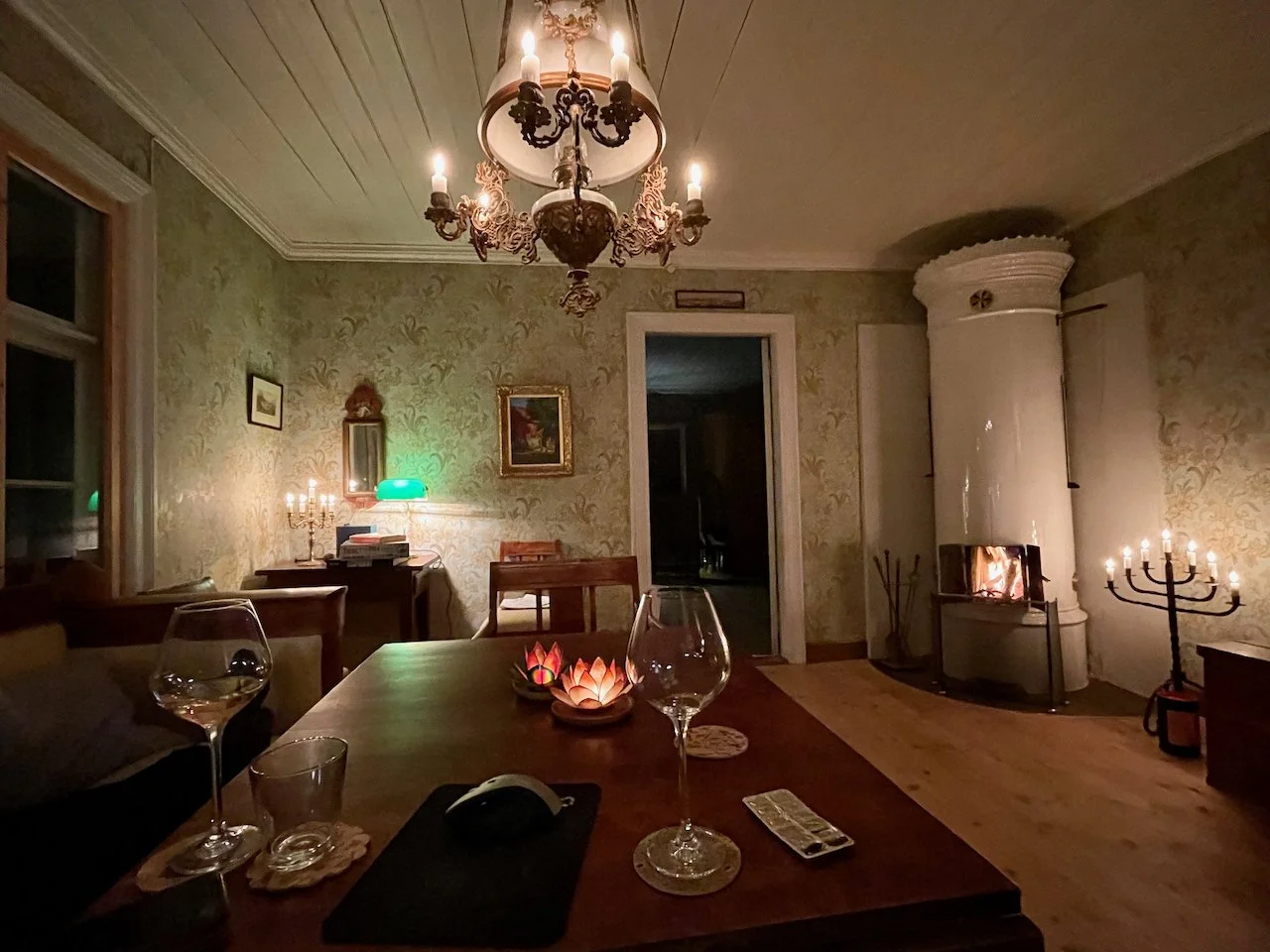
The living room offers a softer expression. A light green base meets golden patterned wallpaper, creating a warm and welcoming atmosphere.
The seating group reflects the Swedish Karl Johan style, where softer lines and solid wood construction bring both comfort and structure to the room.

Layers of History
At the farmstead, some furniture has remained in place across generations. These pieces are worn, repaired, and reused. They anchor the interiors in lived history.
While rural homes were traditionally guided by necessity rather than decoration, they still carry a quiet aesthetic. Simplicity, proportion, and material honesty form their own kind of beauty.
This project does not aim for strict historical accuracy. Instead, it seeks to evoke a sense of continuity, a lived-in interpretation of the past.
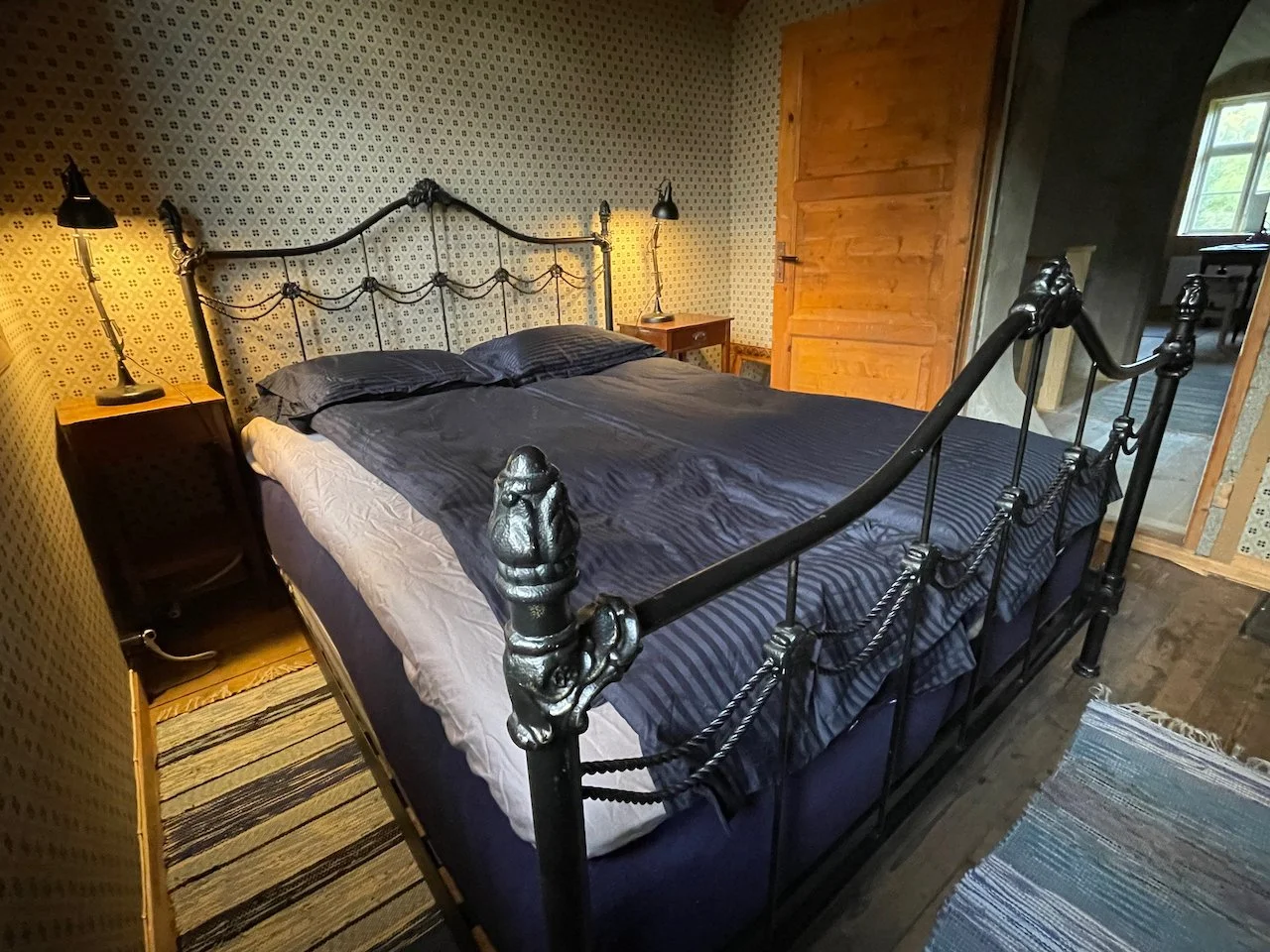
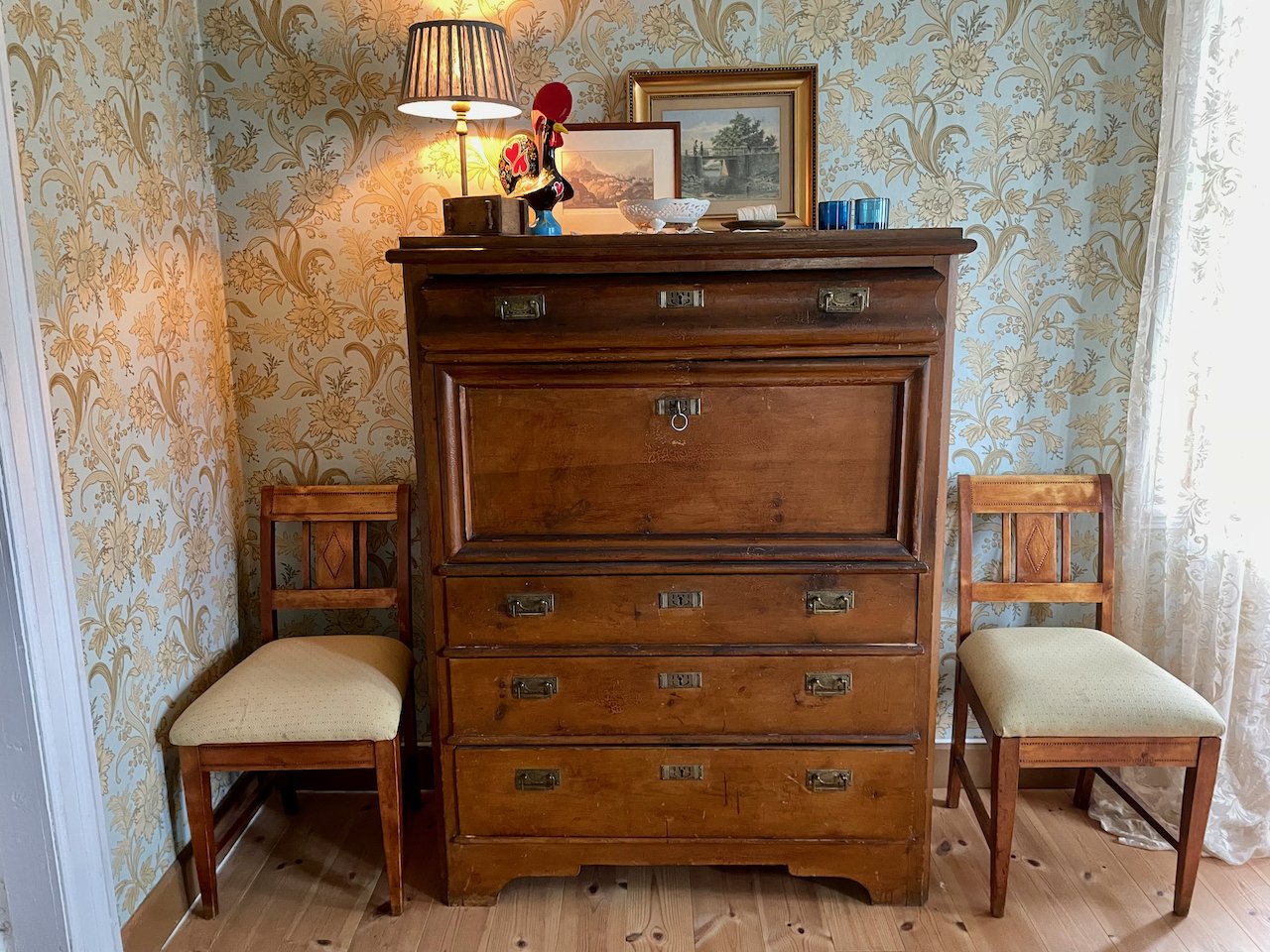
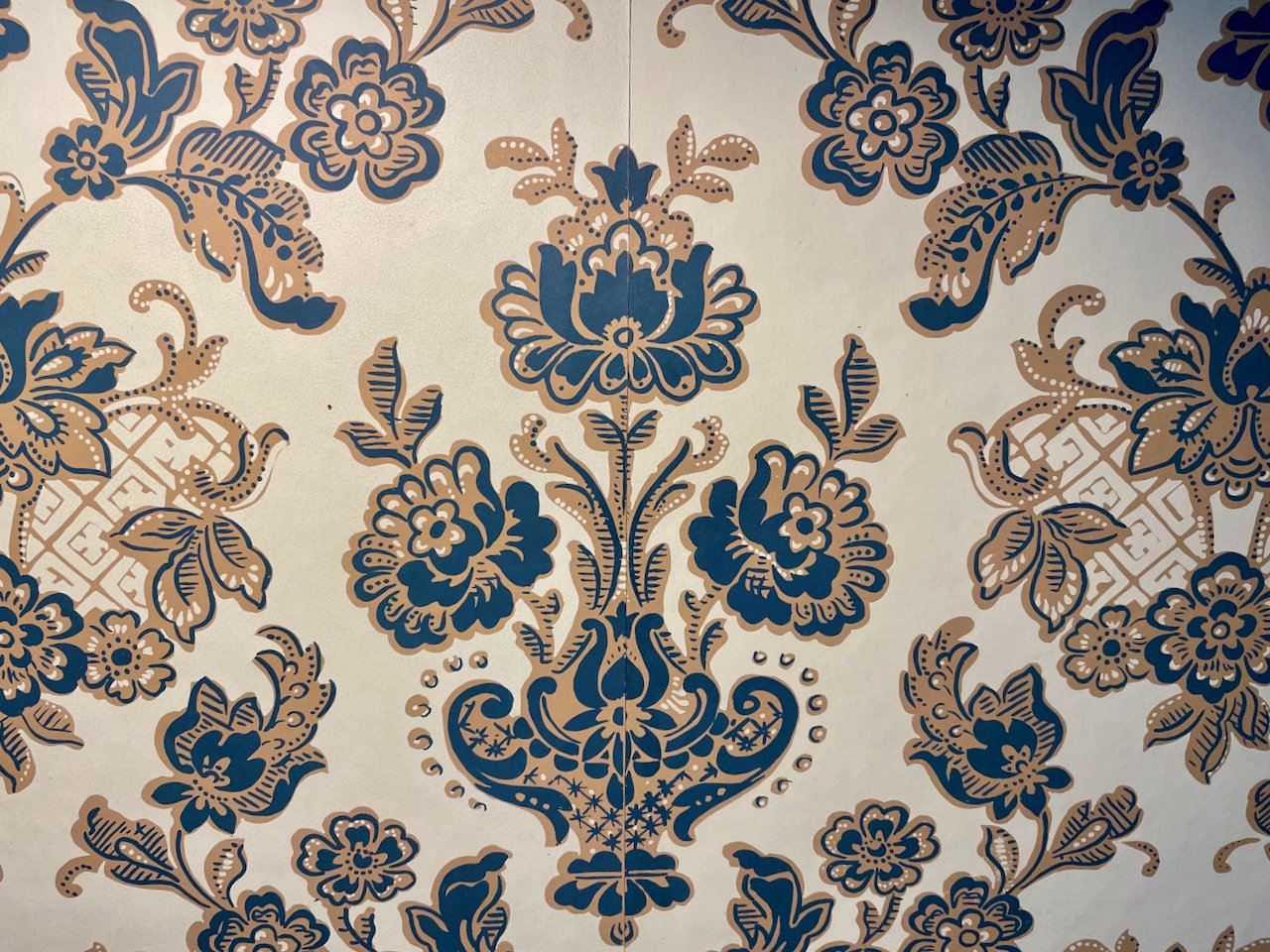
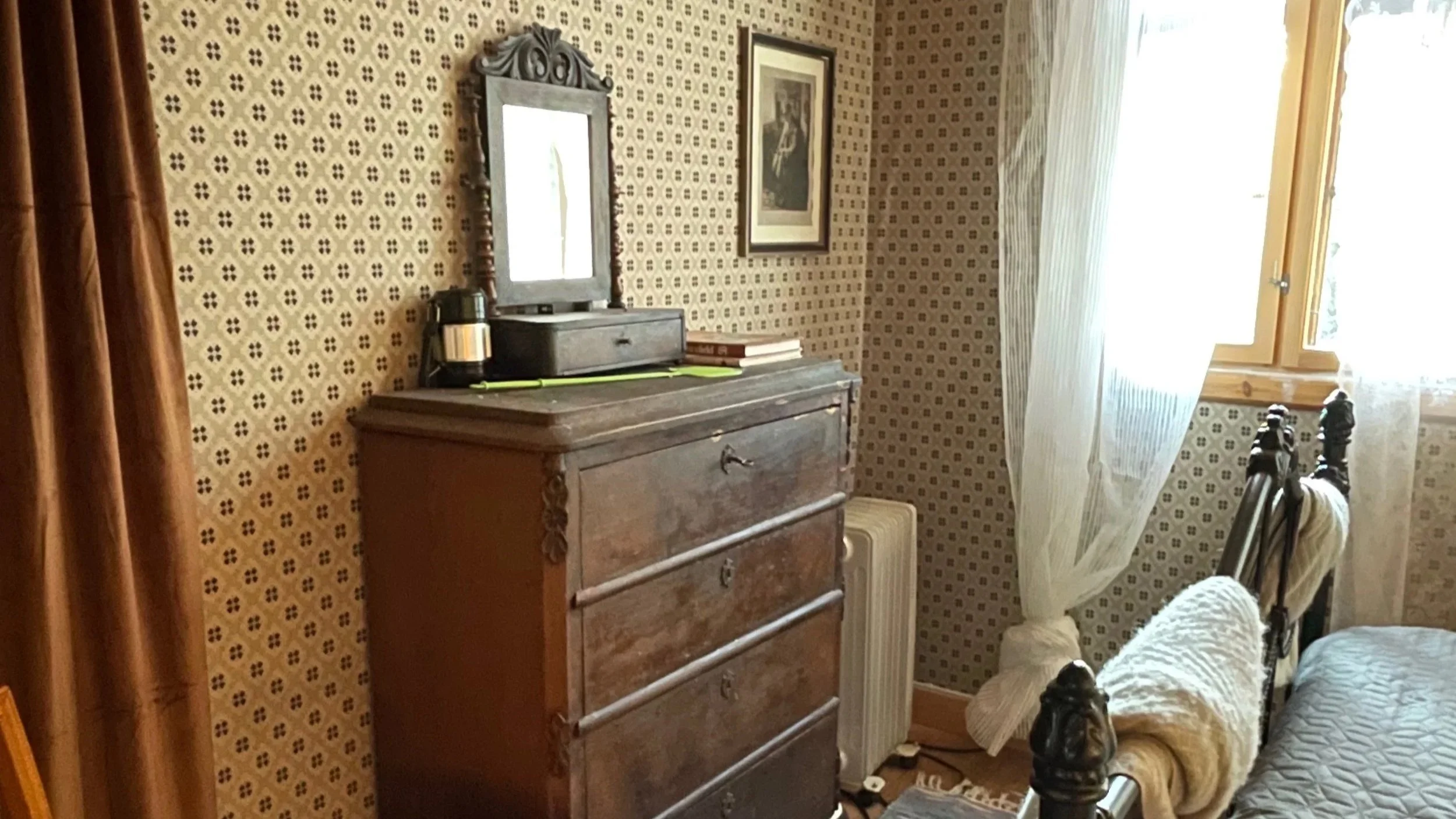
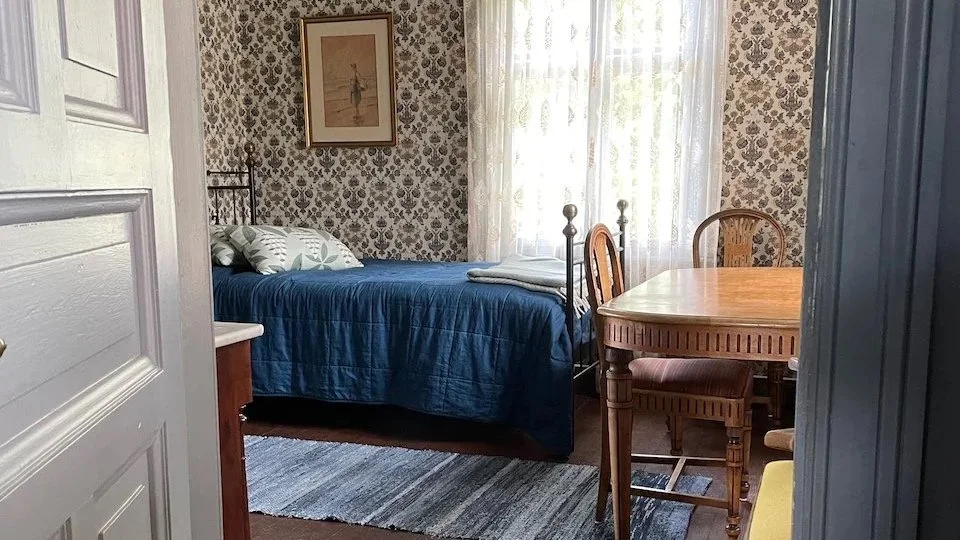
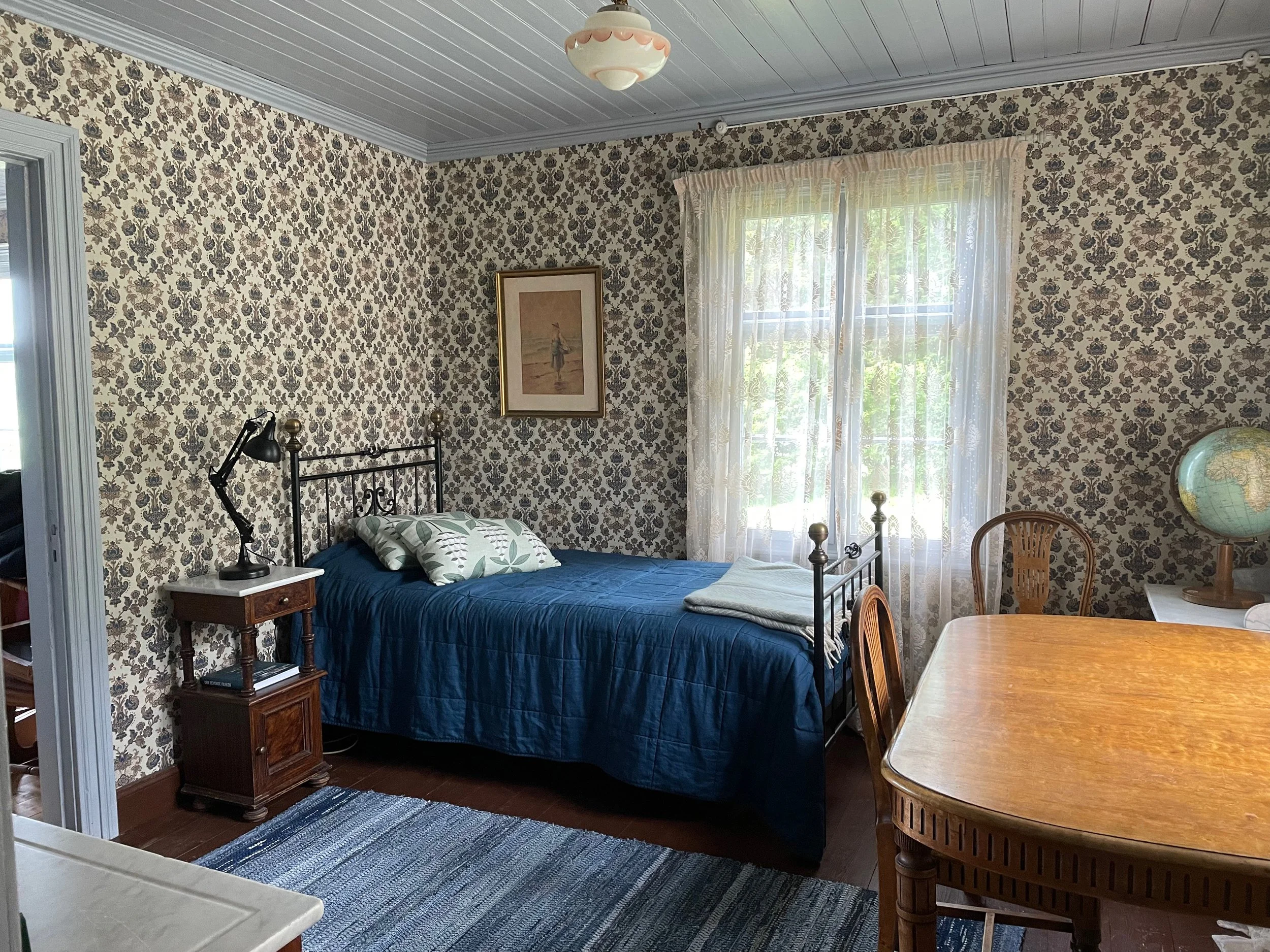
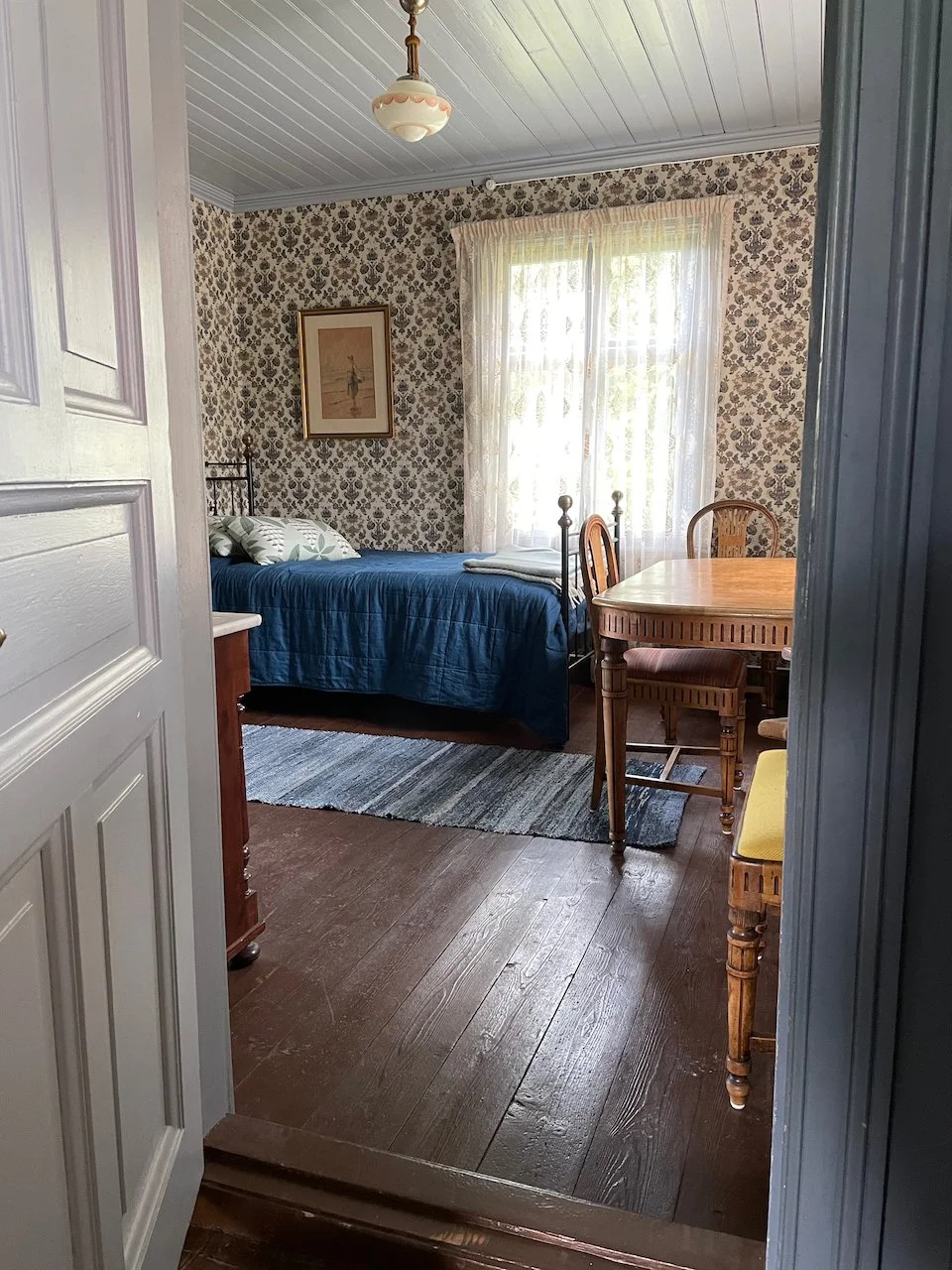
One of the downstairs rooms, once known as “Olles rum”, tells a quieter story. After the estate was sold in 1939, three siblings continued living in the house, placing a bed along each wall of this room.
Such details offer glimpses into everyday life, how spaces were used, shared, and adapted over time.
Rooms with Memory
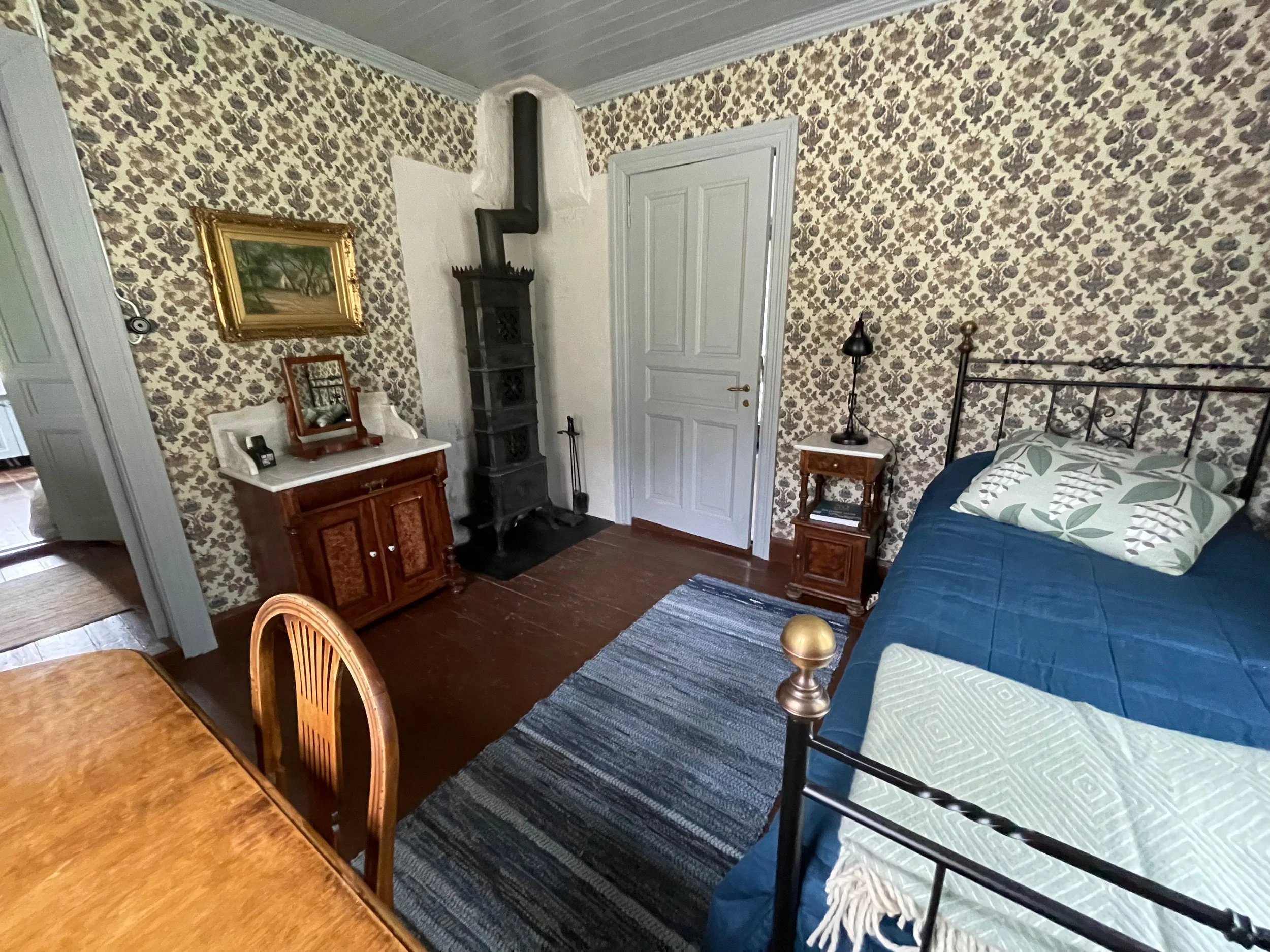
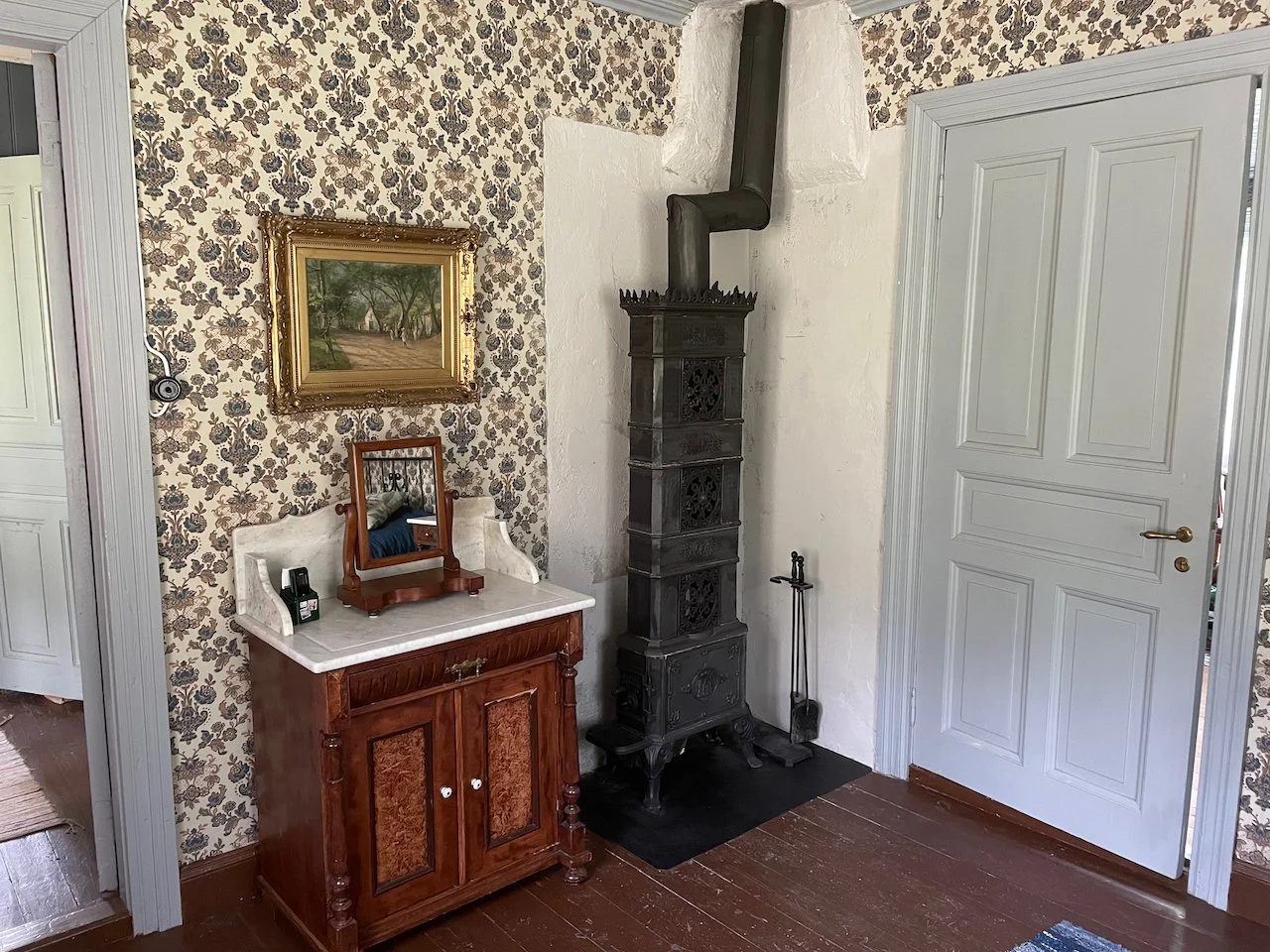
A Living Interior
To renovate an old home is to make deliberate choices. Not only about what to restore, but what to keep, what to adapt, and what to introduce.
It is a balance between preservation and use. The interiors of this house do not stand still. They evolve carefully, shaped by daily life while remaining grounded in their origins.