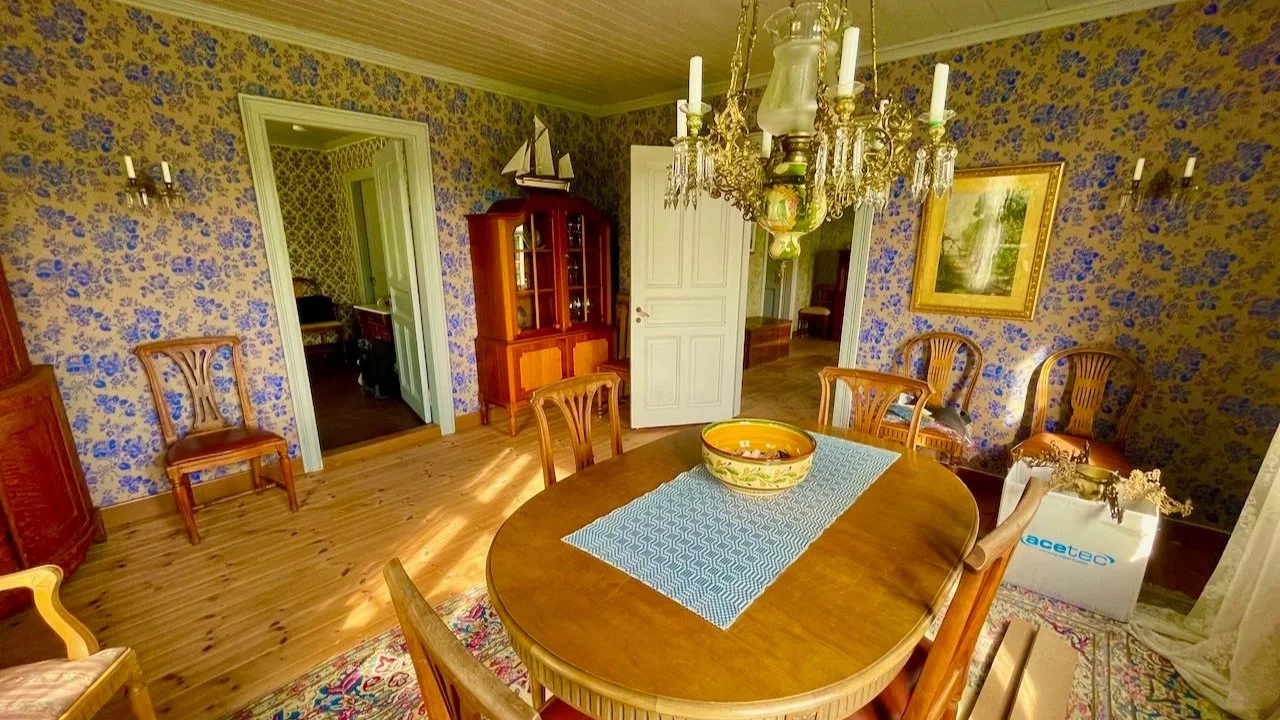
A dining room with floral wallpaper, a wooden dining table with six chairs, a blue table runner, a ceramic bowl, chandelier, wall-mounted candle sconces, a painting, wooden cabinets, an open door leading to another room, and a white box on the floor.

In historic interiors, surfaces are never neutral. They carry texture, color, and memory.

Walls, floors, and finishes form the foundation of the atmosphere, often more than furniture itself.

Materials & Wallpapers
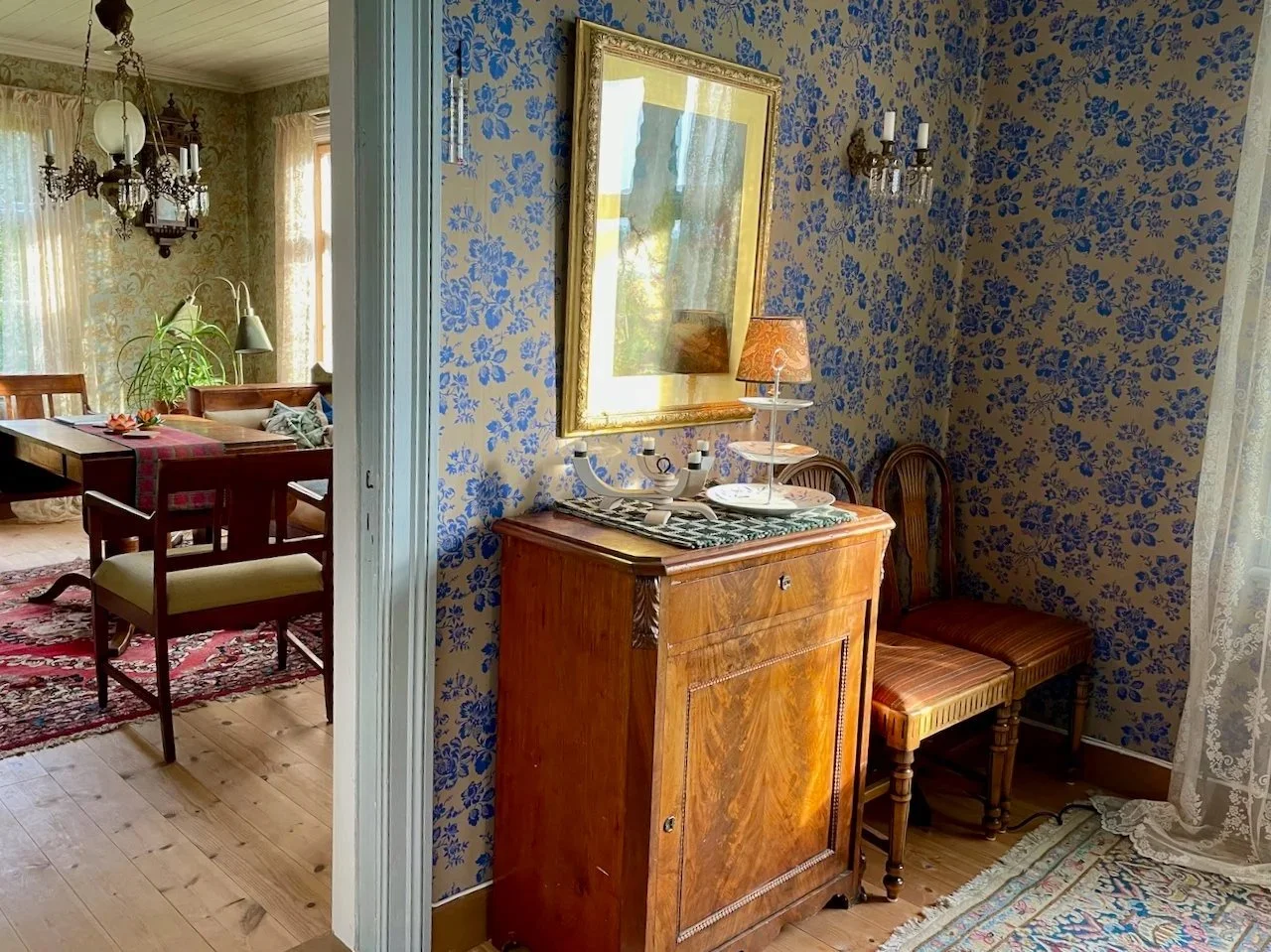
Interior view of a vintage dining room with floral wallpaper, a wooden sideboard decorated with a candelabra and a table lamp, and two chairs with striped upholstery. The adjacent room has a dining table, cushioned chairs, chandelier, and a plant near the window.

Traditional wallpapers play a central role.

Inspired by nature: floral motifs, vines, and geometric rhythms. The patterns bring movement and depth to a room, not used sparingly, but thoughtfully.

They define scale and proportion.

Pattern as Structure
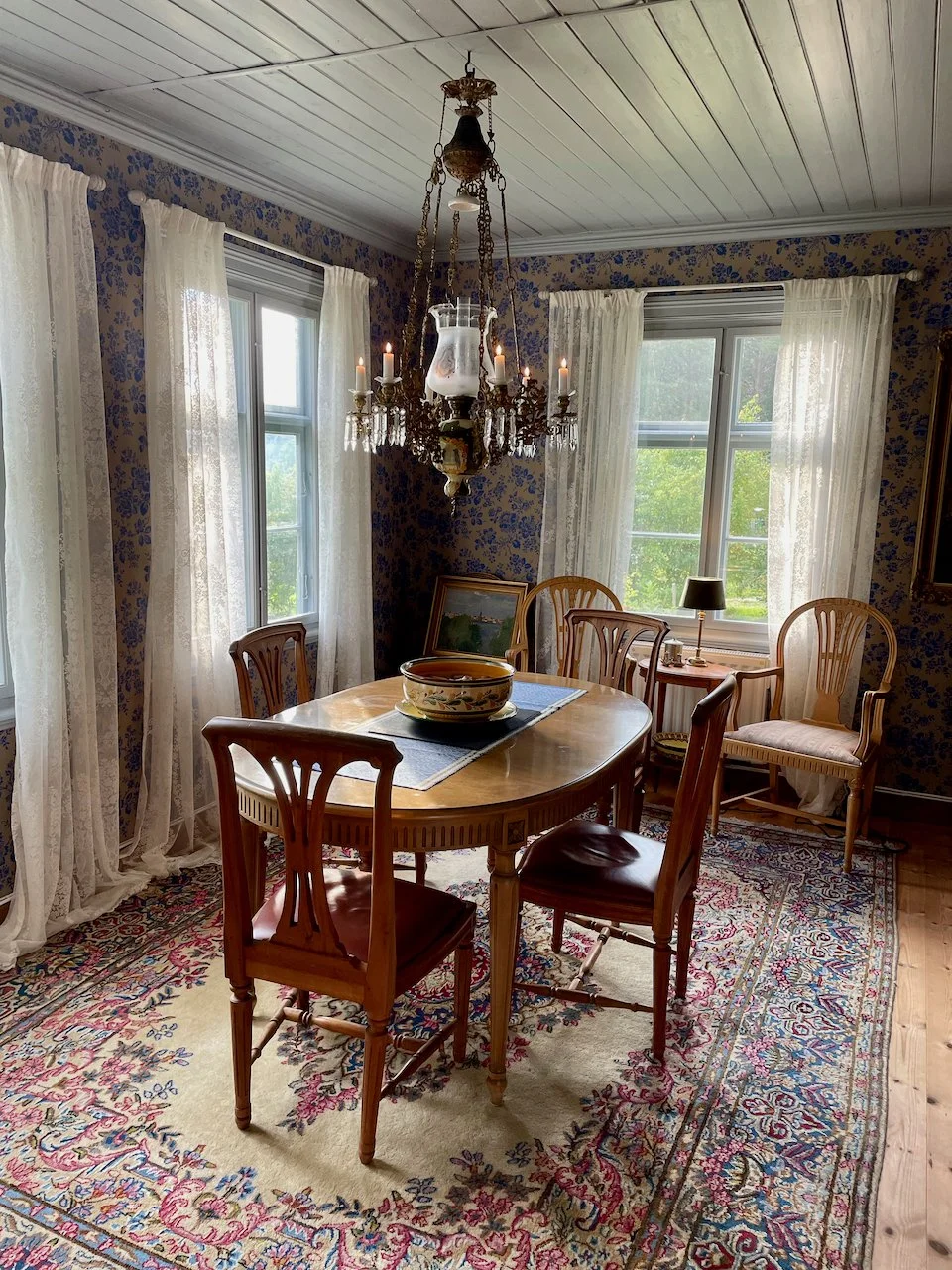
A vintage dining room with a wooden oval table, six chairs, lace curtains, and floral wallpaper. A crystal chandelier hangs above, and sunlight streams through two windows. The table has a large ceramic bowl and a placemat, and there is a small lamp and framed landscape on a side table near the window.

Natural Paints and Finishes

Linseed oil paint and other traditional finishes offer a distinct quality.

They absorb and reflect light differently than modern synthetic paints, creating a softer, more tactile surface. Over time, they develop patina rather than wear.
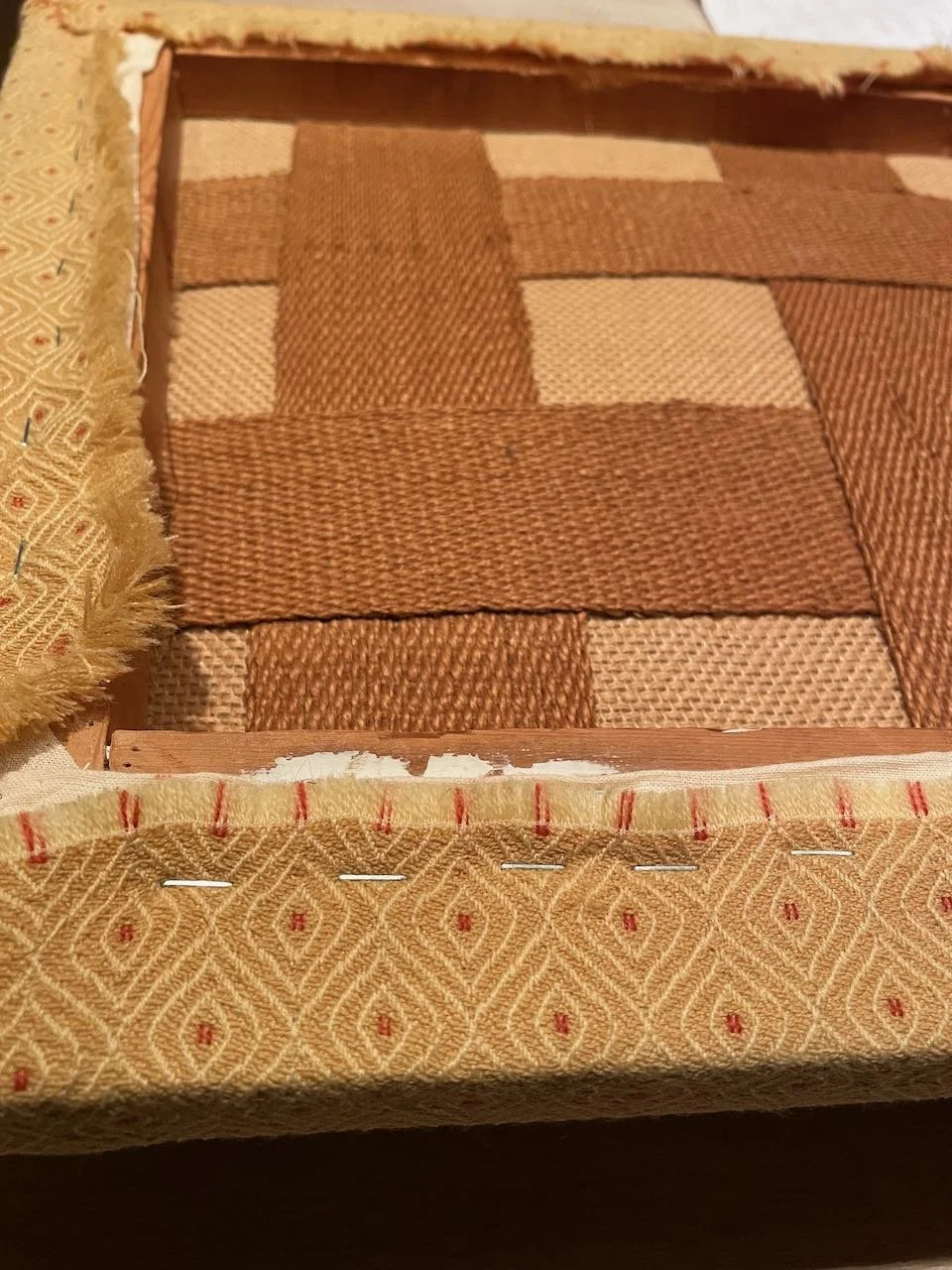
Close-up of a woven fabric pattern inside a partially disassembled picture frame, with nails and staples visible along the edges.
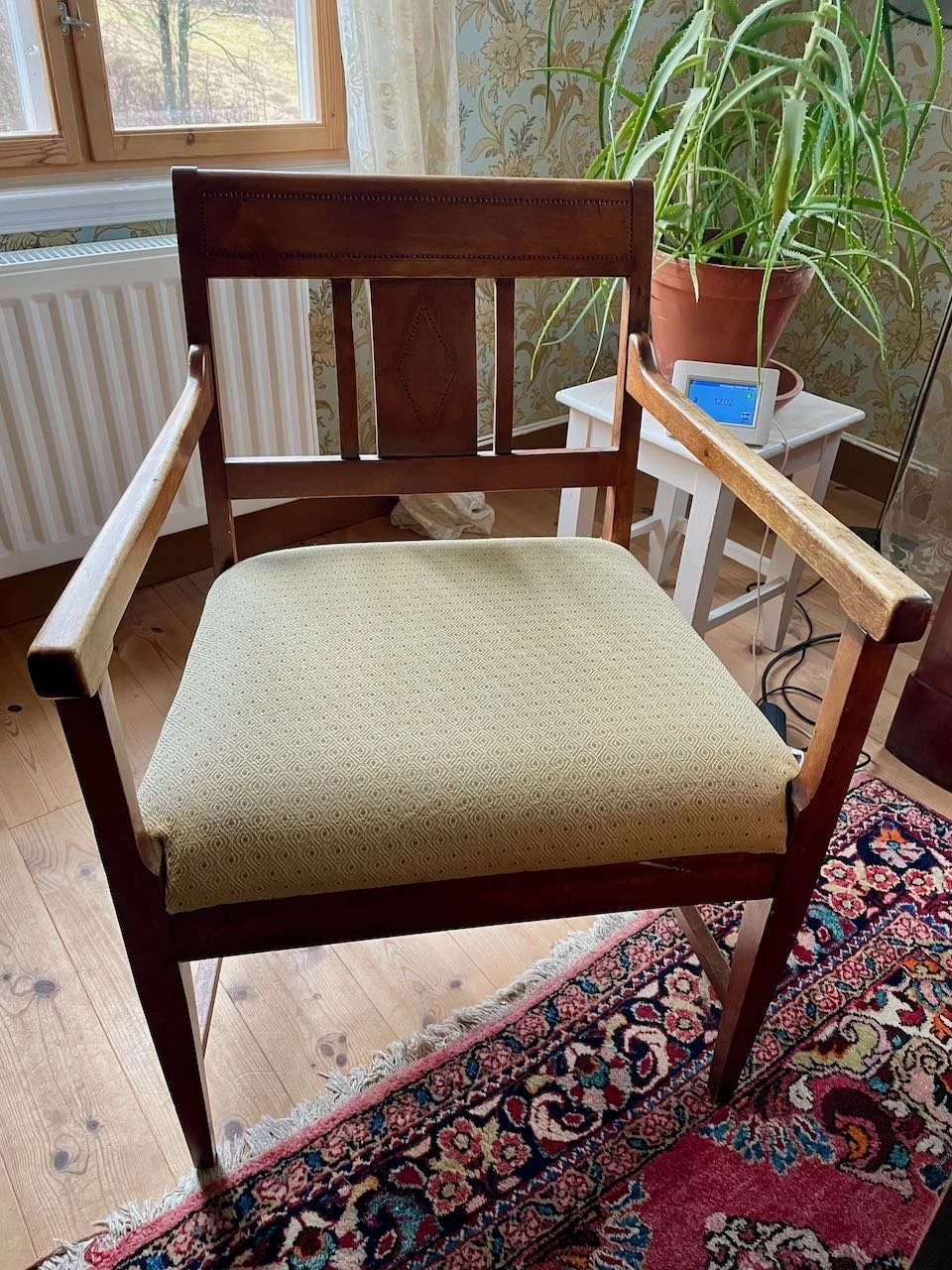
A wooden armchair with beige patterned upholstery on the seat, placed on a colorful Persian-style rug in a room with wood flooring. Behind the chair, there is a window, a white radiator, a potted plant on a small white table, and a digital clock.
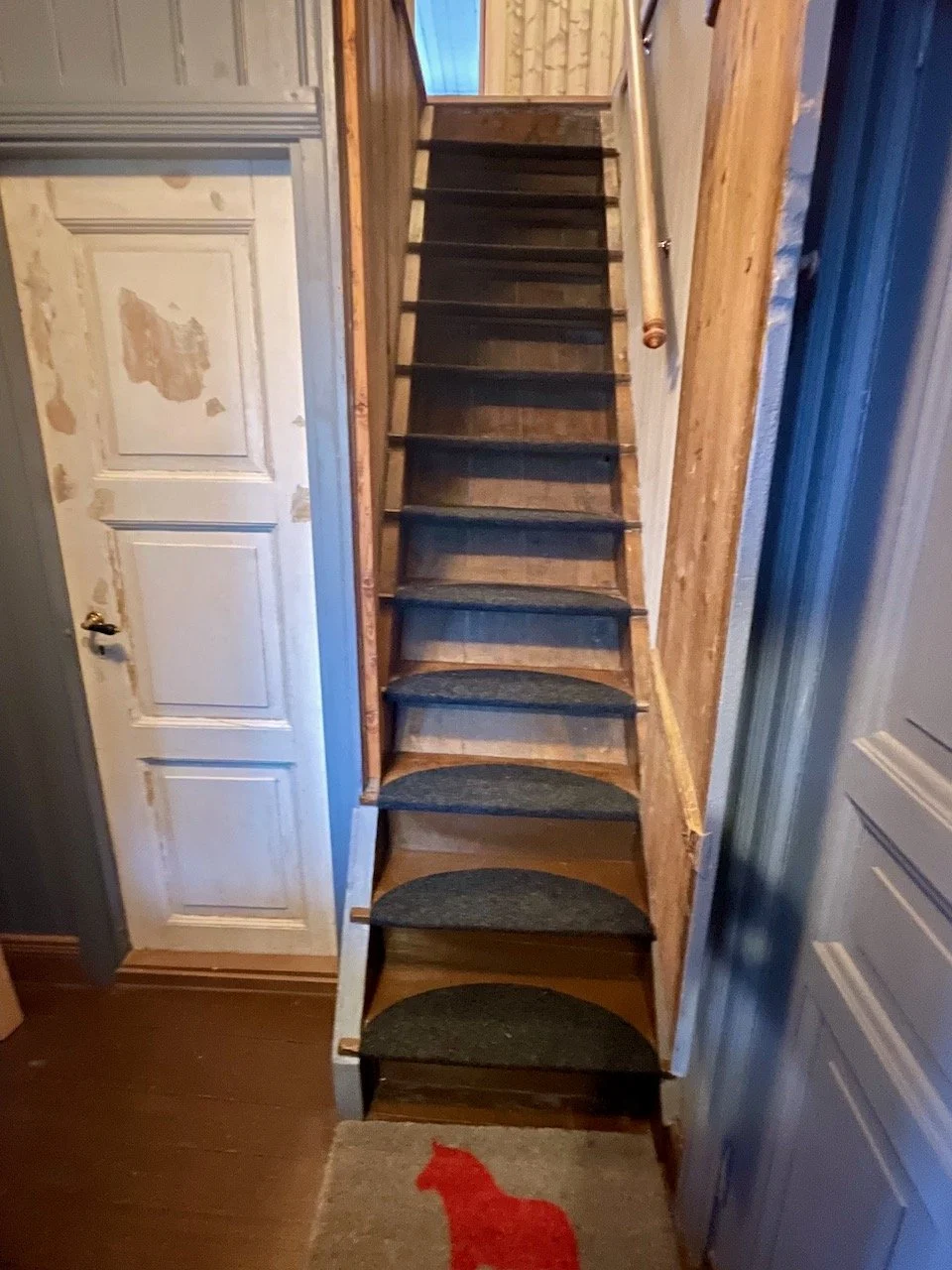
A narrow wooden staircase with black carpeted steps leading upwards, with a wooden handrail on the right side. To the left, there is a white door with peeling paint and a brass handle. A small rug with a red silhouette of a cat is on the floor at the bottom of the stairs.

Materials are chosen for longevity.

  • Solid wood instead of veneer

  • Natural fibers instead of synthetics

  • Pigments that age gracefully

This approach ensures that interiors improve rather than deteriorate with time.

Material Integrity
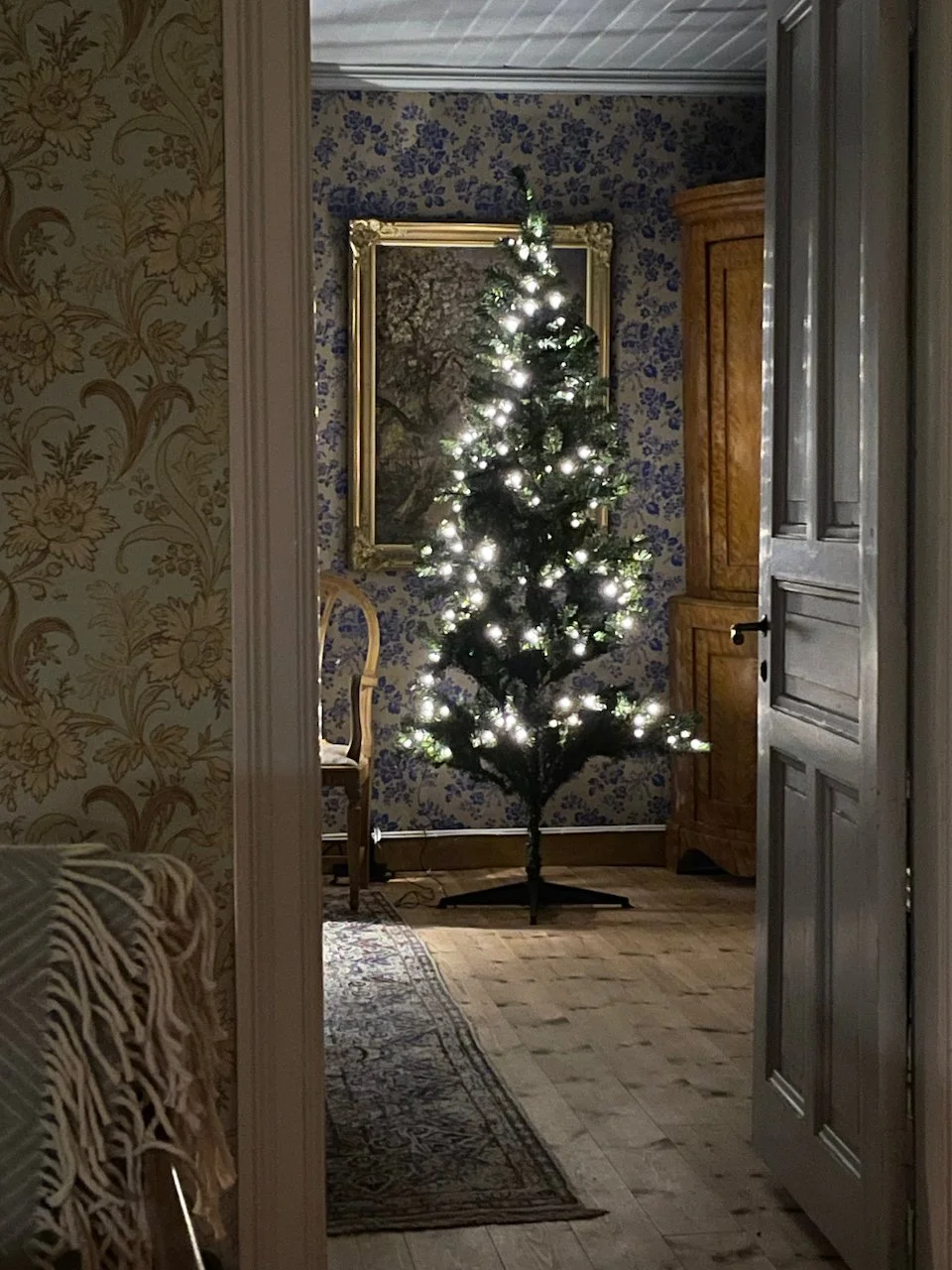
A decorated Christmas tree with white lights in a room with floral-patterned wallpaper and wooden furniture.

A Cohesive Palette

Color schemes are rarely accidental.

Every room gives a certain vibe, but the goal is to create a seamless flow throughout the home. Here, this sensitivity – how one space leads into another – is balanced with the home’s historic character.