Restoring the Past: A Guide to Historic Renovation
Restoration begins with understanding.
What has been built, altered, and sometimes lost shapes every decision that follows.
It is not about returning a house to a fixed moment in time, but about continuing its story with care, restraint, and respect.

A House Within Its Time
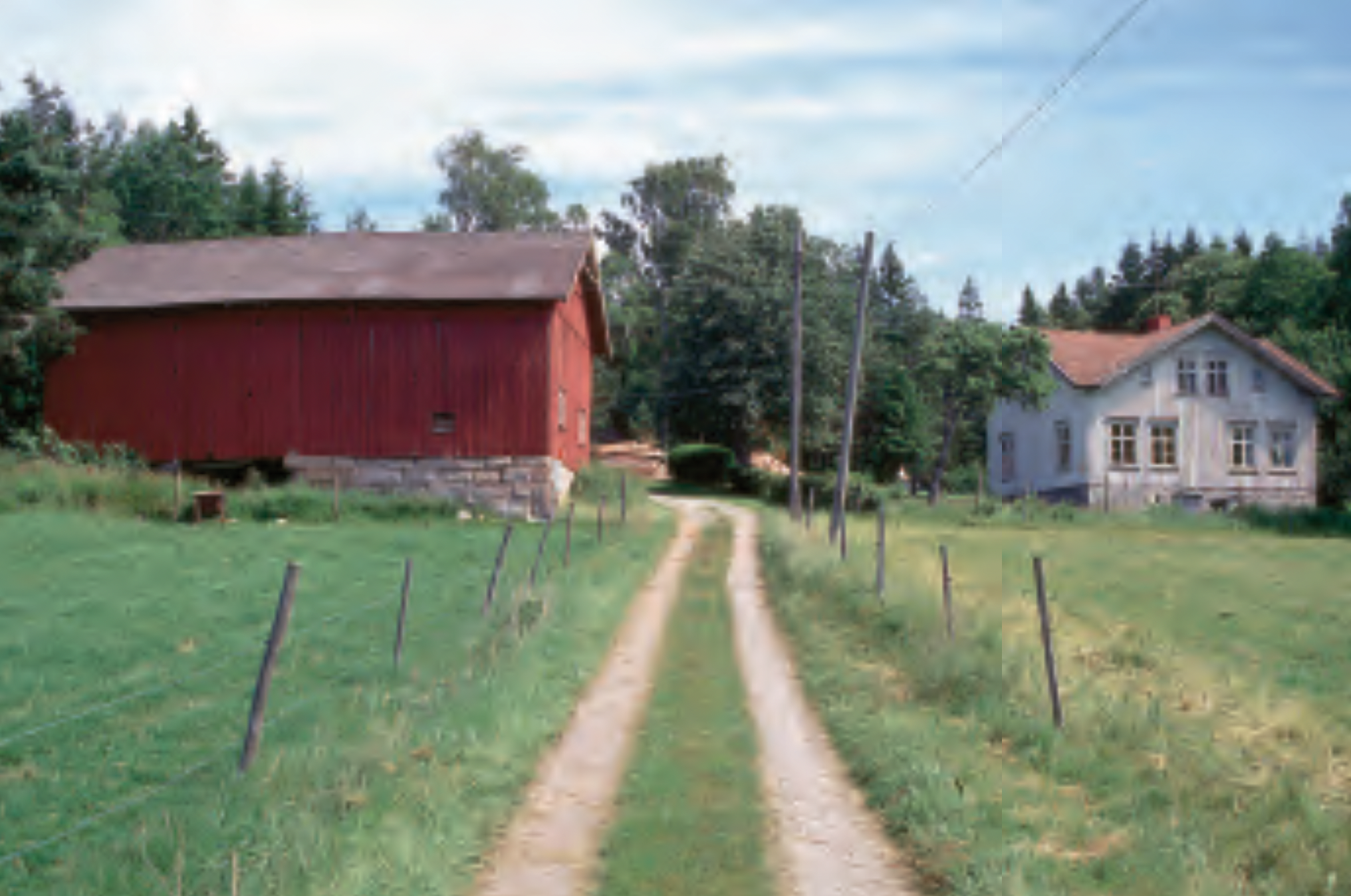
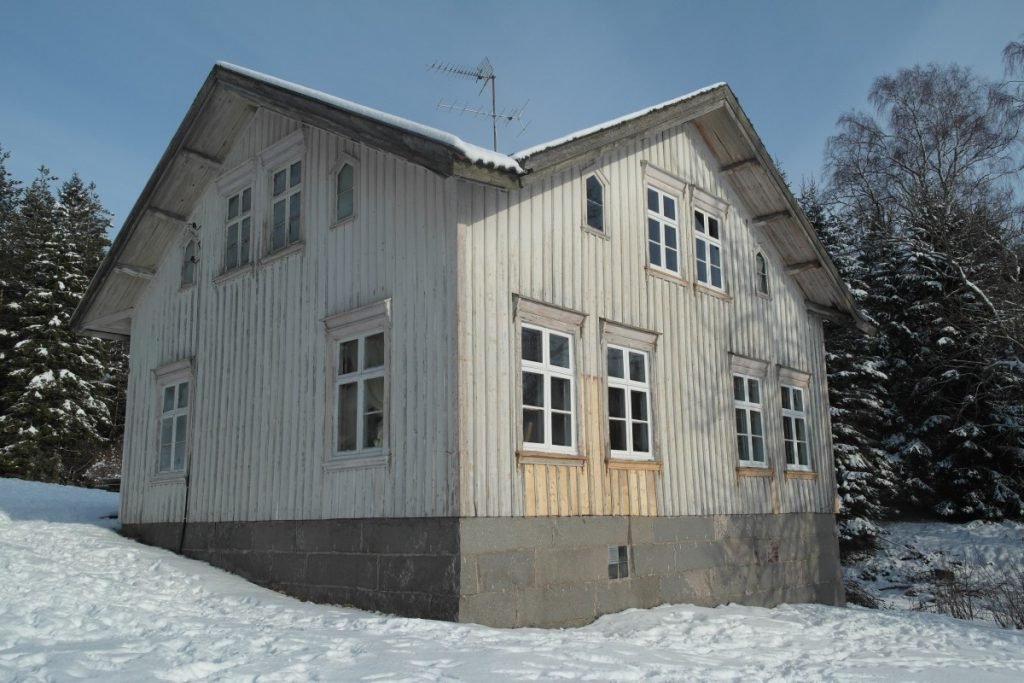
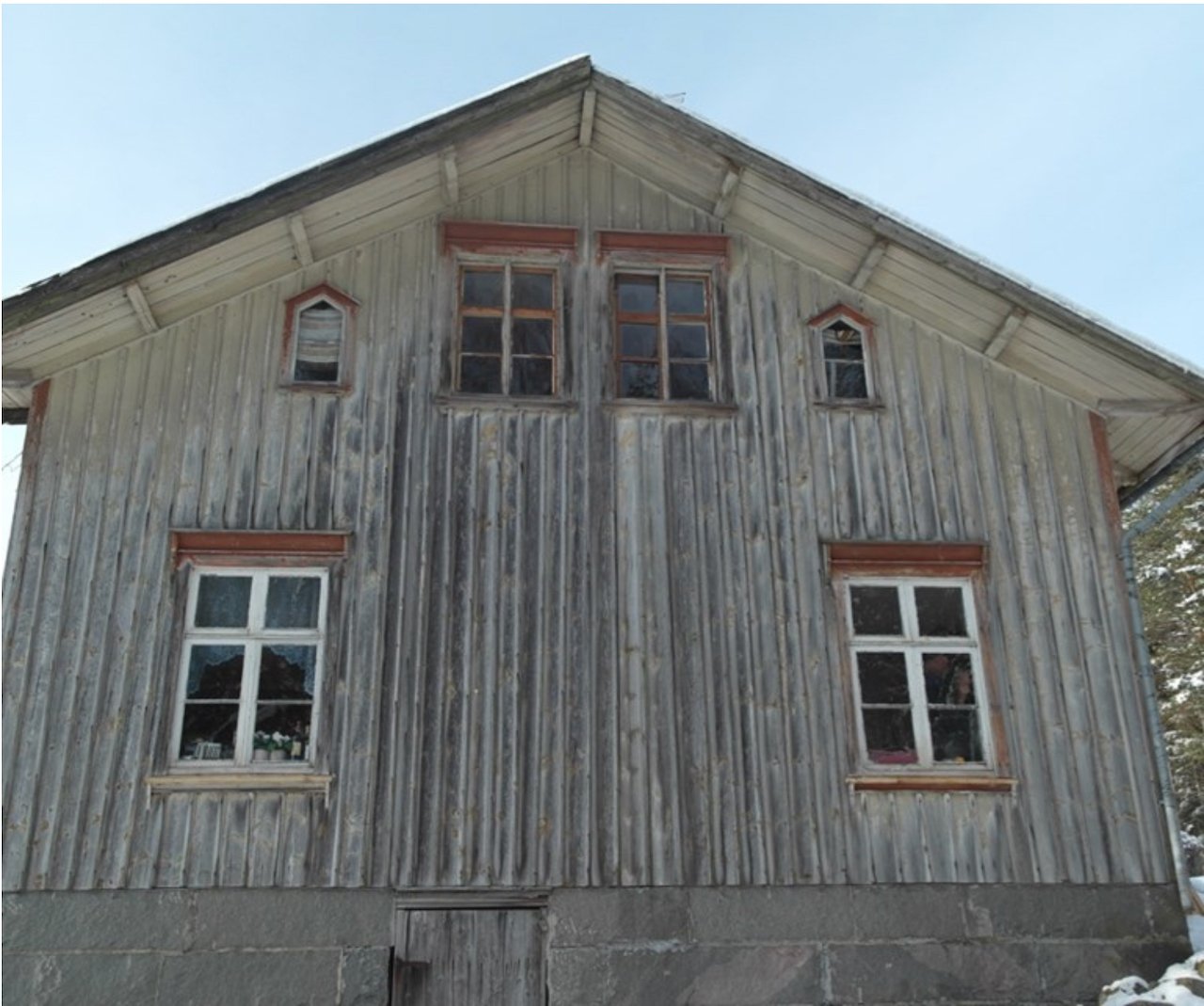
The farmstead stands as a reflection of early 20th-century building traditions.
Like many historic buildings, the house carried its history quietly. Only through restoration did its layers begin to reveal themselves.
What Remains
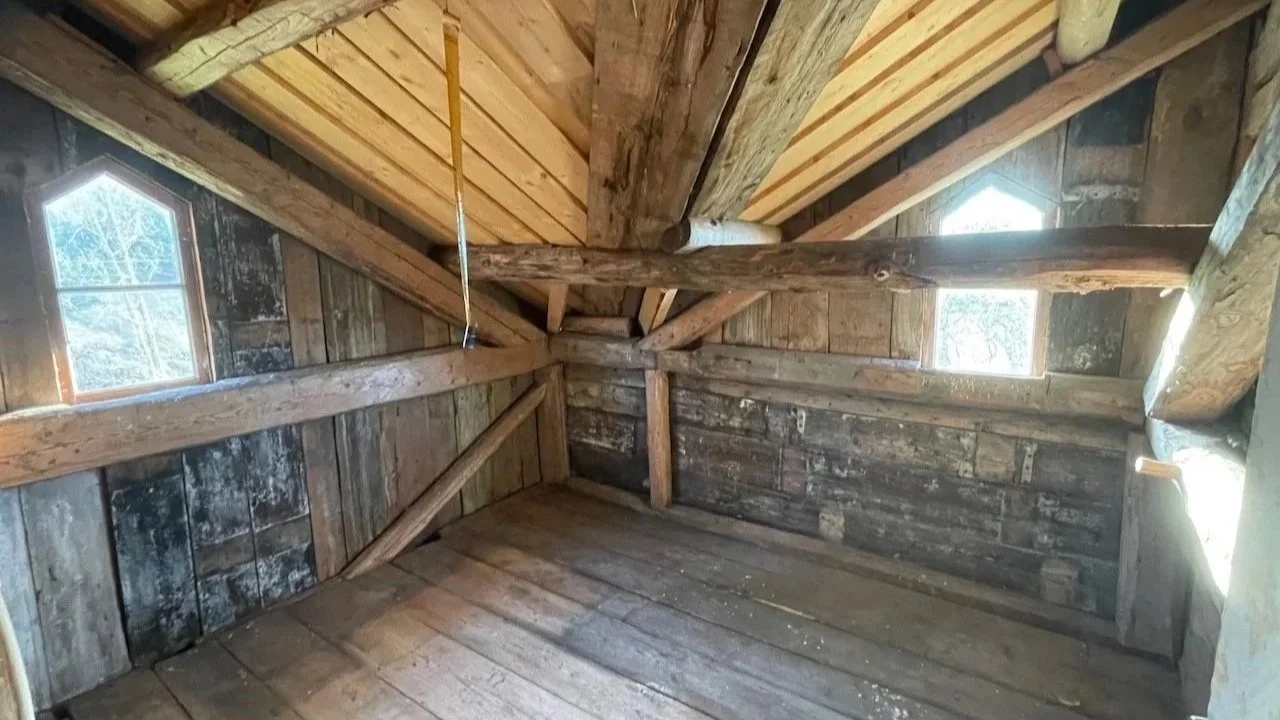
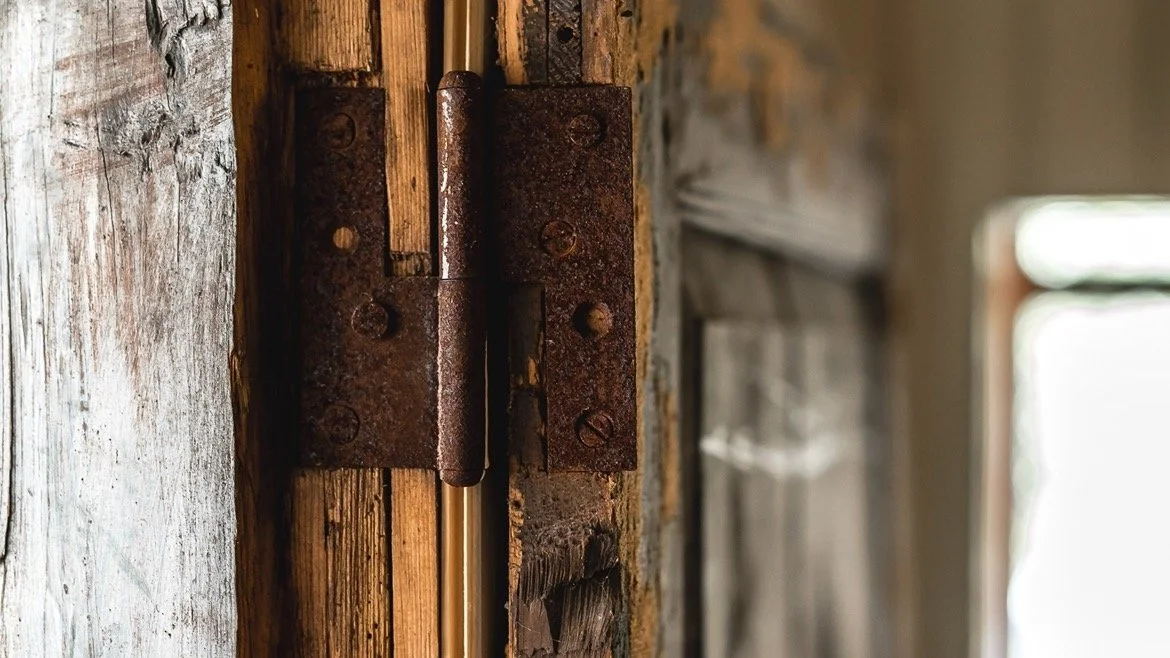
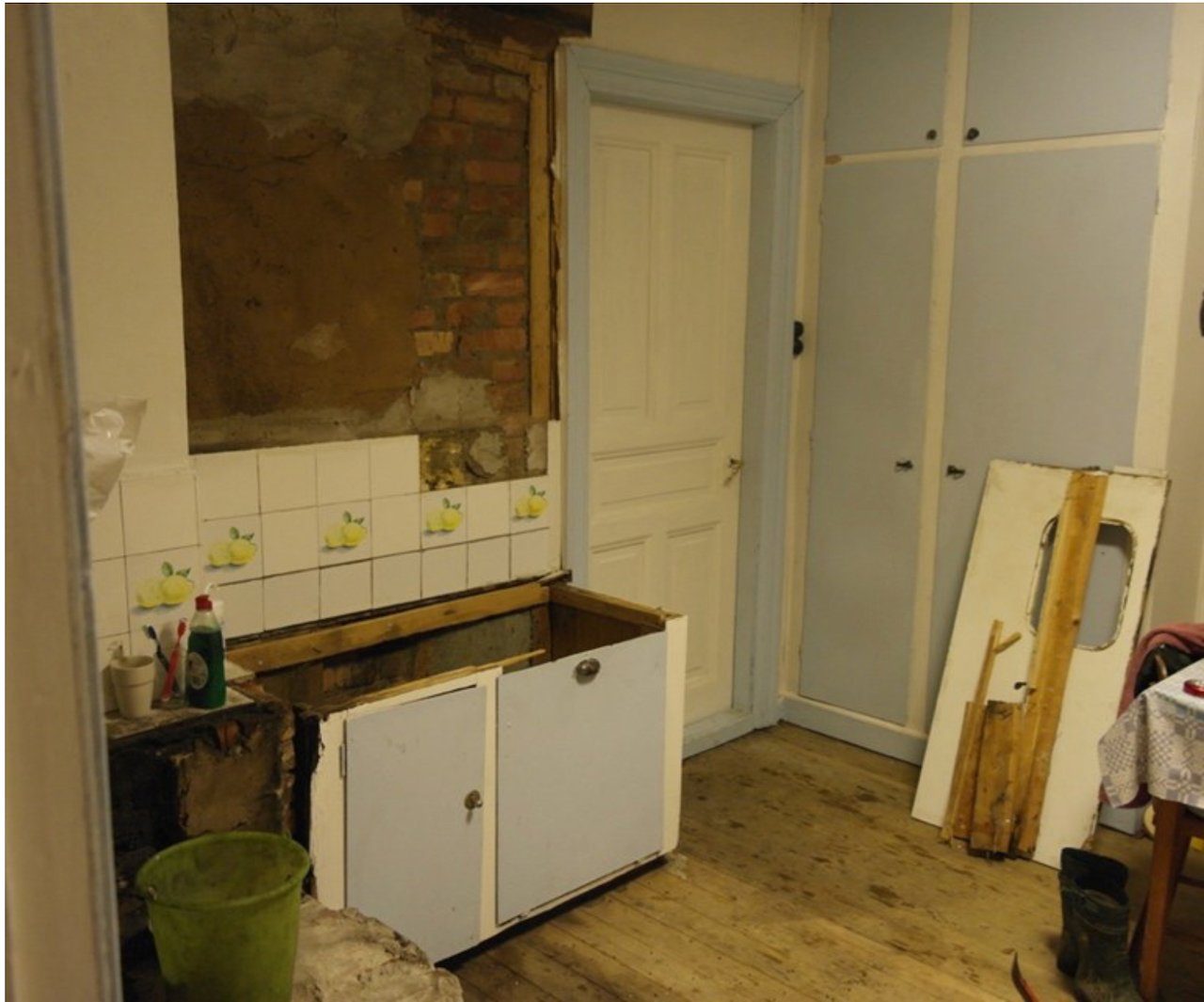
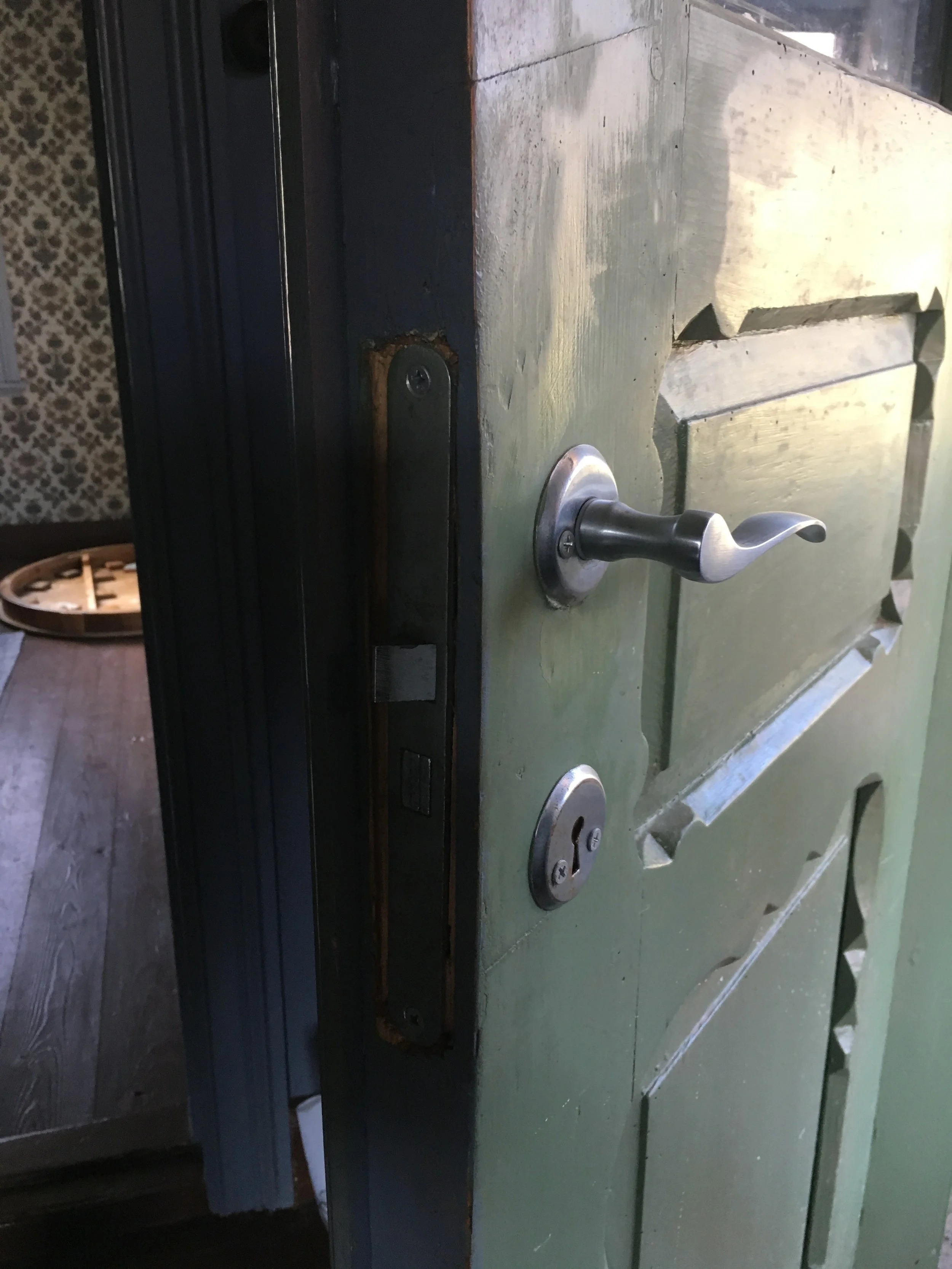
The value of a historic building often lies in what has endured. Original doors, windows, surfaces, and spatial relationships carry both practical and cultural meaning. These authentic features are not isolated details, but part of a larger whole.
They reveal how the building functions, how it was used, and how it has changed. Preserving them is not only about maintaining appearance, but about retaining knowledge.
Working with History, Not Against It
The guiding principle throughout the project has been to work with history, not against it.
This approach relies on:
• Natural, breathable materials
• Traditional craftsmanship
• Respect for original structures and details
The work followed a clear Nordic approach: simplicity, honesty in materials, and respect for what was already there. Instead of imposing something new, the restoration allowed the house to set the direction. Traditional craftsmanship was applied with restraint, creating interiors that feel both authentic and enduring, where historic surfaces, natural light, and considered colours come together in quiet balance.
Discovering the Original Character
Revealing Layers of Time
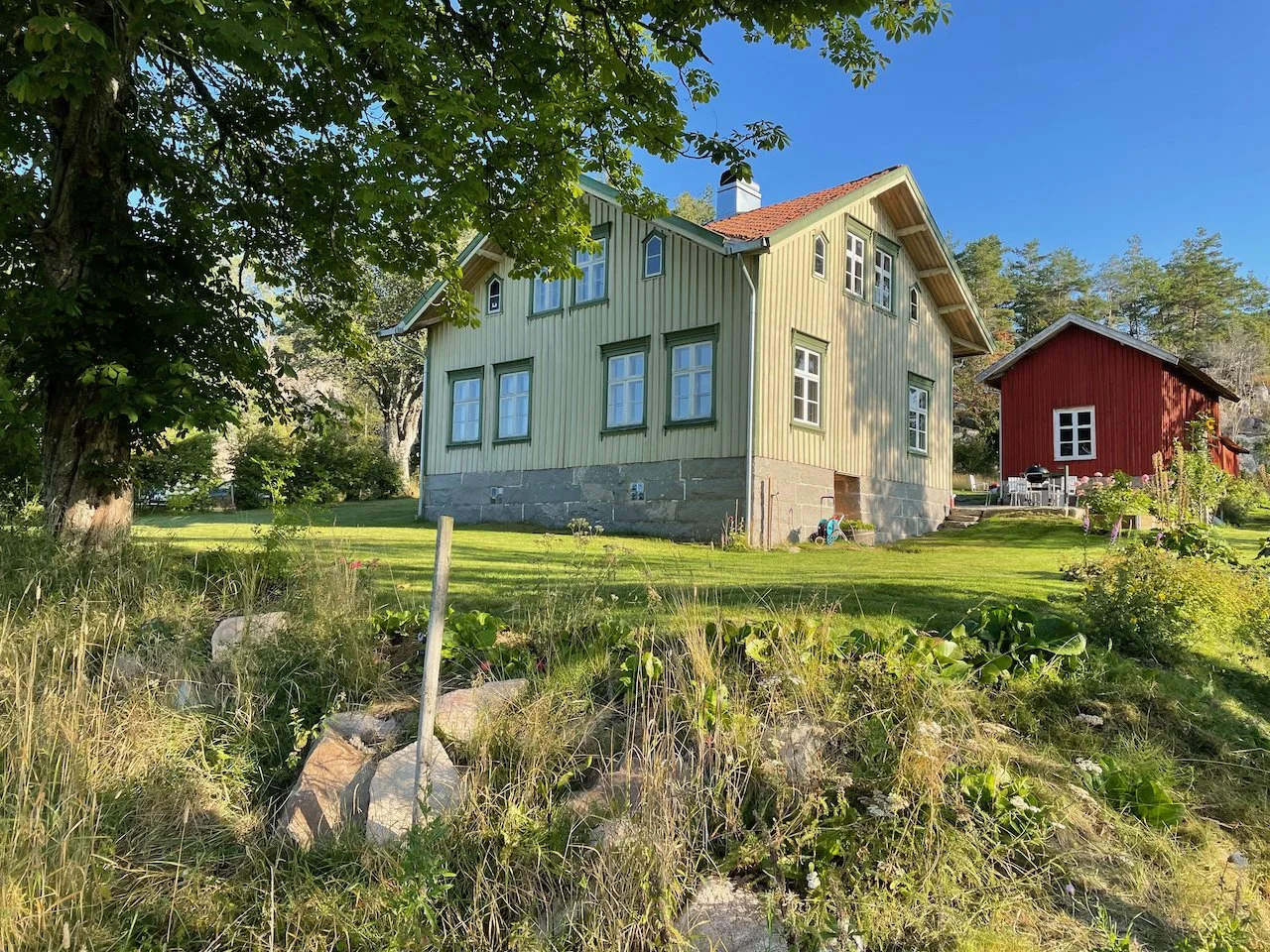
The old farmstead Stan revealed its character slowly, layer by layer, as restoration began. Beneath later additions and wear, traces of its earlier life emerged, original wallpapers, and the subtle presence of linseed oil paint across walls and ceilings.
Colour and Material as Evidence
These findings became a guide rather than a curiosity. Through careful colour analysis, the façade was returned to a palette grounded in its own history, finished with breathable linseed oil paint in keeping with traditional methods.
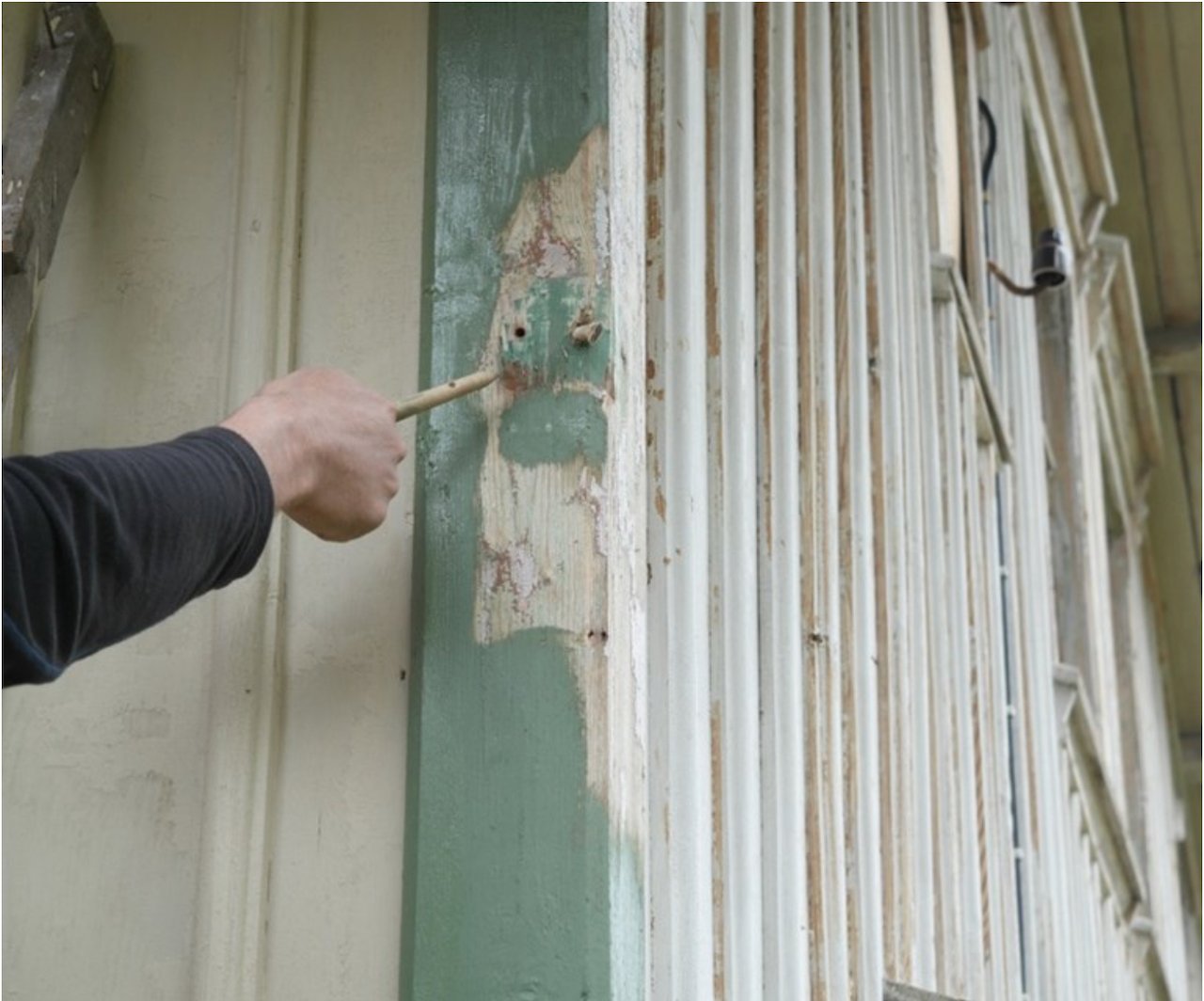
Color analysis on the facade
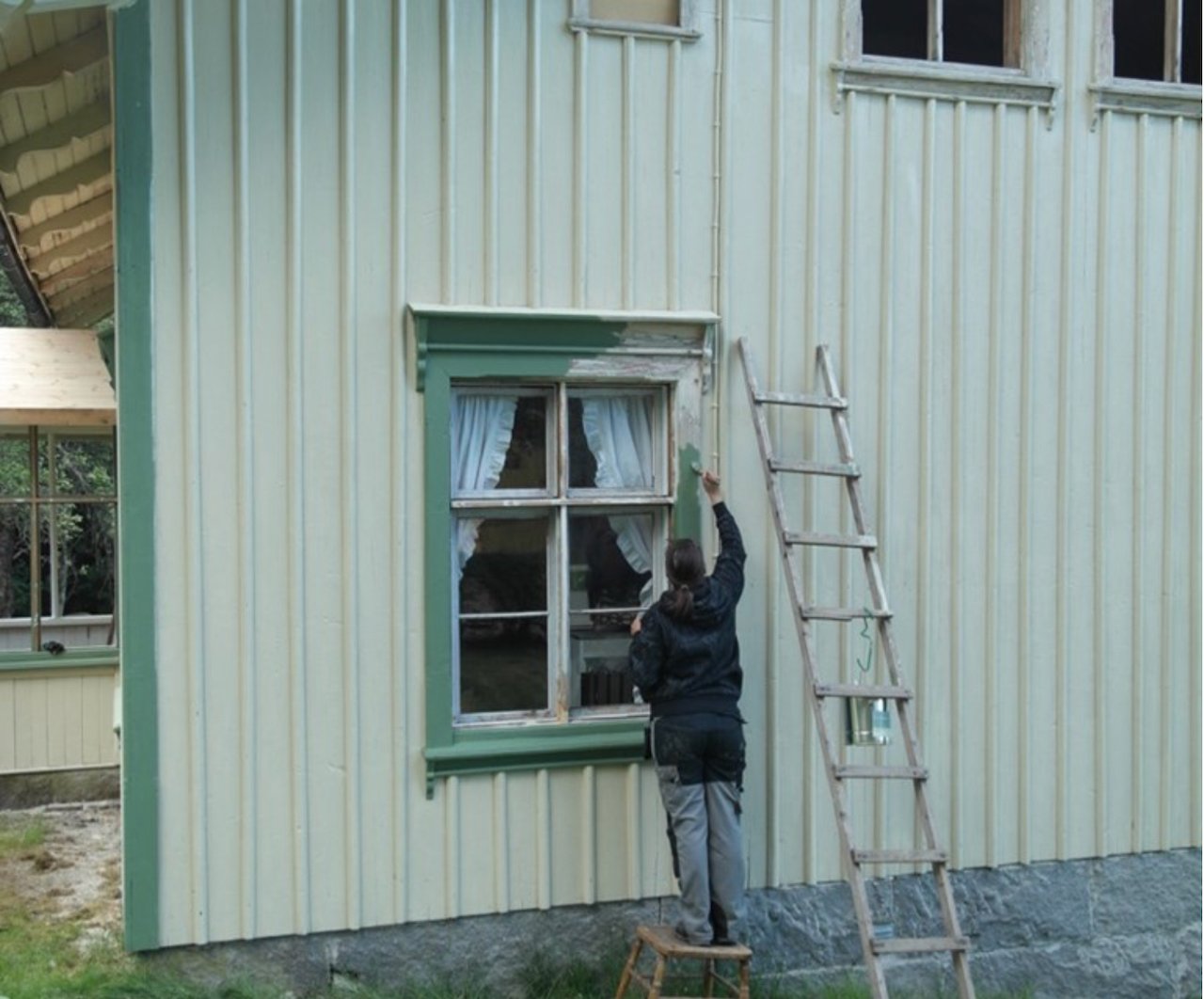
Modernization and Renovation
Integrating Modern Systems
A historic house must also support contemporary living.
Since 2019, a series of upgrades have been introduced:
Electrical systems
Water supply through a drilled well
Wastewater treatment
Structural improvements
Each intervention was designed to remain discreet, supporting modern living without compromising the character of the building.
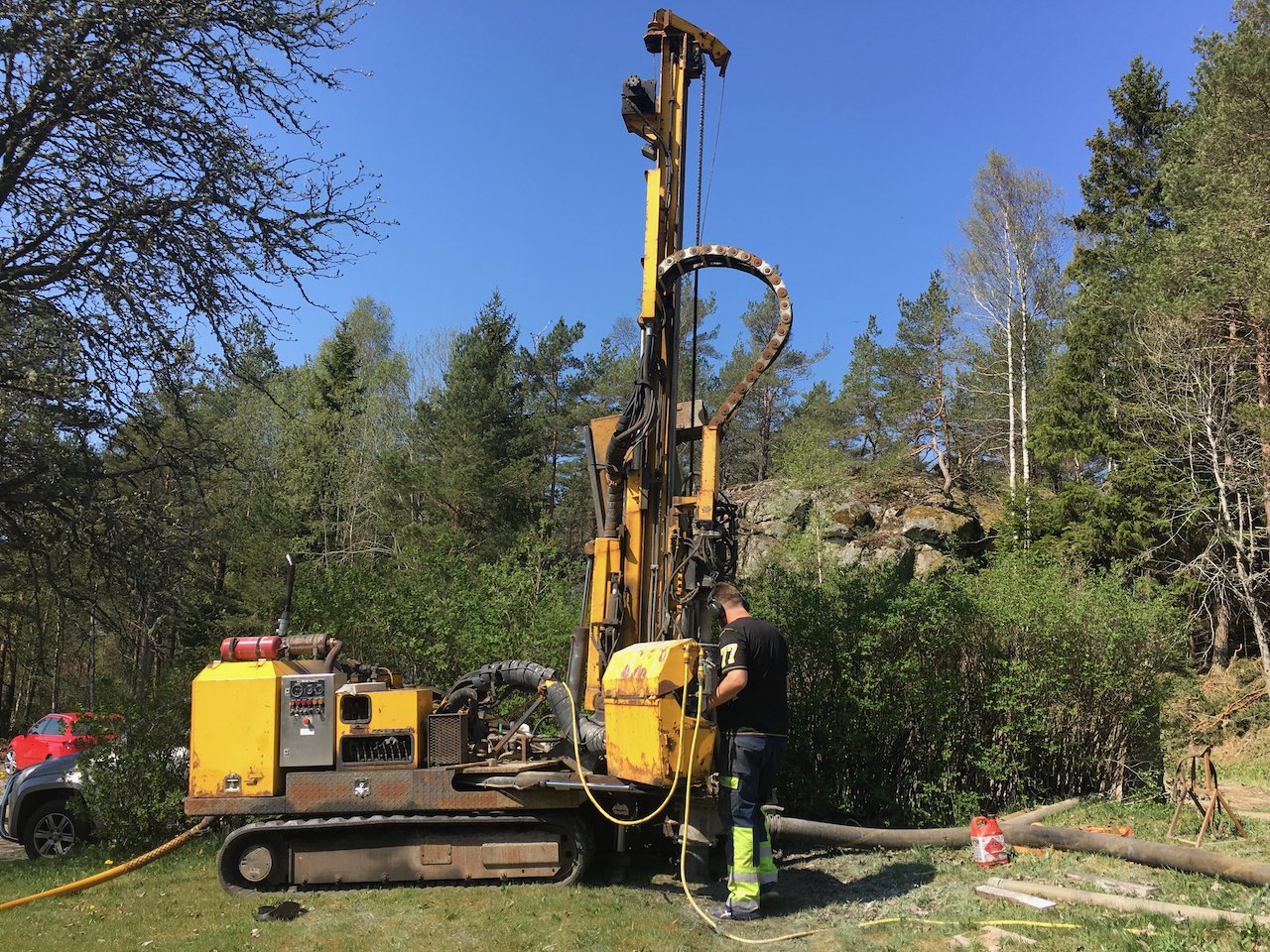
Drilling for water in the garden
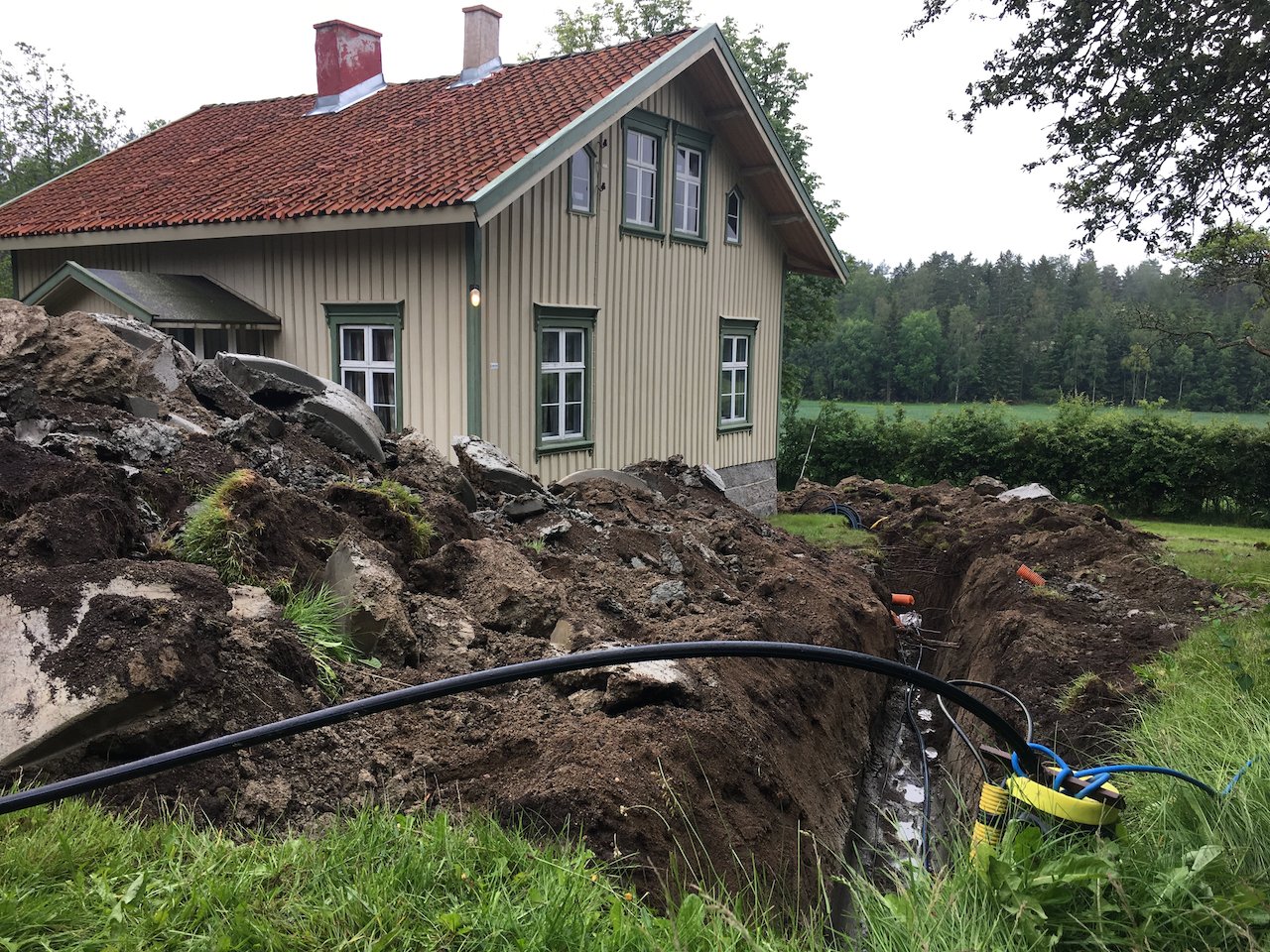
Water pipes from the drilled water-well
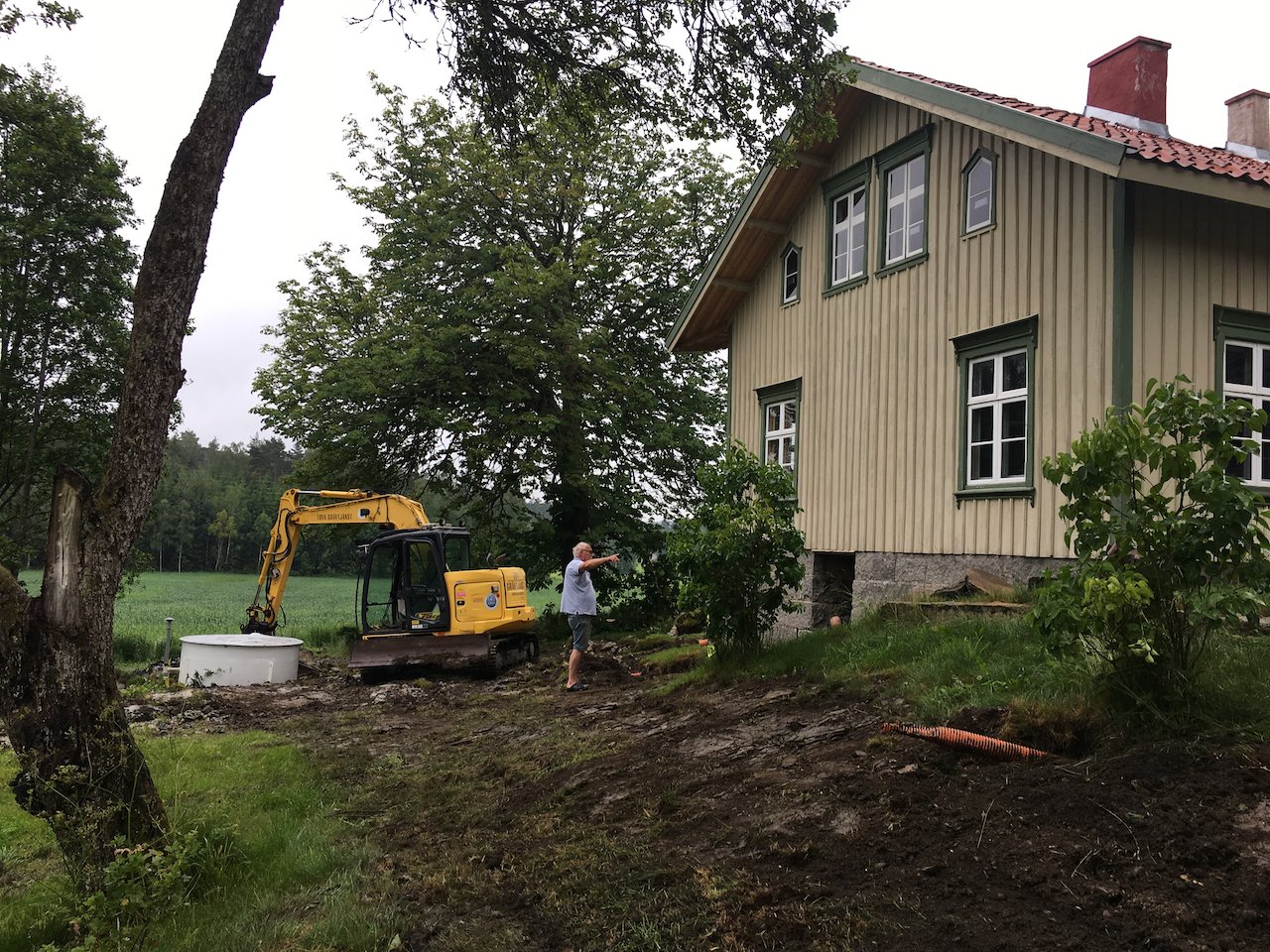
Digger working in the garden
A Balance Between Old and New
Restoring a historic house involves a continuous negotiation.
Modern living demands:
• Insulation
• Heating
• Sanitation
• Energy efficiency
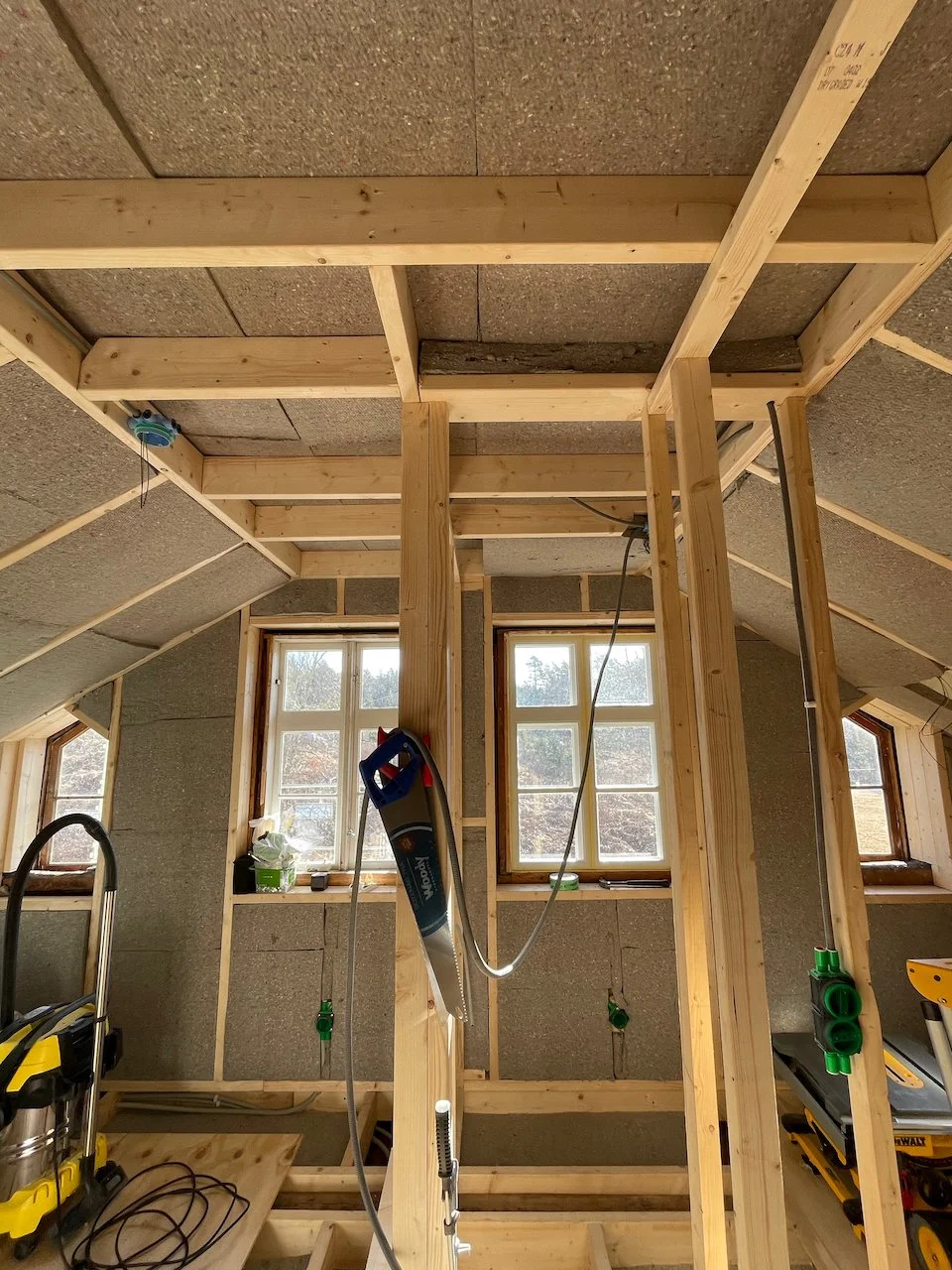
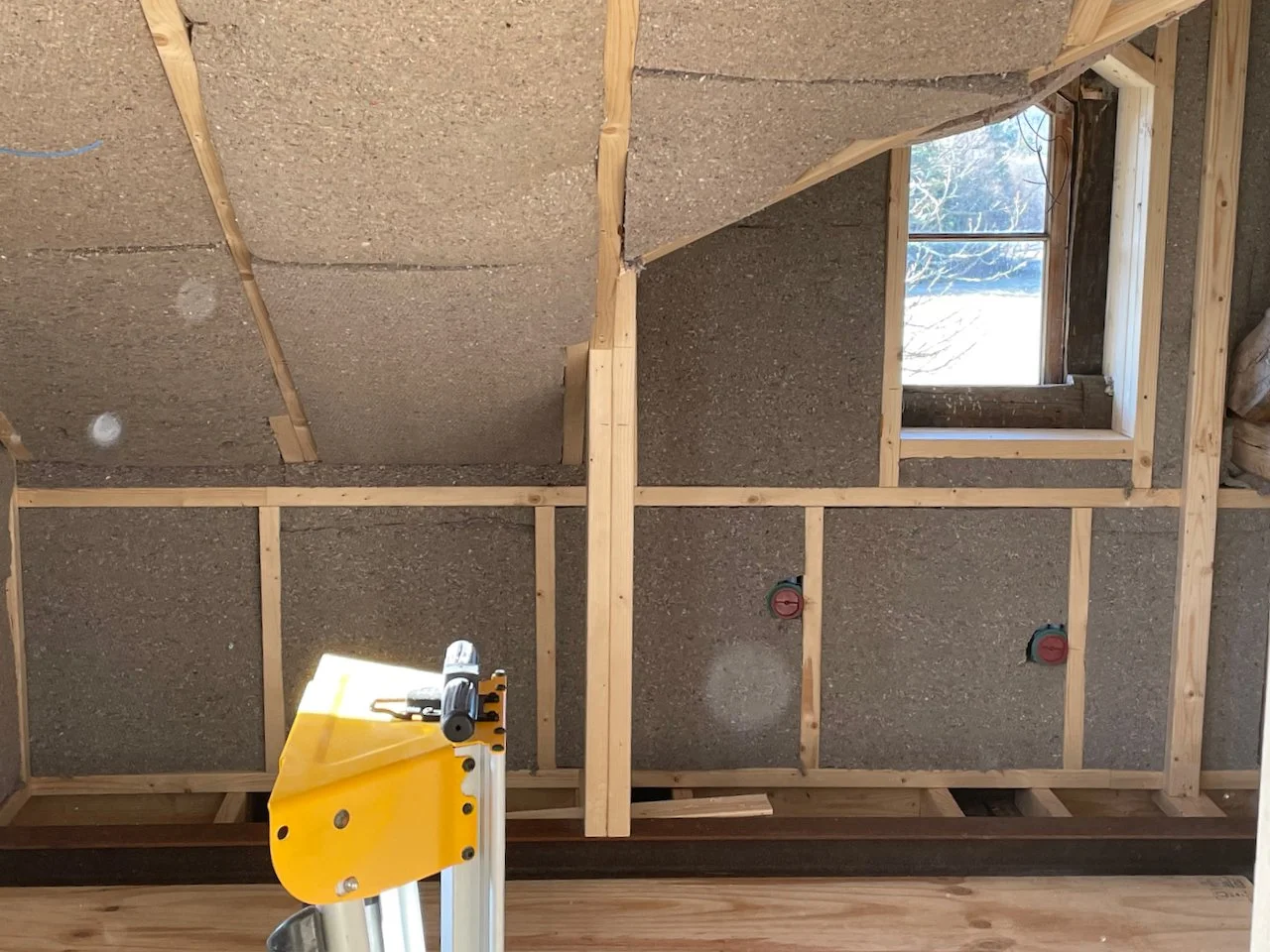
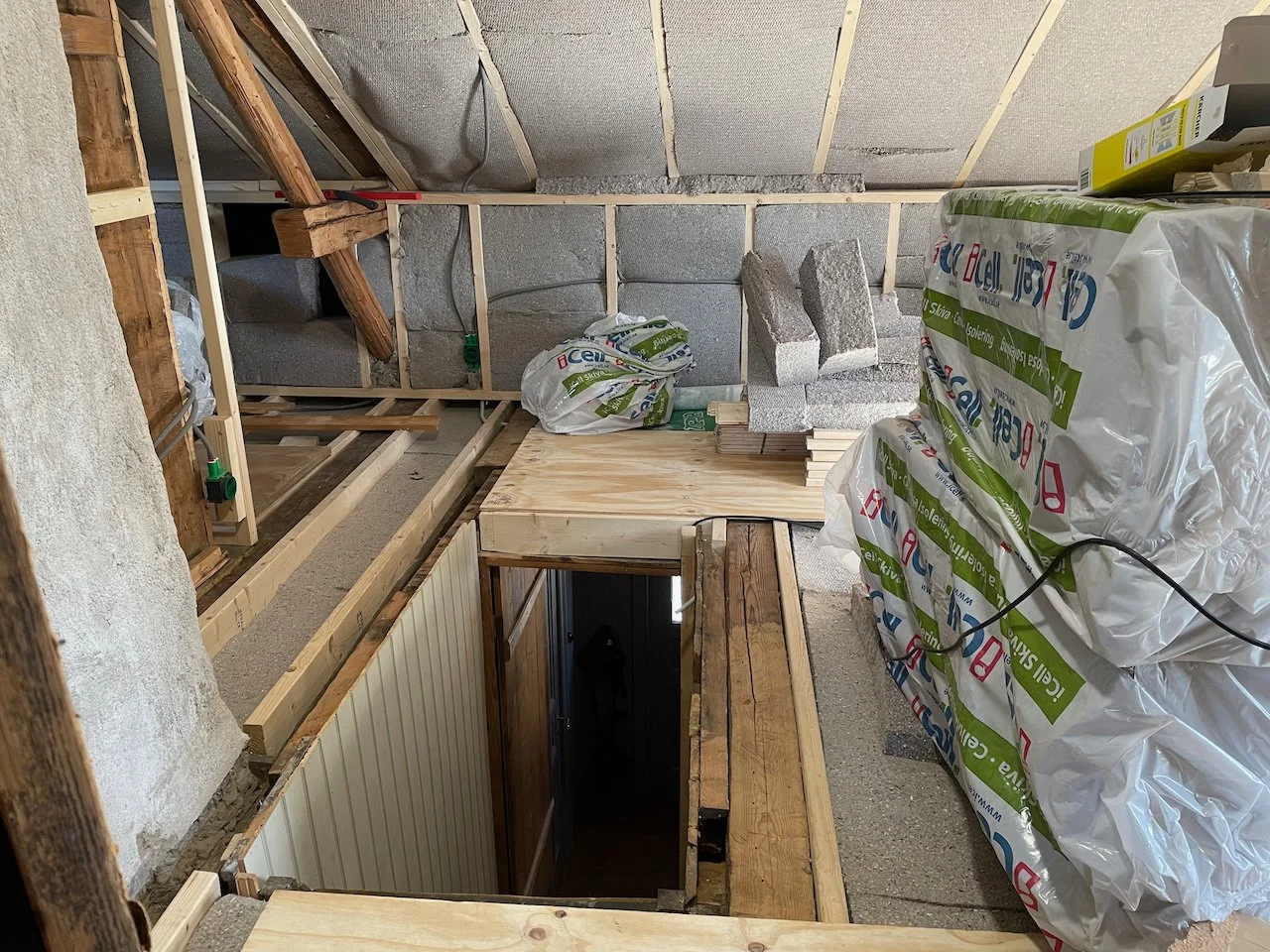
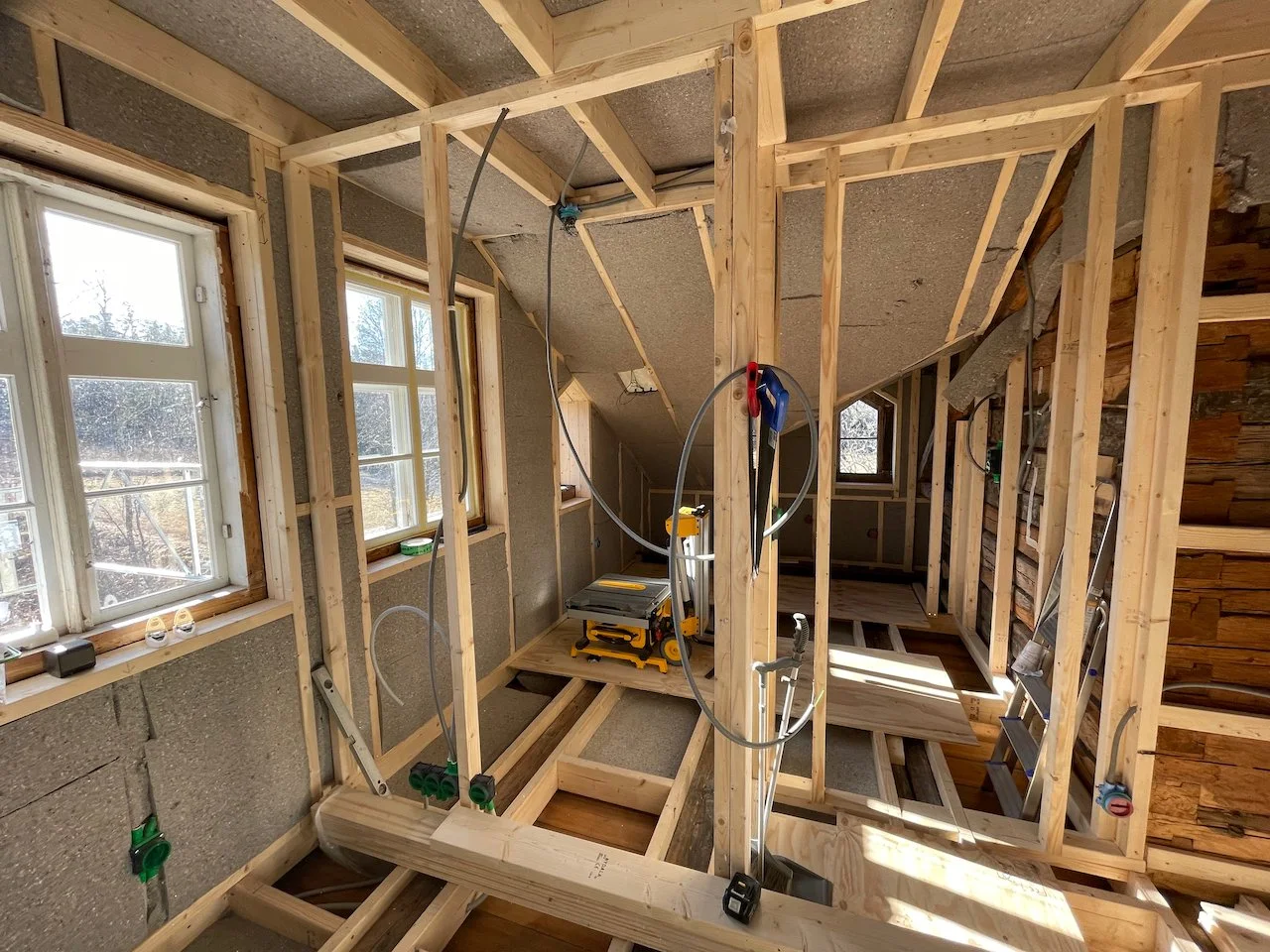
The upper floor of the house suffered from inadequate insulation, which meant that the cold Swedish winter was keenly felt, especially during the night.
Preservation requires:
• Respect for original materials→
• Traditional construction methods→
• Awareness of time and use→
Sustainable Solutions
To improve comfort, sustainable cellulose insulation was introduced throughout the upper floor. This addressed heat loss while remaining compatible with the building’s structure.
The goal is not perfection, but balance, and allowing the house to function today without losing its identity.
Living with History
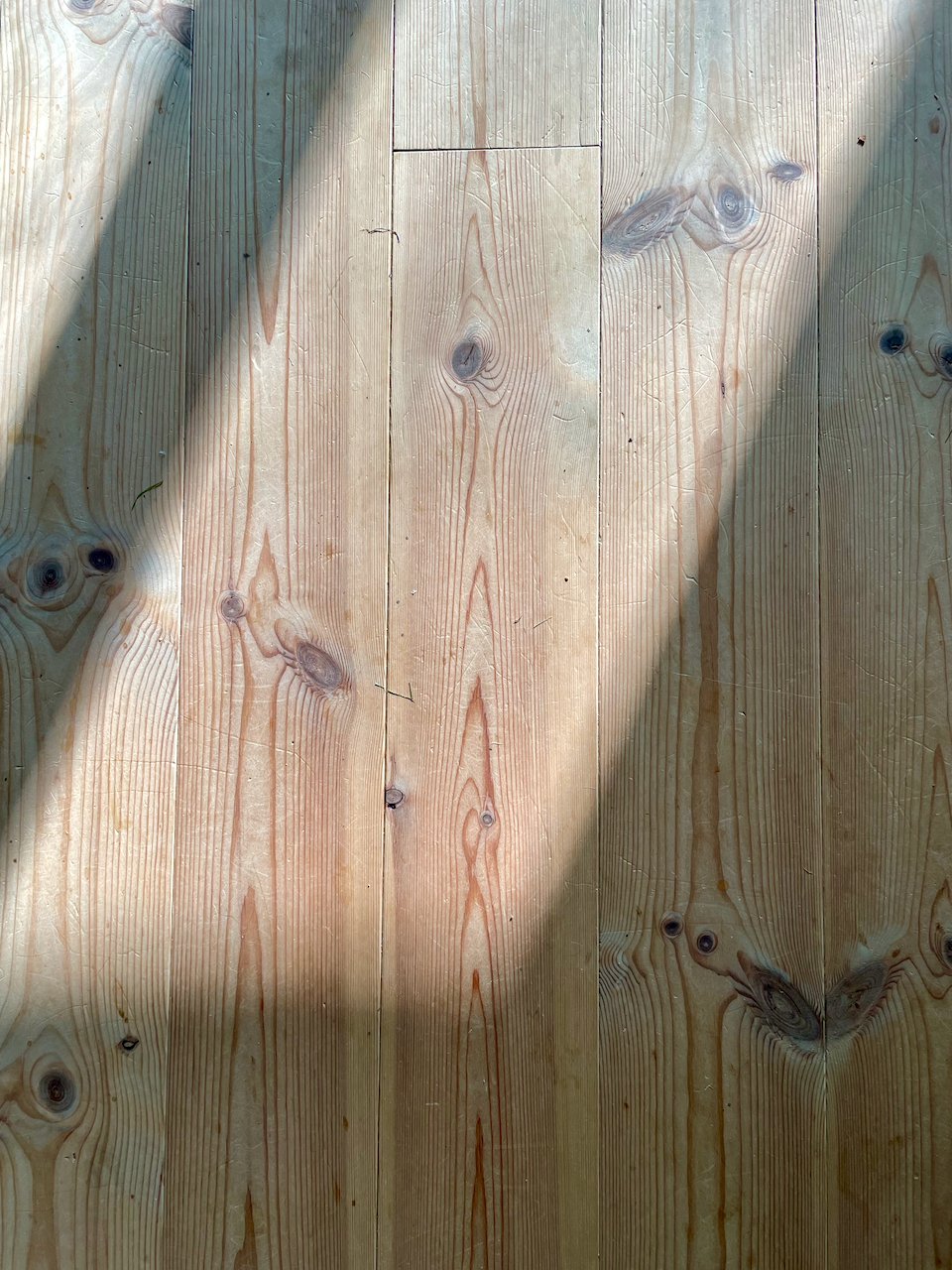
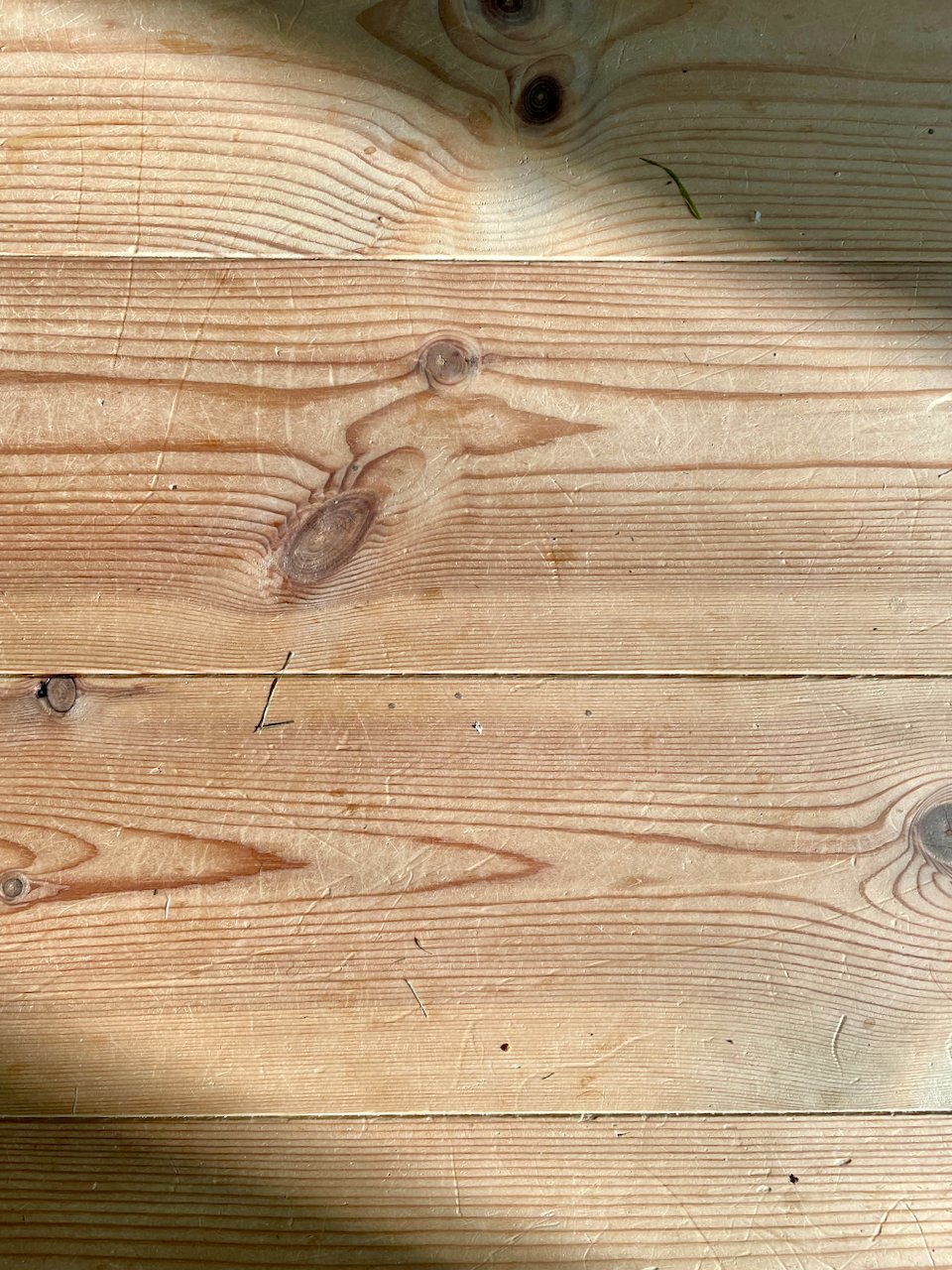
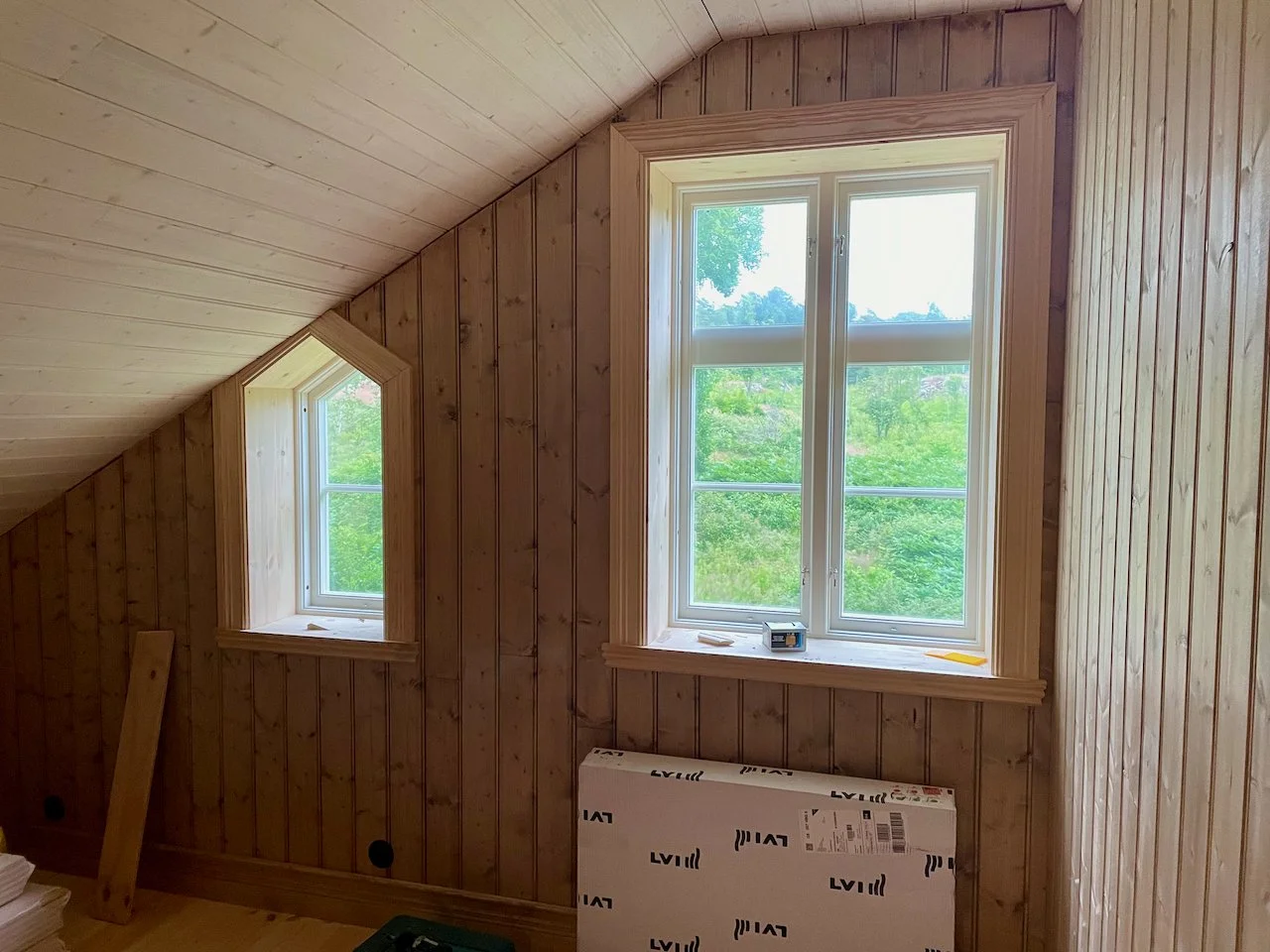
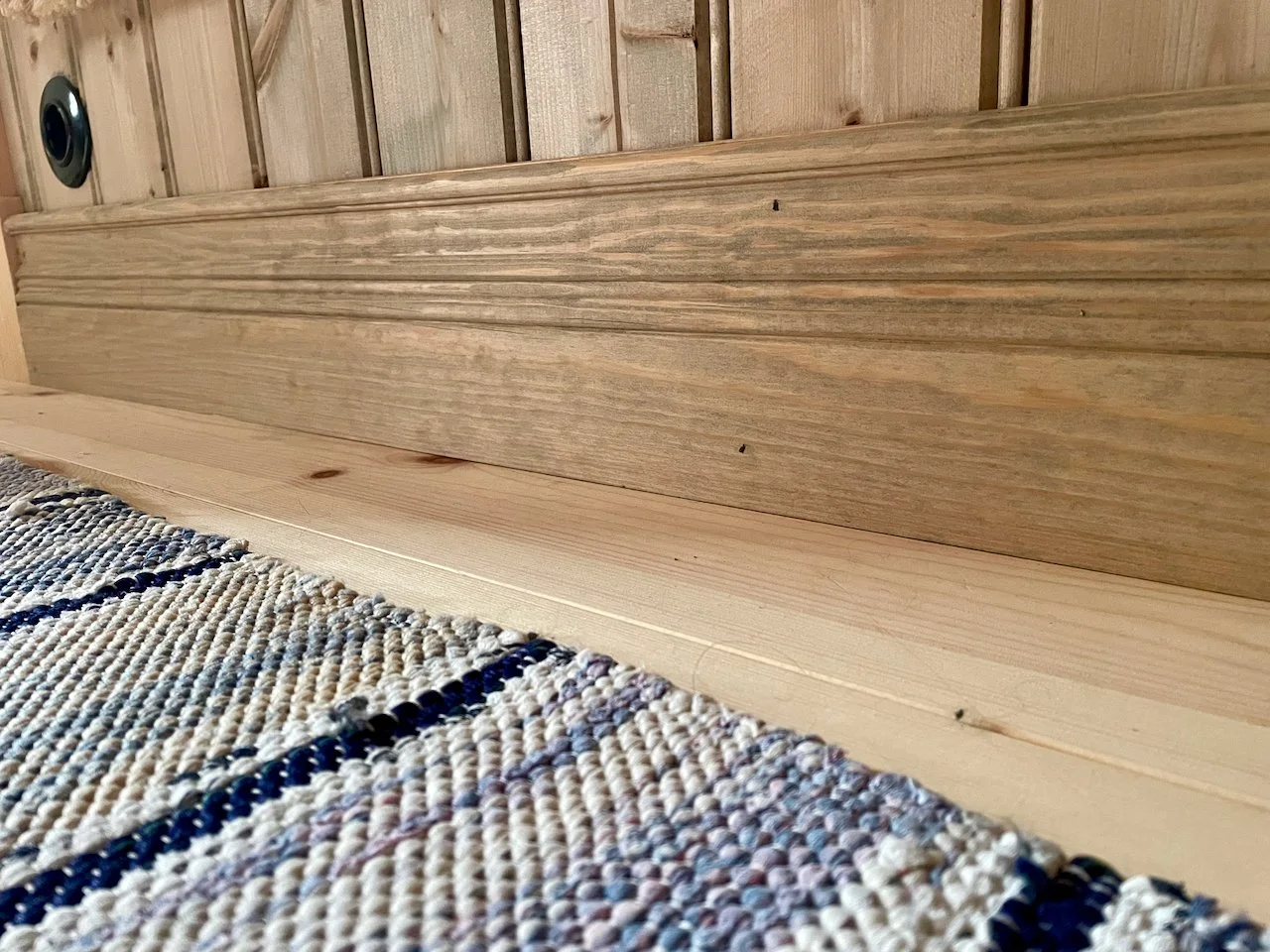
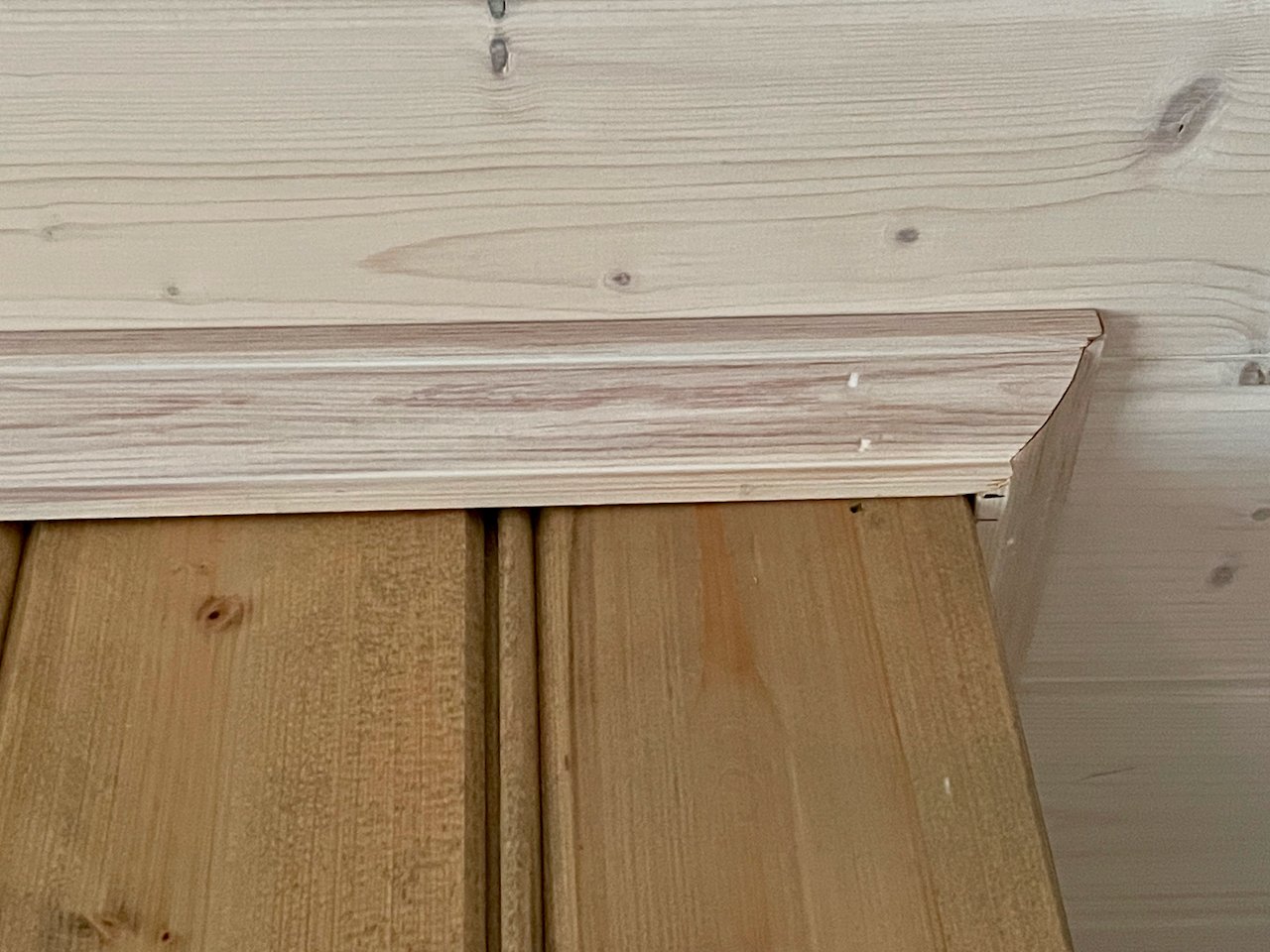
To preserve the character of the interiors, natural wood surfaces and traditional detailing were prioritised. Custom-made mouldings and fittings were designed to match the original language of the house.
The result is not a reproduction, but a continuation, where old and new coexist without conflict.
Looking Ahead
This restoration is rooted in a simple idea: that history has value, and that careful, considered work allows it to remain present in modern life.
Through traditional materials, respectful craftsmanship, and measured interventions, the house has been given new life without losing its essence.
It stands not as a reconstruction, but as a living continuation of its past.