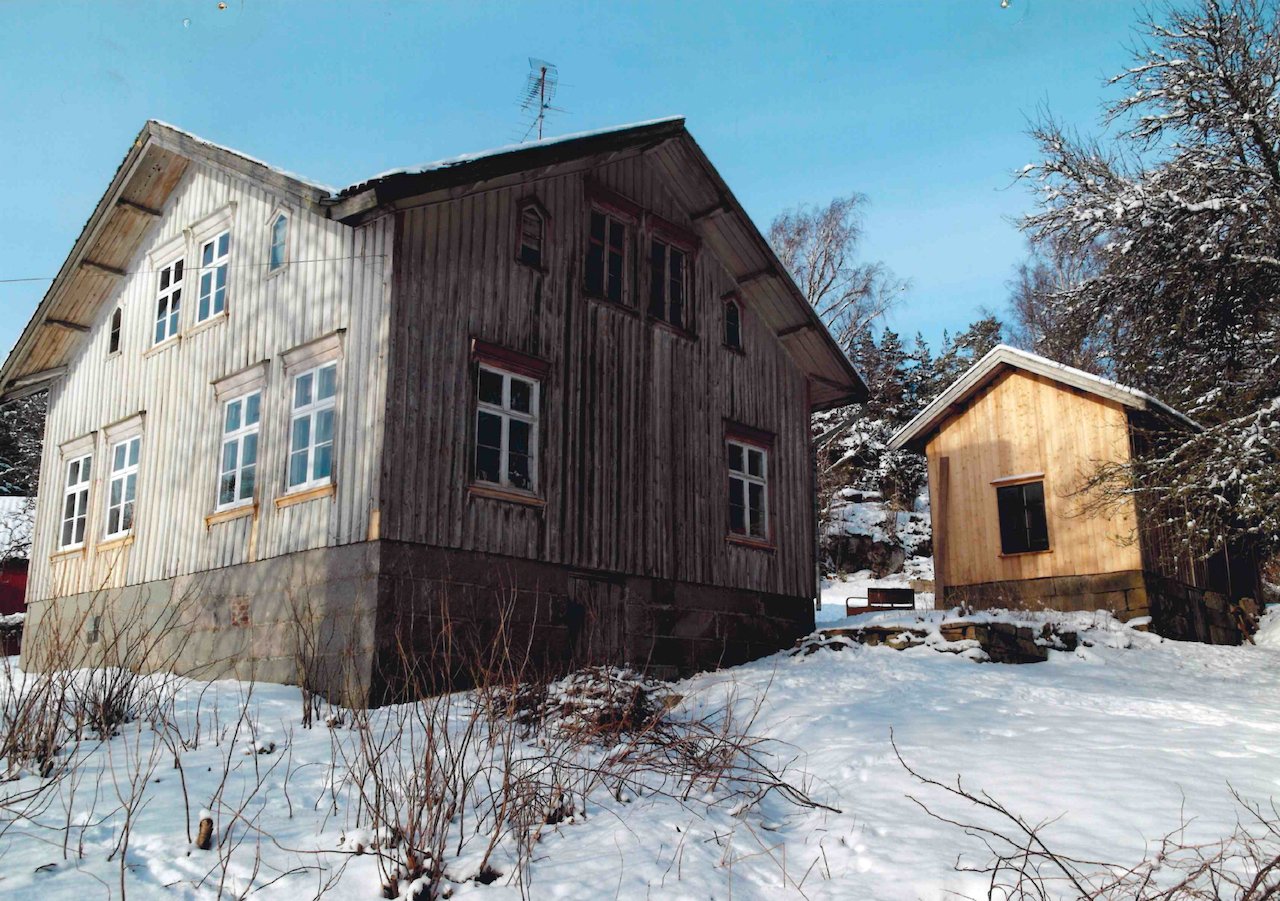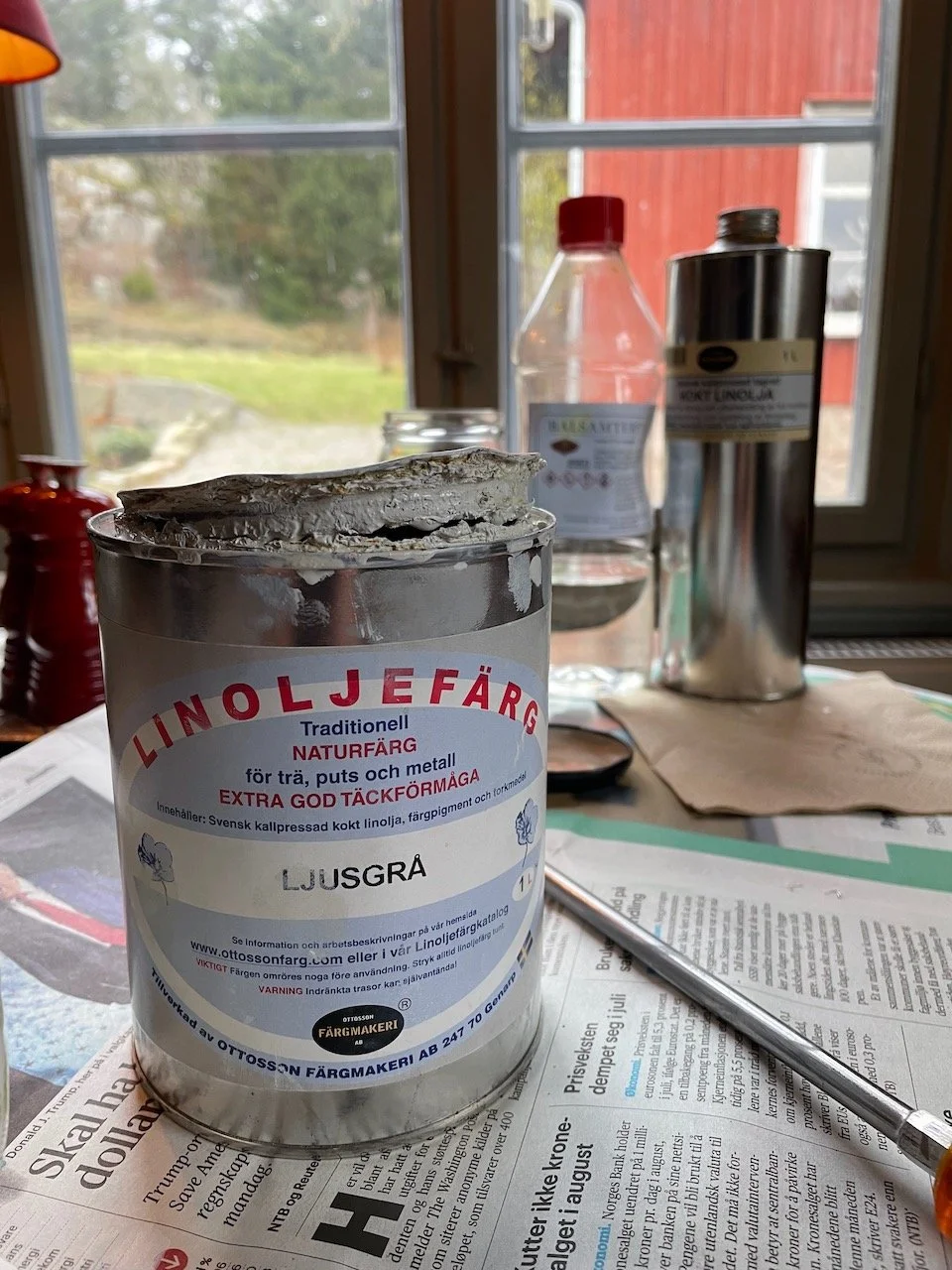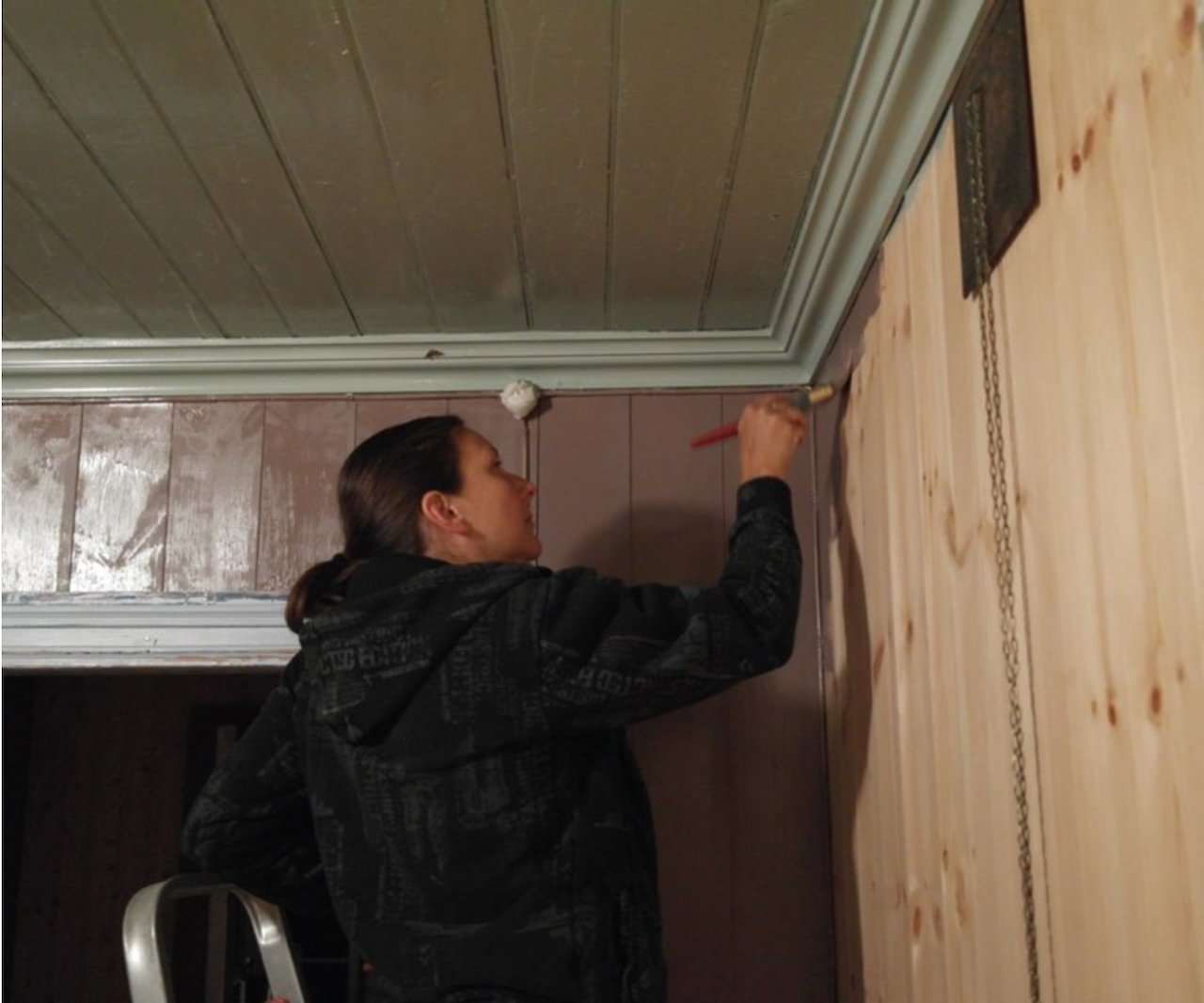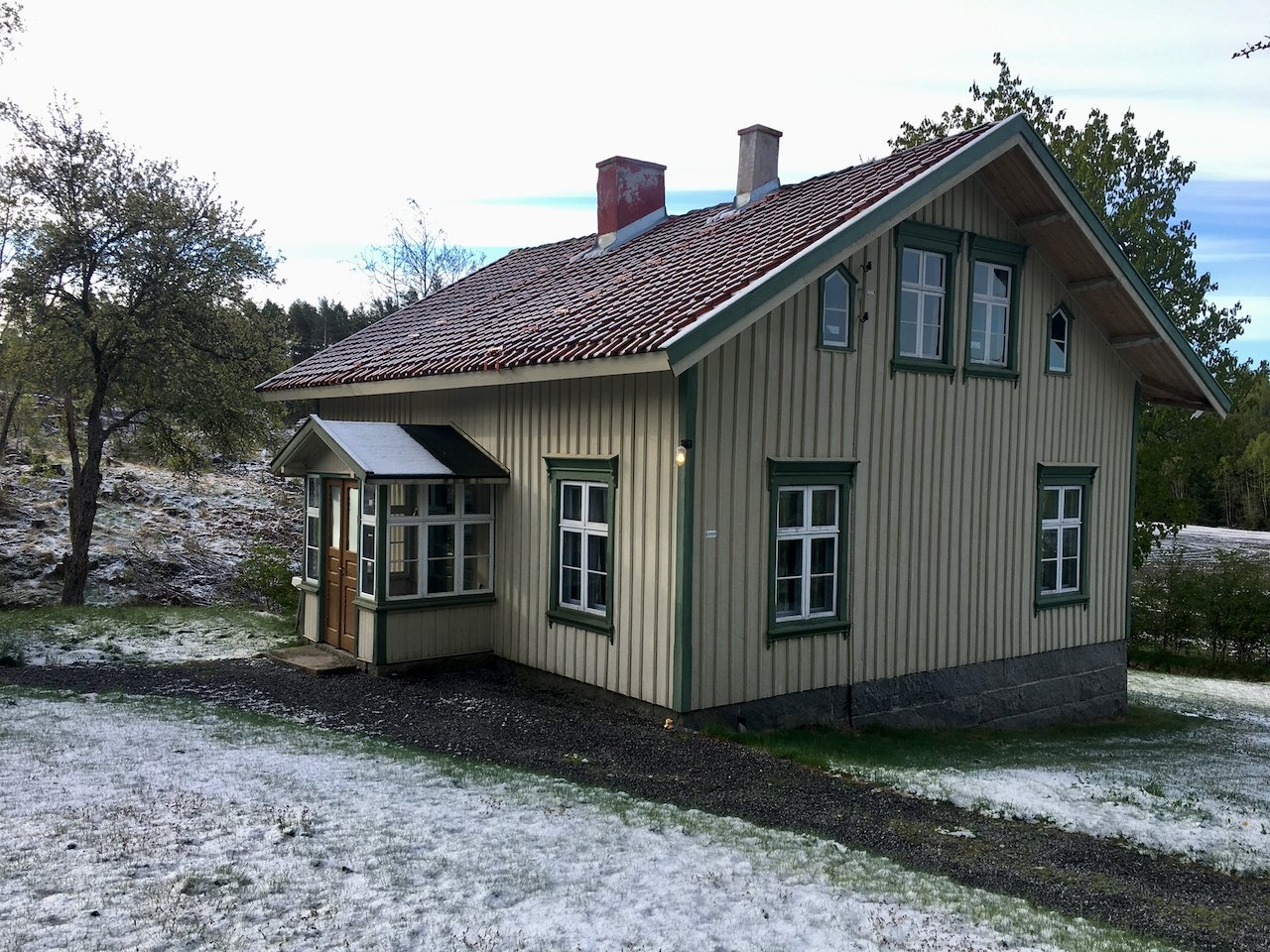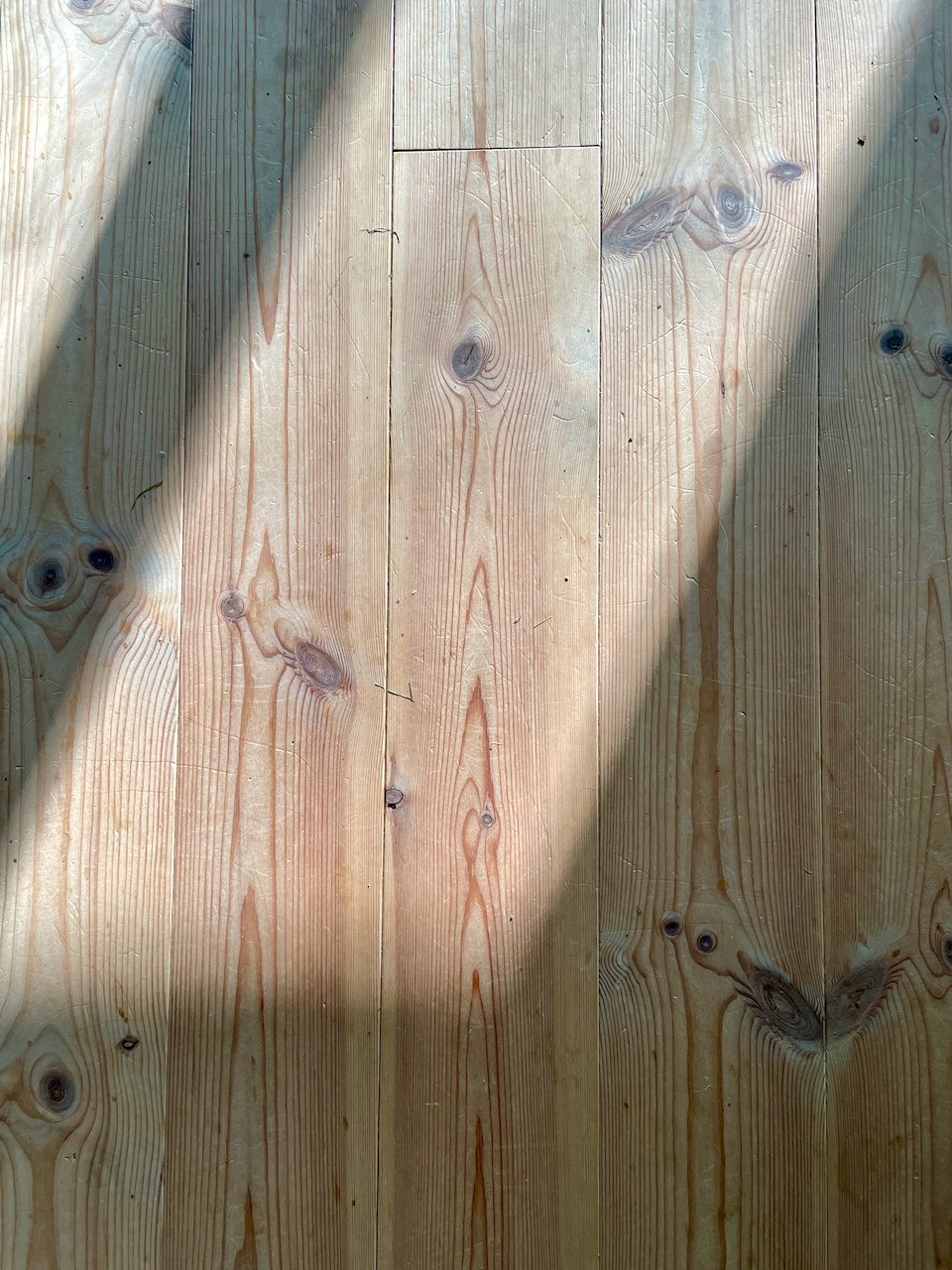
In Nordic and Scandinavia, linseed oil paint has long been valued not only as a finish, but as a philosophy of care. It belongs to a way of building traditions where materials are allowed to breathe, age, and endure with quiet dignity.
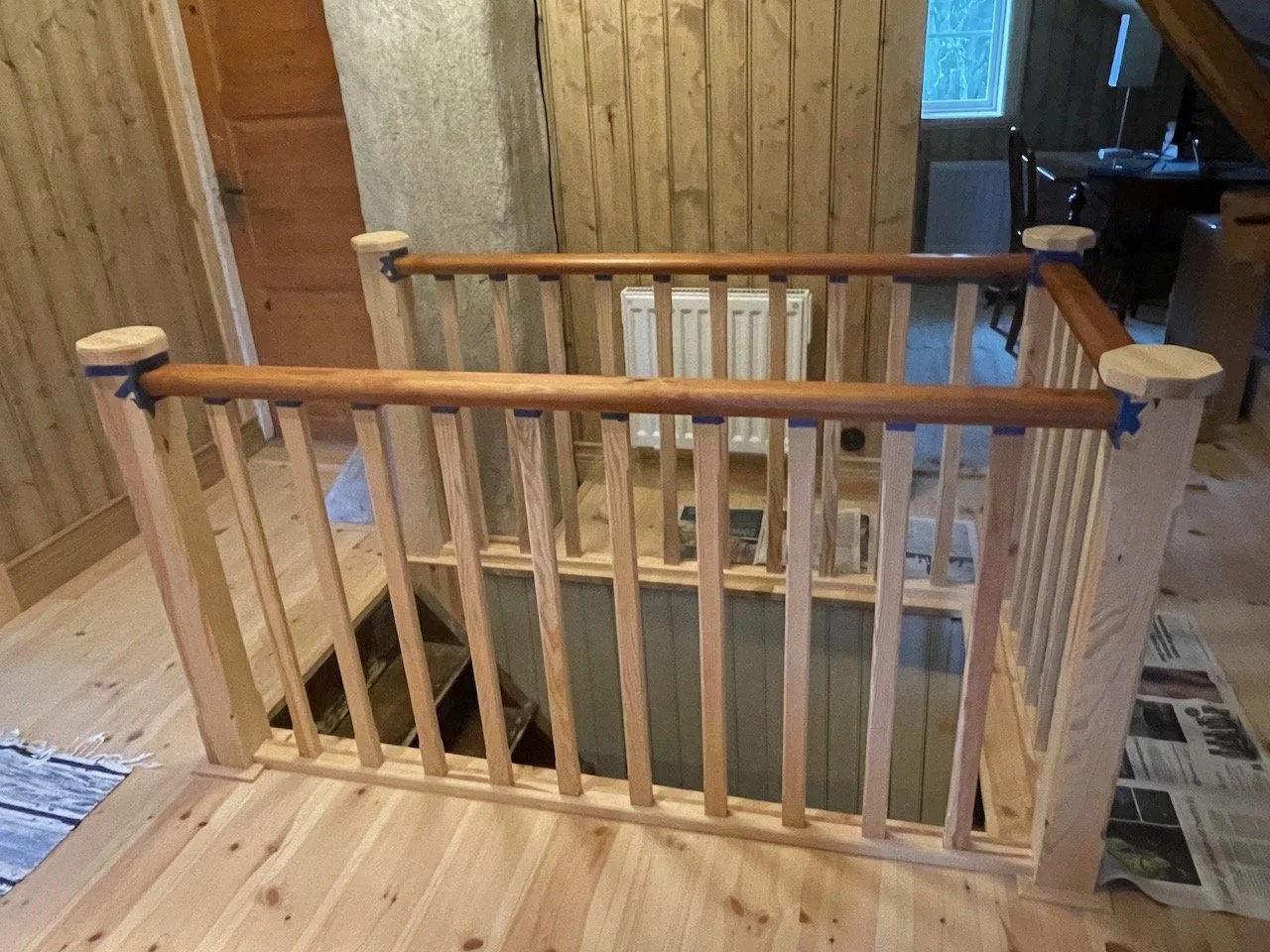
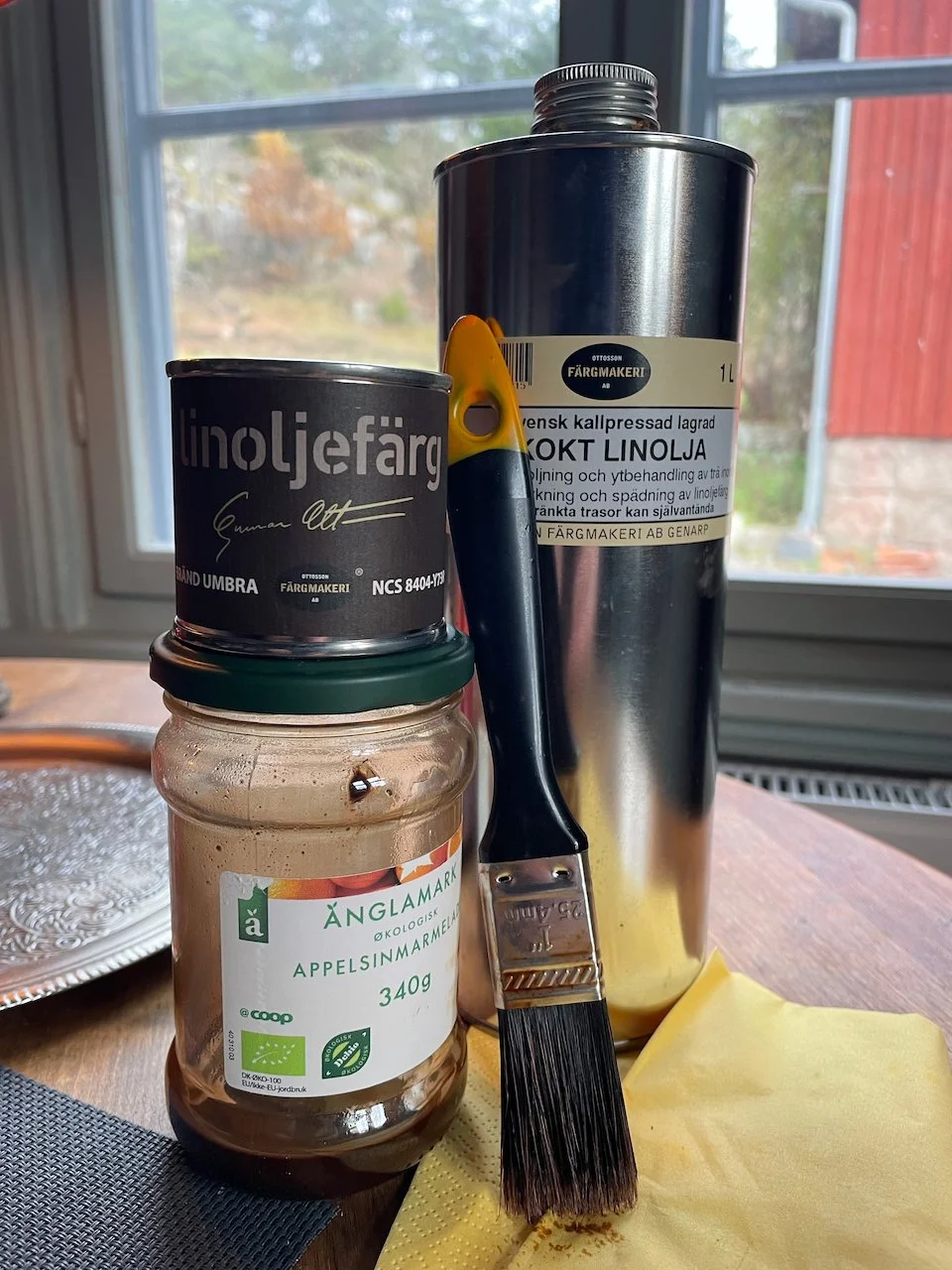
Applied in thin, translucent layers, the paint reveals rather than conceals. Mixed with oil or turpentine, it can be worked gently into the surface with brush or cloth, then softened by wiping away the excess. What remains is not a coating, but a patina - subtle, lived-in, and deeply connected to the material beneath.
There is patience in this process. Each layer dries slowly, often over the course of a day or two, before gradually curing into a surface of remarkable strength. Over time, it forms a durable, moisture-resistant protection that does not seal the structure, but allows it to respond naturally to shifts in climate and season.
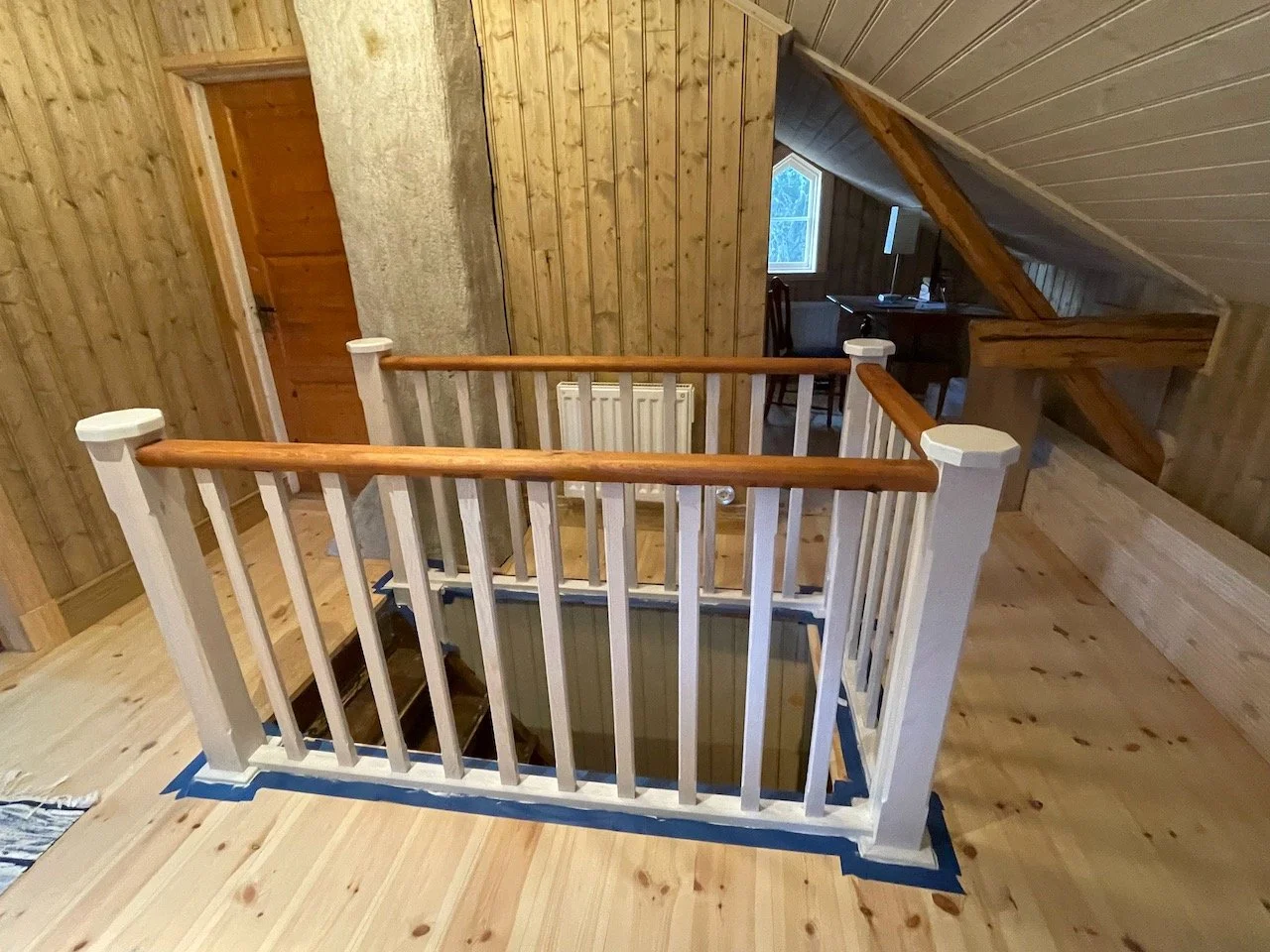
This is why linseed oil paint remains central to Swedish and wider Scandinavian restoration practices. On façades, it protects timber from wind and weather without trapping moisture within. Indoors, it creates a soft, matte depth - free from synthetic barriers, and aligned with a more considered, tactile way of living.
In a Nordic context, where light is seasonal, and materials are asked to withstand both time and climate, such qualities are not aesthetic choices alone. They are essential. To use linseed oil paint is not simply to decorate, but to participate in a tradition - one that values longevity, honesty, and the quiet beauty of surfaces that are allowed to age. Indoors, it also creates a beautiful, matte finish with a healthy, toxin-free environment.
Linseed Oil Paint