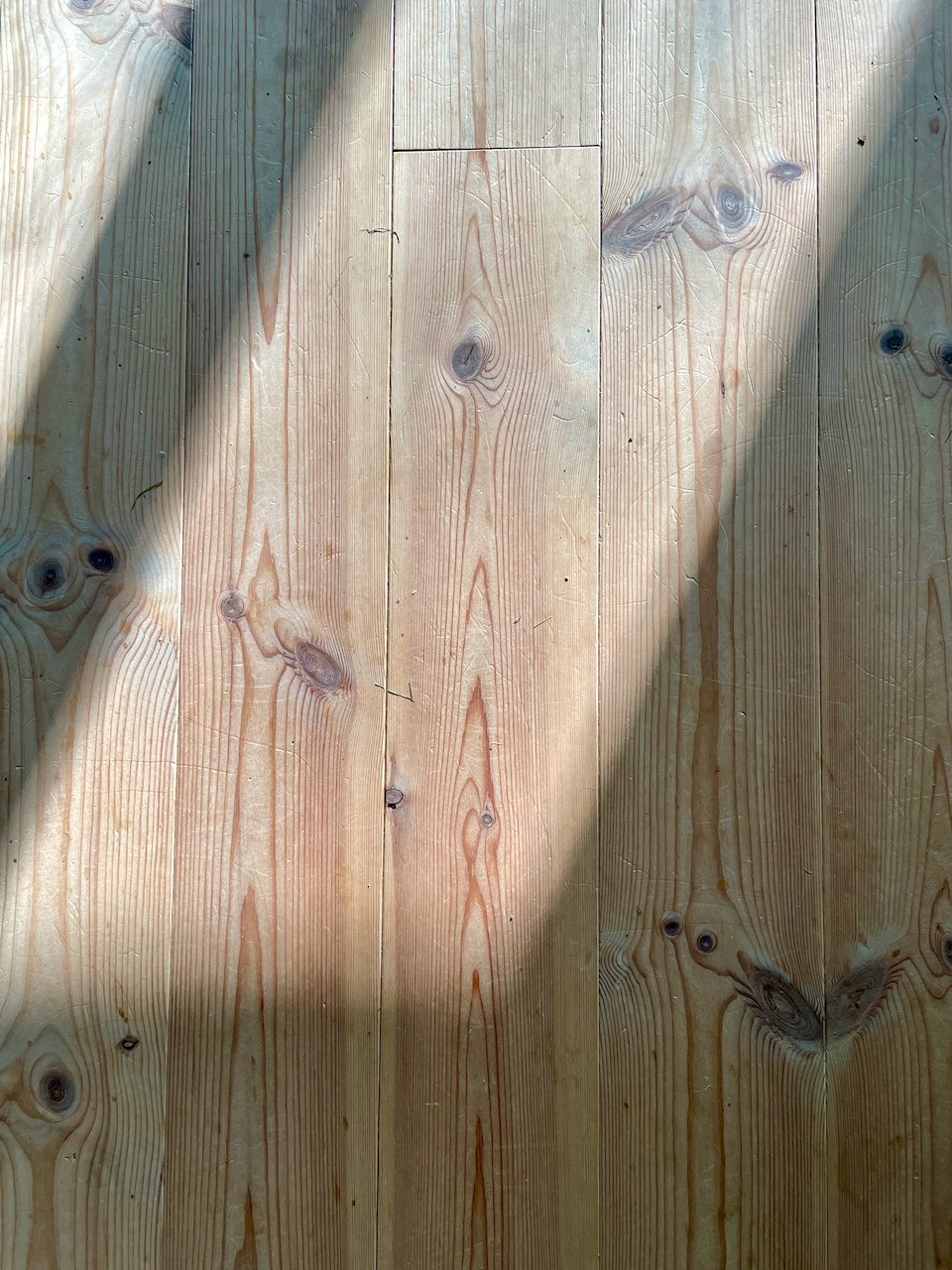
Using Osmo Hardwax Oil

In an old home, every surface has its own story and its own needs. You must listen carefully before you act.

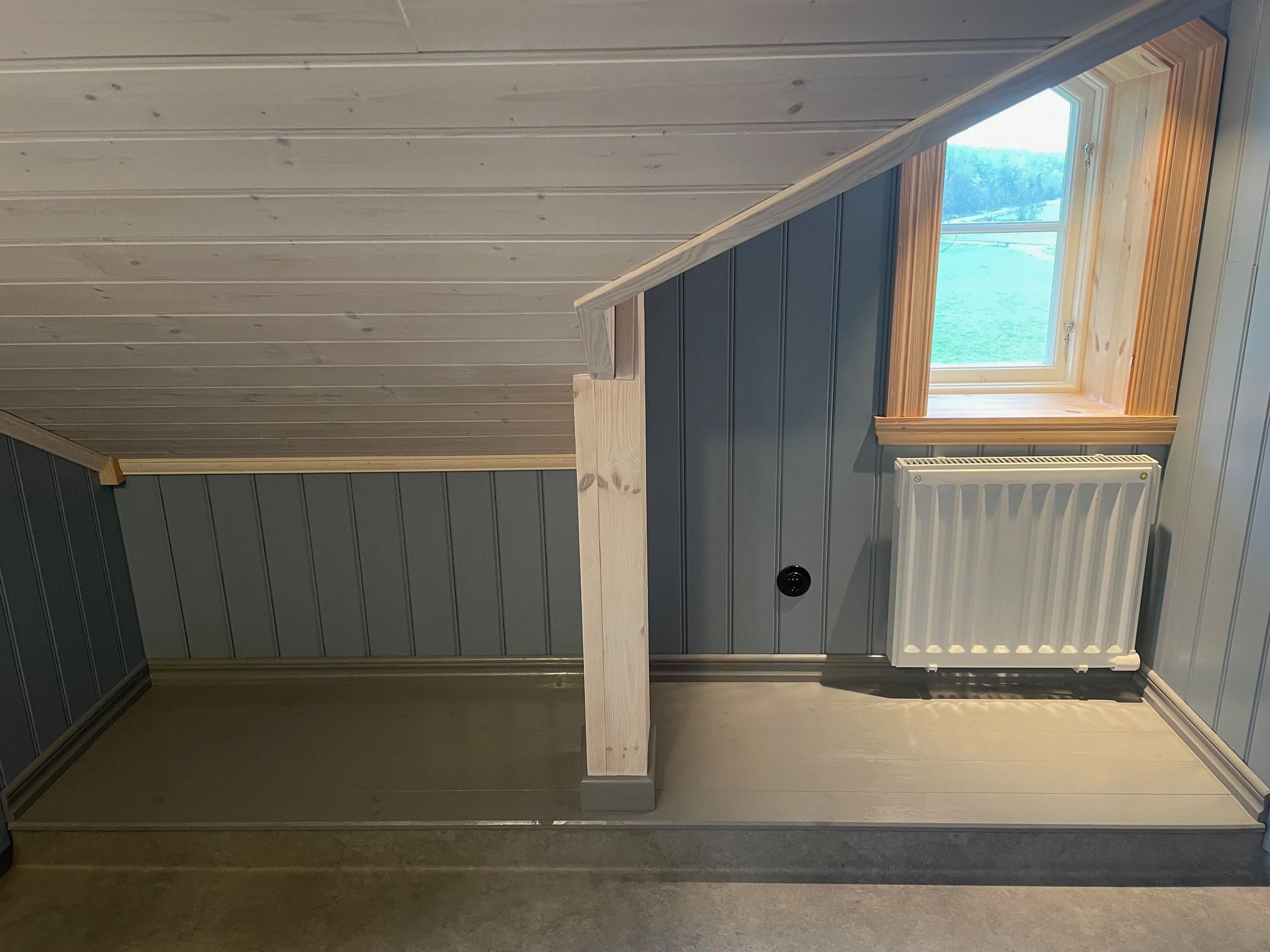
For once, linseed oil paint was set aside, and Osmo oil wax was chosen instead - guided not by habit, but by what the house itself seemed to ask for, and by a wish to try it on a small section of wooden floor in the bathroom.

The oil, made from rapidly renewable natural vegetable oils, penetrates deeply into the wood, keeping it elastic and healthy, preventing it from drying and turning brittle with time.
It protects without sealing, allowing the wood to breathe and moisture to evaporate, while still offering gentle resistance to water.

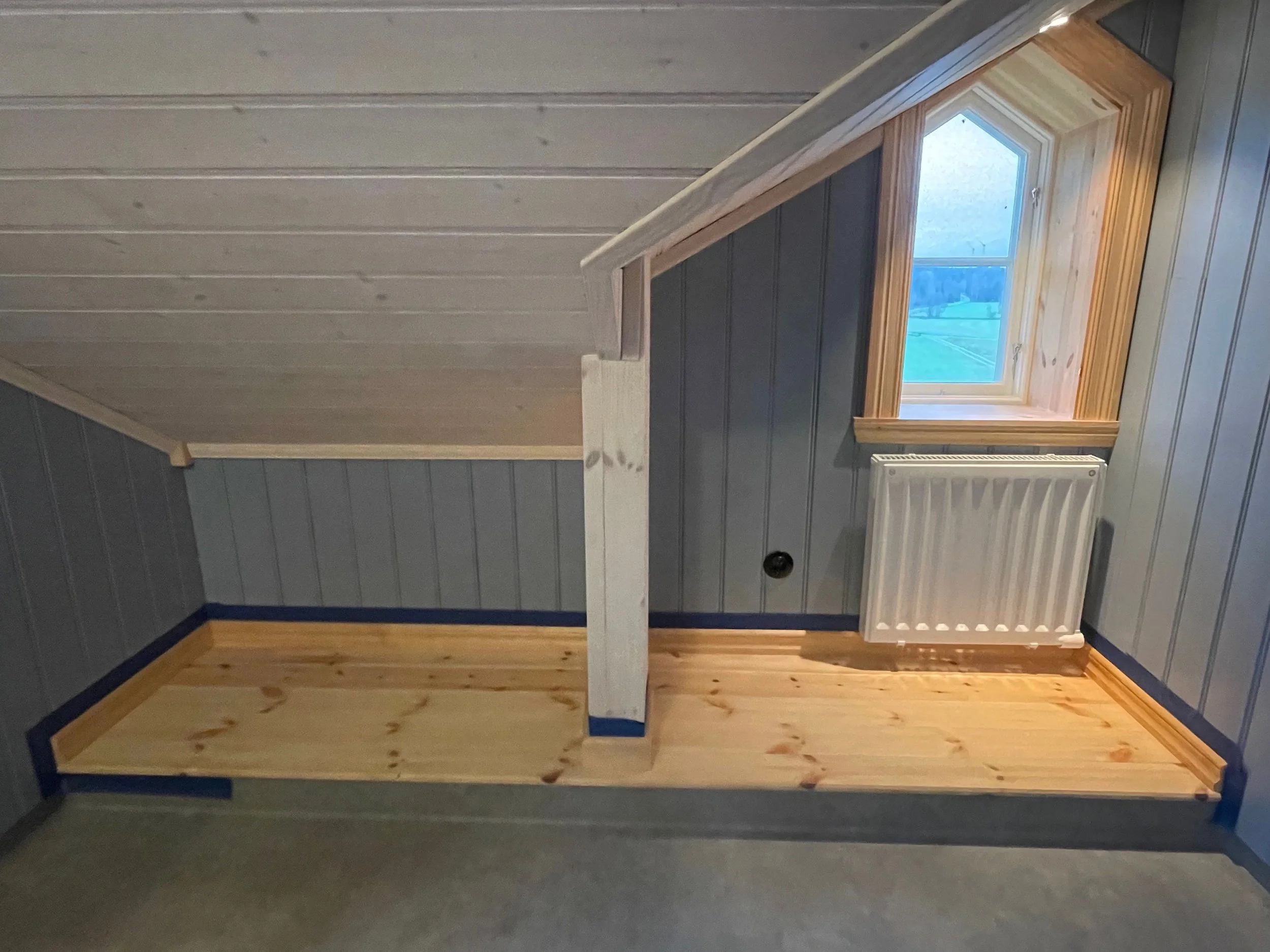
Here, the soft grey tone meets the water-resistant tarkett floor in quiet harmony, and the wood is preserved without losing its breath, its warmth, or its soul.
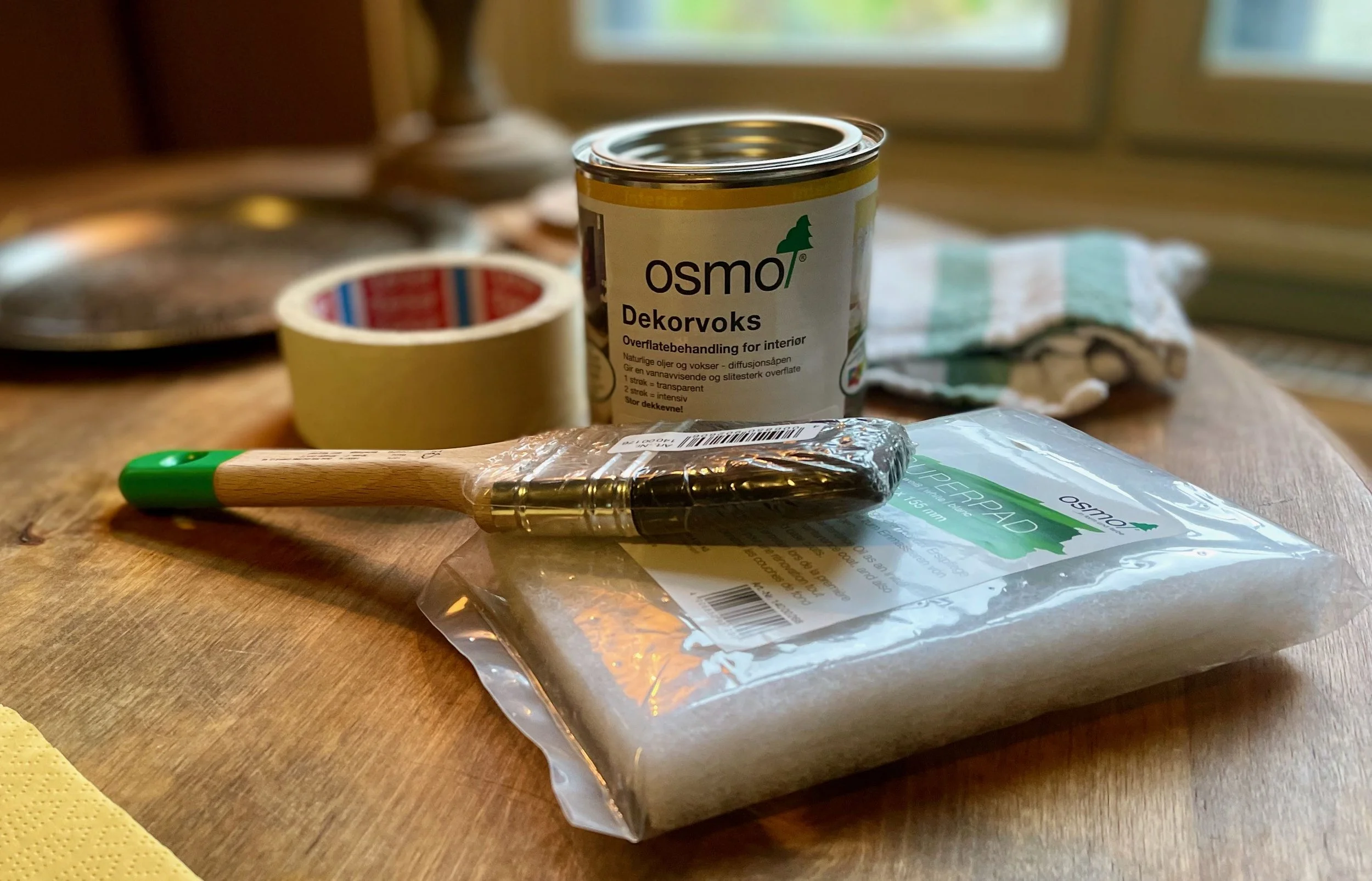
Various painting supplies on a wooden table, including a can of Osmo Dekorvoks, painter's tape, a paintbrush wrapped in plastic, a bag of primer, and a cloth with a window in the background.
Empty small room with sloped ceiling, wood flooring, blue gray paneled walls, a window with a wooden frame, and a radiator beneath the window.
Interior view of an attic space with a sloped ceiling, a small window with a wooden frame, blue paneled walls, a white radiator below the window, and light-colored wooden flooring.
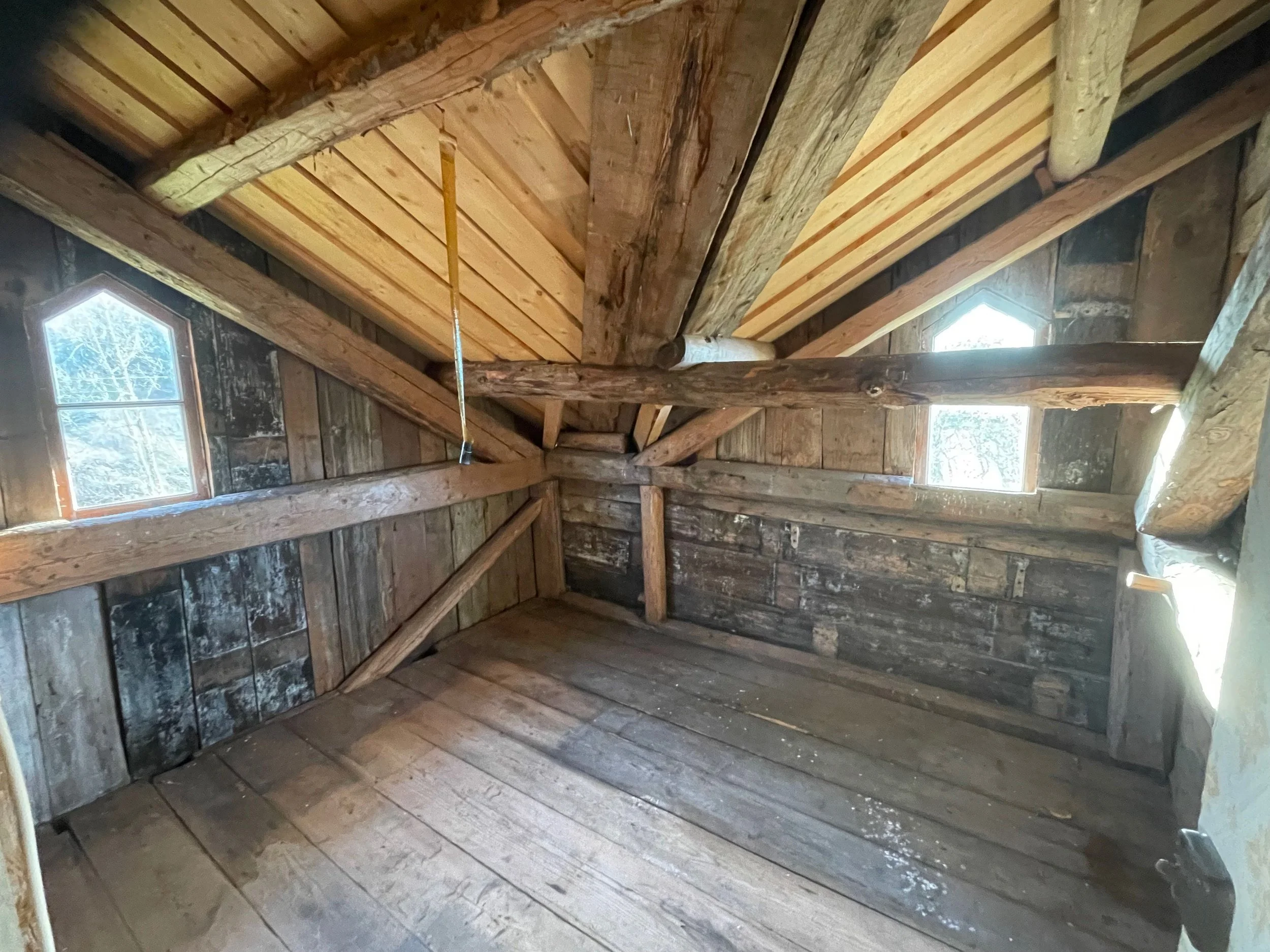
Interior view of an attic with wooden beams, rustic wooden walls, a wooden ceiling, and small windows letting in natural light.
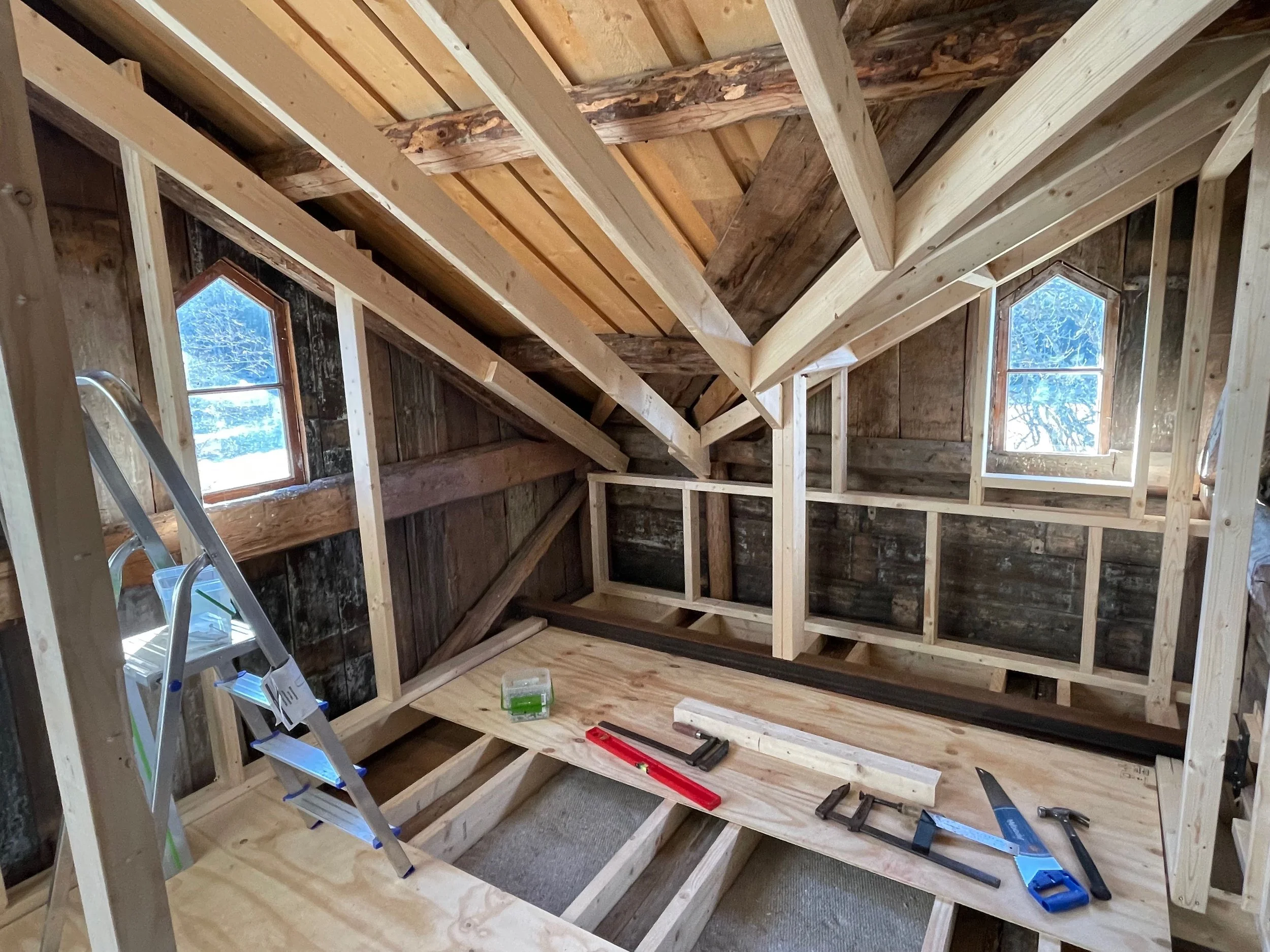
Interior of an attic under construction with wooden framing, two small windows, and construction tools on a work surface.
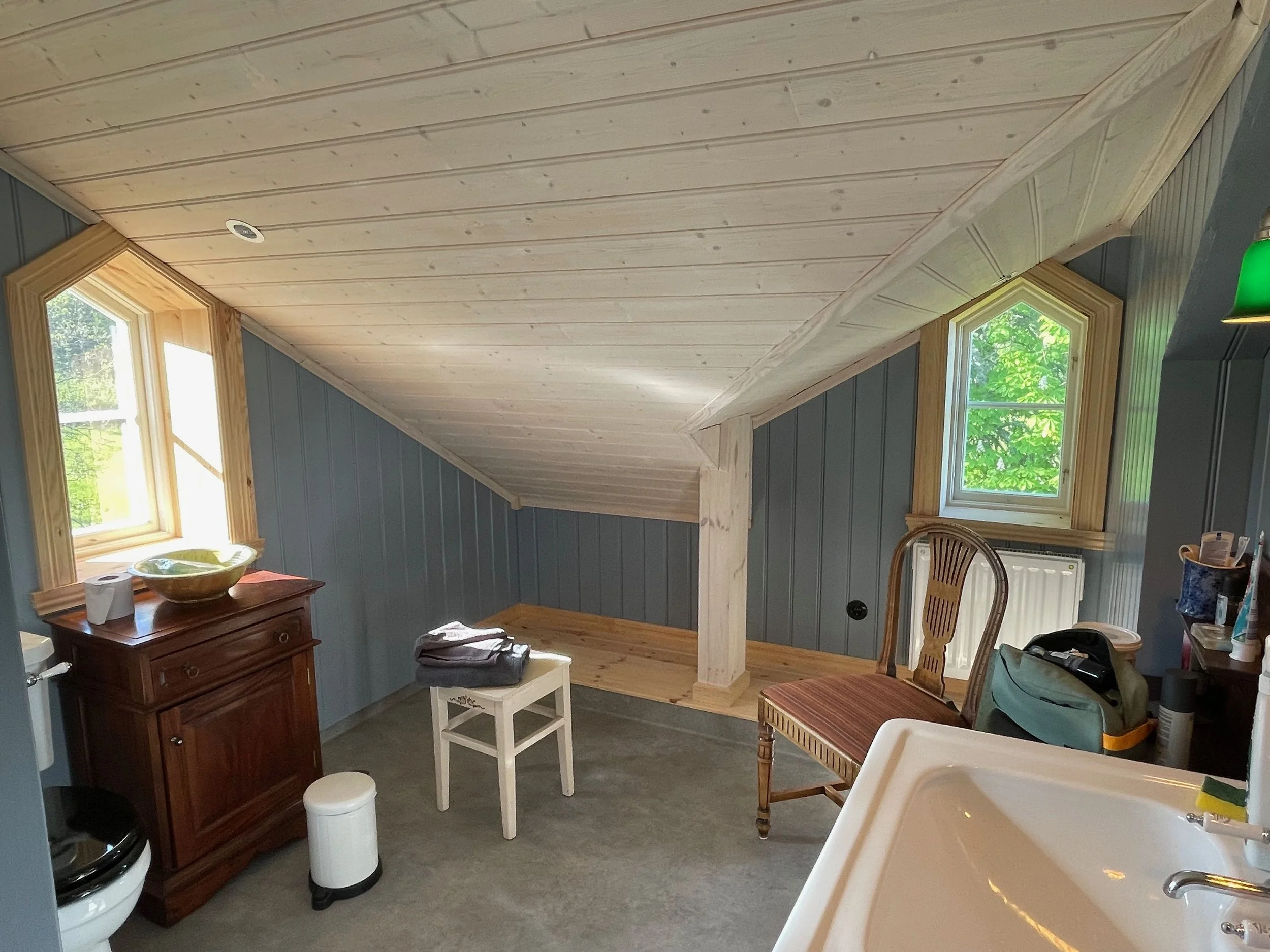
Attic room with sloped wooden ceiling and walls, two windows with green foliage outside, a wooden cabinet with a bowl and tissue box, a white small table with cloth, a wooden chair, a laundry basket, and a sink with toiletries.