Turning a Slope into a Stone Terrace
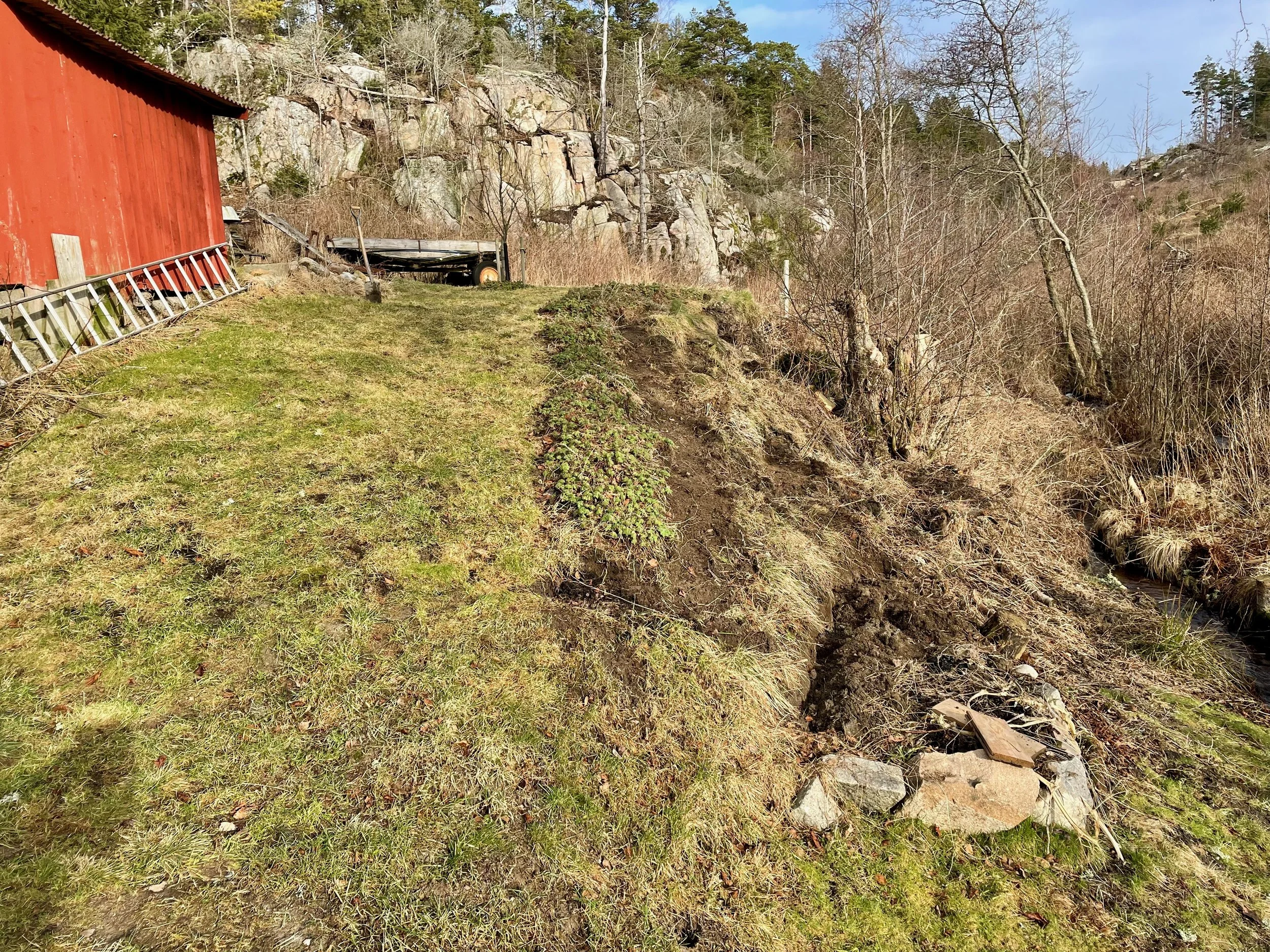
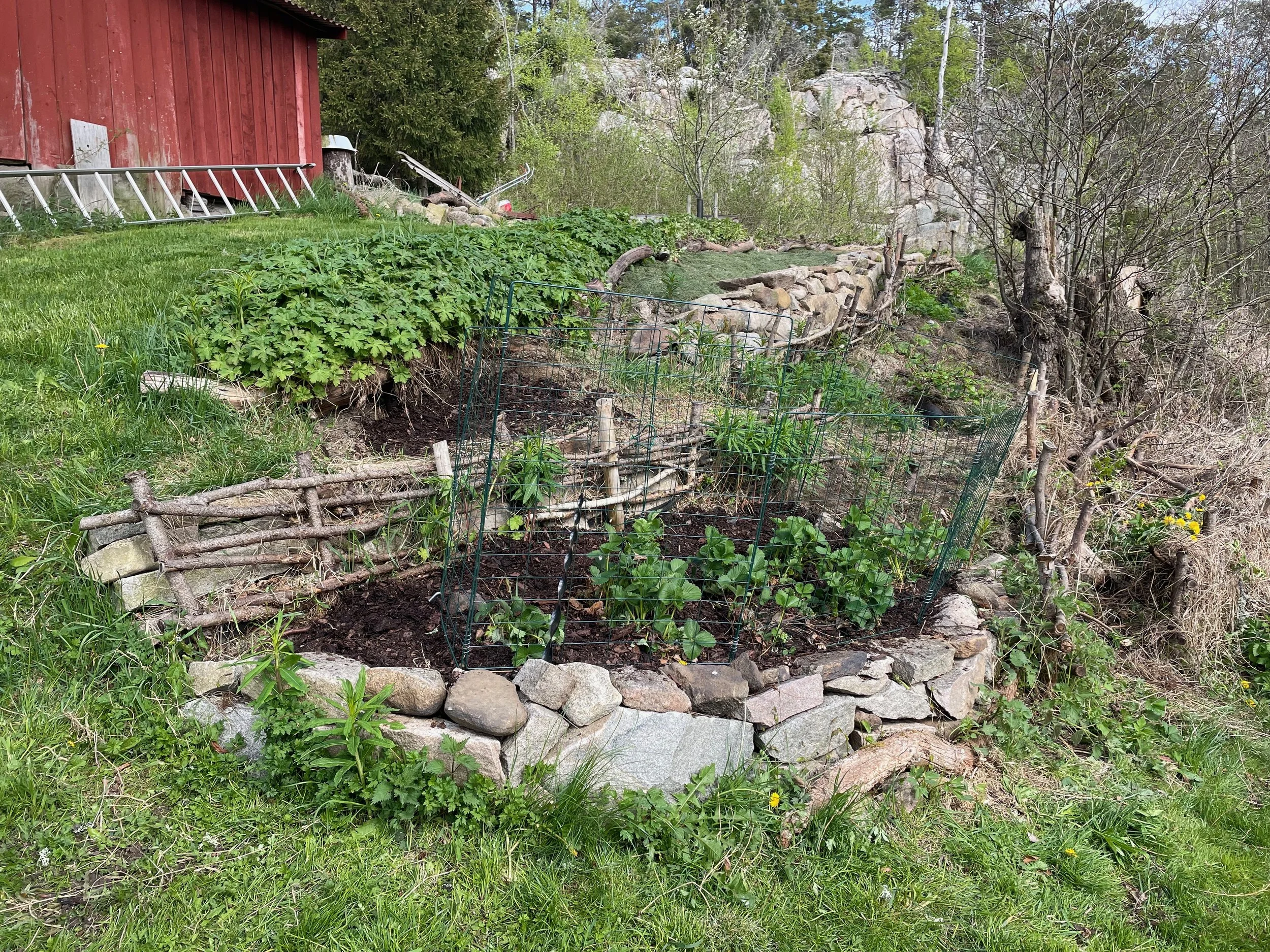
On the slope of the garden, I decided it was time to make the land useful. The incline had always been awkward and unmanageable, so I built a stone terrace, creating a level area that could one day host something productive - perhaps a row of grapevines or a small orchard of apple trees.
Securing a Garden Terrace on a Slope
A Simple Natural Method Using Pine Branches and Stone
When creating a terrace on a slope, the most important step is stabilizing the soil before placing heavy stones. Instead of starting directly with stonework, I used a simple traditional method using pine branches as a natural reinforcement.
This created a strong base and made it easier to build the retaining wall that now holds the terrace in place.
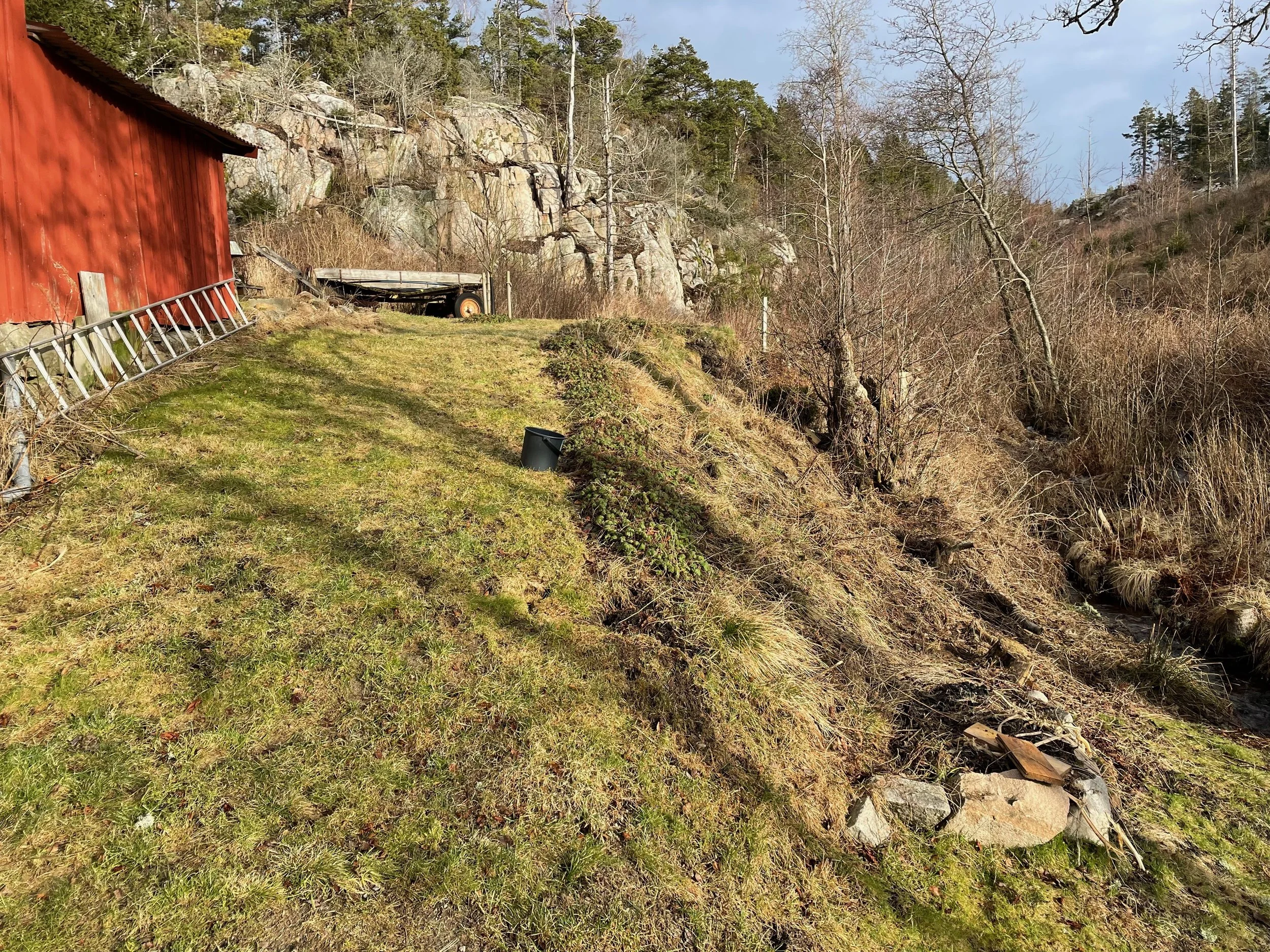
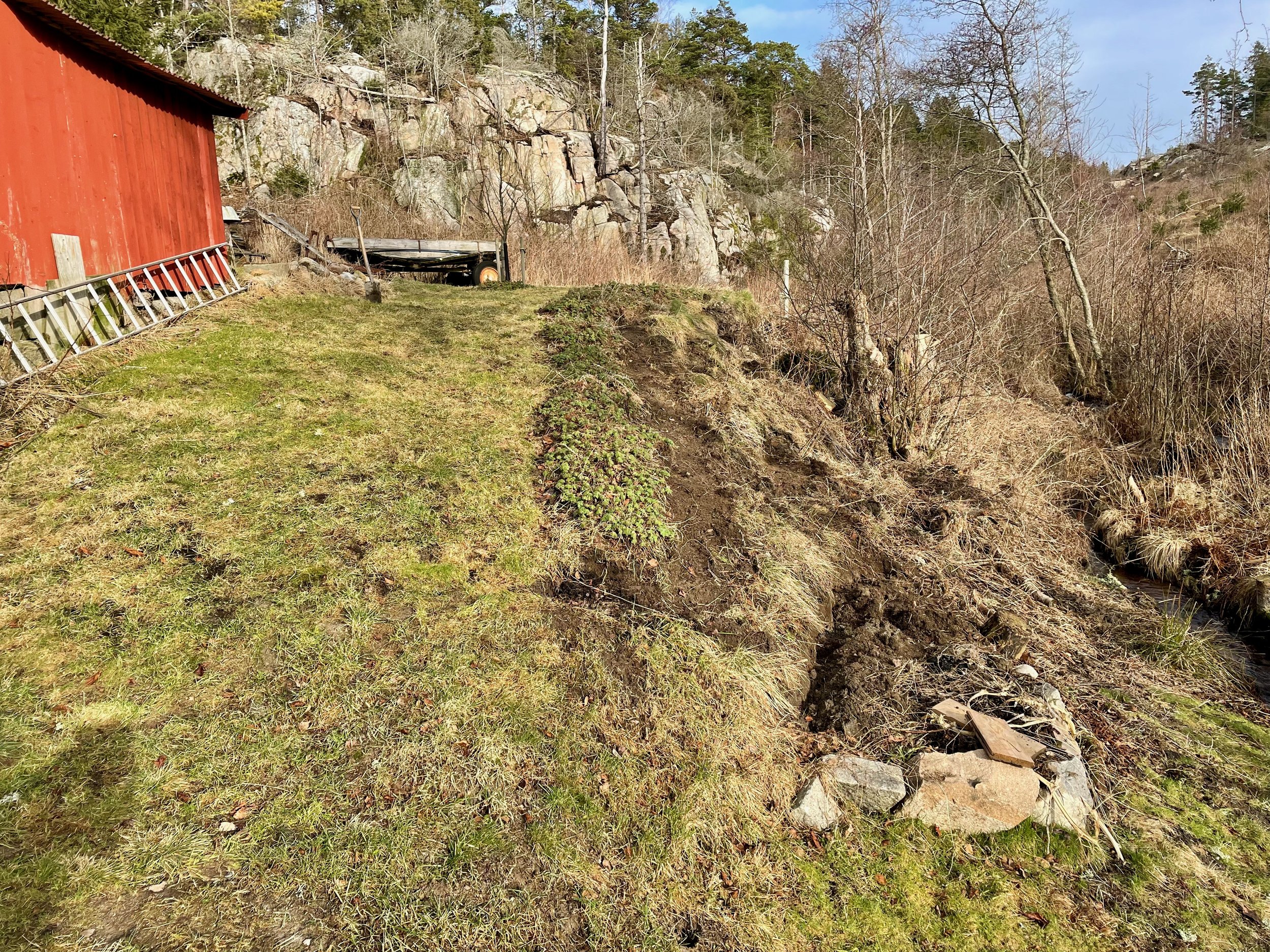
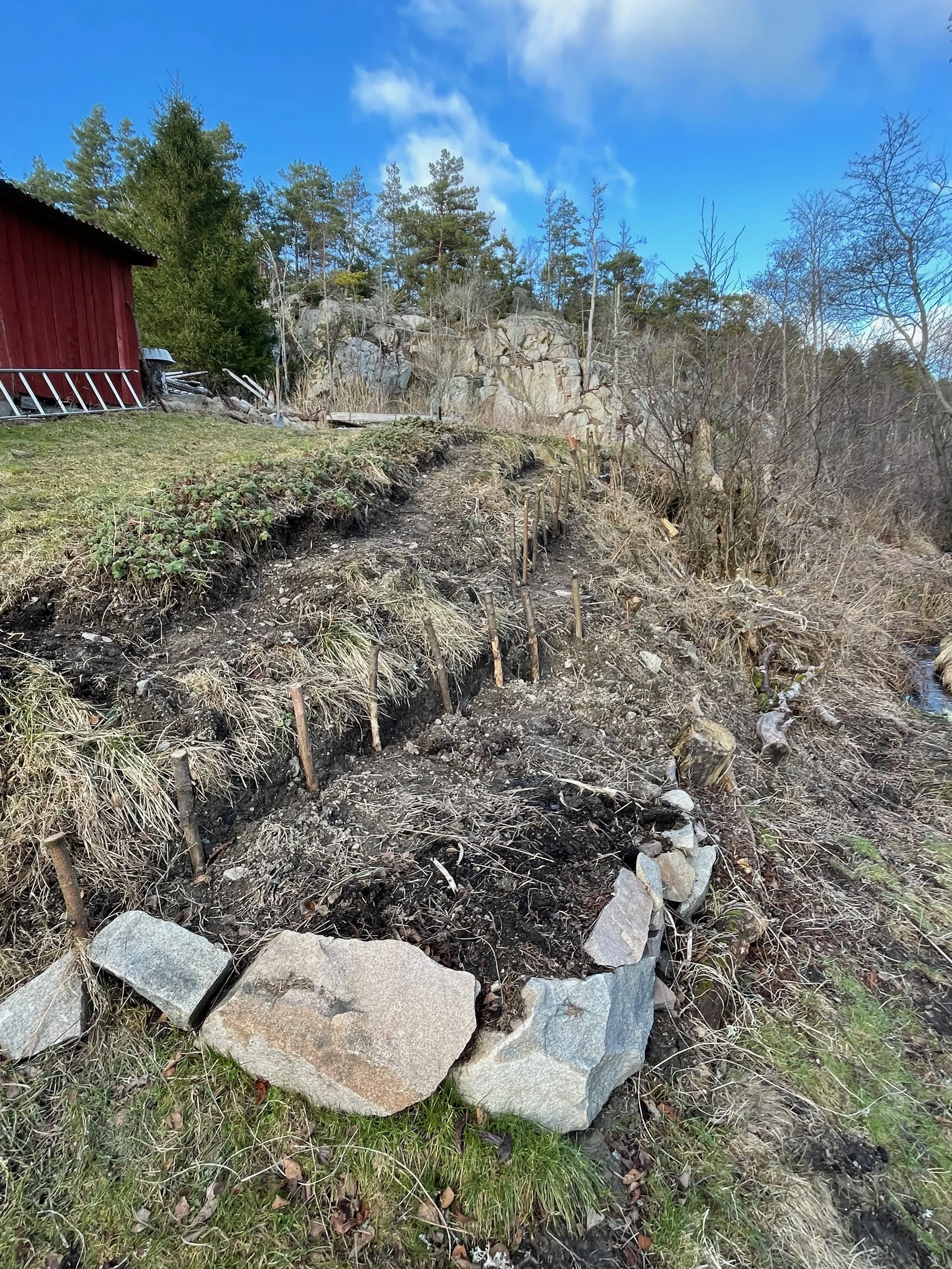
Step 1 – Stabilizing the Slope with Pine Stakes
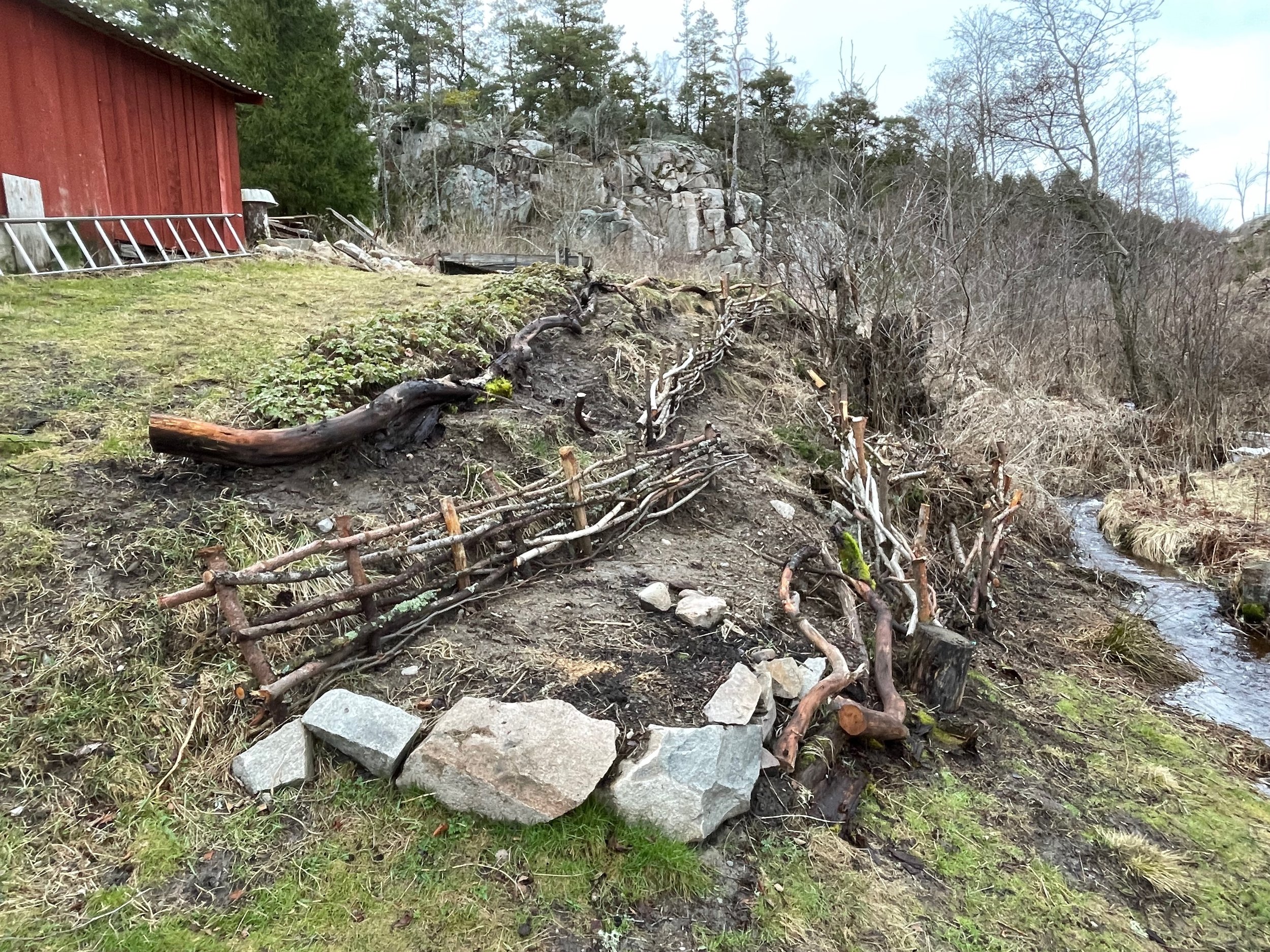
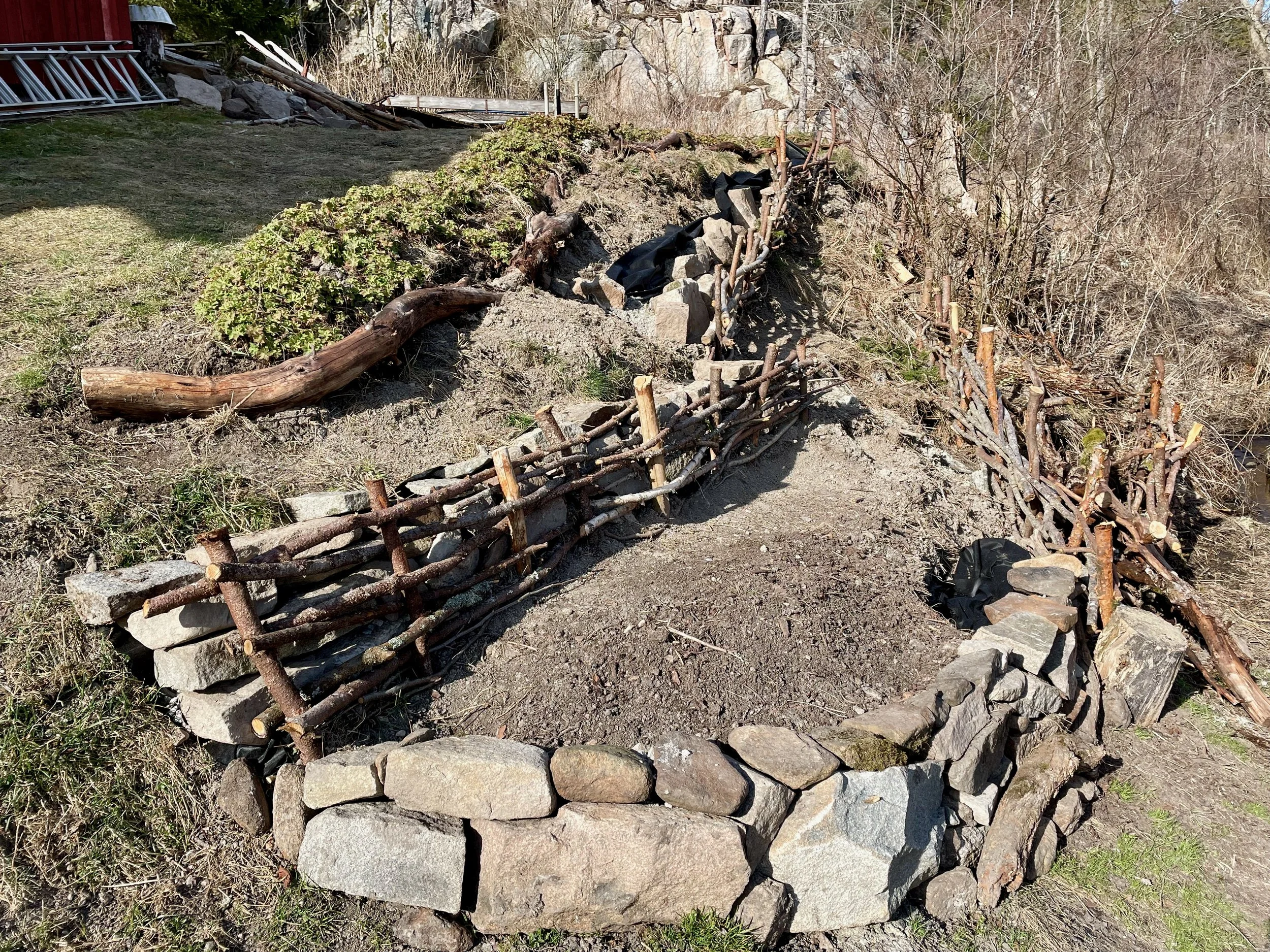
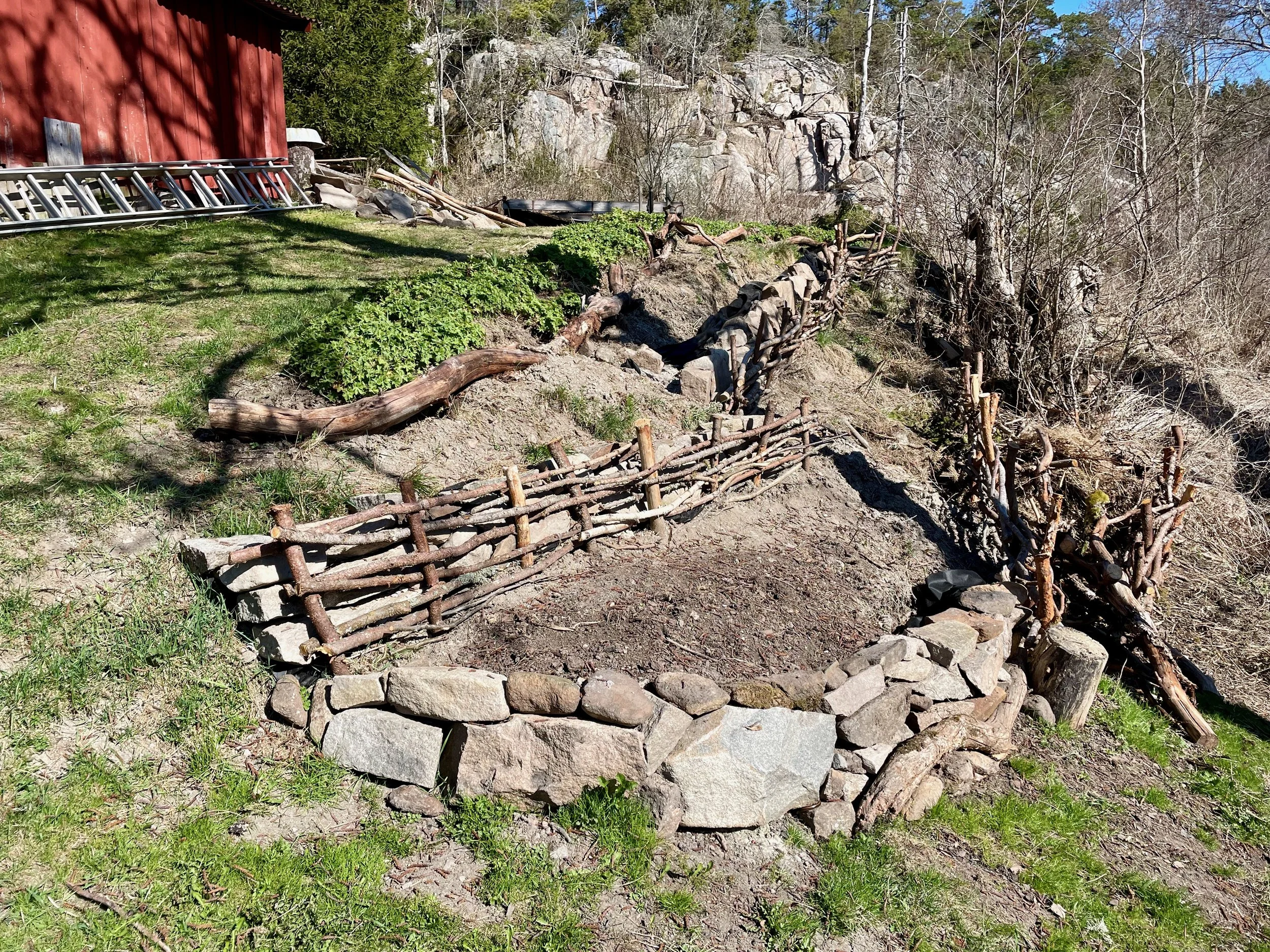
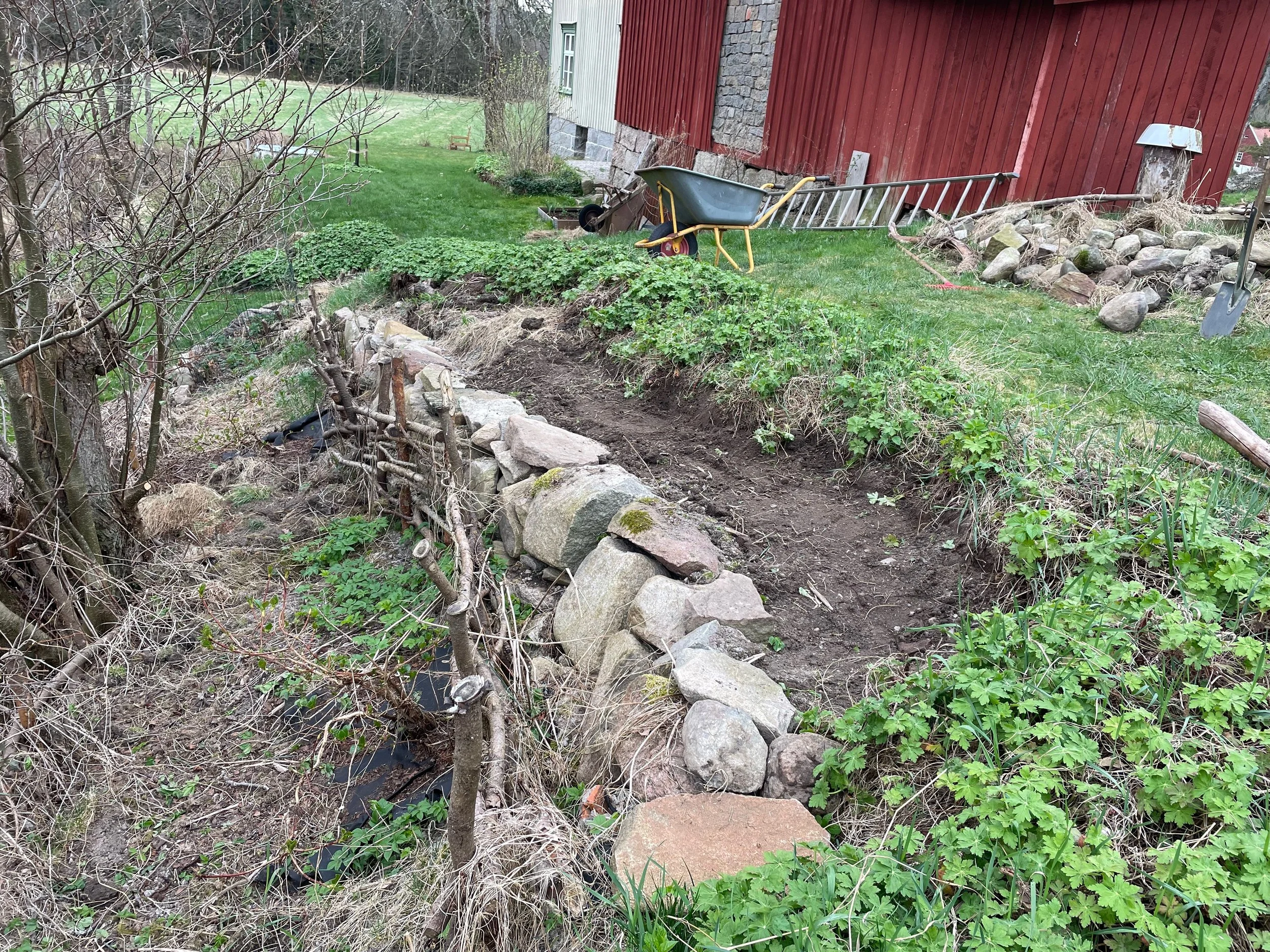
The first step was to force long pine branches deep into the soil, working them down between 1 and 1.5 meters (approximately 3 to 5 feet).
Placed along the future line of the terrace wall, these branches acted as vertical stakes, helping hold the loose soil in place while the structure was being built.
Because pine is flexible and strong, it works well for temporary stabilization while the terrace is formed.
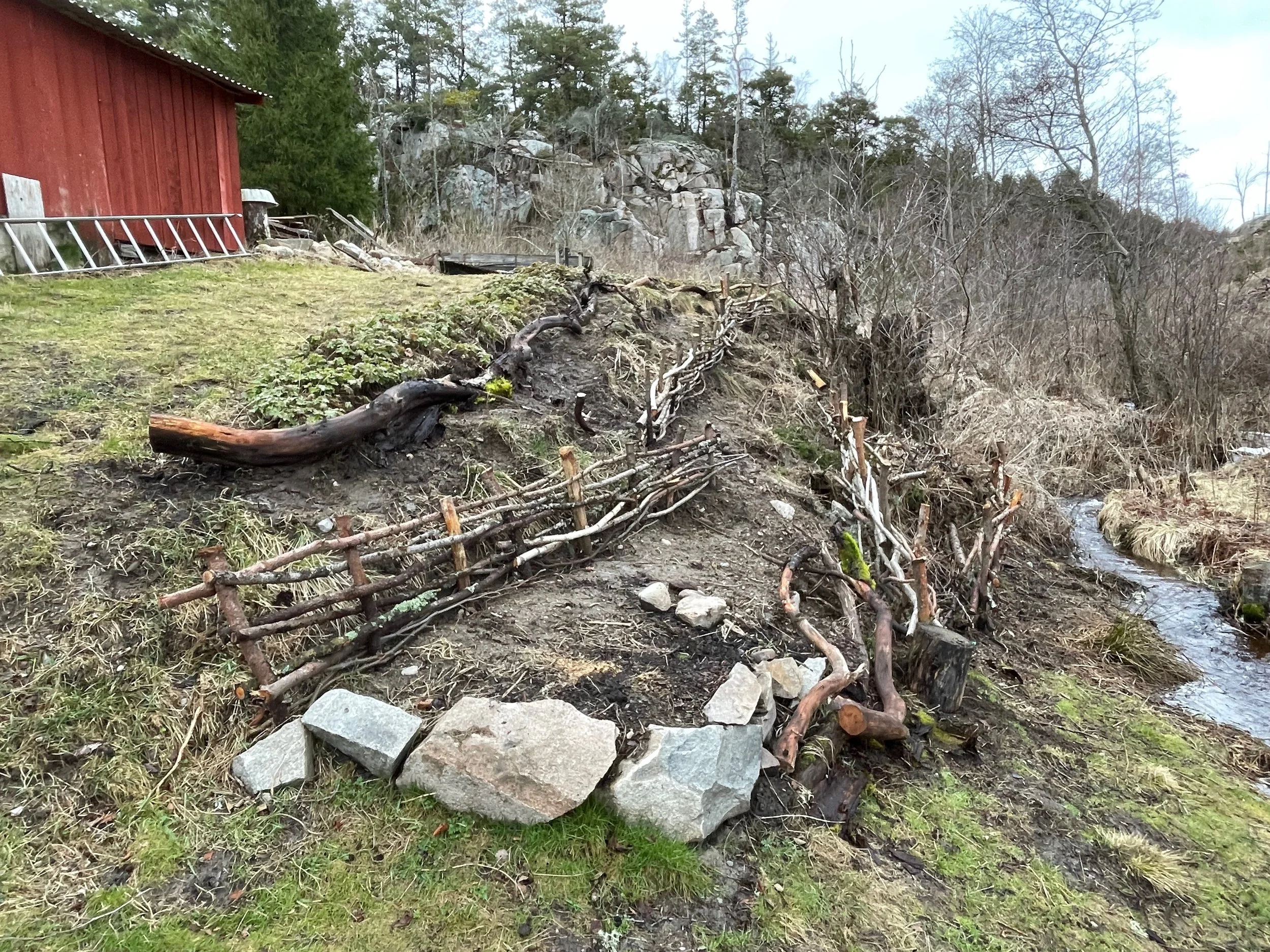
Step 2 – Weaving Horizontal Branches
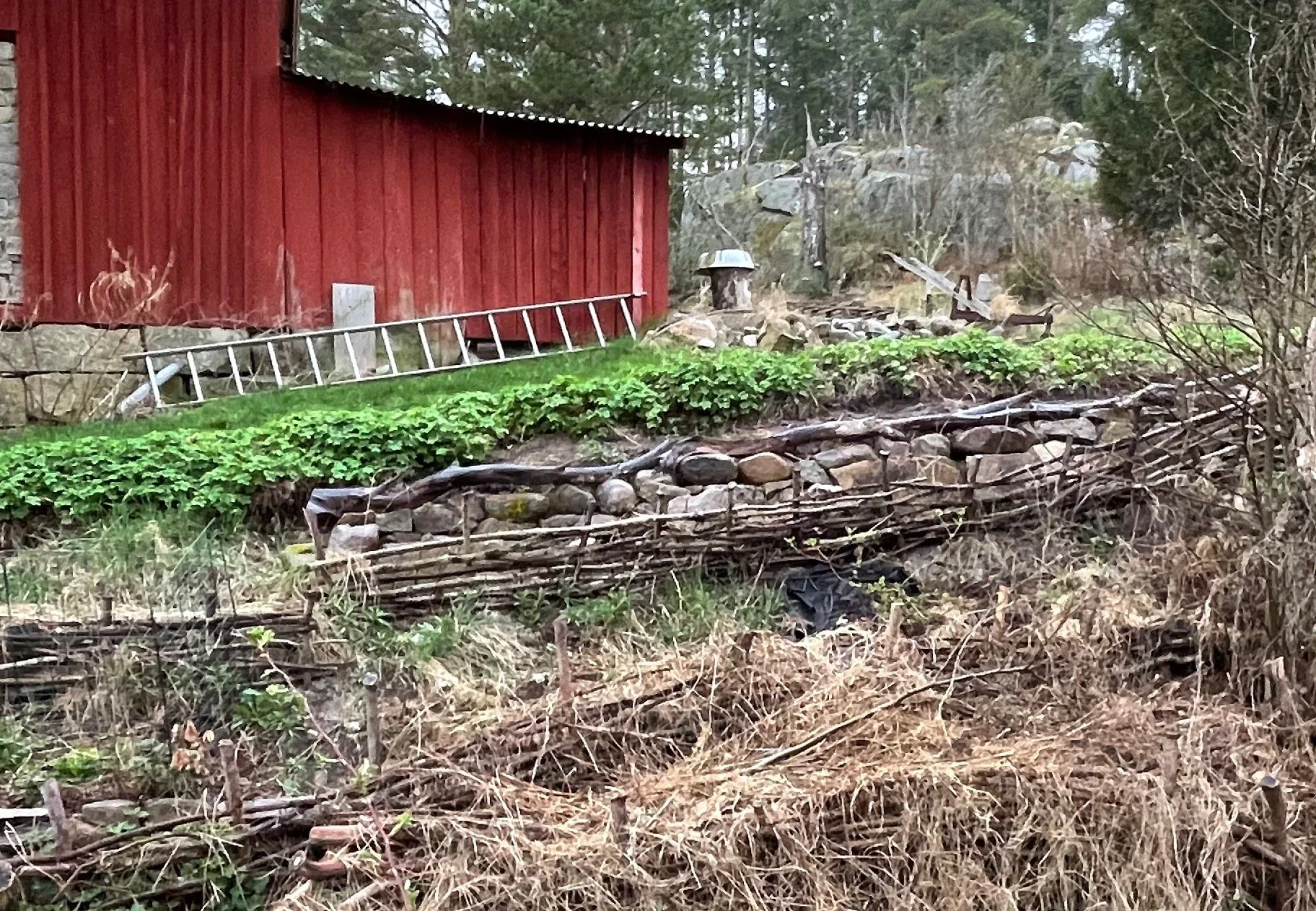
Once the vertical stakes were in place, I added longer branches horizontally between them, weaving them in and out like a simple fence.
This weaving technique created a natural retaining structure that tied the stakes together and strengthened the whole line.
It served two purposes:
reinforcing the soil behind the terrace
creating a flexible structure that prevents the slope from collapsing during construction
Step 3 – Digging the Drainage Trench
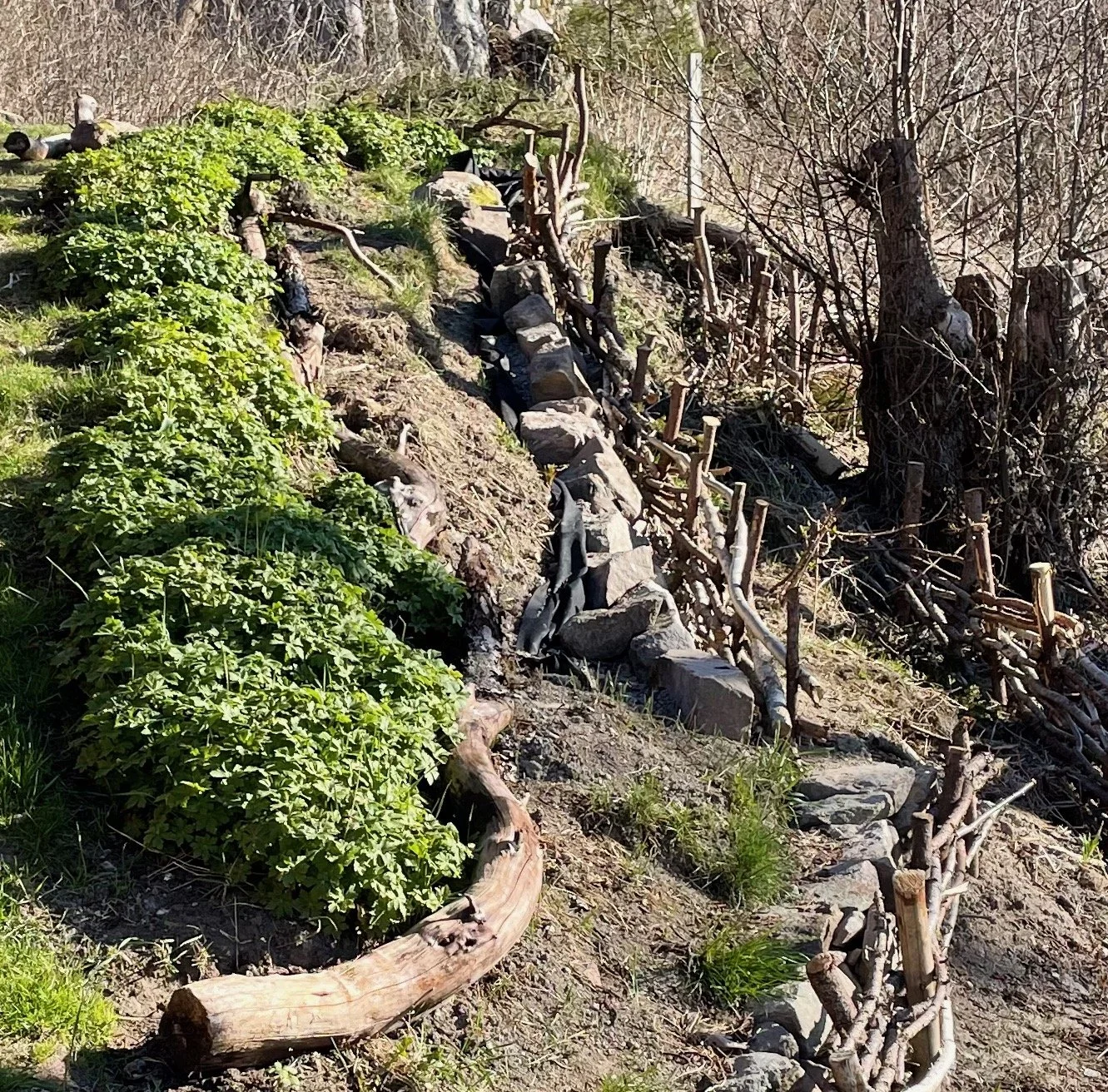
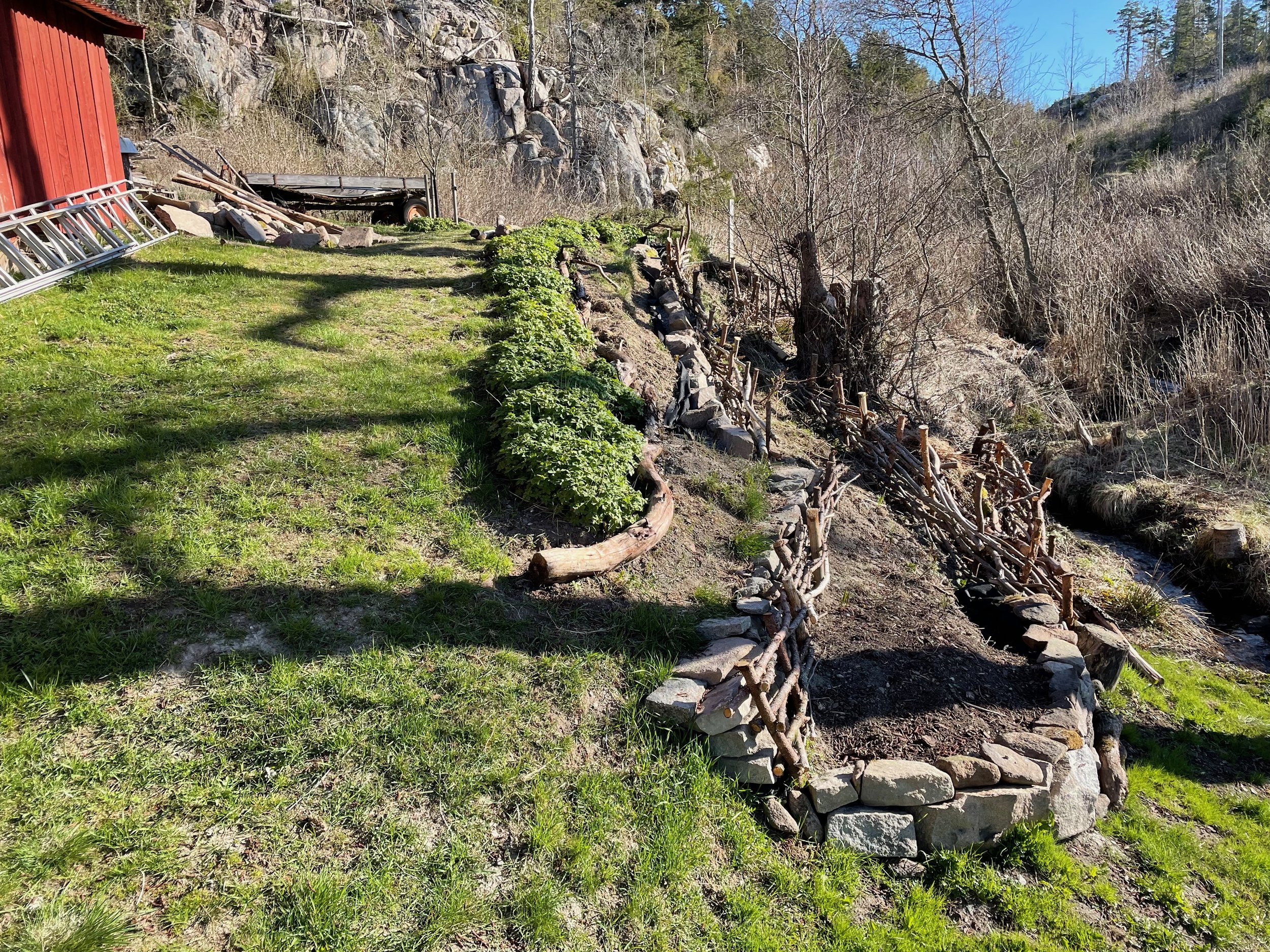
With the woven branch structure holding the soil in place, I could safely dig a trench directly behind the future stone wall.
This trench was then filled with gravel, creating drainage that prevents water pressure from building up behind the terrace.
Proper drainage is essential. Without it, water trapped in the soil can push the wall outward over time.
Step 4 – Placing the Foundation Stones
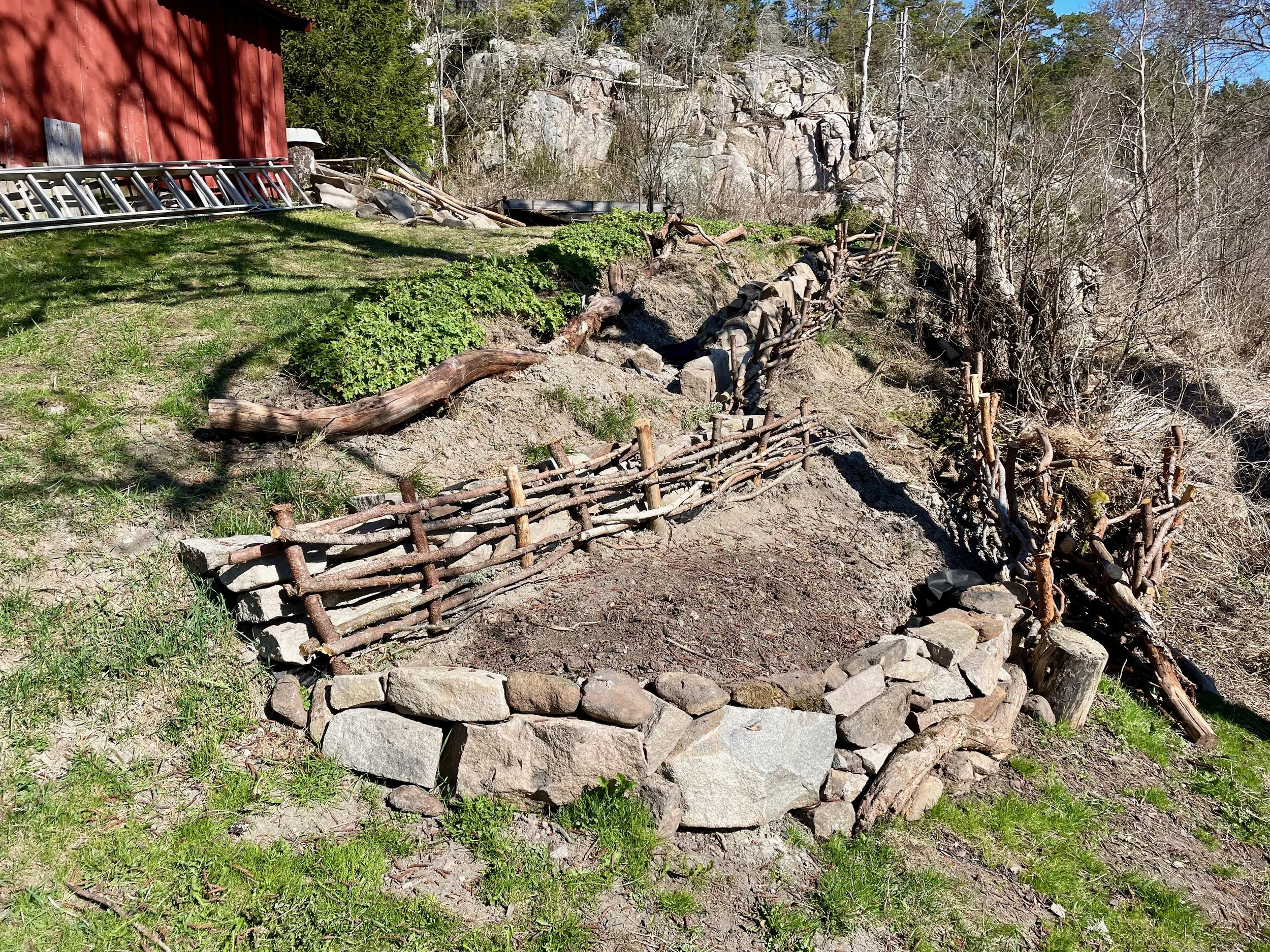
After the gravel was in place, I laid the largest and heaviest stones in a row at the front of the terrace.
Each stone was set leaning slightly inward toward the slope. This inward angle allows the stones to better resist the natural pressure from the soil behind them.
Combined with the drainage and the woven branch support, the stones form a strong retaining structure.