
Swedish Heirloom Varieties
Within the Nordic garden, plant selection is guided by continuity as much as climate. Choosing plants suited to Nordic conditions ensures not only reliable harvests, but a garden that develops resilience over time.
Swedish heirloom varieties have often been preserved through generations, and reflect this approach.
Crops such as the Leksand onion from Dalarna and the Östgöta yellow pea from Östergötland have been shaped by local conditions, selected for their ability to mature within a short growing season and store well into winter.
Dense, cold-tolerant varieties like Solberga cabbage connect directly to traditions of preservation, while Mor Kristins bean continues a lineage of seed-saving, that links one season to the next.
These crops are part of a broader system of climate-adapted plant selection, where resilience, timing, and usefulness define what is grown.
Their variation, subtle differences in size, timing, and yield, is not a limitation, but a strength. It reflects a long process of adaptation, allowing the plants to respond to fluctuations in temperature, moisture, and soil.
Many of these varieties are still maintained through Programmet för odlad mångfald, where cultivated heritage remains active and evolving.
To grow them is to work in alignment with both soil conditions in Nordic gardens and the seasonal rhythm that defines all cultivation.

Heirloom Blooming Plants
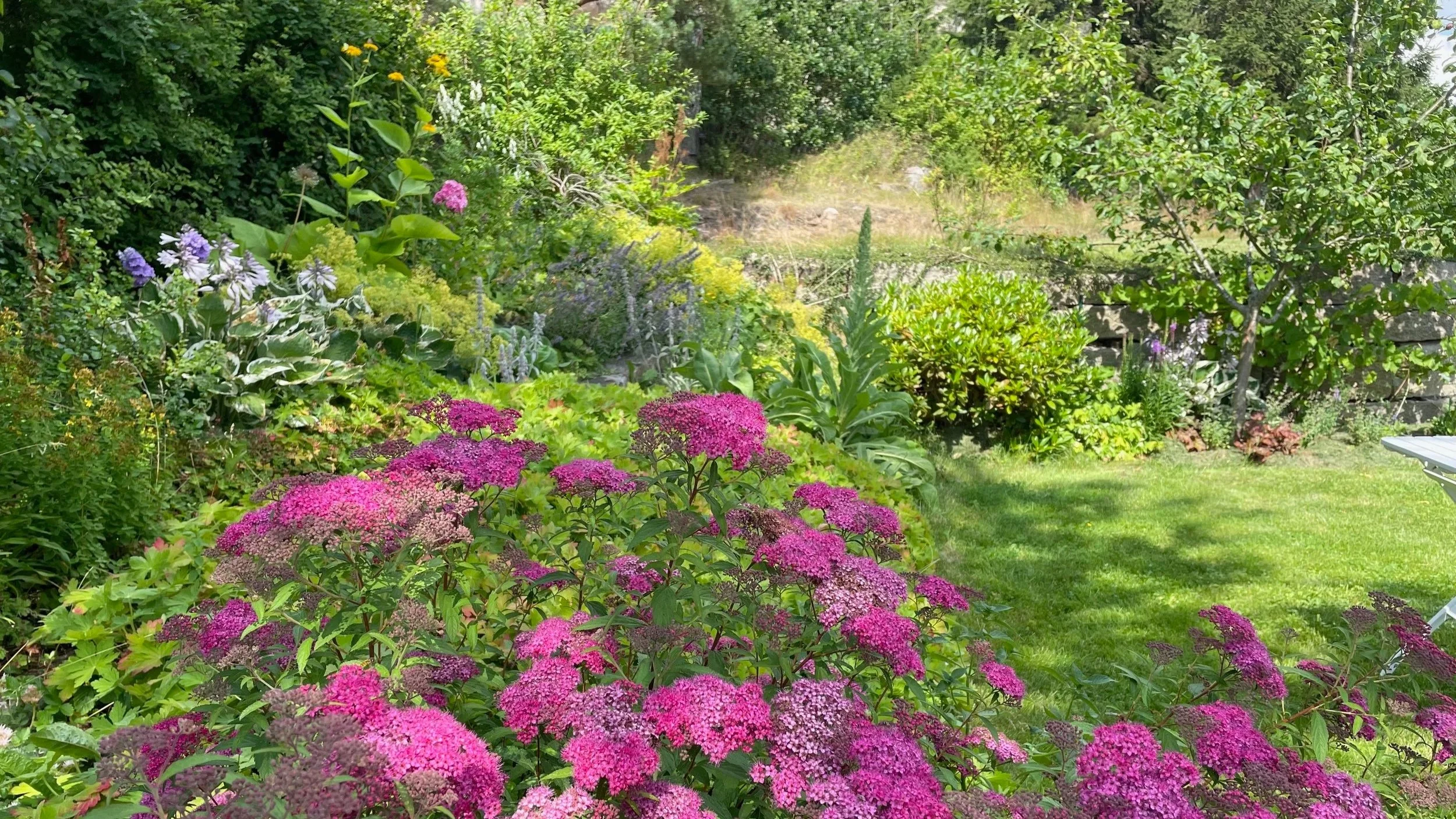
Alongside edible crops, flowering plants form an integrated part of the Nordic garden. They are not separate from cultivation, but contribute to a balanced ecosystem, supporting pollinators, improving soil vitality, and softening the structured geometry of the kitchen garden.
Traditional perennials such as Peony and Hollyhock are often placed near buildings, where warmth and shelter extend their flowering season.
Lupin establishes itself more freely, contributing both structure and nitrogen to the soil, while Foxglove introduces height and seasonal variation.
These plants belong within a broader tradition of hardy perennials in Nordic gardens, where longevity and adaptation are valued over short-lived display.
They return each year with quiet consistency, shaped by the same environmental conditions as the edible crops. In this way, flowering plants are not ornamental additions, but part of a cohesive system. One that connects productivity, biodiversity, and visual balance.
Back to: How to plan a Nordic Garden →
Back to: Nordic Garden→