Pendant Lamps – Suspended Light
Few lighting forms are as versatile or as quietly defining as the pendant lamp.
Across time, it has taken on countless shapes: softly rounded globes, elongated cylinders, delicate cones. The glass may be opal white, gently diffusing the light, or richly coloured, green, amber, or deep red which is adding warmth and character to a room. Each variation alters not only the appearance of the lamp, but the atmosphere it creates.
In a Nordic historic home, pendant lamps often appear as part of a layered story. Some are found at auctions, carrying traces of earlier lives, small imperfections, a patina that cannot be replicated. Others are newly made, yet rooted in traditions that stretch back to the 19th century.
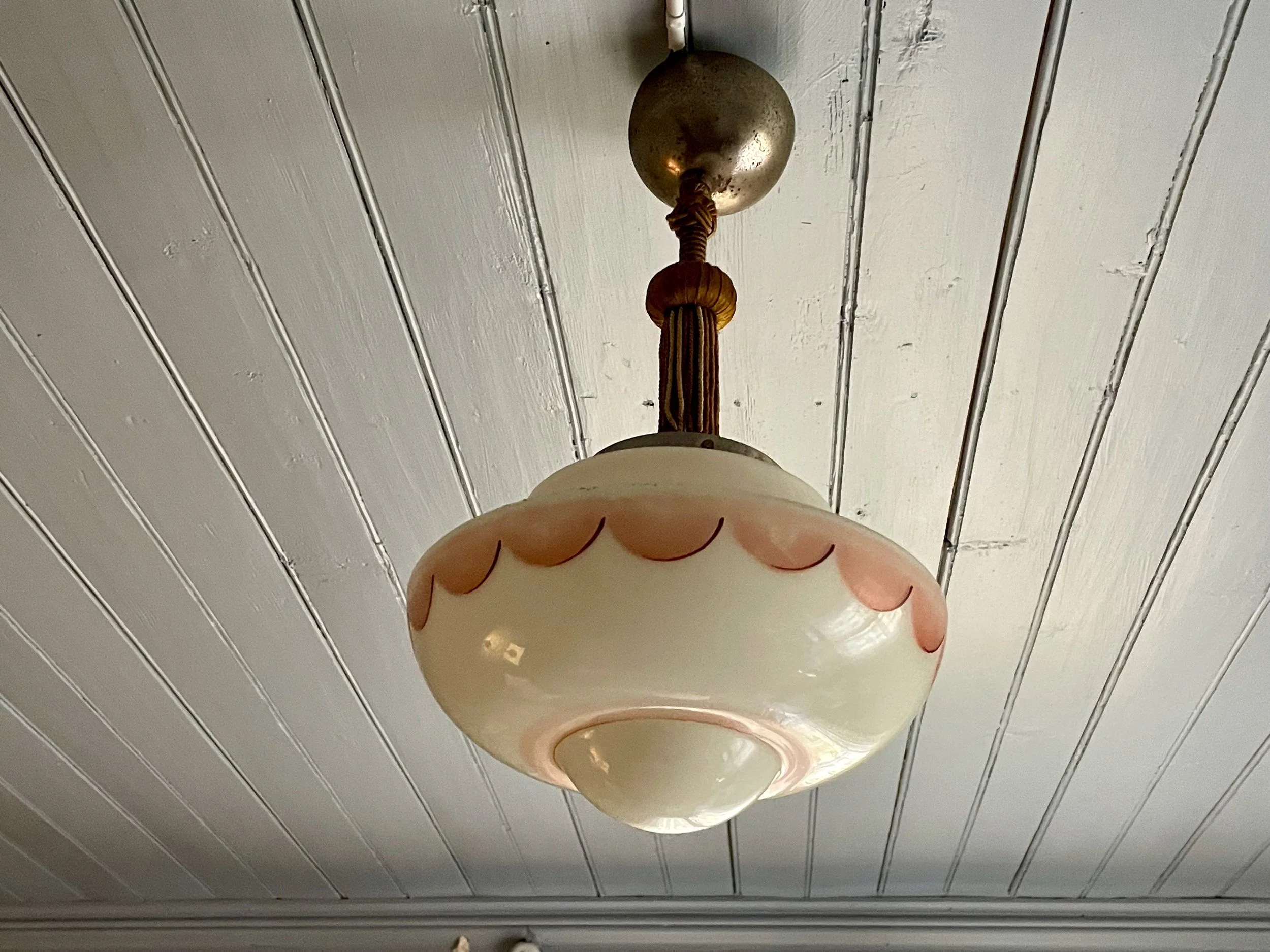
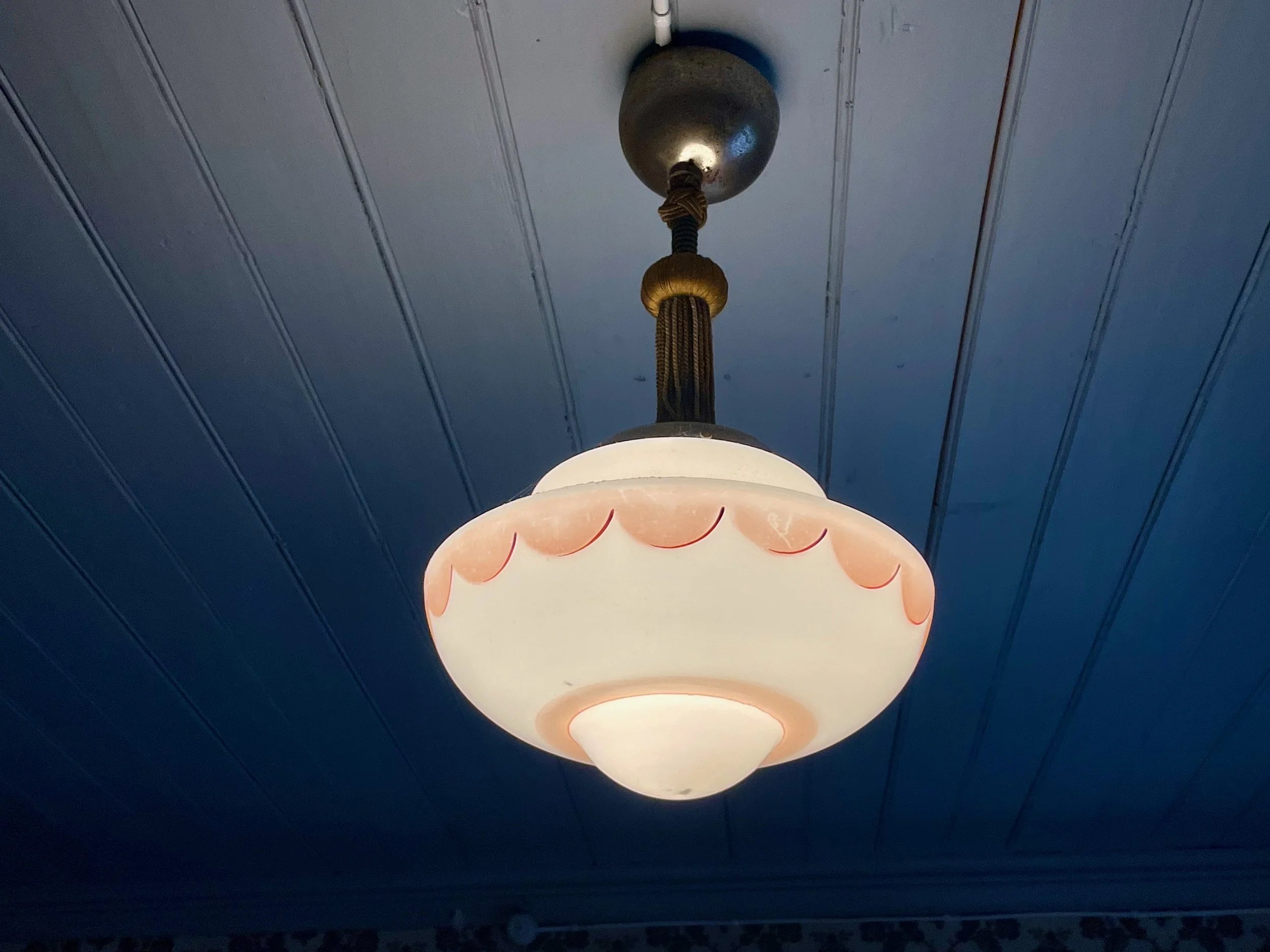
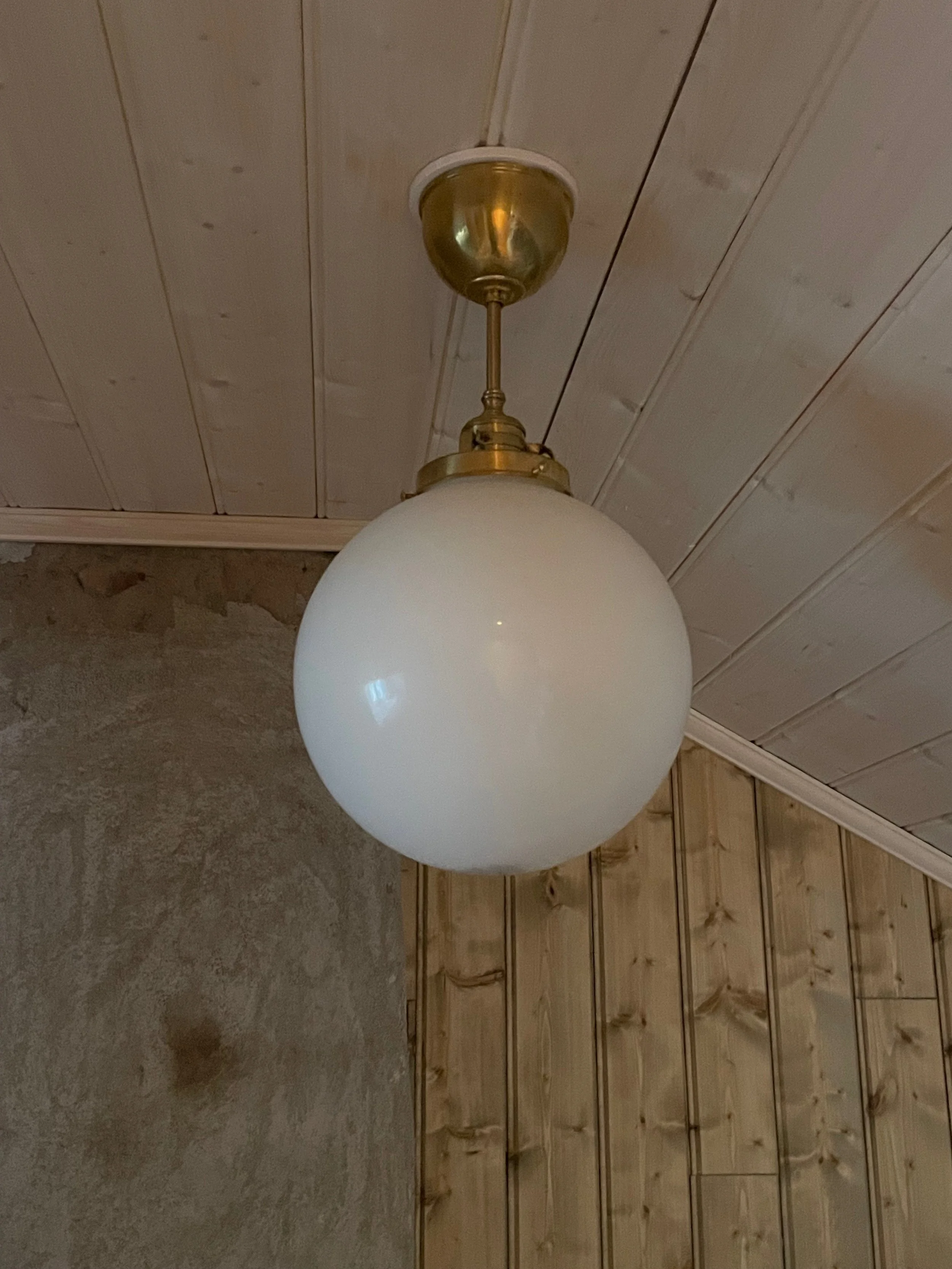
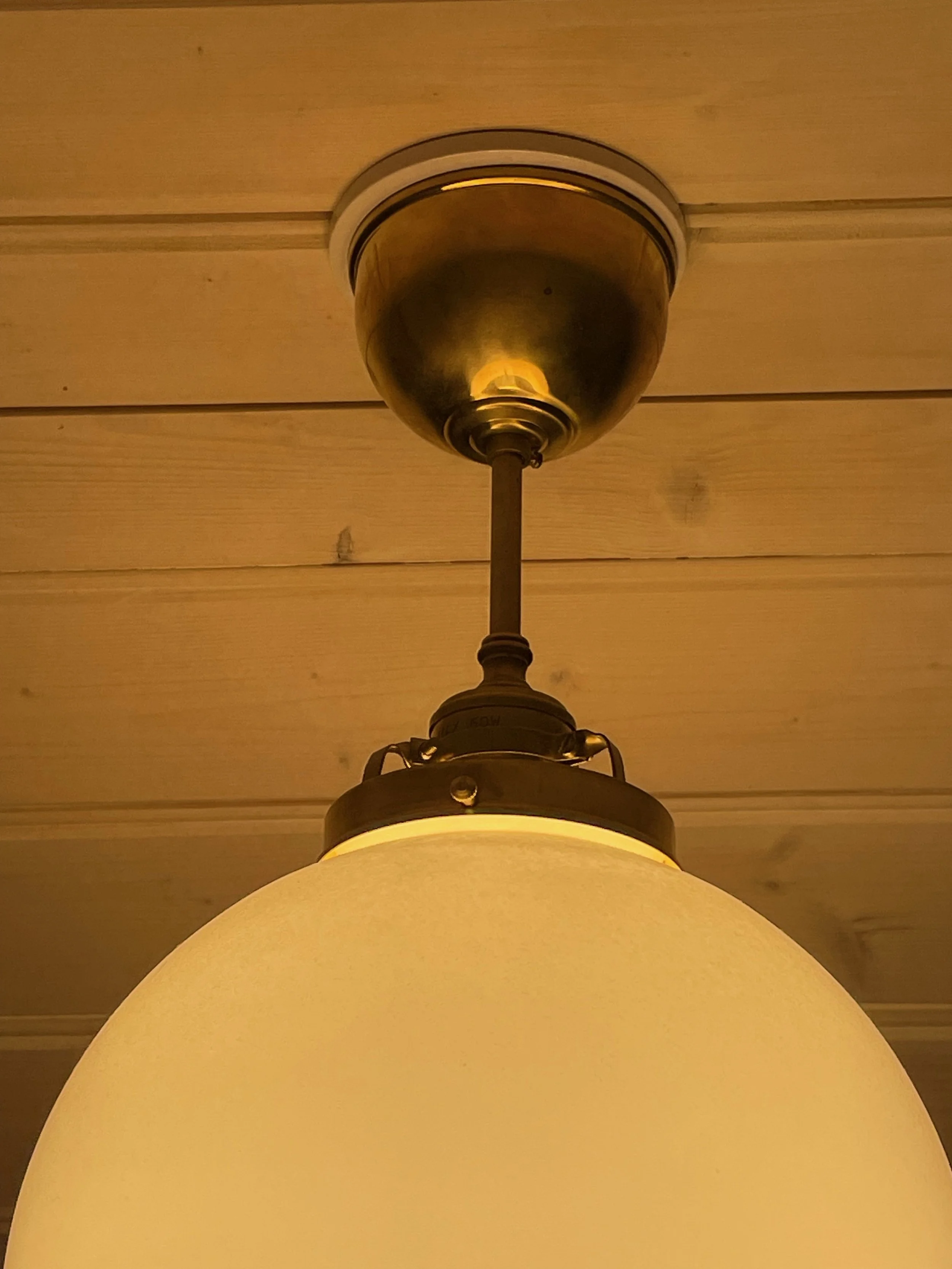
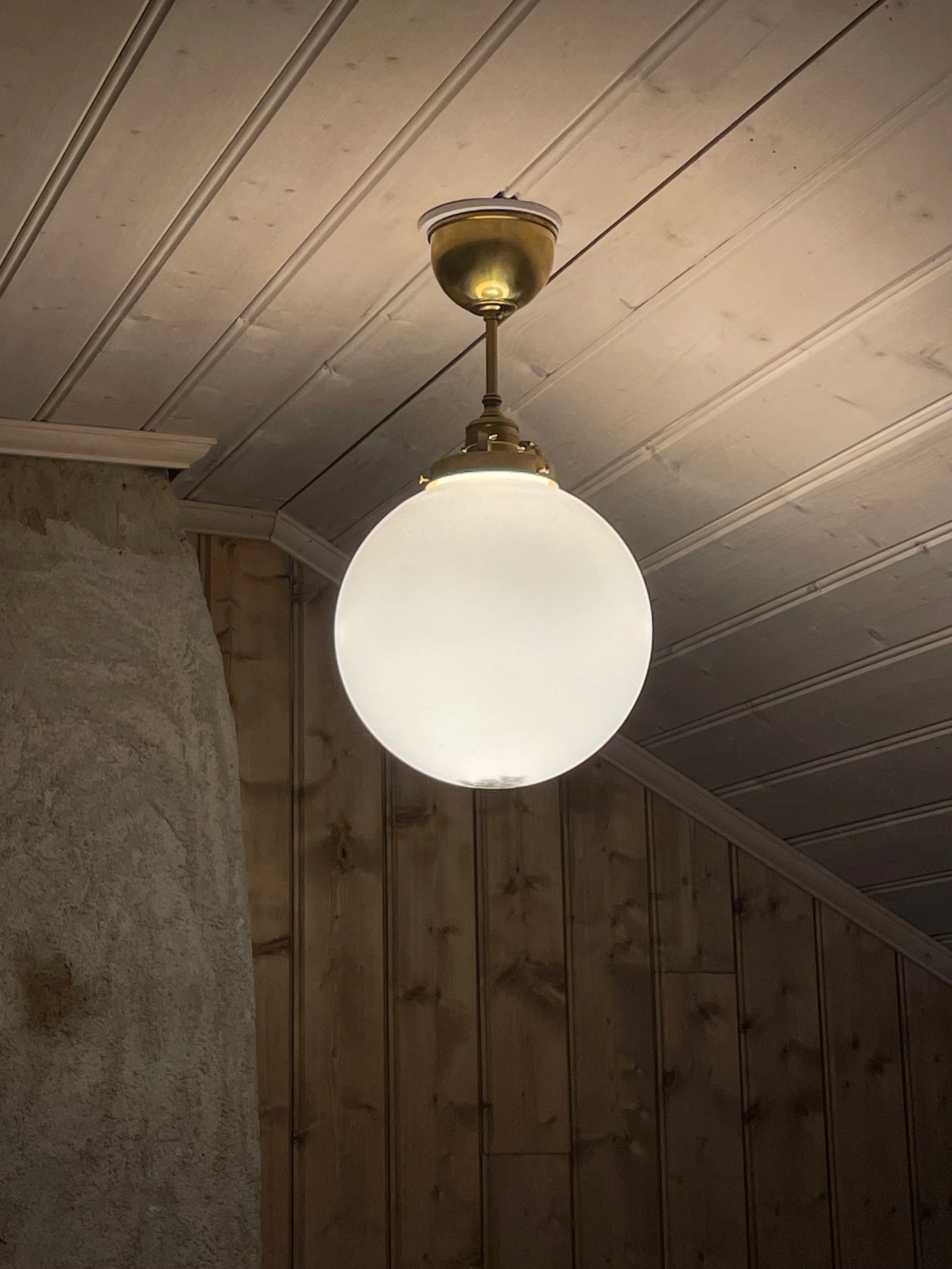
Among these, the work of Karlskrona Lampfabrik offers a particular continuity. Their Rör pendel is not an antique, but something perhaps more meaningful: an original design still in production. Crafted entirely in brass, it reflects a philosophy where materials are allowed to speak for themselves.
Its construction is simple, almost architectural. A suspended glass shade is held by a rigid brass tube, the length of which can be adjusted to suit the proportions of the room. This detail is practical. The height of the lamp determines how the light falls, whether it defines a table, softens a corner, or opens up a space.
There is no excess here. Only balance.
In the Nordic interior, where light must often work against long periods of darkness, the pendant becomes essential. Hung low above a table, it creates intimacy and removes shadow. Placed higher, it allows the room to breathe, spreading a softer glow.
What makes these lamps enduring is not only their form, but their adaptability. Old or new, coloured or clear, they belong easily among timber, textiles, and time-worn surfaces.
Suspended between ceiling and floor, they hold light in place, quietly shaping the life that unfolds beneath them. Both modern and historic.
Back to: Inside the Home →