What We Planted in the Nordic Garden
A living composition of structure, resilience, and seasonal rhythm
A Nordic garden is not planted all at once, nor designed as a static composition. It is built gradually, layer by layer, where structure, climate, and time define what can take root and thrive.
Planting here is not decoration. It is a placement within a system, where every shrub, tree, and perennial contributes to a larger ecological and visual balance.
Structural Framework – Evergreens and Foundation Shrubs
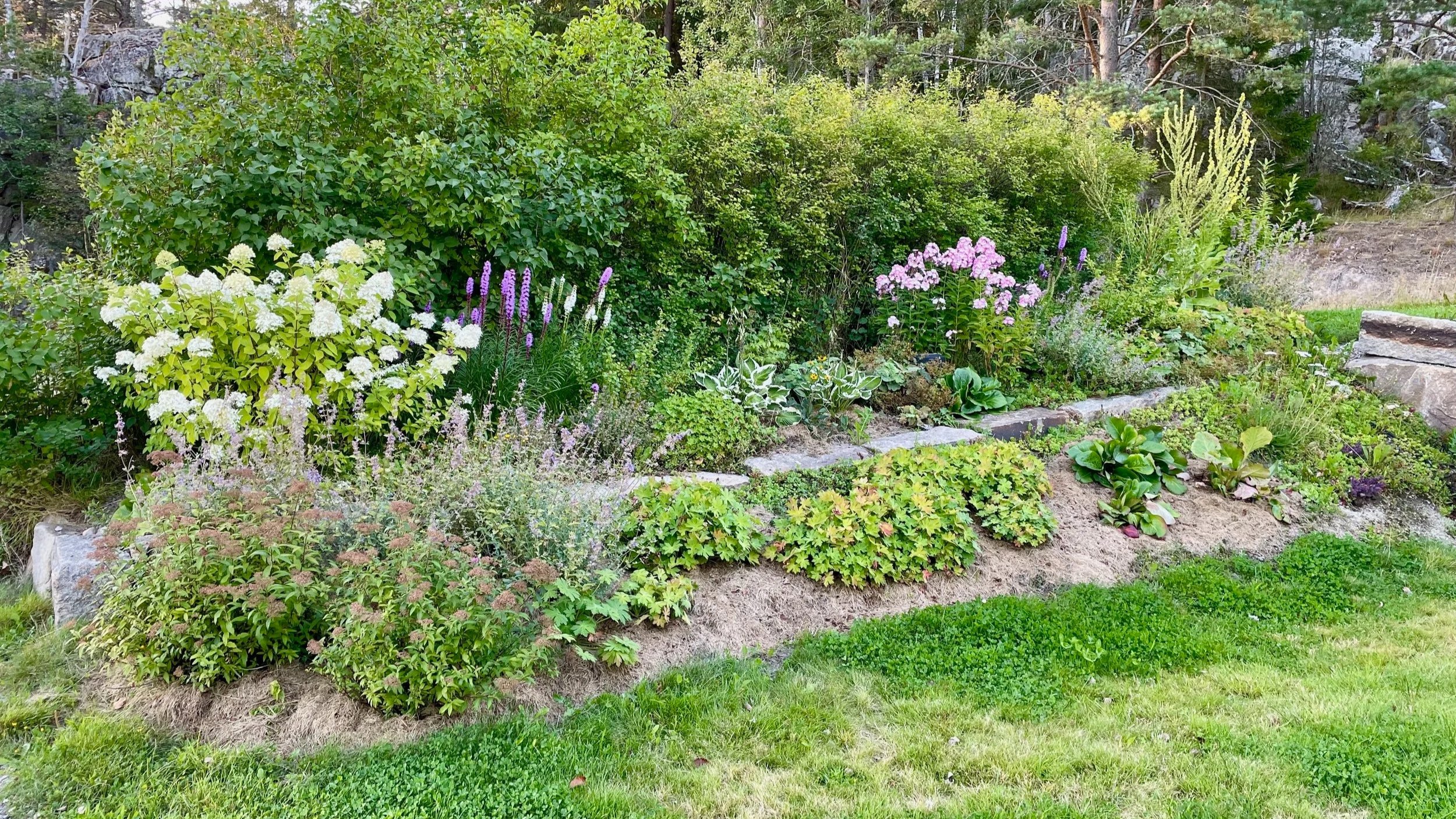
Along stone walls and edges, evergreen shrubs form the backbone of the garden. These plantings create permanence, structure, and year-round presence.
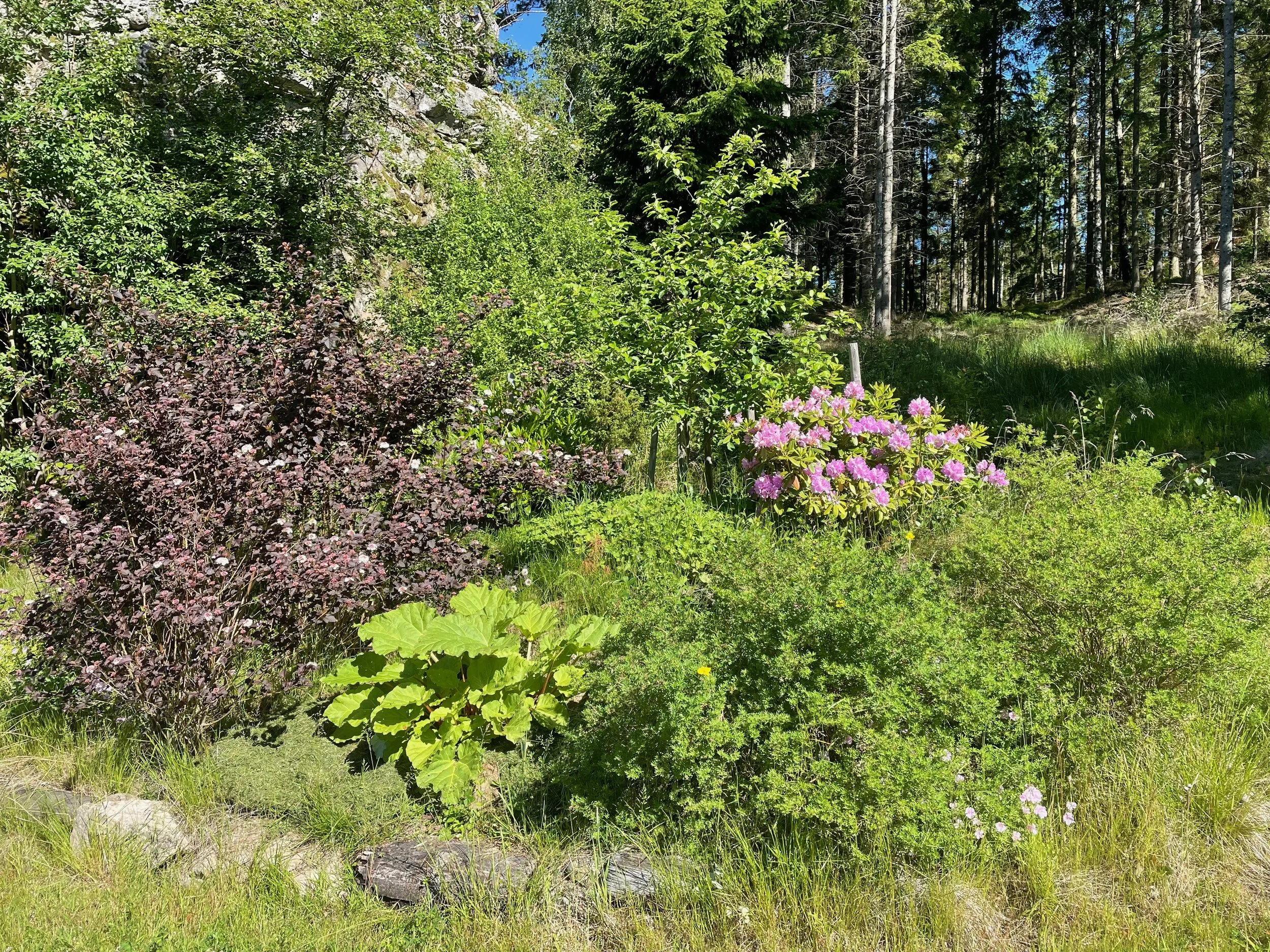
Rhododendron forms the most dominant layer of this structure.
Yakushimanum ‘Doc’ is placed along stone walls in sheltered beds, forming compact growth with soft pink blooms in early summer.
The Cunningham White park rhododendron expands this rhythm with broader growth and creamy white flowers, sometimes repeating its bloom into autumn in favorable conditions.
In more exposed corners, Catawbiense Grandiflorum brings deeper purple tones and a taller, more architectural presence.
These plants are left unpruned, developing slowly into stable forms that anchor the garden over time.
Seasonal Flowering Shrubs – Rhythm and Transition
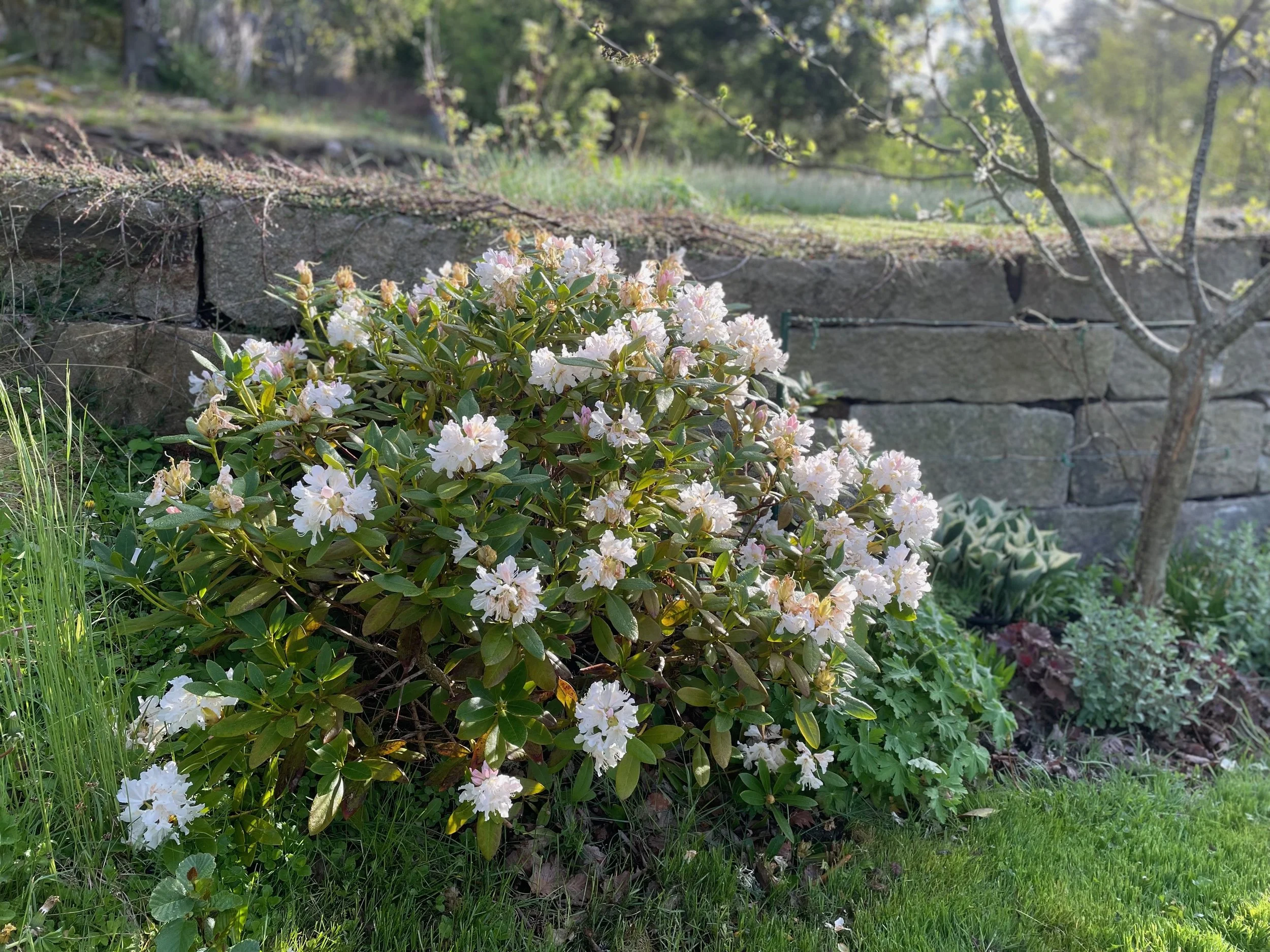
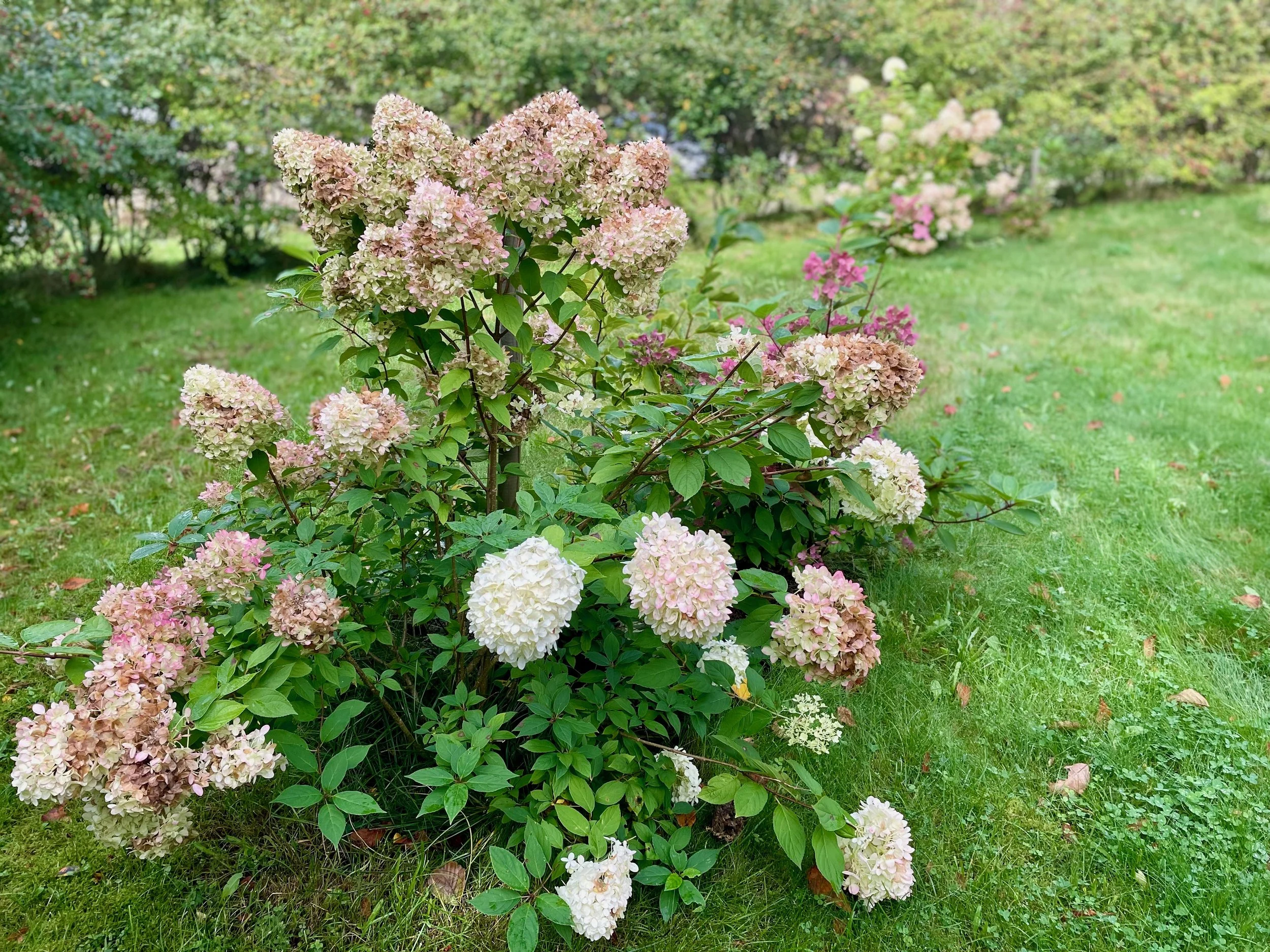
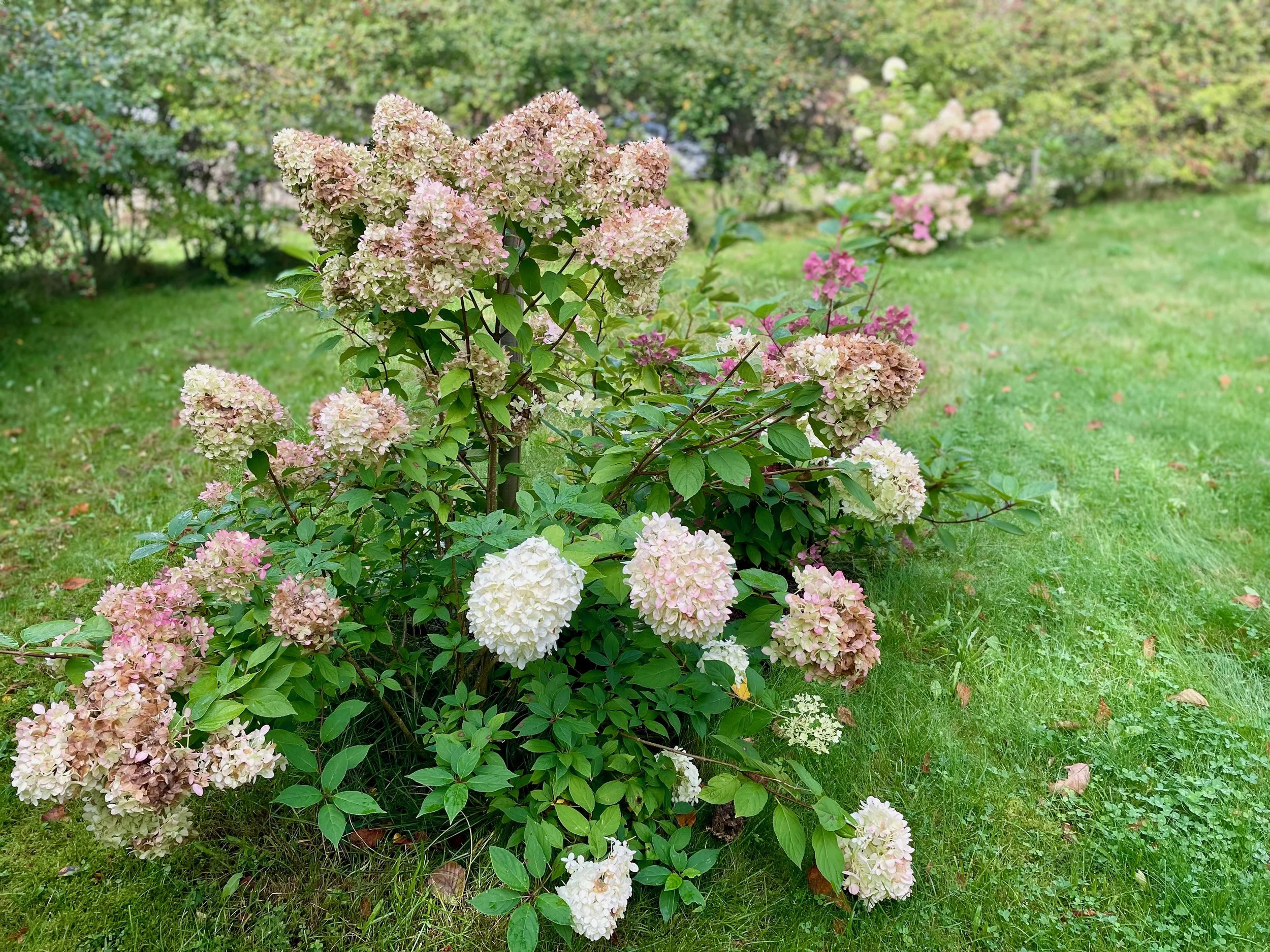
Hydrangeas define much of the garden’s seasonal transition, carrying structure from early summer into autumn.
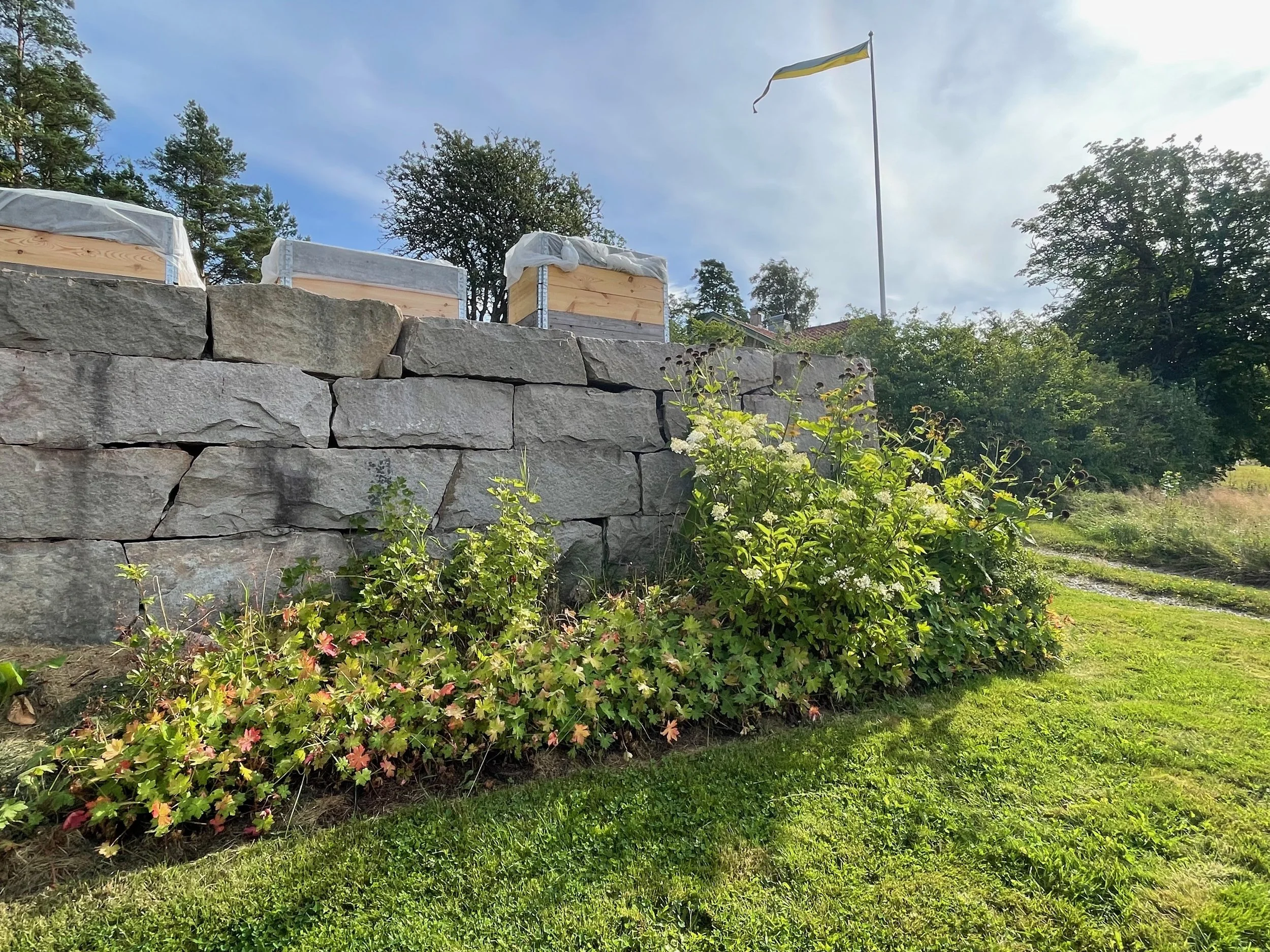
Along sheltered stone walls, Hydrangea macrophylla in both white and blue forms creates dense flowering masses, responding strongly to soil and moisture conditions. Varieties such as ‘Bodensee’ and ‘Bluebird’ extend the flowering period through summer and into early autumn.
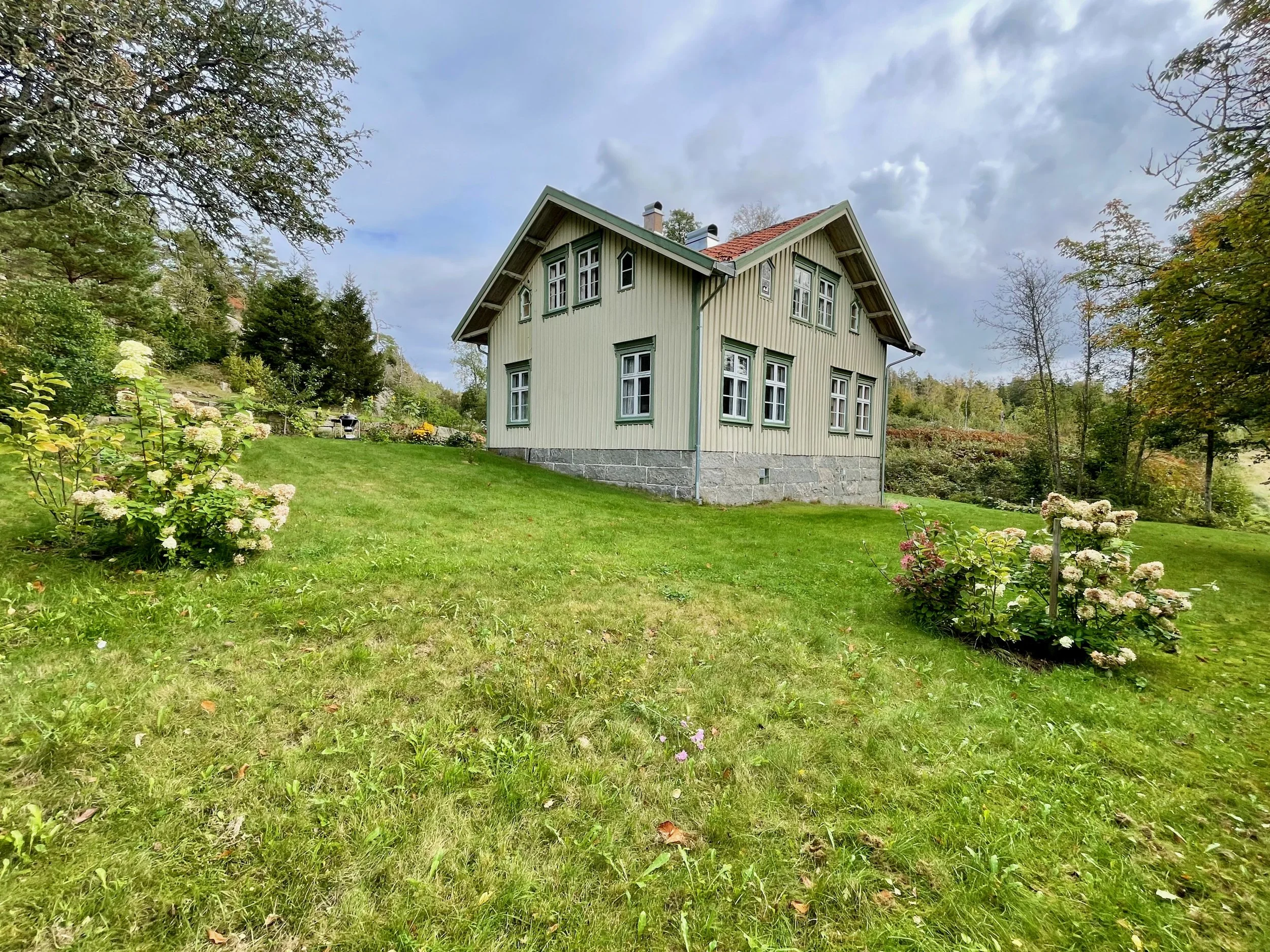
In contrast, Hydrangea paniculata ‘Limelight’ and Grandiflora form taller, architectural shrubs with conical flower clusters that shift tone as the season progresses. These are pruned annually to maintain structure and increase flower size.
More compact forms such as Hydrangea arborescens ‘Pink Annabelle’ add softness and volume to mid-level planting, while Hydrangea anomala petiolaris climbs vertical surfaces, connecting architecture to vegetation.
Together, these hydrangeas create a continuous flowering sequence from early summer to late autumn.
Trees and Long-Term Structure
At a larger scale, trees define the long horizon of the garden.
Magnolia ‘Galaxy’ was intended to bring early spring flowering to the garden, its blooms appearing on bare branches as one of the first signs of the season. Over time, however, it has struggled to adapt to the soil and climate, gradually declining rather than establishing as intended.
Forsythia suspensa carries the same early rhythm with cascading yellow bloom.
Near open areas, Laburnum x watereri ‘Vossii’ forms a seasonal focal point with yellow bloom in late spring.
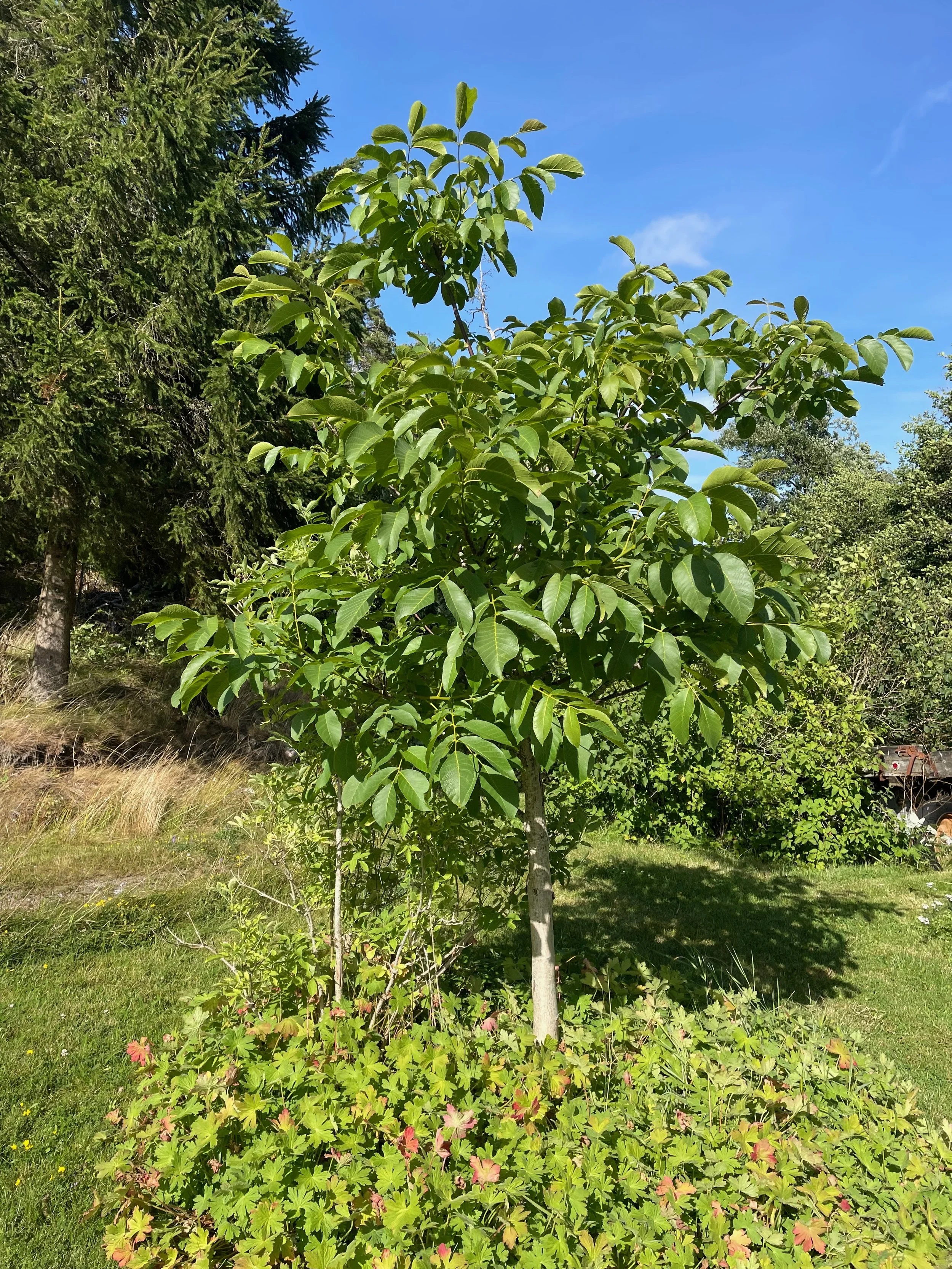
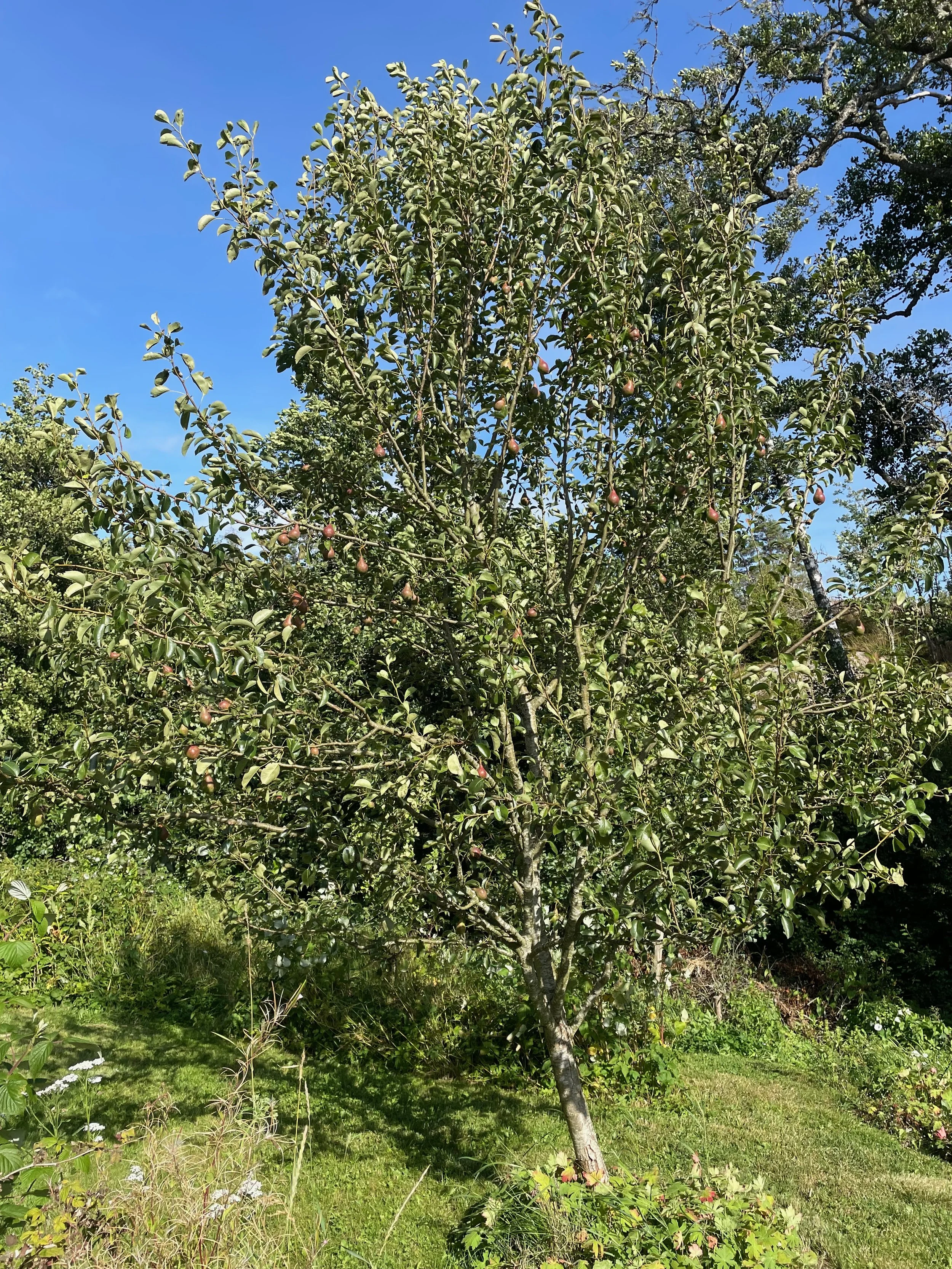
Fruit trees such as apple, plum, and cherry establish long-term productivity within the structure of the garden.
The orchard includes varieties such as ‘Ingrid Marie’, ‘Aroma’, ‘Åkerö’, and ‘Katinka’, selected both for taste and cross-pollination compatibility. These trees form a productive layer that integrates directly into the ornamental landscape rather than standing apart from it.
Edible Layer – Fruit, Shrubs, and Productivity
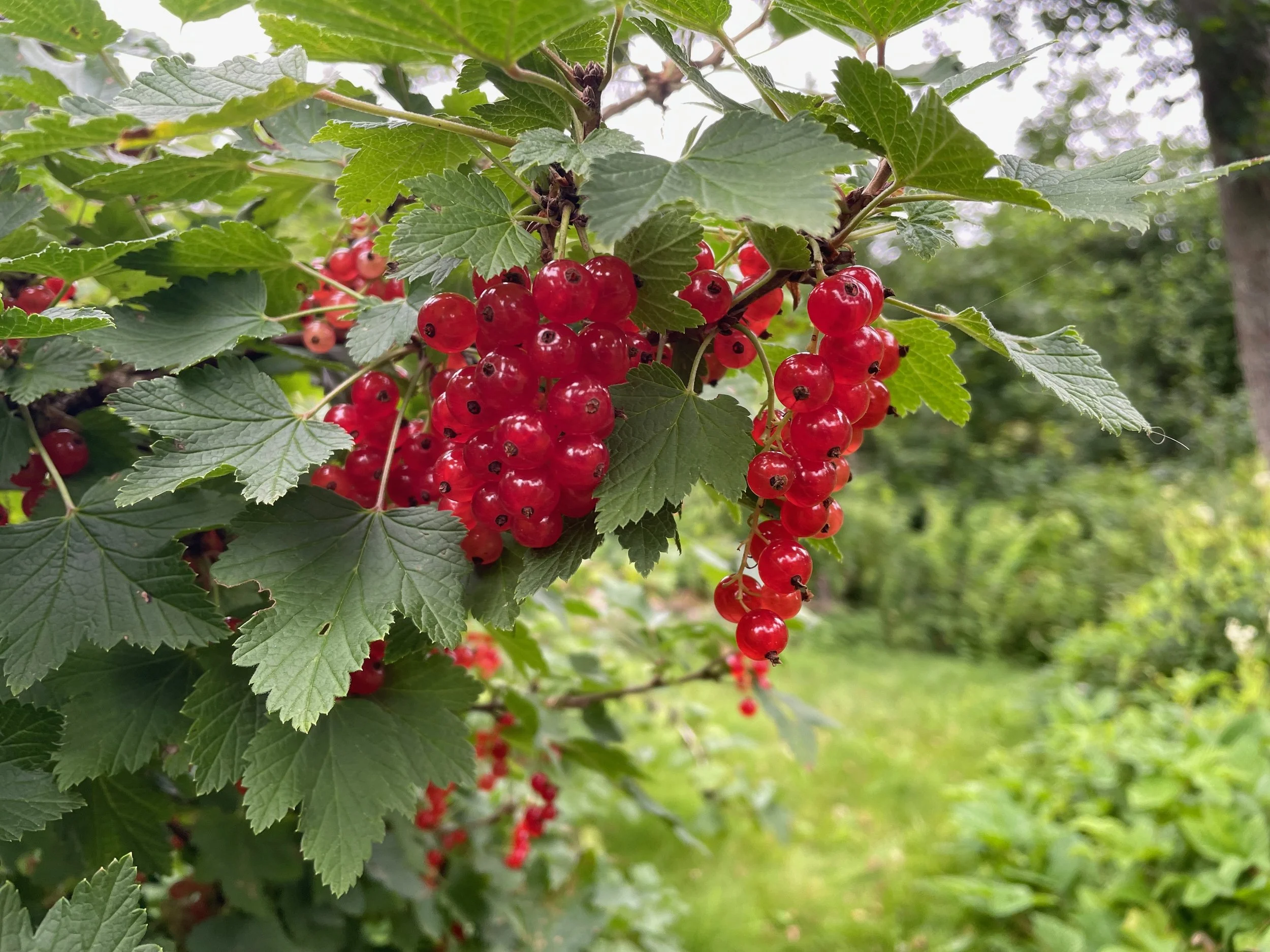
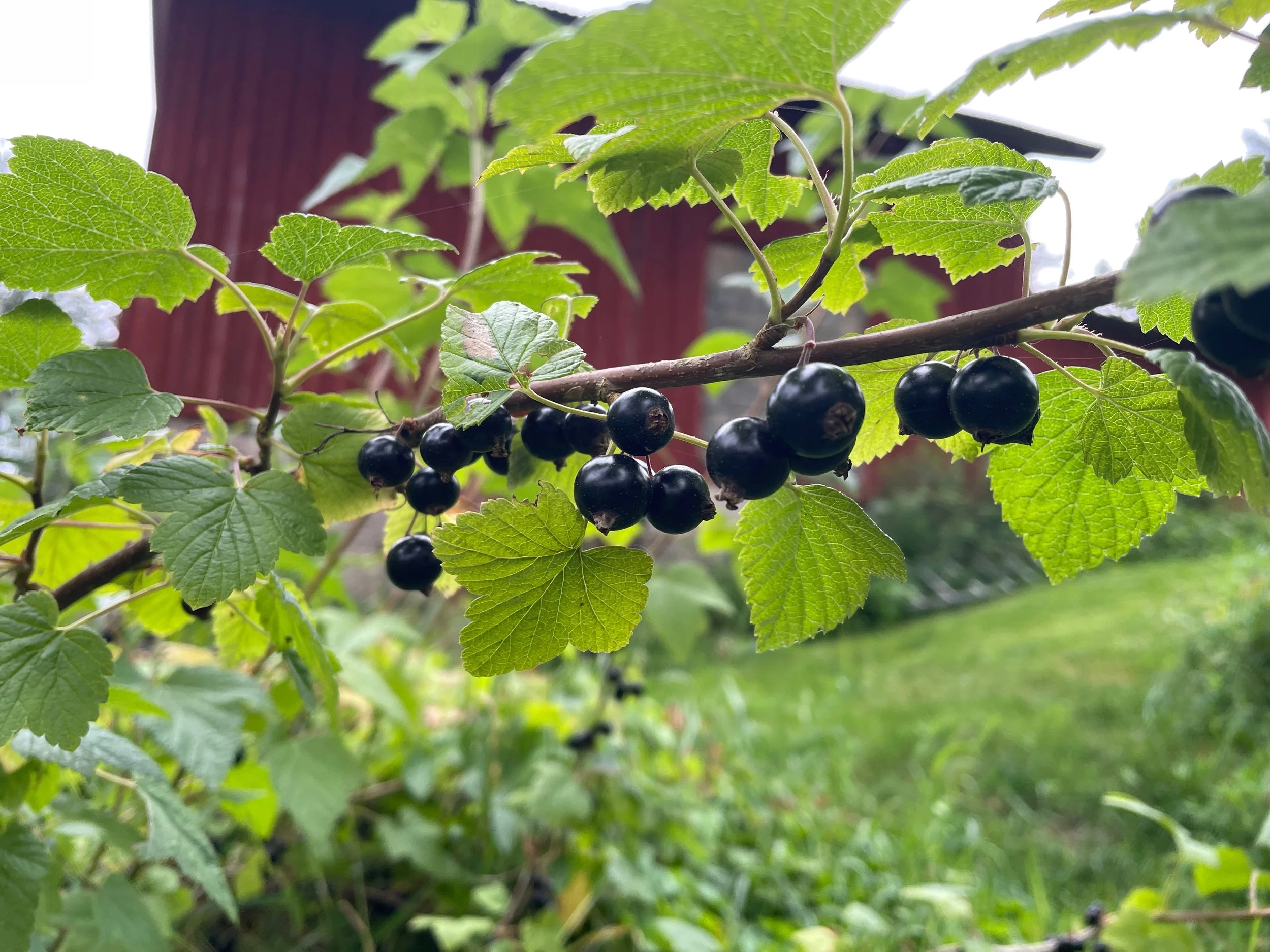
Between ornamental structure and open spaces, edible shrubs provide continuity between garden and kitchen.
Havtorn (sea buckthorn) is planted as a functional and ecological system, with male ‘Otto’ and female ‘Eva’ ensuring pollination and high-yield berry production.
Currants and raspberries contribute seasonal harvests, while blackcurrant (Ribes nigrum ‘Öjebyn’) and redcurrant varieties provide stable yields in varied conditions.
Japanese quince (Chaenomeles japonica), and winter-hardy shrubs such as cotoneaster extend productivity into more structural planting zones, often doubling as natural boundaries or protective hedging.
Perennials and Ground Structure
The lower layer of the garden is defined by dense perennial planting, where structure, soil coverage, and seasonal flowering merge.
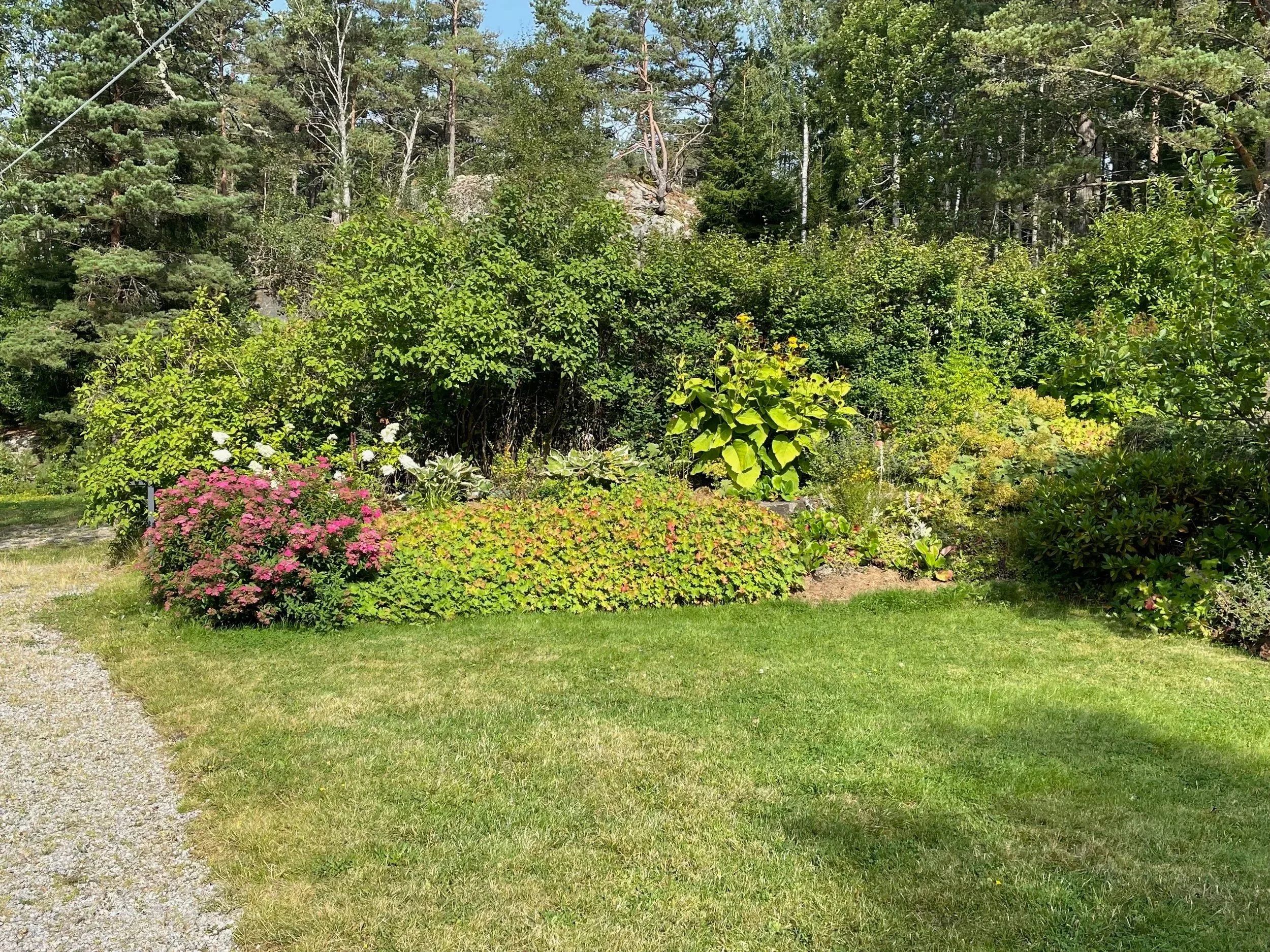
Geranium species form the foundation of this layer, including Geranium macrorrhizum, Rozanne, and Azure Rush, which function both as ground cover and long-flowering structural plants.
These are complemented by Heuchera ‘Palace Purple’, Alchemilla mollis, and Hosta, which provide contrast in texture, colour, and leaf form.
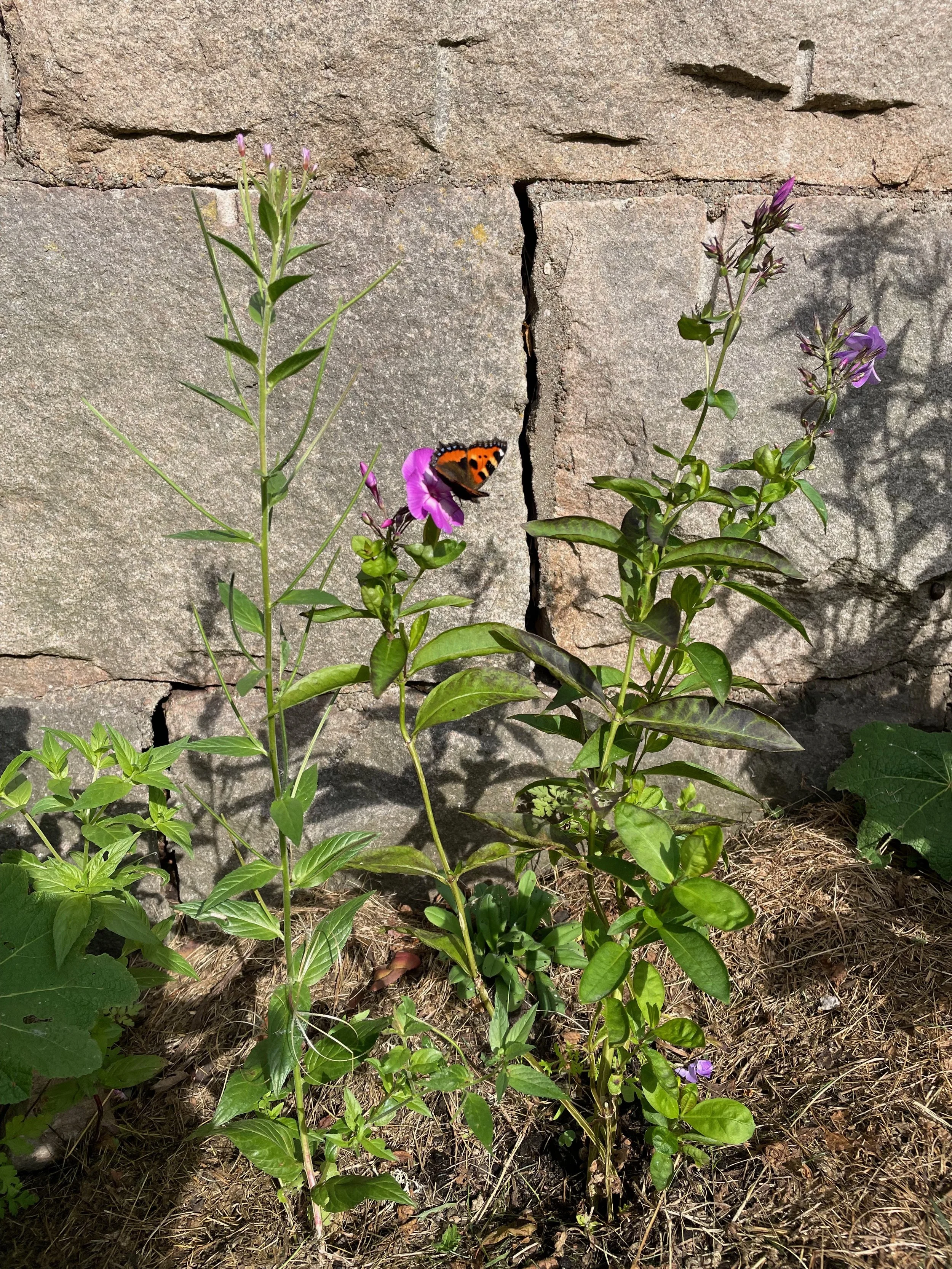
Seasonal highlights include Echinacea, Rudbeckia, Phlox, Liatris, and Sedum, creating a layered flowering sequence from early summer into autumn.
In more naturalized areas, Primula, Campanula, and Leucanthemum introduce meadow-like structure, while taller perennials such as Delphinium, Verbascum, and Aconitum bring vertical rhythm.
Ground Covers and Spatial Continuity
Ground-covering plants are essential for both structure and function. They suppress weeds, stabilize soil, and connect planting zones visually.
Species such as:
Bergenia
Campanula portenschlagiana
Nepeta
Stephanandra incisa
They form continuous surfaces between larger plant groups.
These plantings reduce maintenance while strengthening ecological stability within the garden system.
Climatic Logic and Placement
Plant placement in the Nordic garden is determined by exposure, soil, and microclimate.
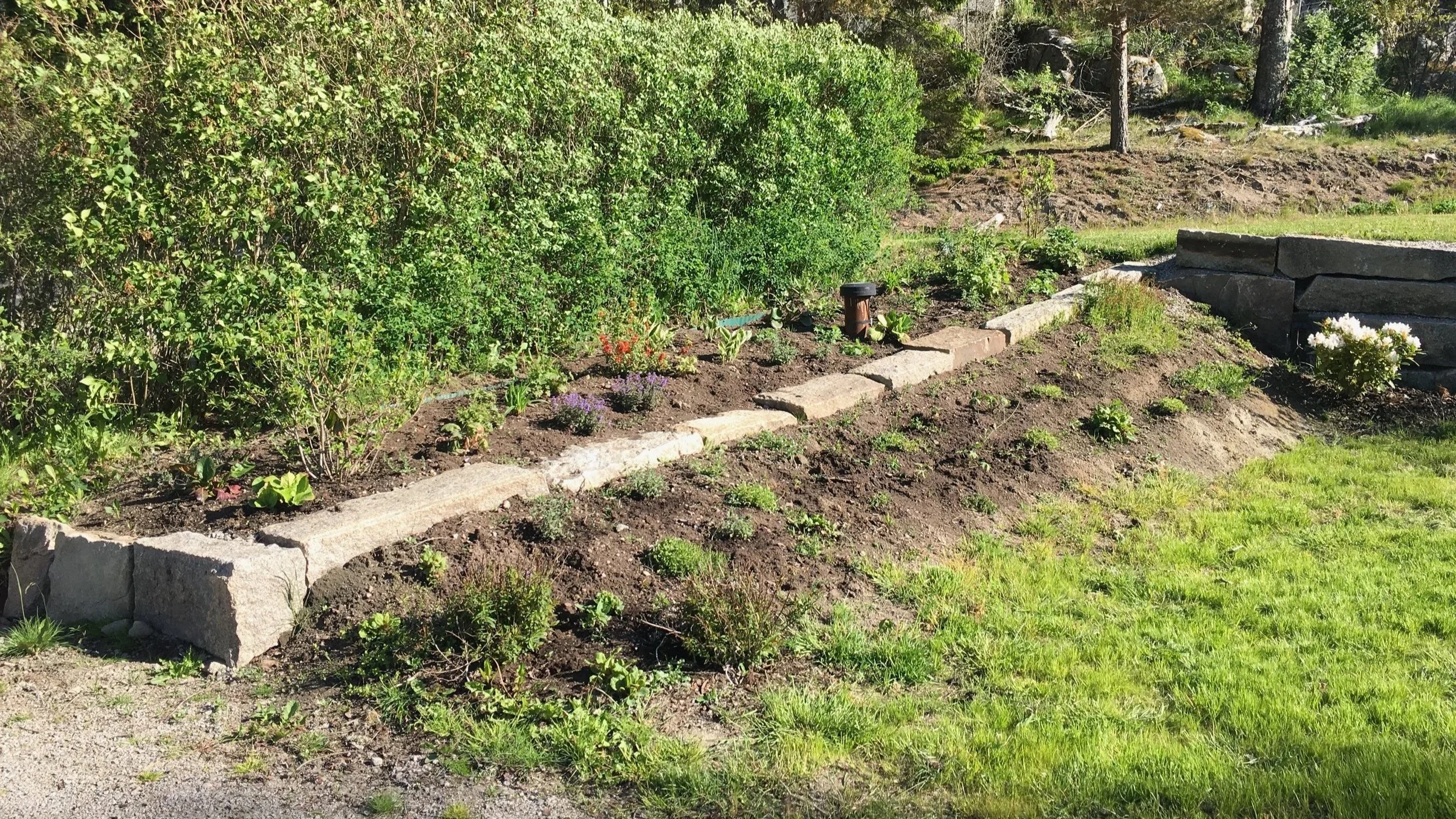
Sheltered walls support hydrangeas, magnolias, and rhododendrons.
Open sun-exposed areas are reserved for perennials, grasses, and fruiting shrubs.
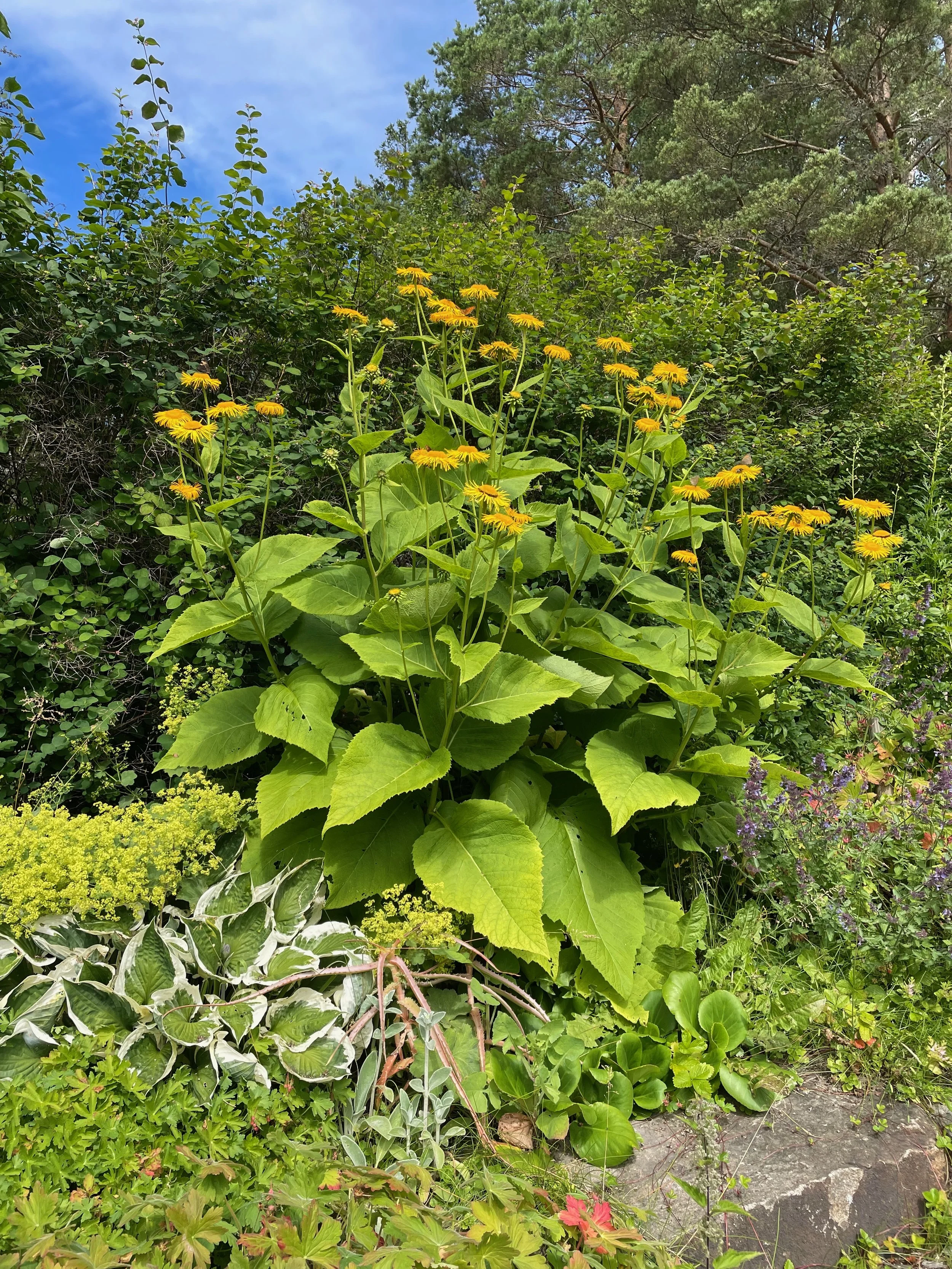
Moist zones accommodate ligularia and other water-loving species, while well-drained slopes support lavender, sedum, and drought-tolerant perennials.
This distribution is not aesthetic alone, it is functional adaptation to a short, variable growing season.
A Garden in Layers
The Nordic garden is ultimately a layered system:
Structural evergreens define permanence
Flowering shrubs create seasonal rhythm
Trees establish long-term framework
Edible shrubs connect to daily use
Perennials and groundcovers unify the whole
Together, they form a garden that is not static, but continuously evolving, shaped by time, climate, and careful placement rather than rigid design.
Next to: Inventory Plant List - Nordic Garden →
Back to: Nordic Garden→