
August at the Summer House – The Next Step Towards the Autumn Harvest
August is one of the finest months for planting. The soil is still warm from summer, while cooler nights and increased rainfall give plants ideal conditions in which to establish themselves before winter. It is an excellent time to plant perennials, shrubs and trees, but also to divide older perennials that have outgrown their space.
Planting for the Future
This is also the moment to reconsider planting beds where plants have become too crowded or are beginning to compete for light and space.
This is particularly important where a dense hedge is starting to take over. Late summer and early autumn offer the perfect opportunity to make these adjustments, laying the groundwork for stronger growth next year.
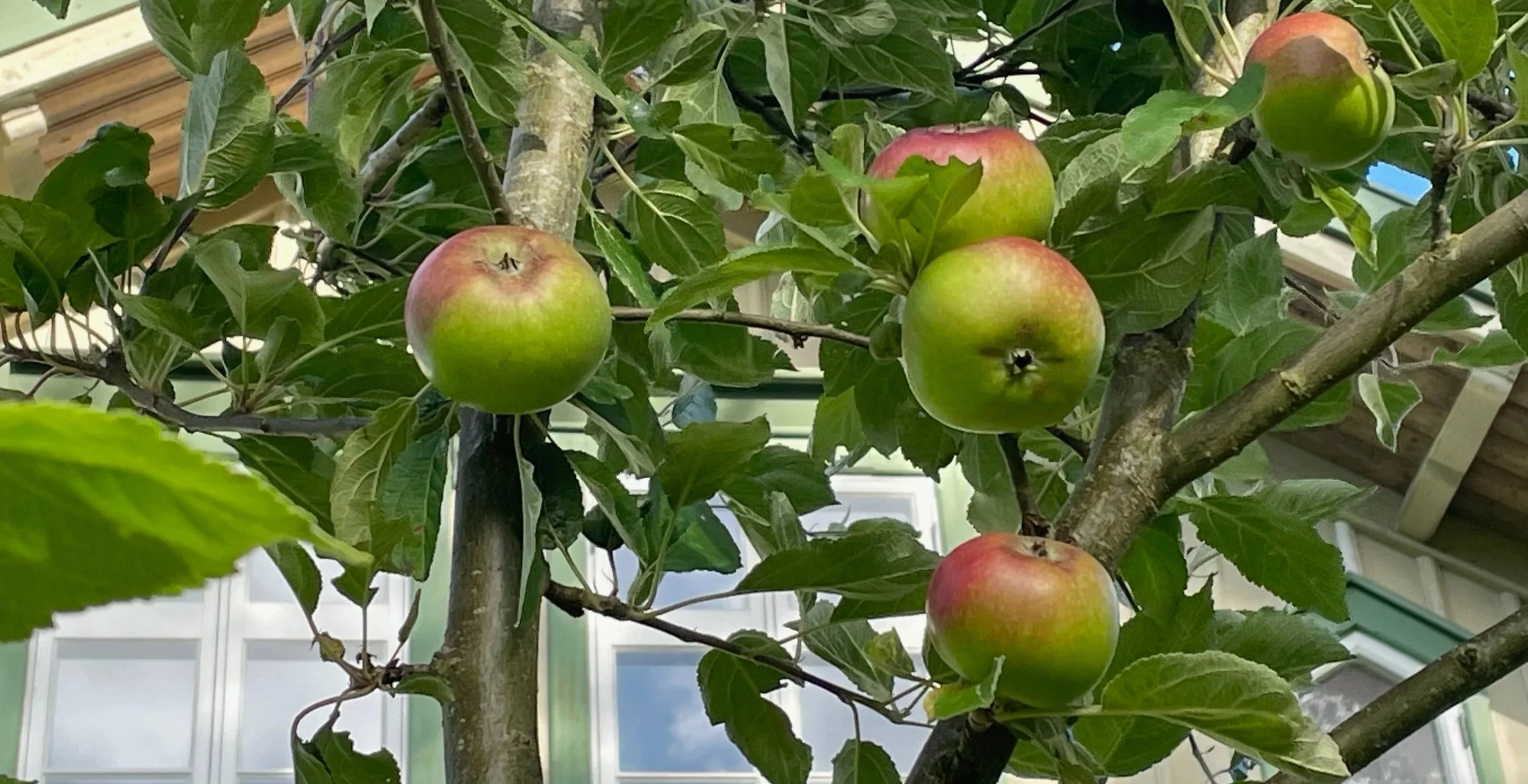
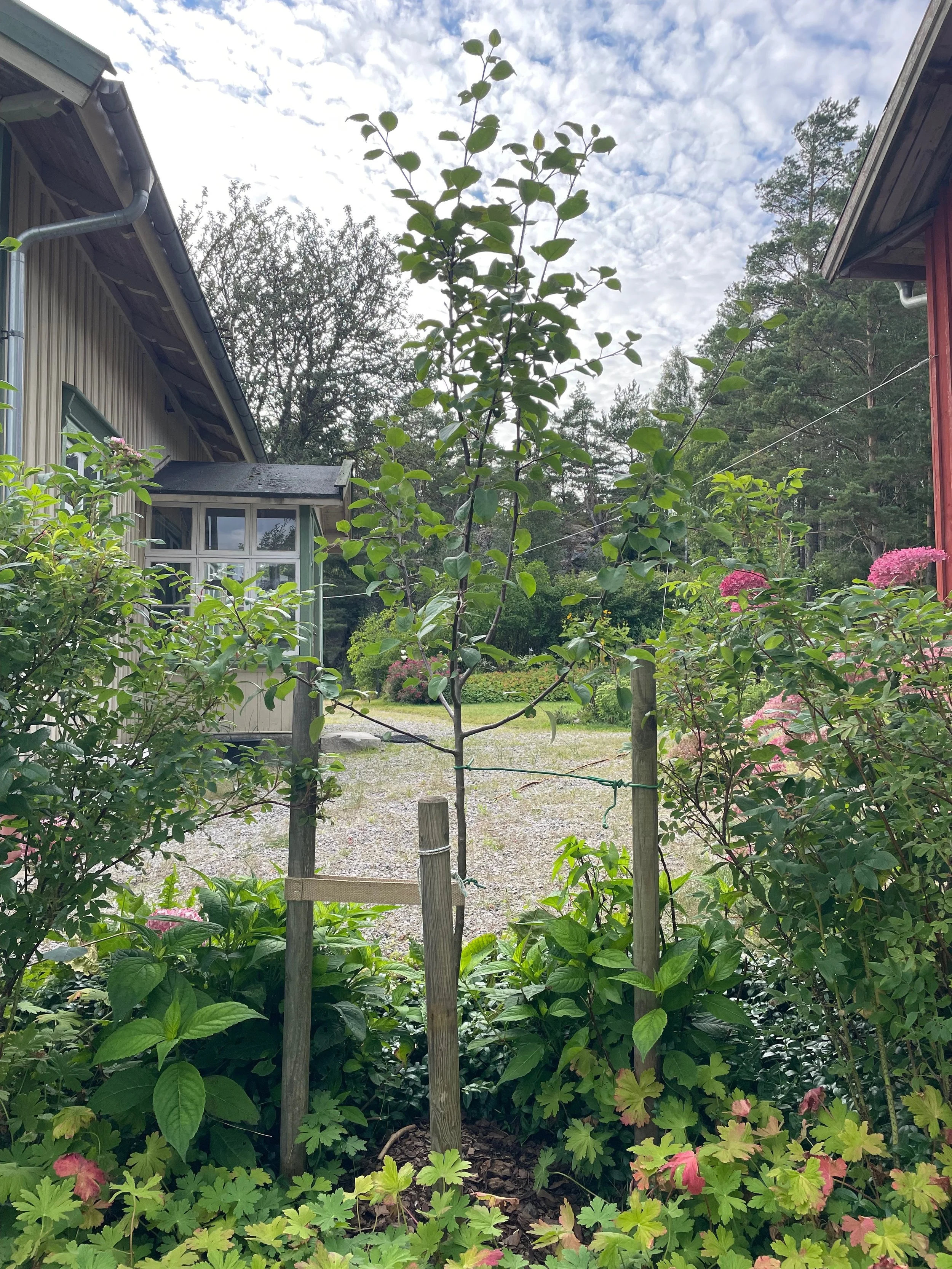
Despite this year’s modest apple harvest, the work of building a strong and well-balanced orchard continues. At the end of summer, the focus is mainly on keeping the soil free of weeds, ensuring a steady supply of water when needed, and allowing this year’s new Aroma apple tree to establish itself undisturbed.
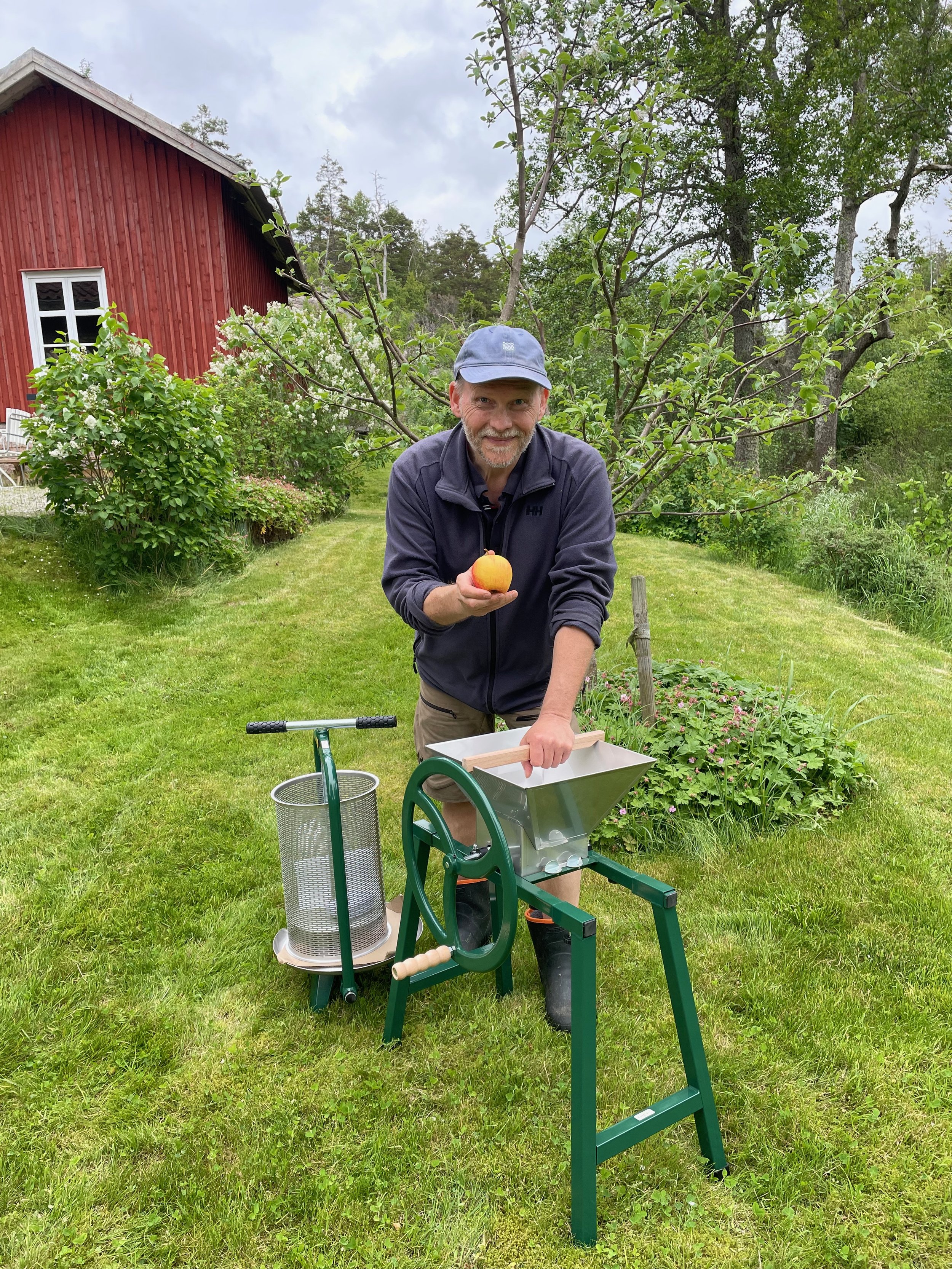
The apple press I received for my birthday from my parents and my sister and her family can hold a full 18 kilos of apples in a single pressing. For now, it will have to wait for the more abundant harvest we hope to see in a few years.
The Apple Trees – Preparing for Next Season
The Herb Garden Continues to Give
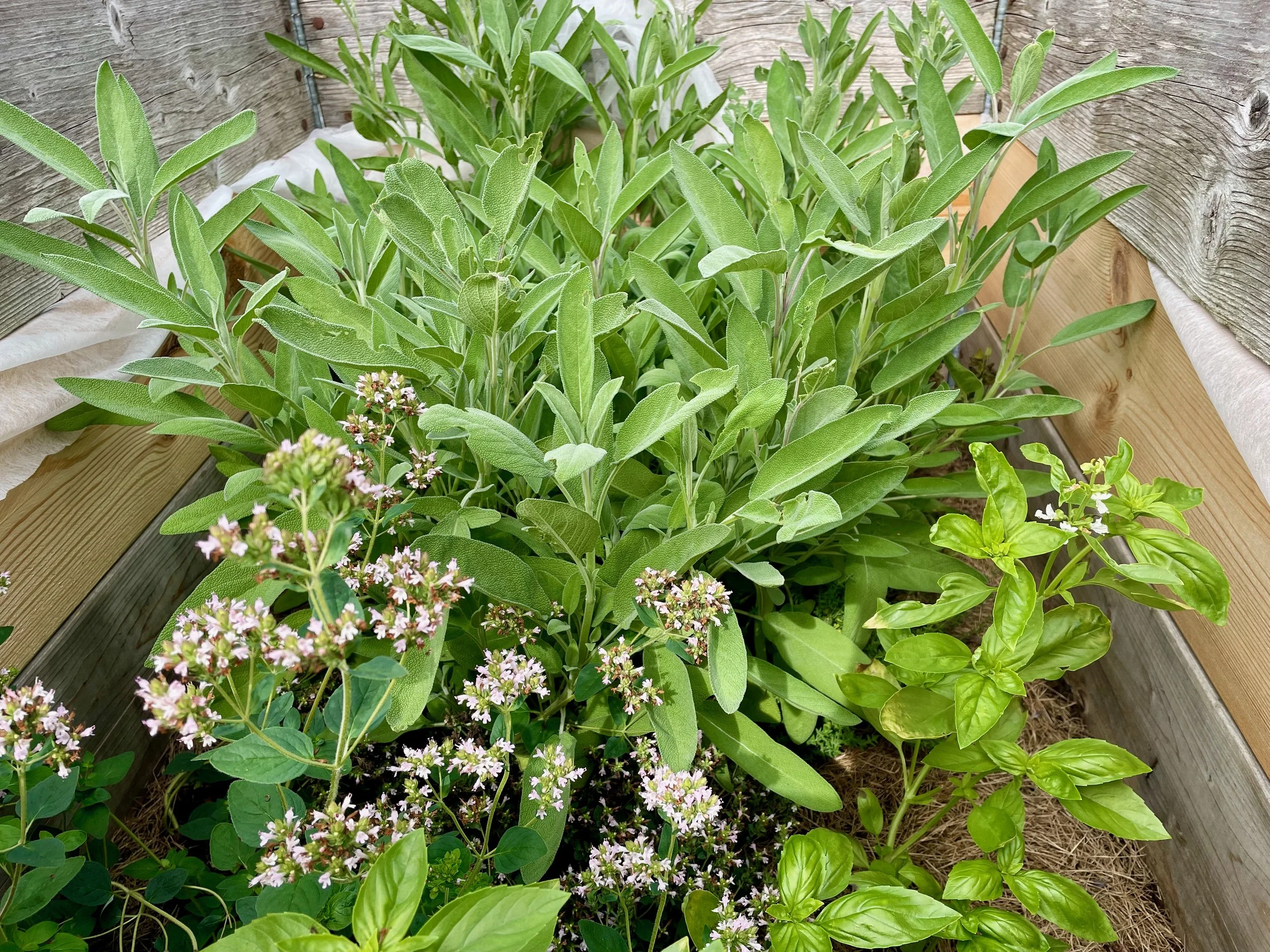
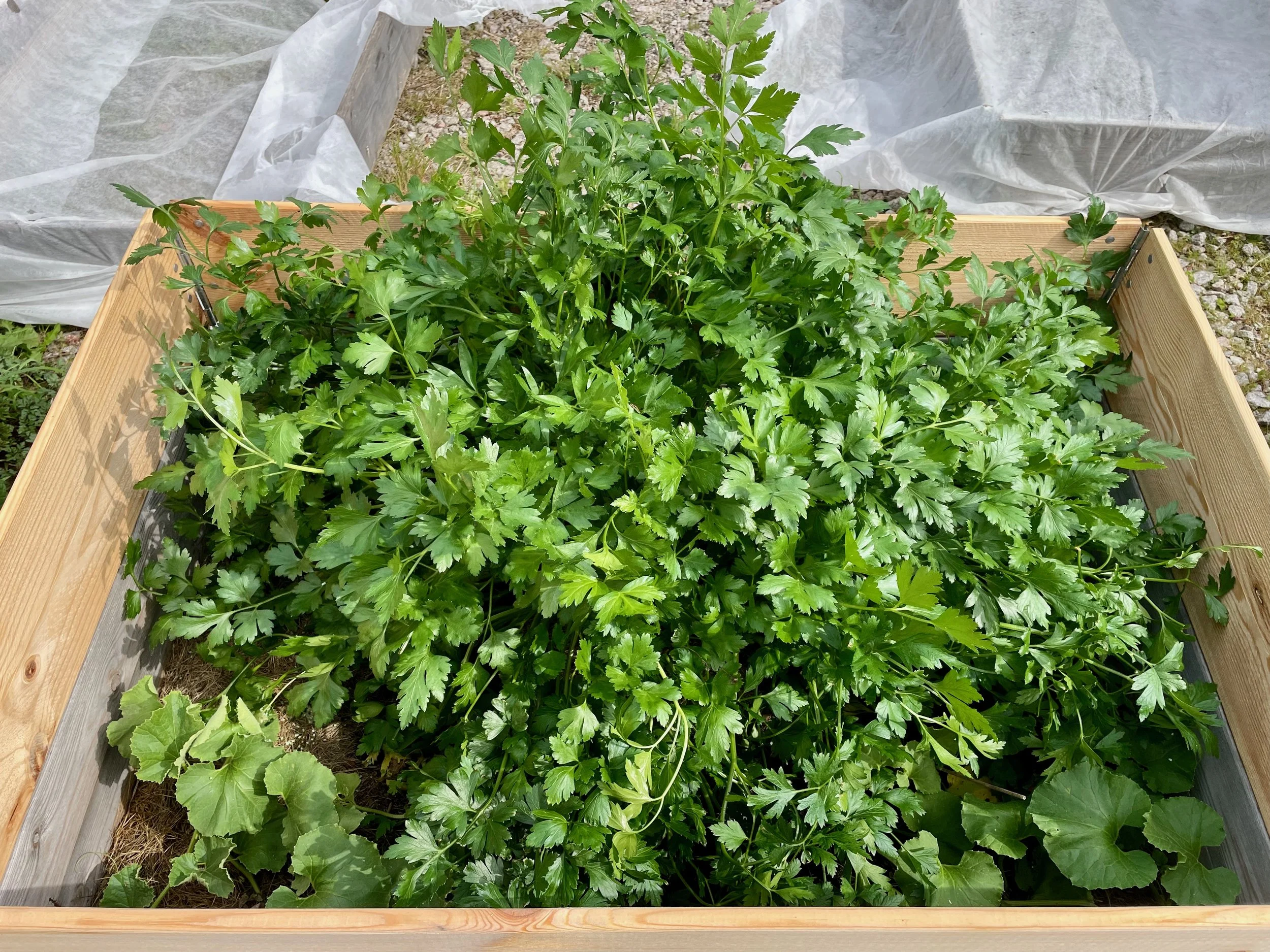
Many of the herbs are at their finest in August. Basil, oregano, thyme and parsley are harvested continually, used fresh in the kitchen or dried to build up supplies for the winter months.
Regular harvesting is also an important part of their care. Cutting the herbs back encourages fresh growth and allows them to continue producing well into autumn.
Preparing Next Year’s Garlic
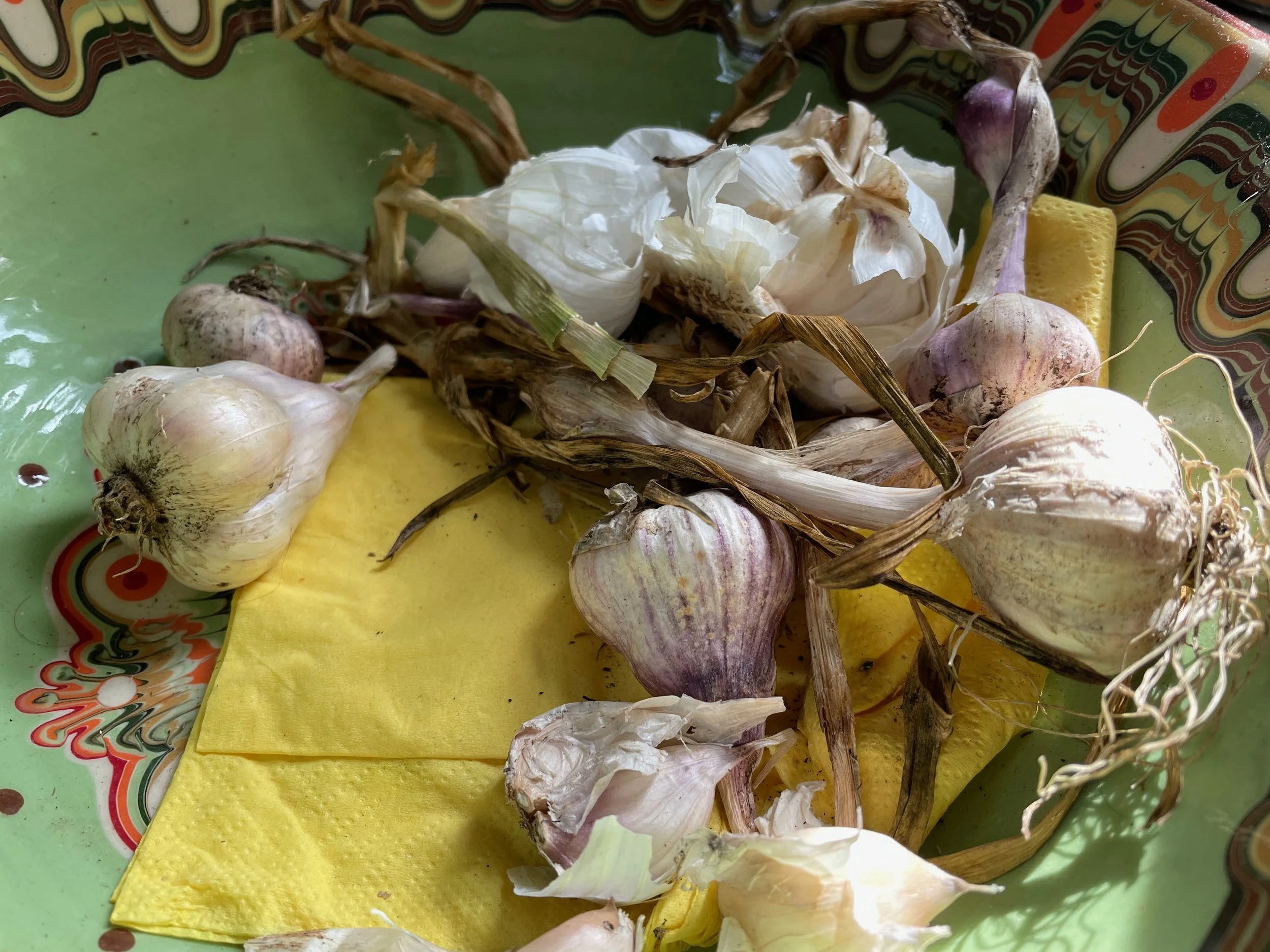
Although this year’s garlic harvest was smaller than expected, preparations for the next season are already underway. The largest and healthiest bulbs are selected for planting, while new growing areas are prepared with compost and other organic matter ahead of the autumn planting.
In this sense, next year’s garlic harvest really begins the moment the previous crop is lifted from the soil.
The Onions’ Final Ripening
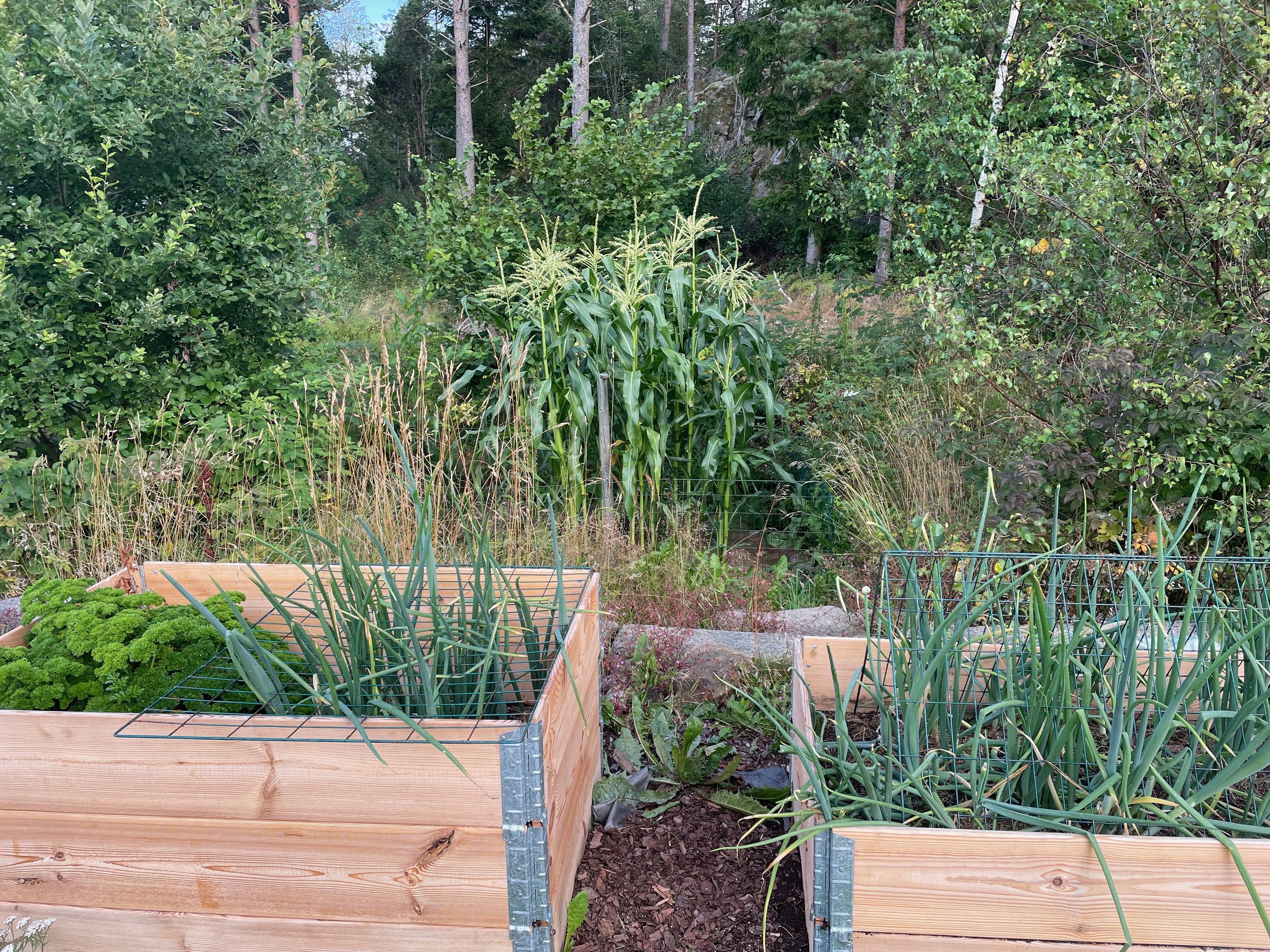
The onions are now left to mature at their own pace. As the foliage naturally begins to fall over, watering is reduced, allowing the bulbs to develop a firm, durable skin for storage.
During dry weather, they can then be left in the soil for a little longer to finish drying before being brought indoors. It is one of those simple gardening tasks that rewards patience: allowing the harvest to reach maturity in its own time.
Squash, Cucumbers and Tomatoes at Their Peak
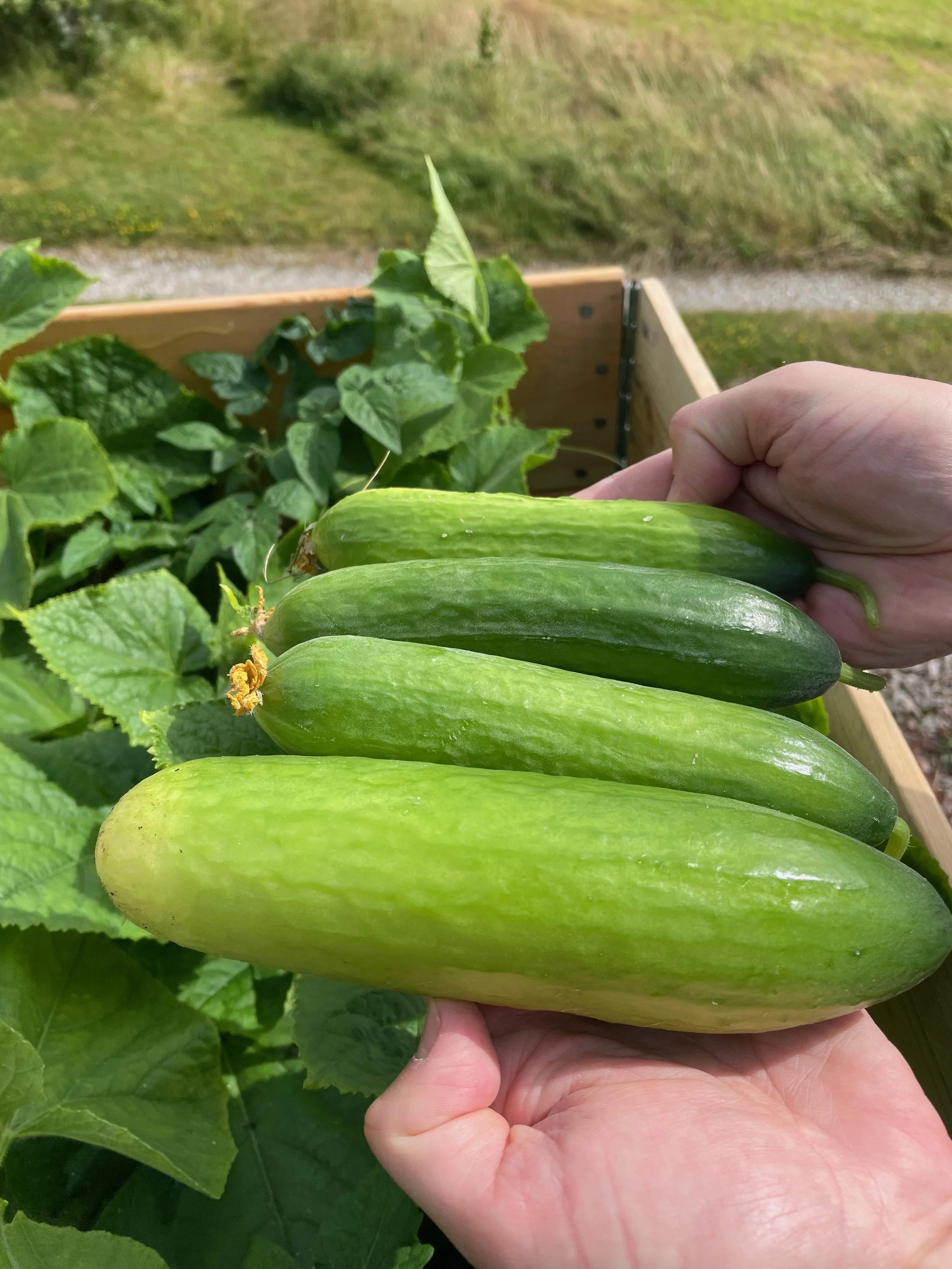
The kitchen garden is still in full production. Squash and cucumbers are harvested almost daily, and the more regularly the fruits are picked, the longer the plants will continue to produce.
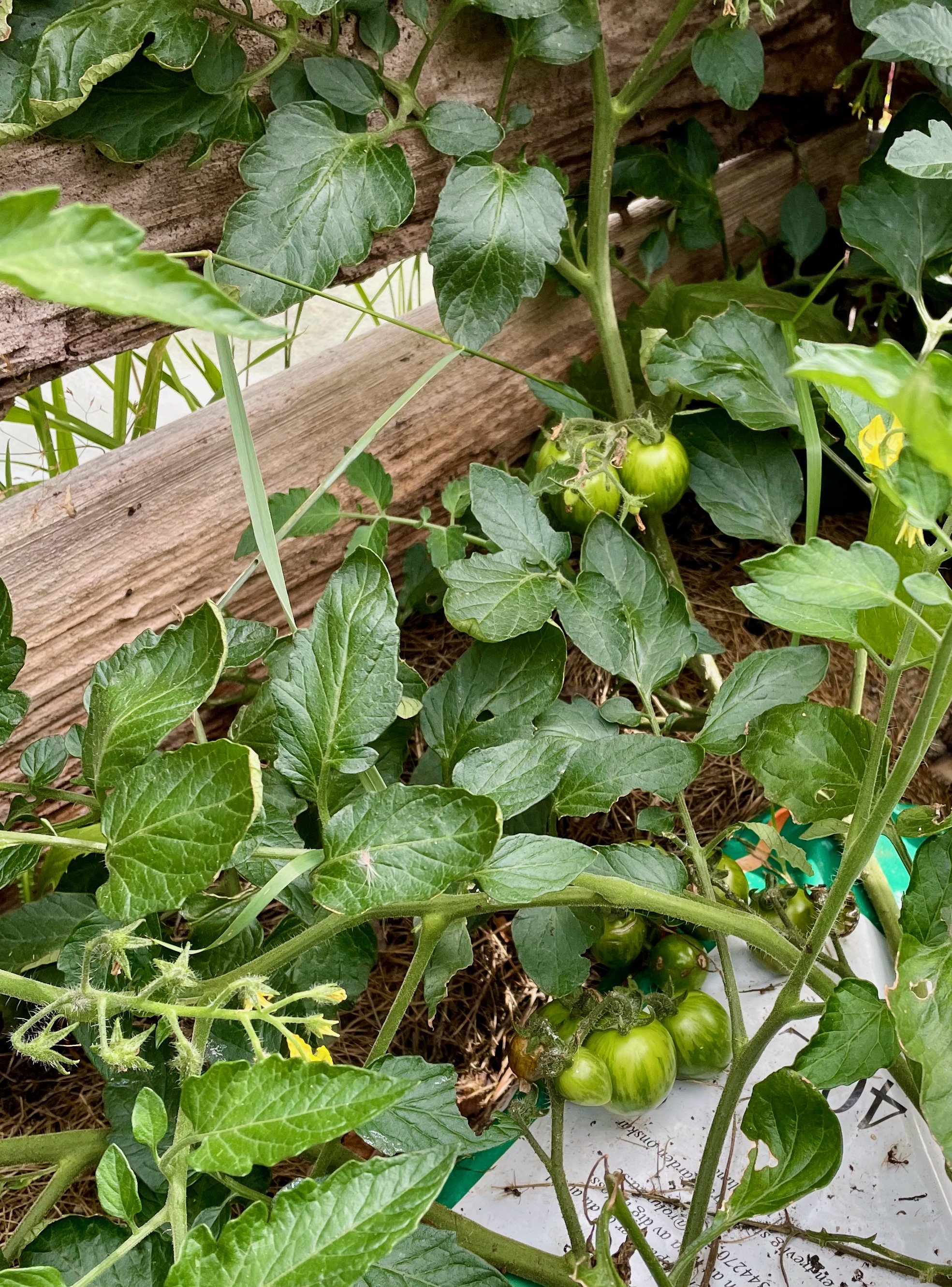
The tomatoes are entering the season’s most anticipated phase. The fruits are beginning to ripen more quickly, while the plants still require support, good air circulation and a little judicious pruning to keep growth under control and direct their energy towards the fruit.
This is when much of the work put in throughout the summer finally begins to pay off.
Red and Black Currants – This Year’s Great Surprise
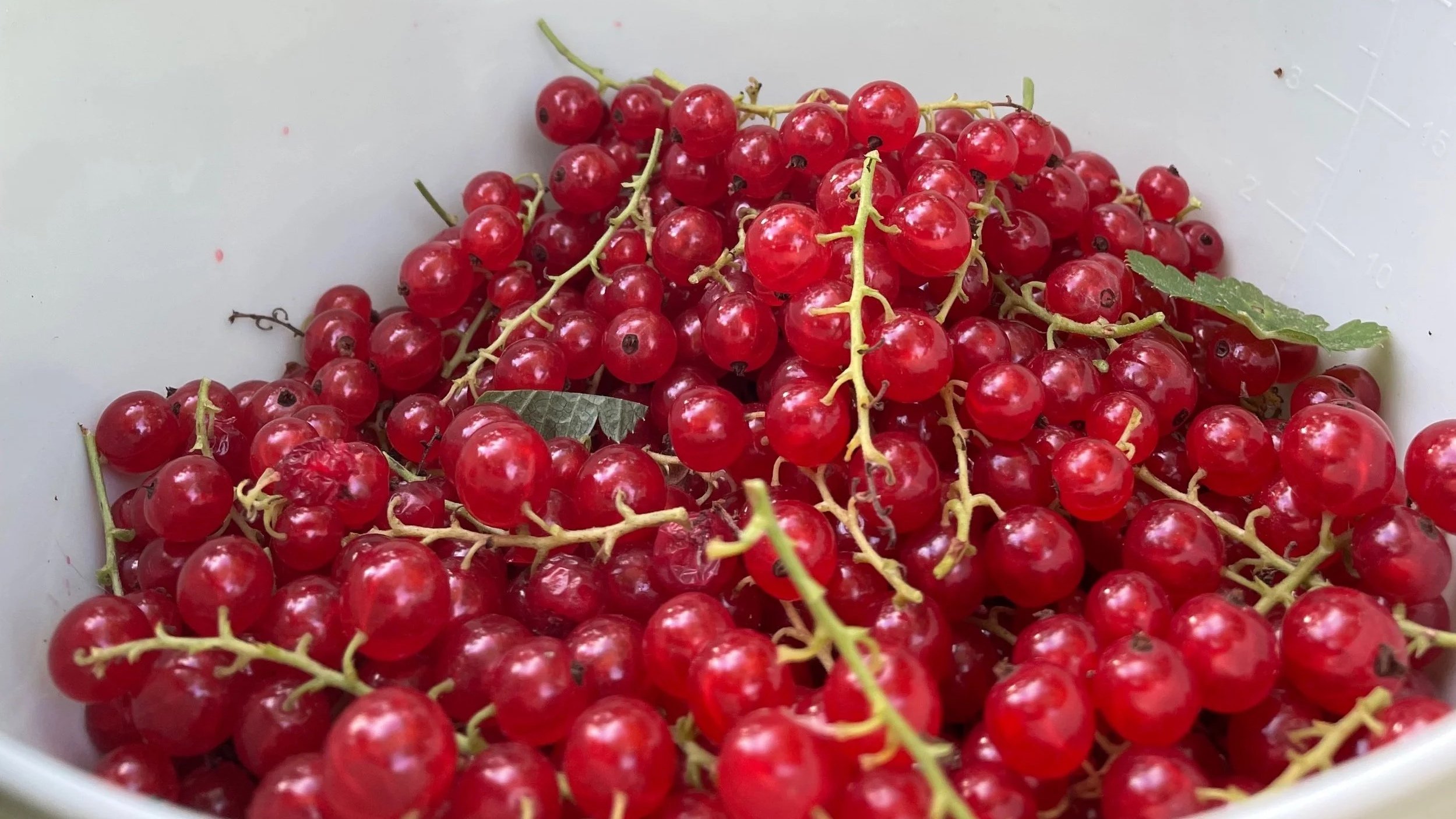
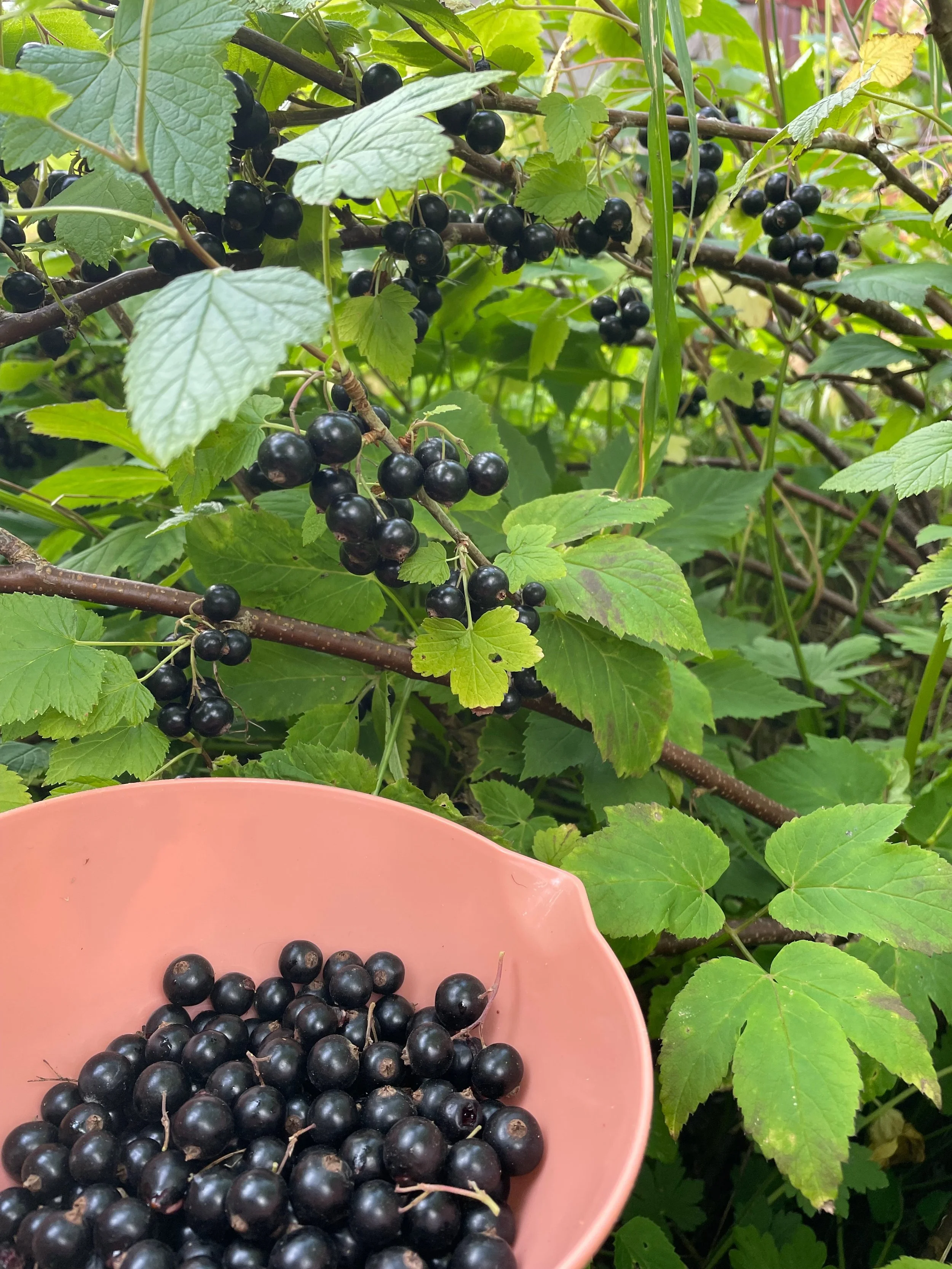
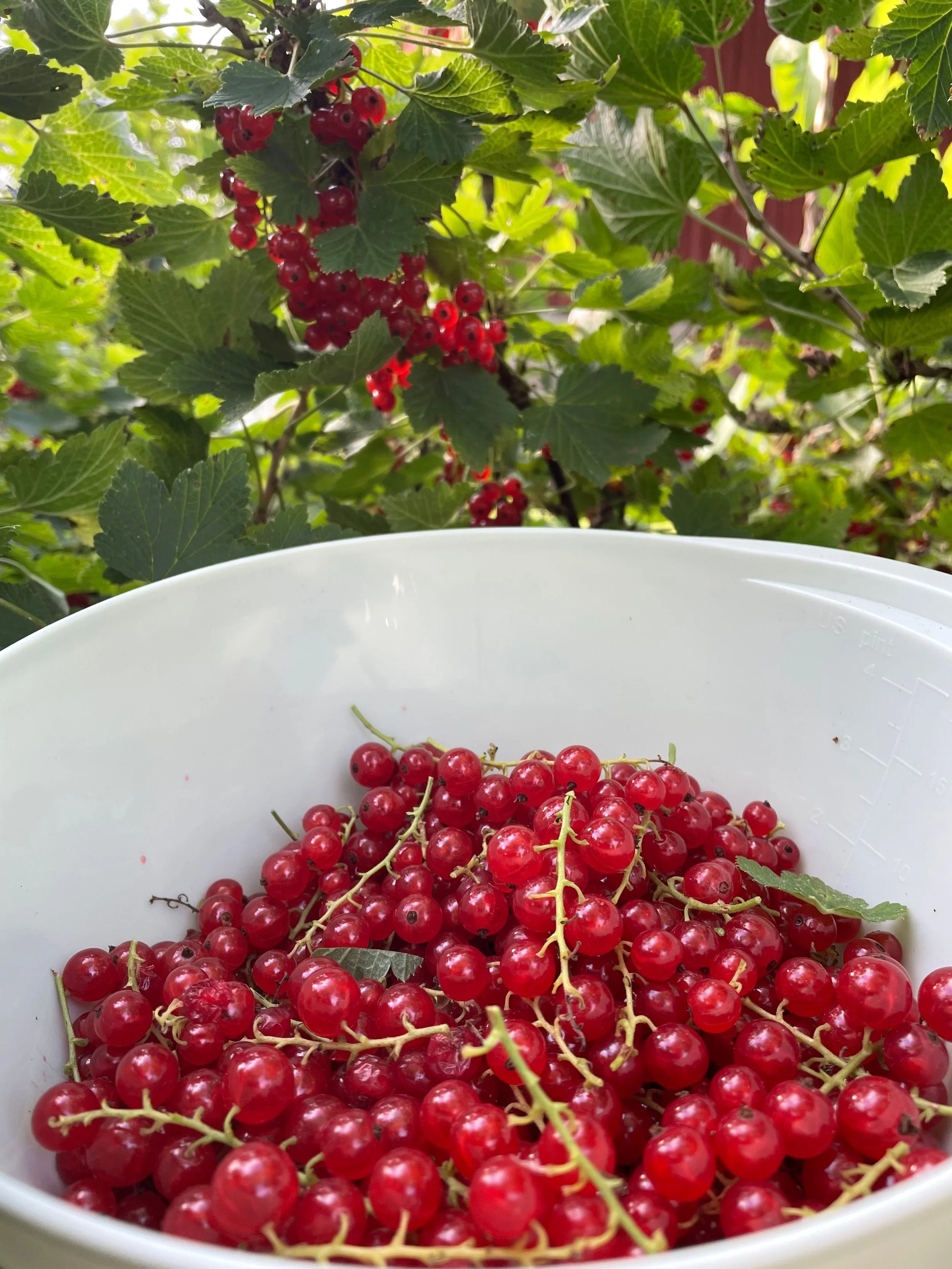
The currants have truly thrived this year. Both the red and black currant bushes produced an unusually generous crop, with dense clusters and beautifully developed berries. After several years of more modest harvests, it was especially rewarding to see the bushes laden with fruit.
Some were eaten straight from the bushes, while the rest was preserved for later in the year. Black currants have an intense, deeply flavoured character that works beautifully in cordials, preserves and desserts, while red currants, with their bright acidity, are equally appealing fresh or used in baking.
These are the harvests that make a garden particularly rewarding. Sometimes, it is not the plants we watch most closely that surprise us most.
Pears and Plums Approach Harvest
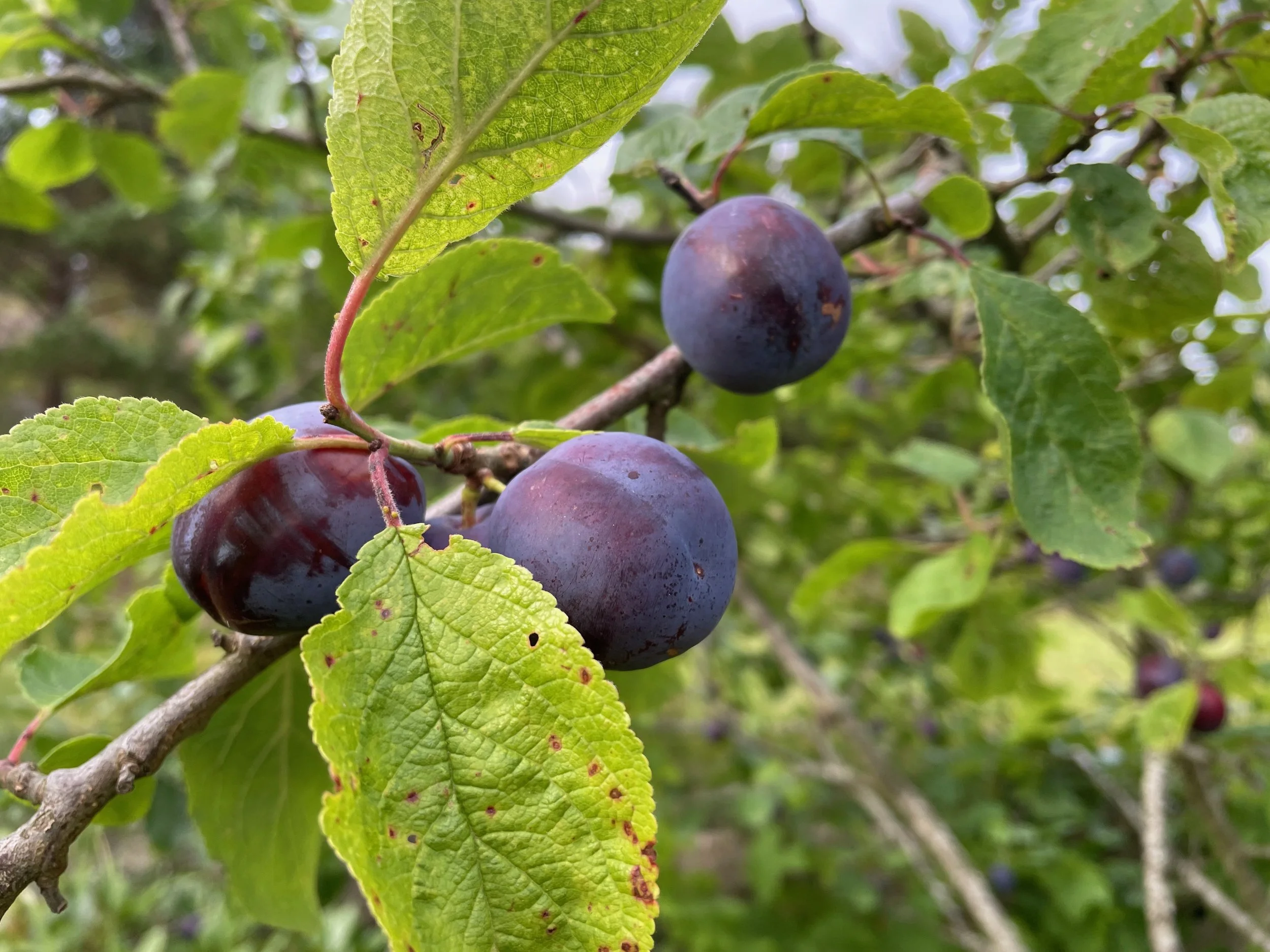
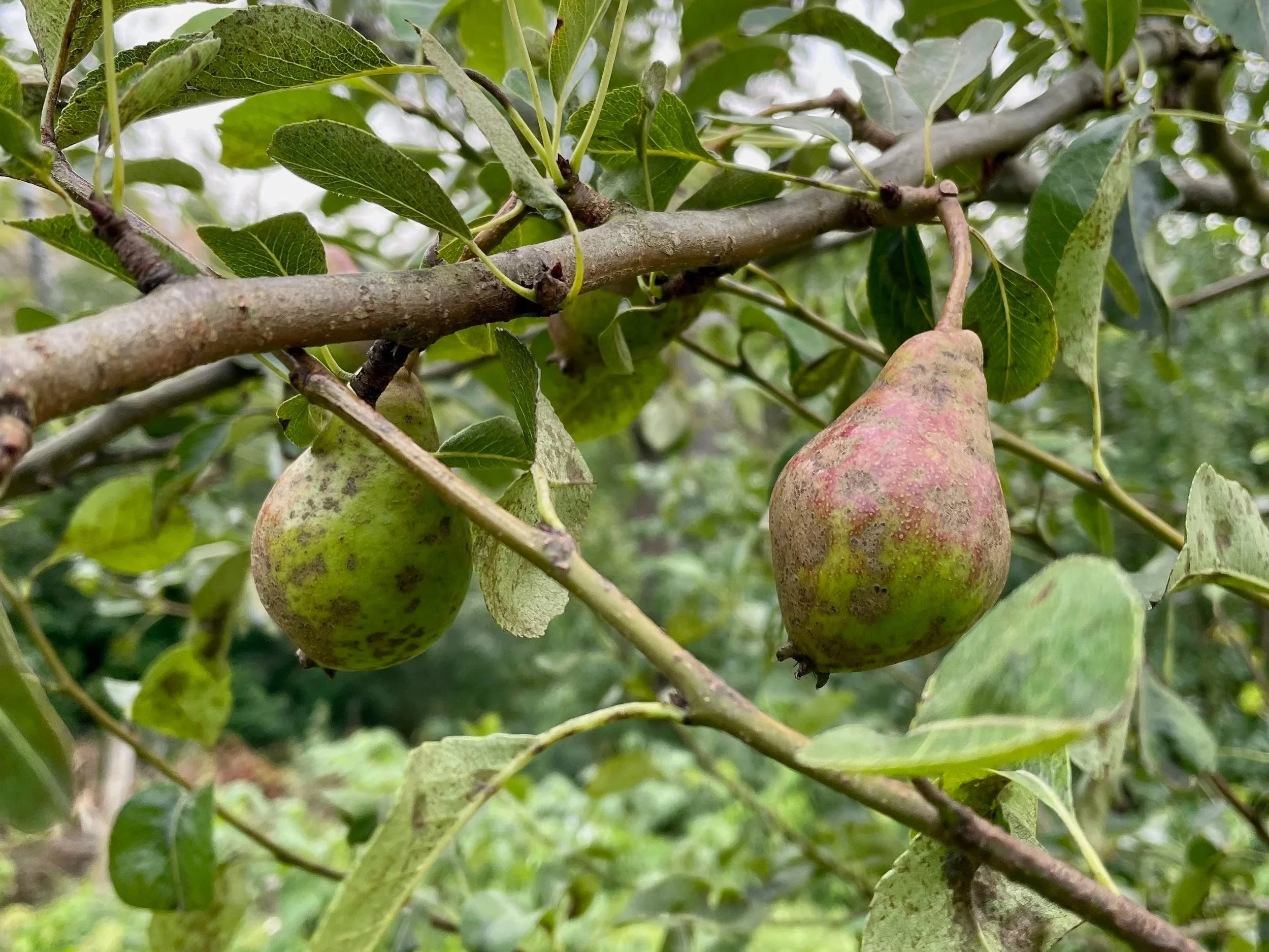
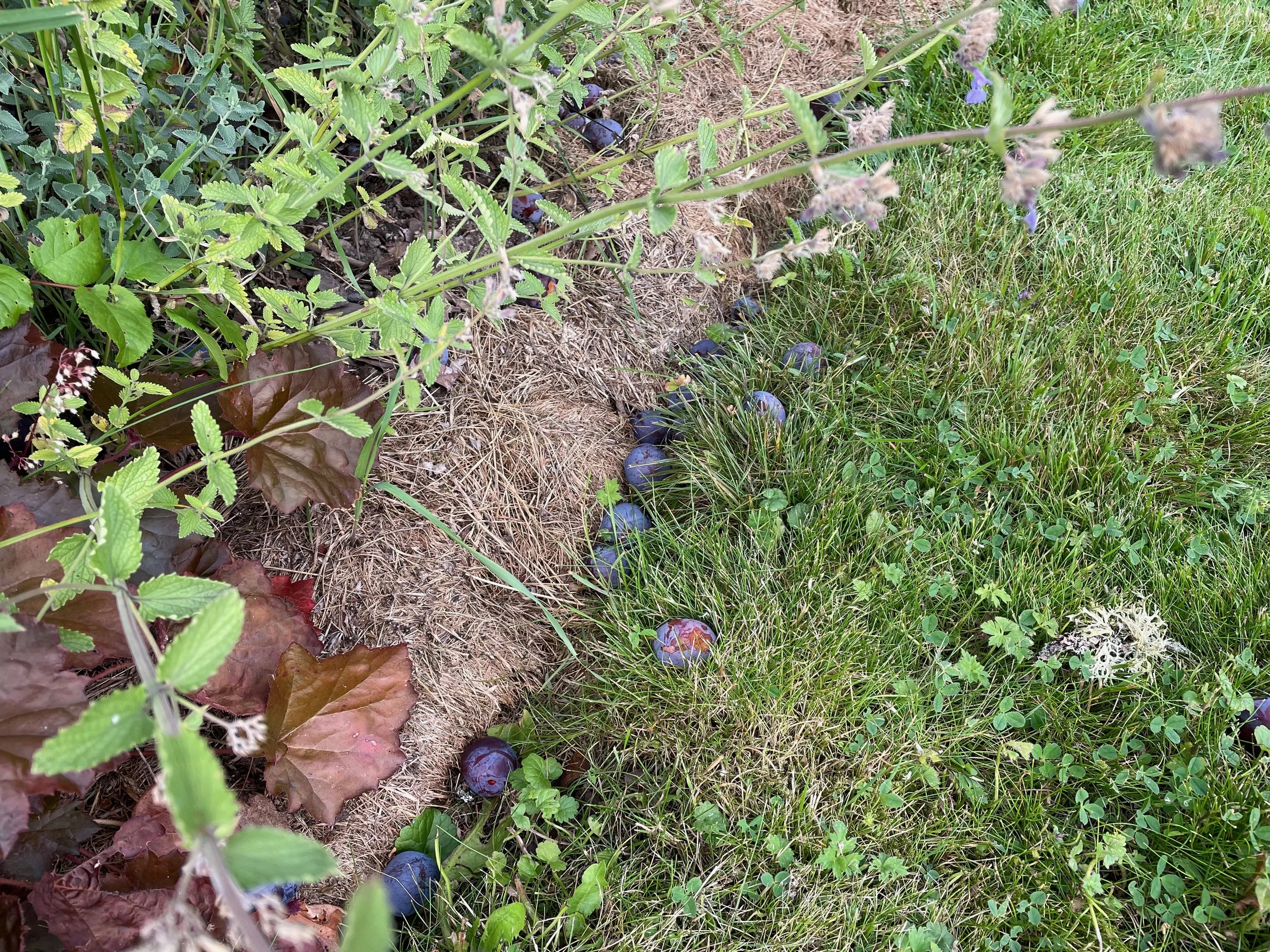
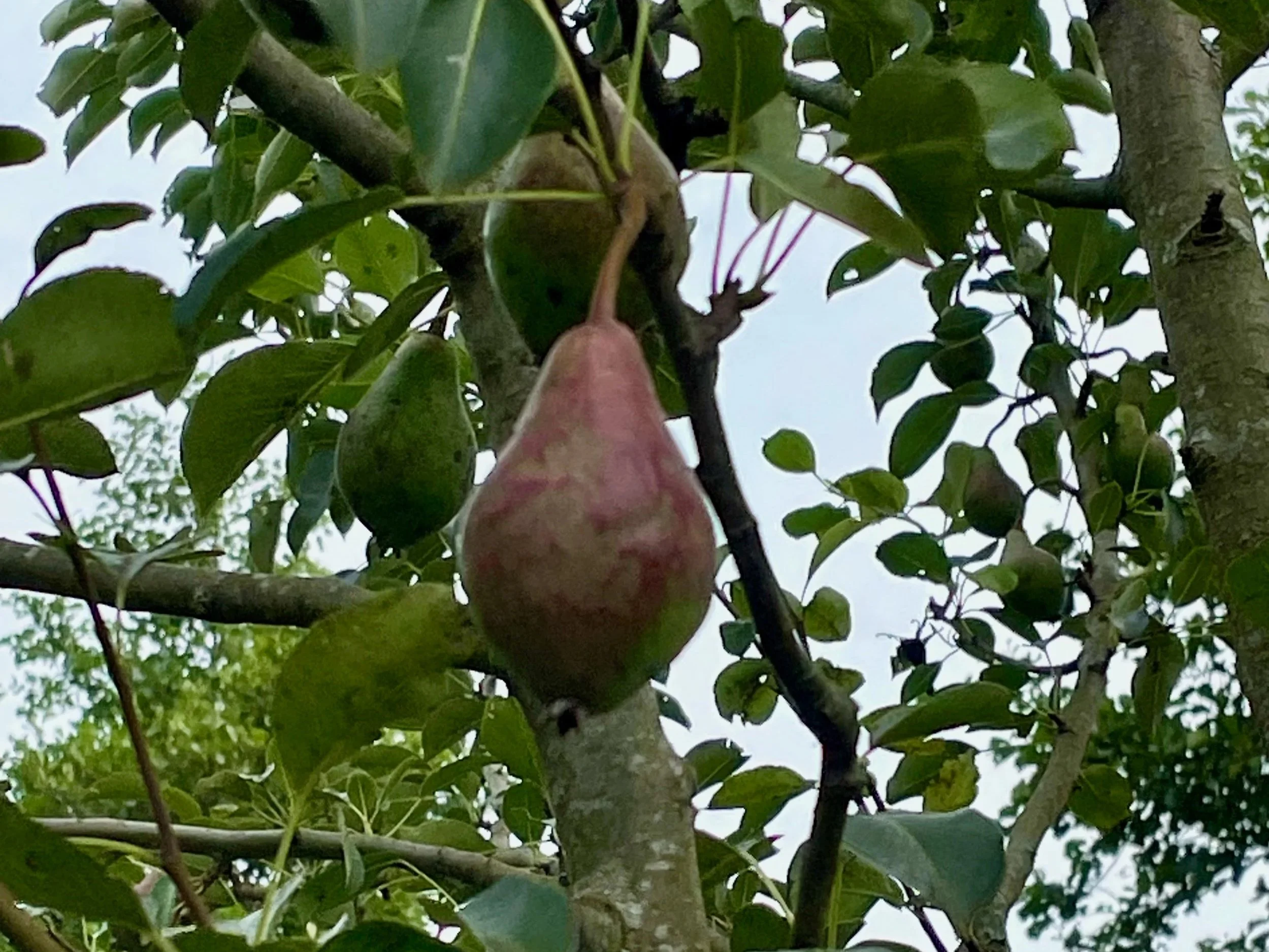
The pears continue to develop sweetness and aroma, while the plums are moving towards ripeness. Heavily laden branches may need support to prevent them from breaking beneath the weight of the fruit, while fallen fruit should be cleared regularly to reduce the risk of disease and pests.
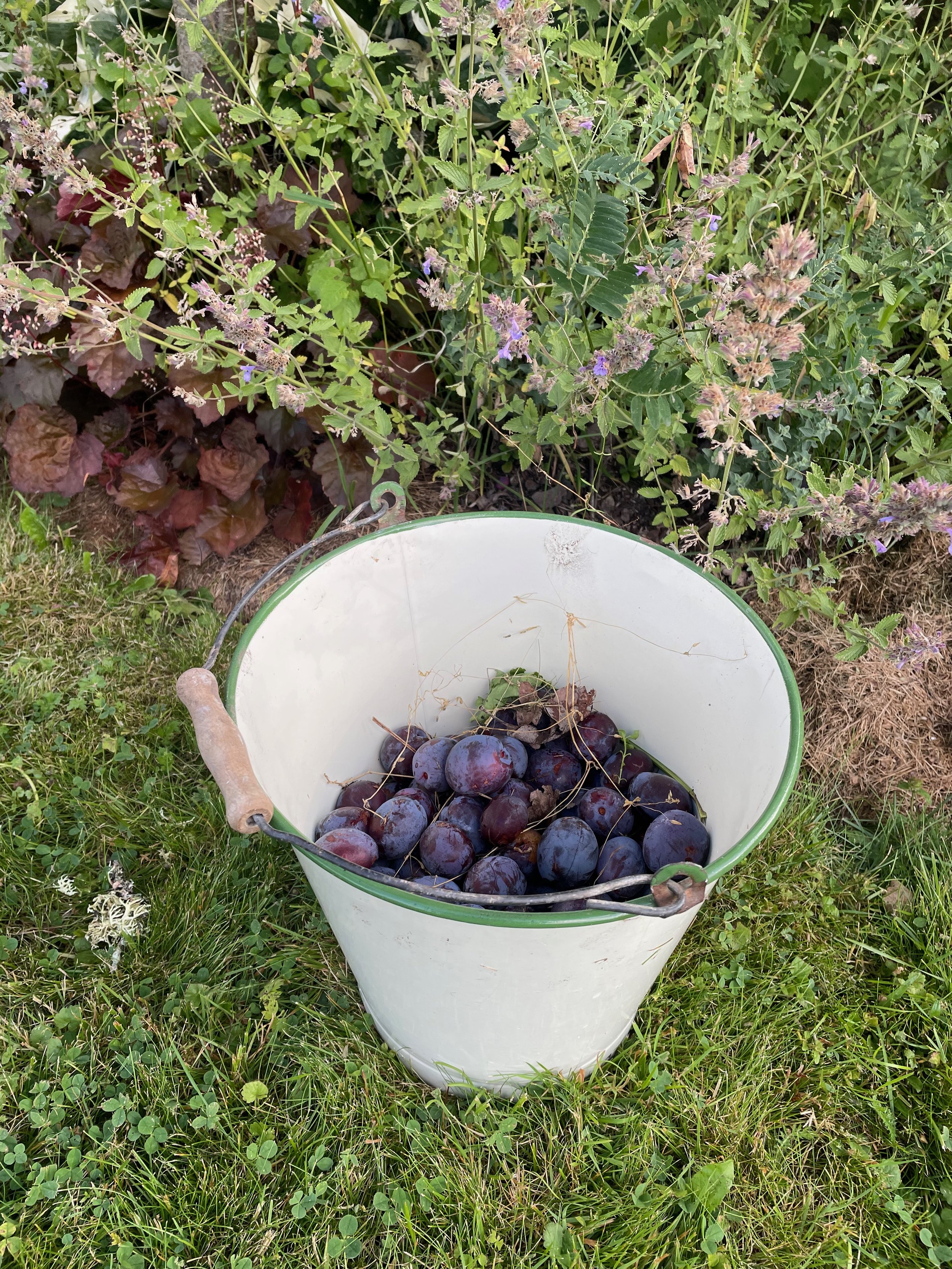
Strong westerly winds unfortunately took a large share of this year’s plum crop. We still managed to harvest around ten kilos, however, and the final plums left on the tree proved to be the sweetest of all.
Now there will be plum dessert pies and fresh plums for lunch for the next couple of weeks. Not a bad way to bring this year’s plum season to a close.
Sweet Corn Comes to Maturity
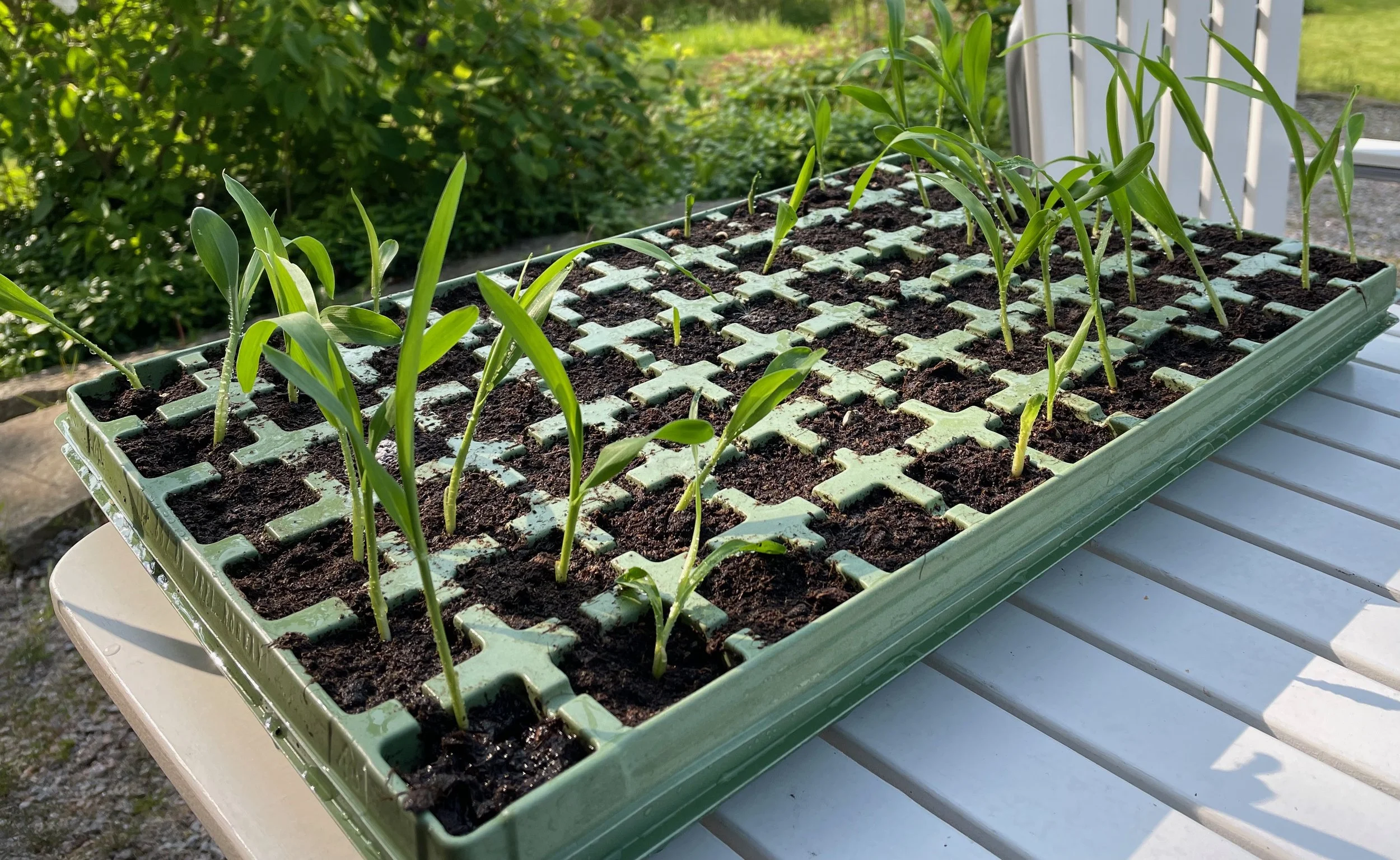
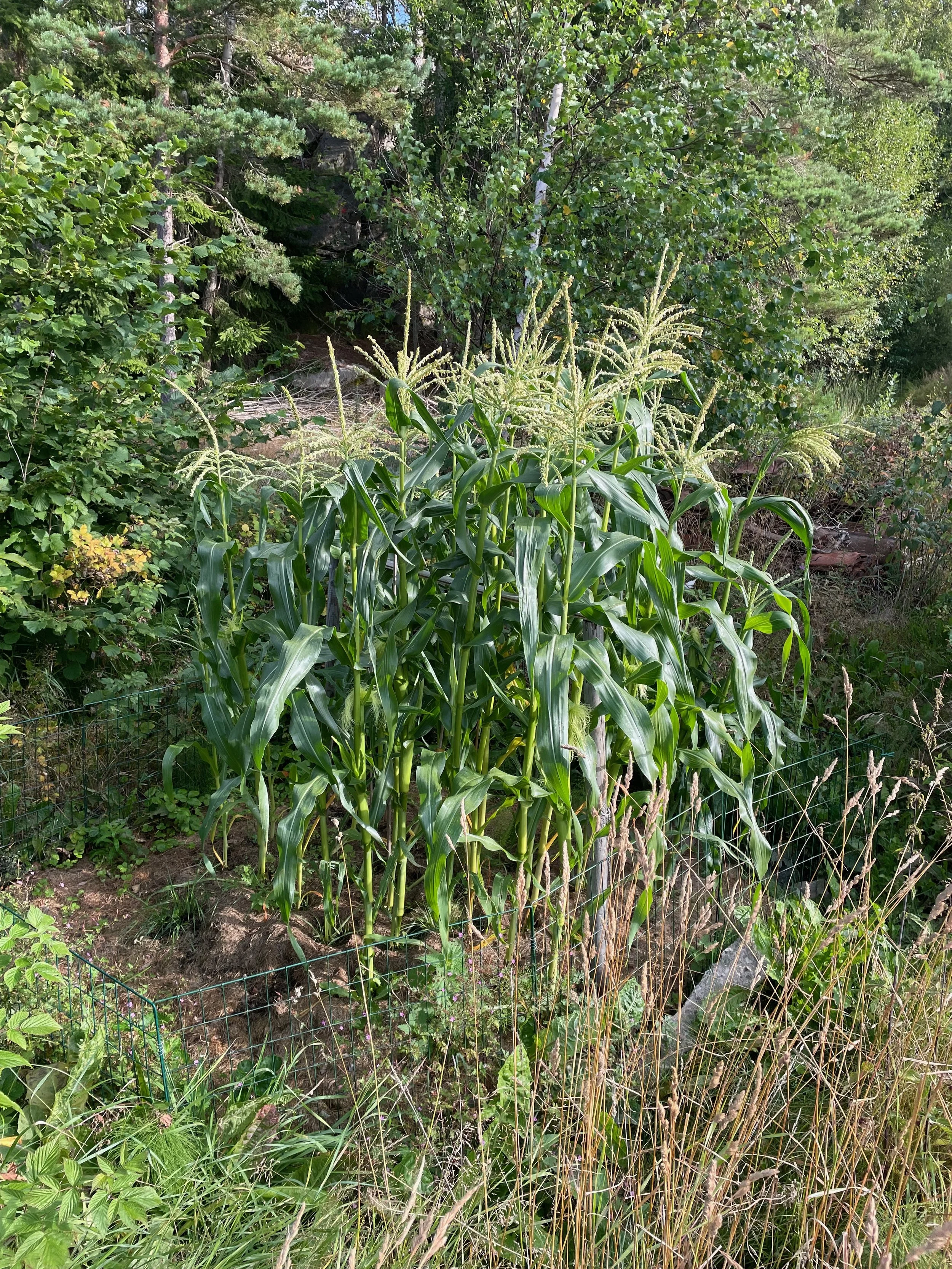
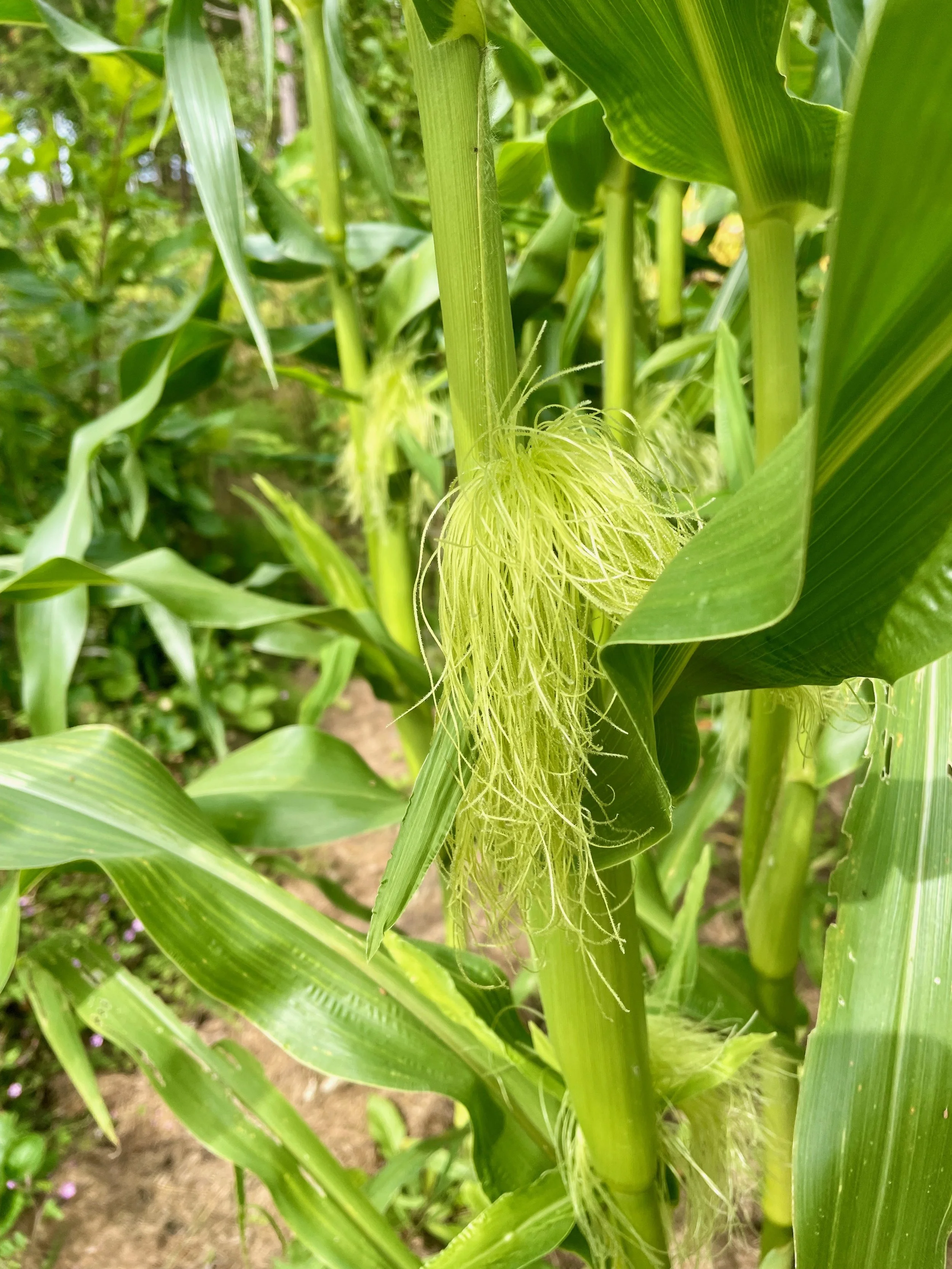
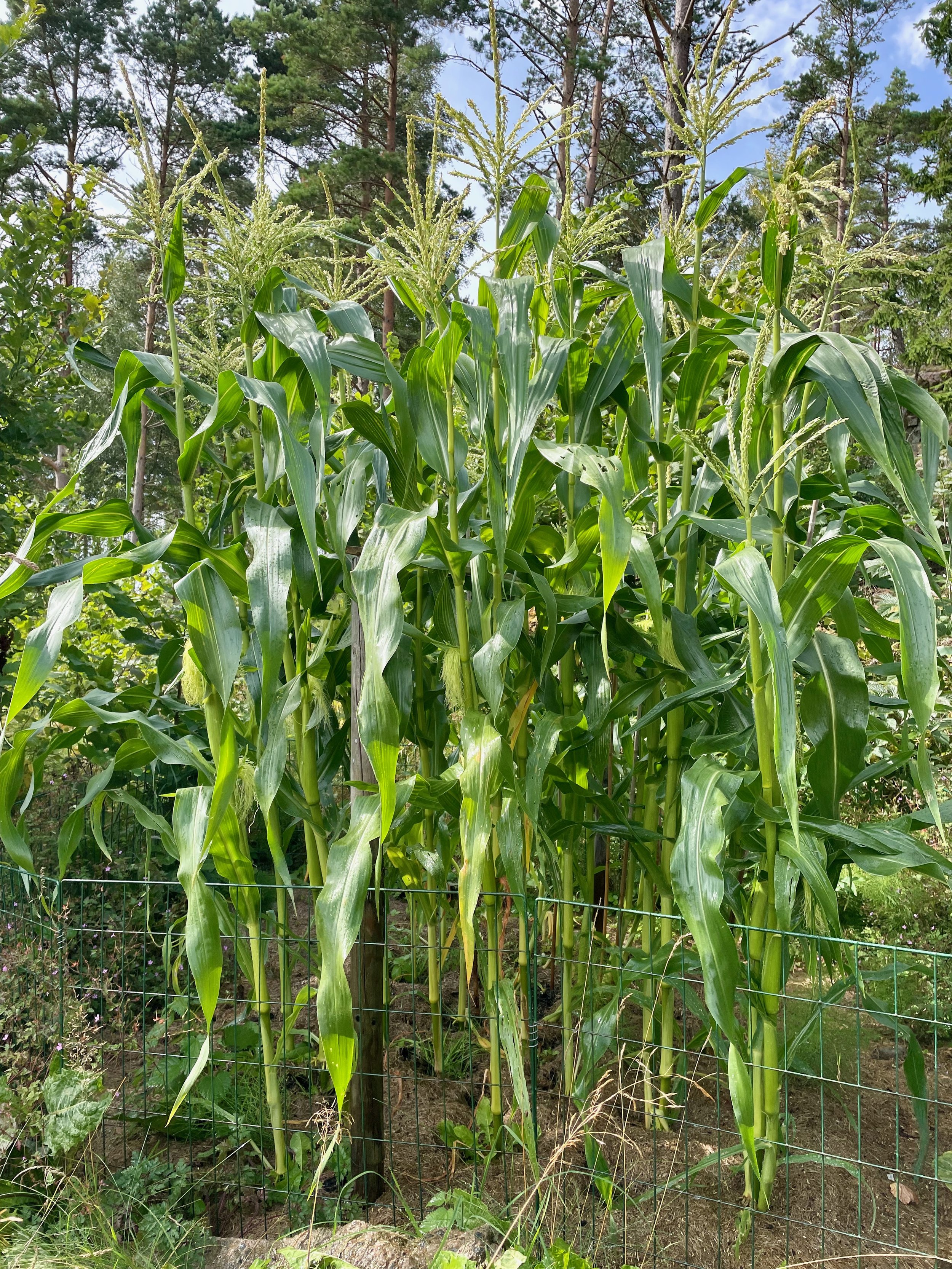
The sweet corn has grown vigorously throughout the summer, and the ears are now filling rapidly with their characteristic sweet kernels. During the final stage of ripening, a consistent supply of water remains important.
When the silks begin to darken and the ears feel full and well developed, it is time to test the first harvest.
Strong winds can easily bring corn plants down, but this year we were quick to stake those that needed a little extra support. Now there is nothing left to do but wait for the first ears to reach perfection.
The Vines Enter Their Second Autumn
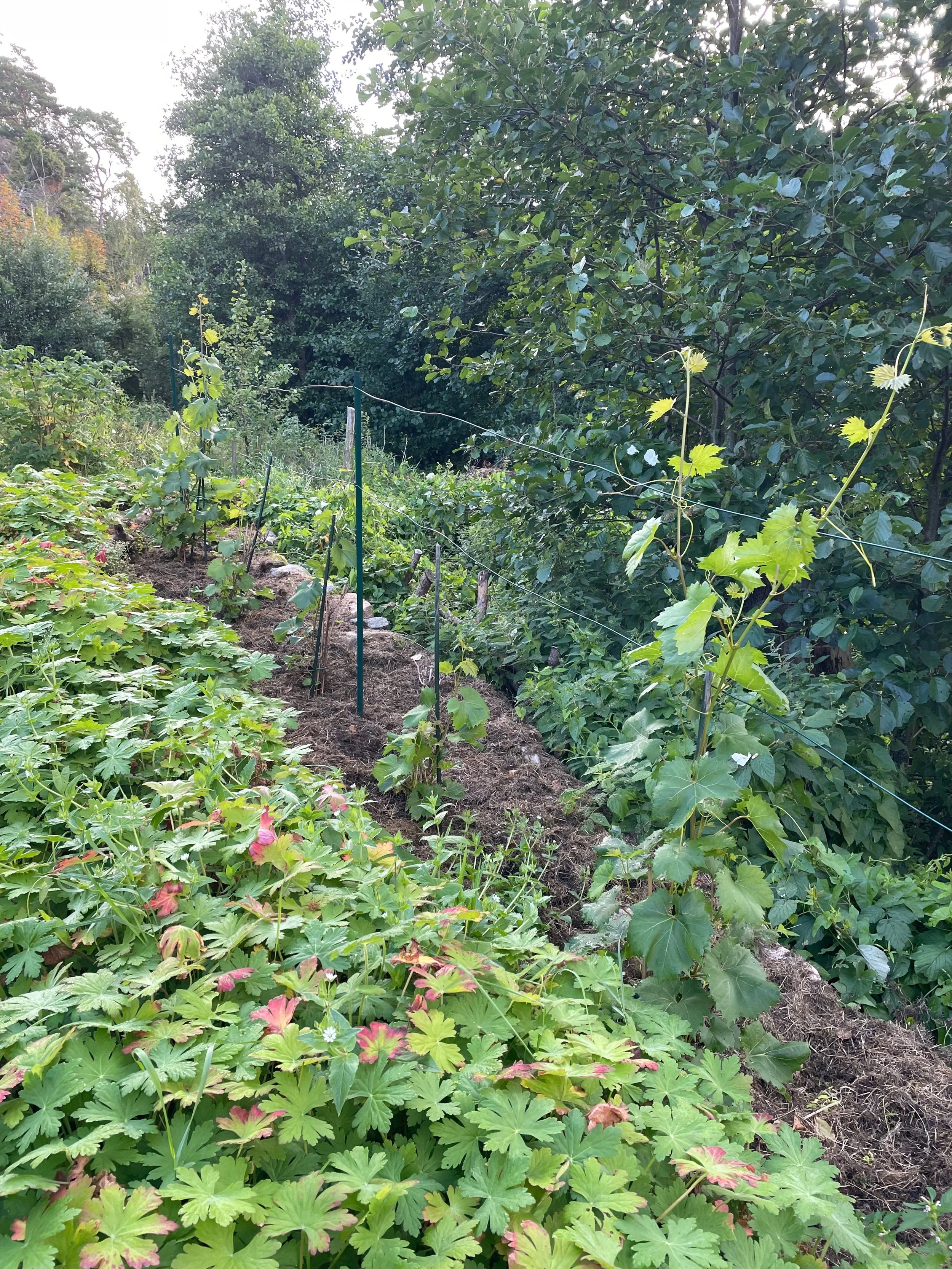
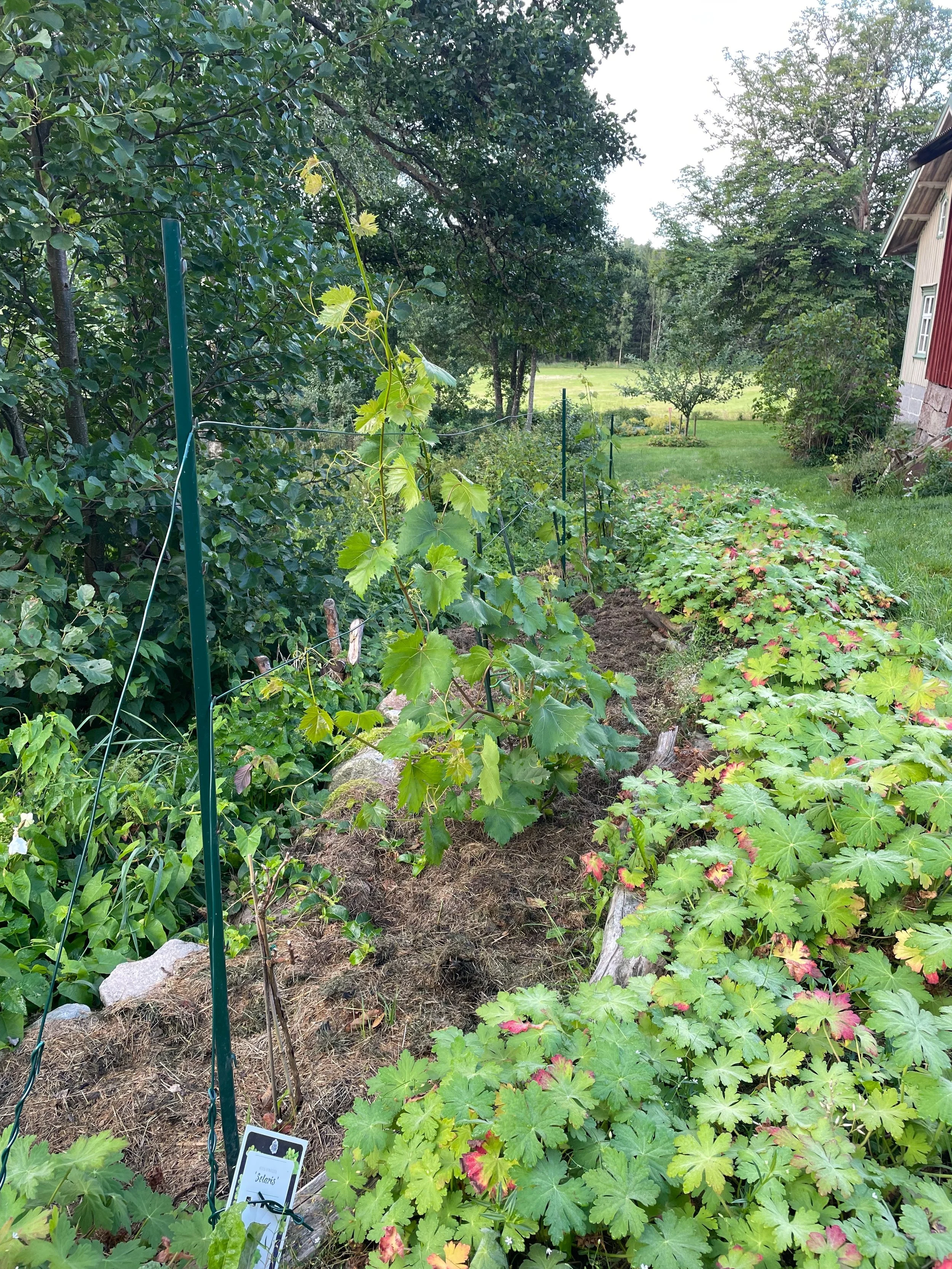
The young vines continue to establish themselves, developing stronger root systems and building the foundation for future growth. At the end of summer, care is focused primarily on tying up the strongest shoots while avoiding excessive fertilisation, allowing the plants to harden off properly before winter rather than encouraging a flush of soft new growth.
Planning for winter protection also begins now, an important part of establishing young vines during their first years.
The oldest vine on the property was planted five years ago. It has grown vigorously and this year carries seven clusters of grapes. Hardly enough for a glass of juice, but just about the right amount for a small batch of grape jam.
Looking Towards Autumn
August marks the transition between high summer and harvest season. While the kitchen garden is still producing generously, preparations for the next growing year are already beginning. Garlic, autumn planting and winter protection gradually enter the rhythm of the garden, even as the last abundance of summer is gathered in.
Perhaps this is one of the most satisfying aspects of gardening at the summer house: harvesting what has been grown while, at the same time, quietly laying the foundations for what comes next.
Explore more: Nordic Garden →