
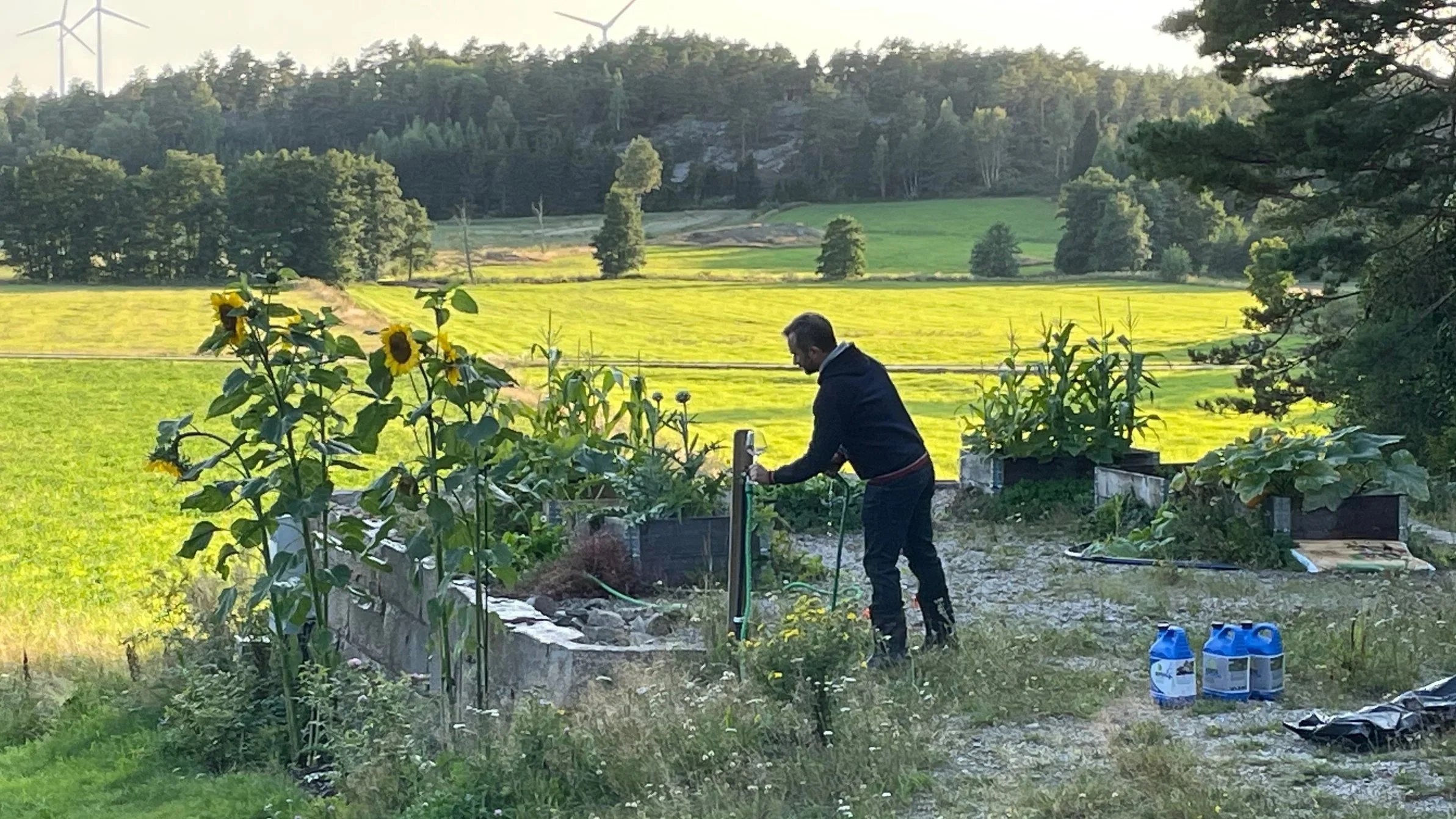
How to Prepare a Vegetable Garden
Building Healthy Soil for the Growing Season
A productive vegetable garden begins long before the first seed goes into the ground.
The real work starts with the soil.
Healthy soil is alive. It stores nutrients, retains moisture, supports microorganisms, and creates the foundation for strong crops throughout summer.
Spring preparation makes all the difference.
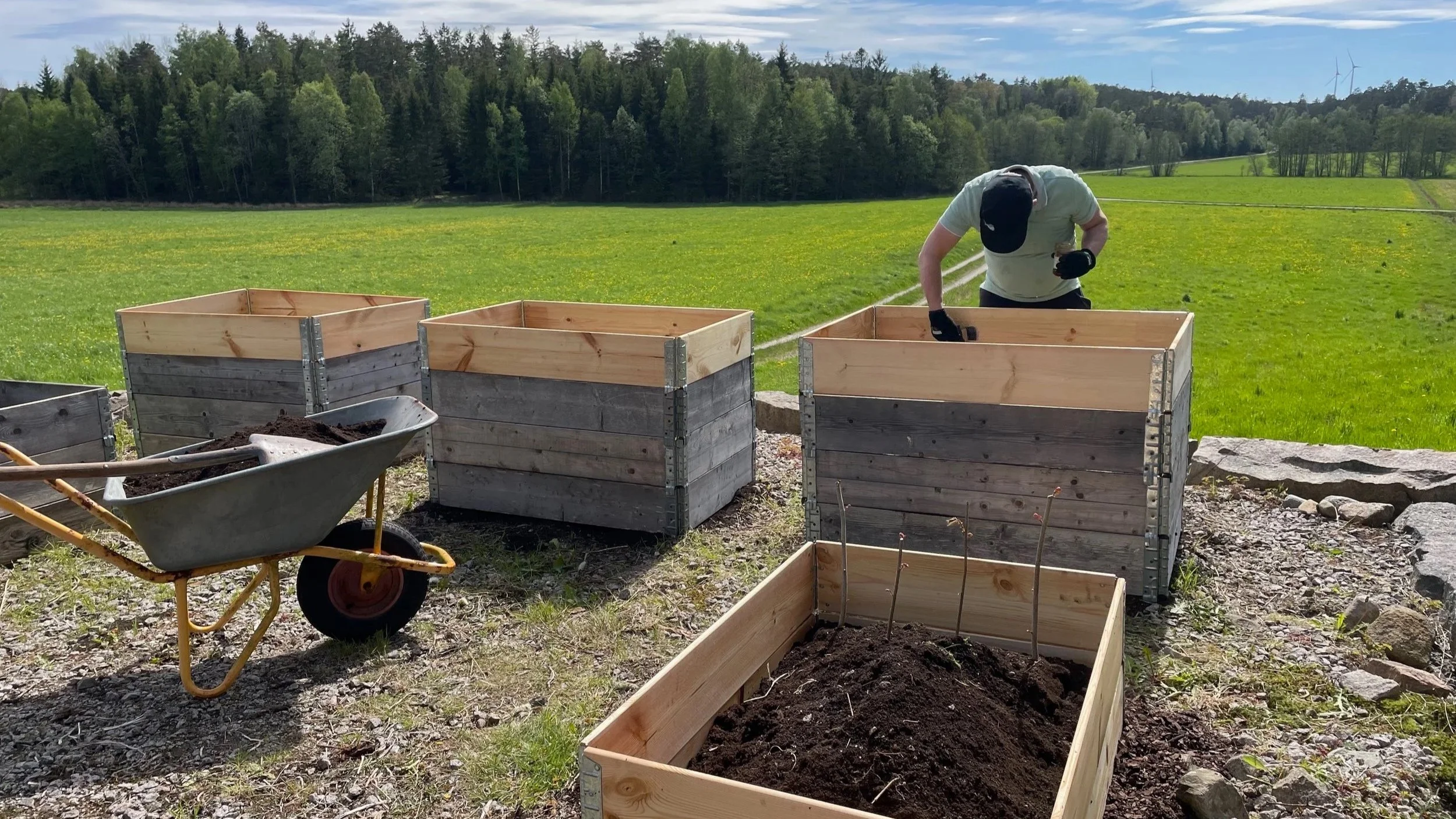
Keep healthy organic material for compost if possible.
Start by removing:
winter debris
dead roots
leftover annual crops
early weeds
Clear the Beds
A clean bed allows you to properly inspect soil condition.
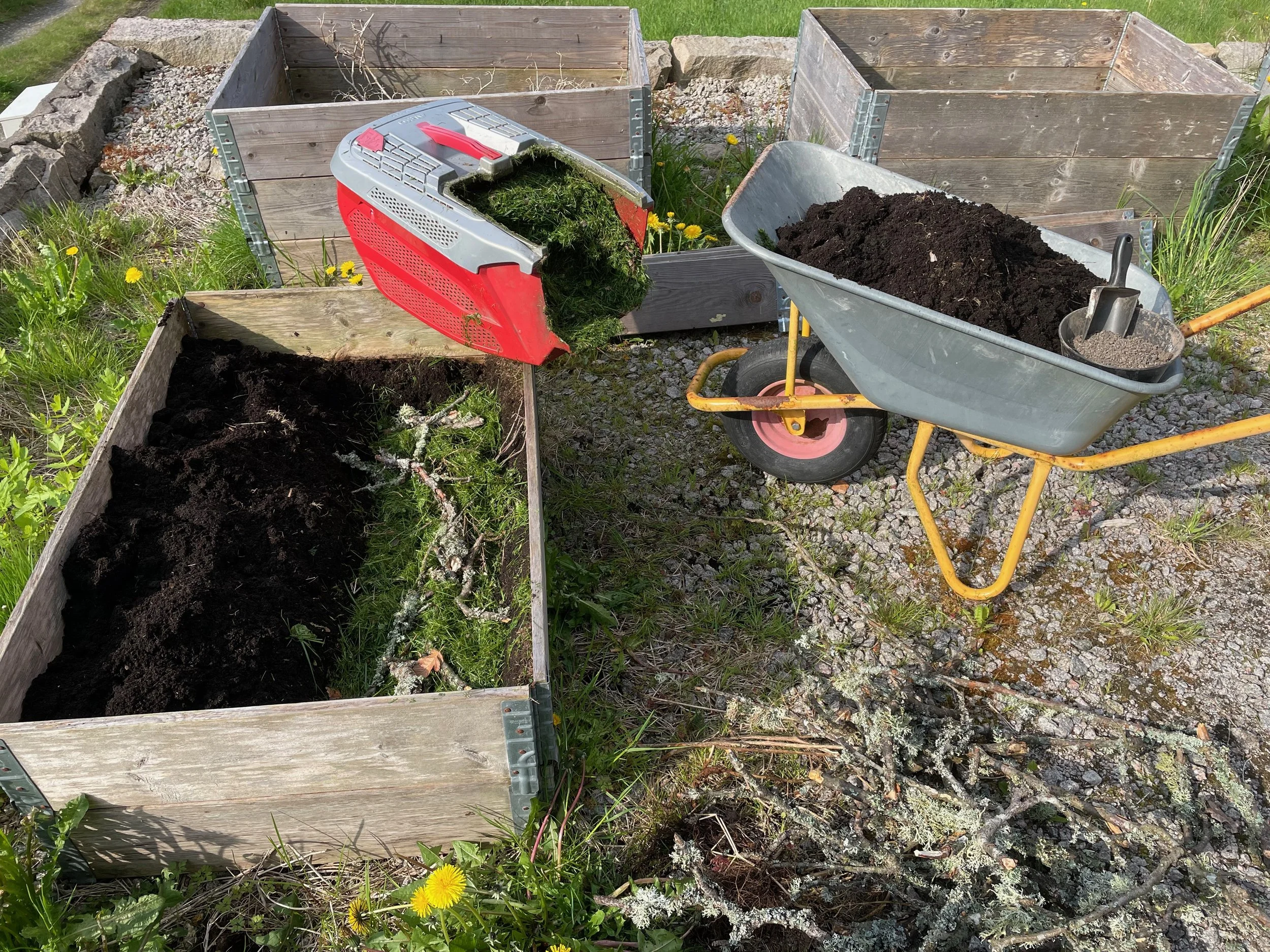
Renew Raised Beds When Needed
Raised wooden beds do not last forever.
Even well-built beds exposed to moisture and frost will naturally begin to break down over time. Every six to seven years, some beds may need partial rebuilding or replacement.
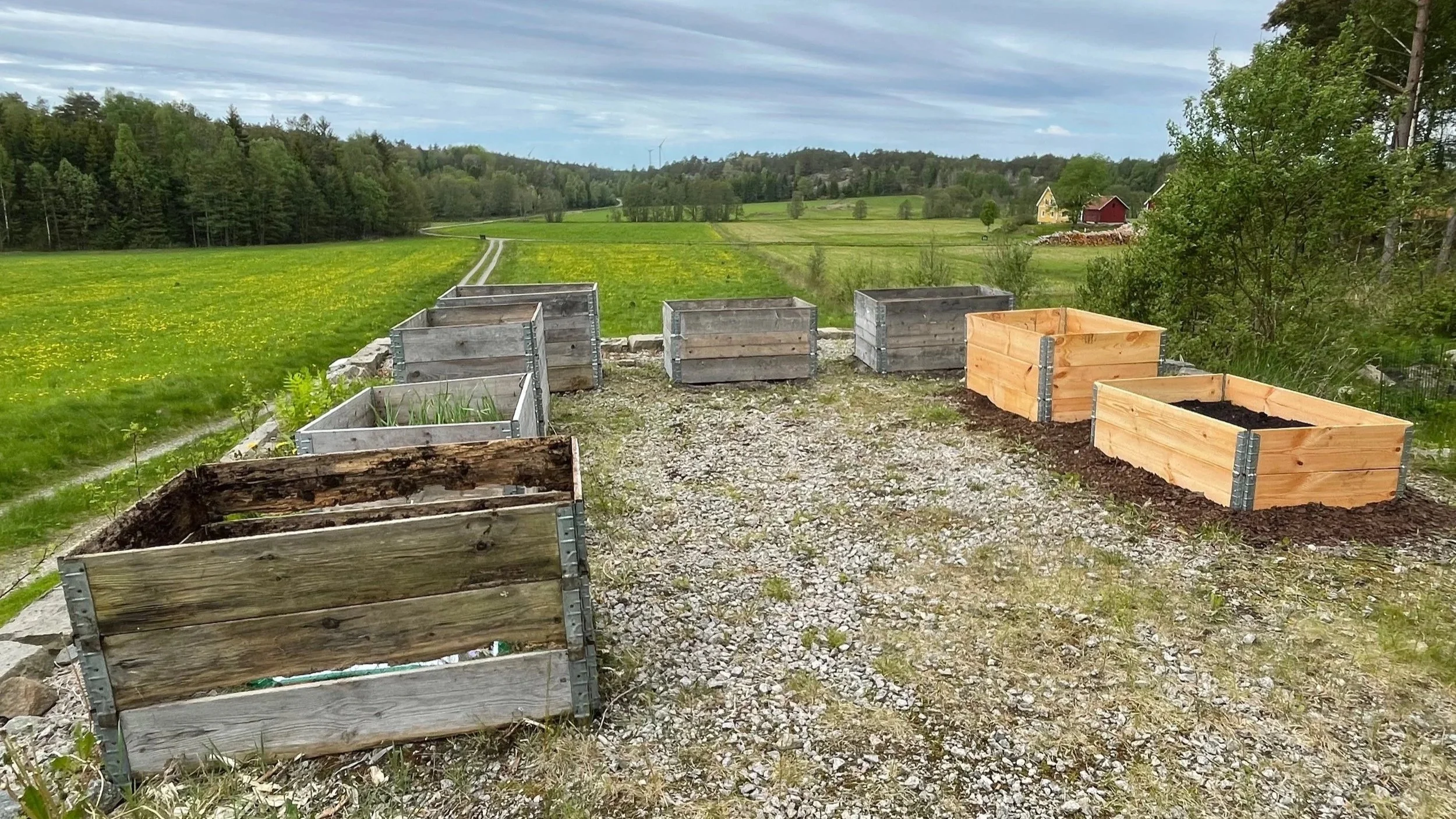
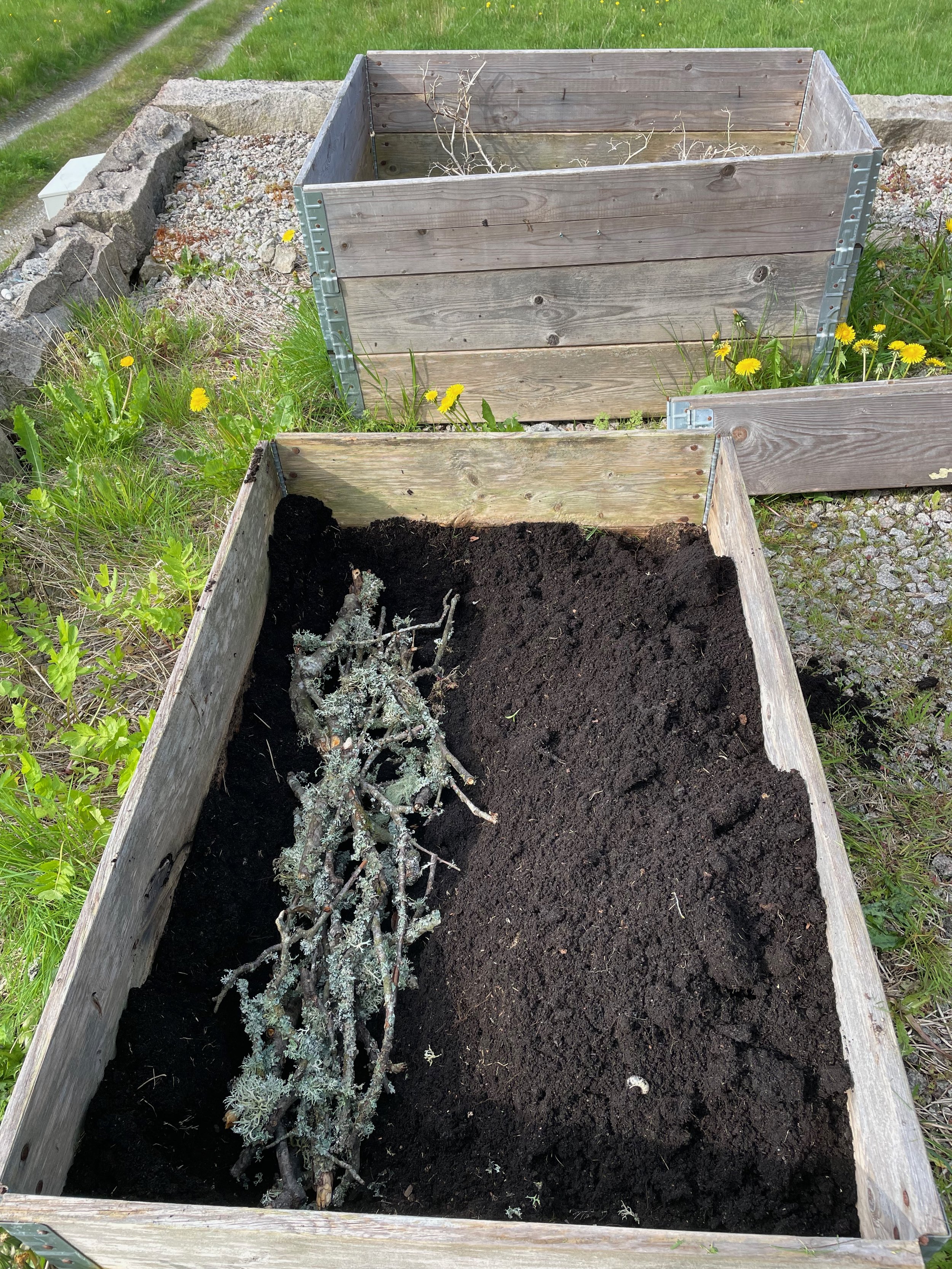
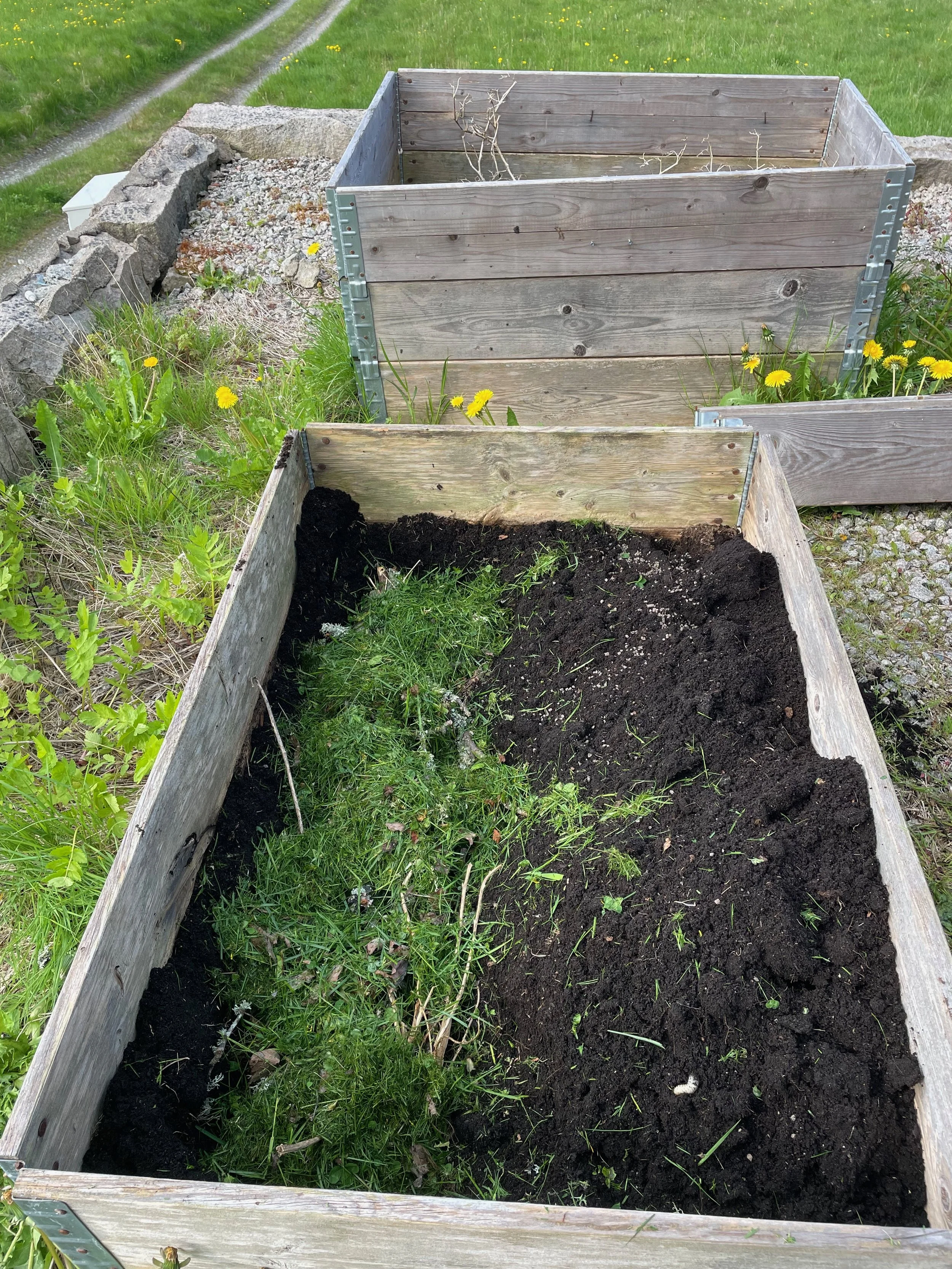
This season, several beds were renewed and rebuilt as mini hügelbeds, a traditional layered growing method designed to improve moisture retention and soil life.
The old soil was lifted out, and the base of the beds was layered with:
fallen branches from the garden
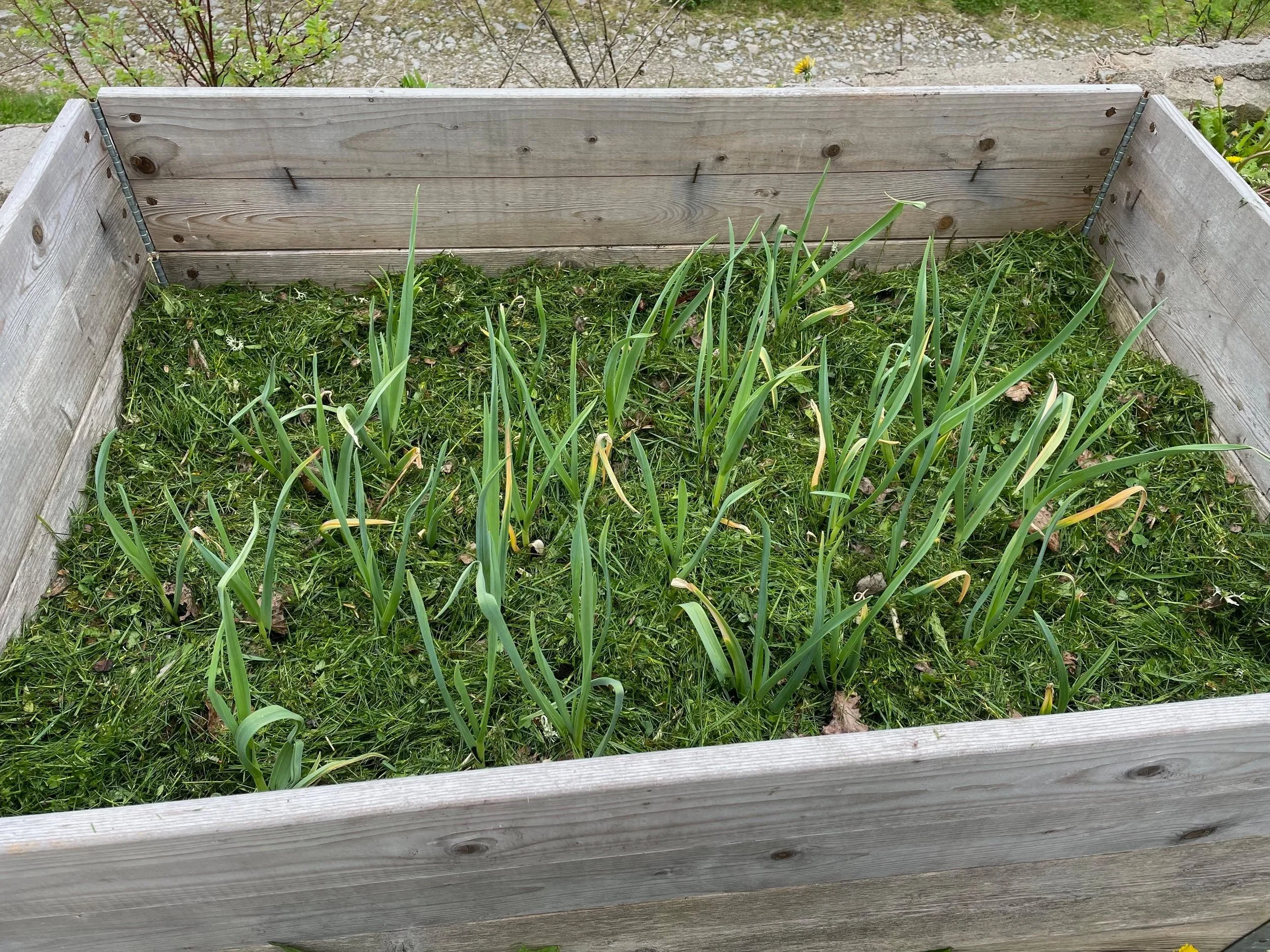
grass clippings
organic material
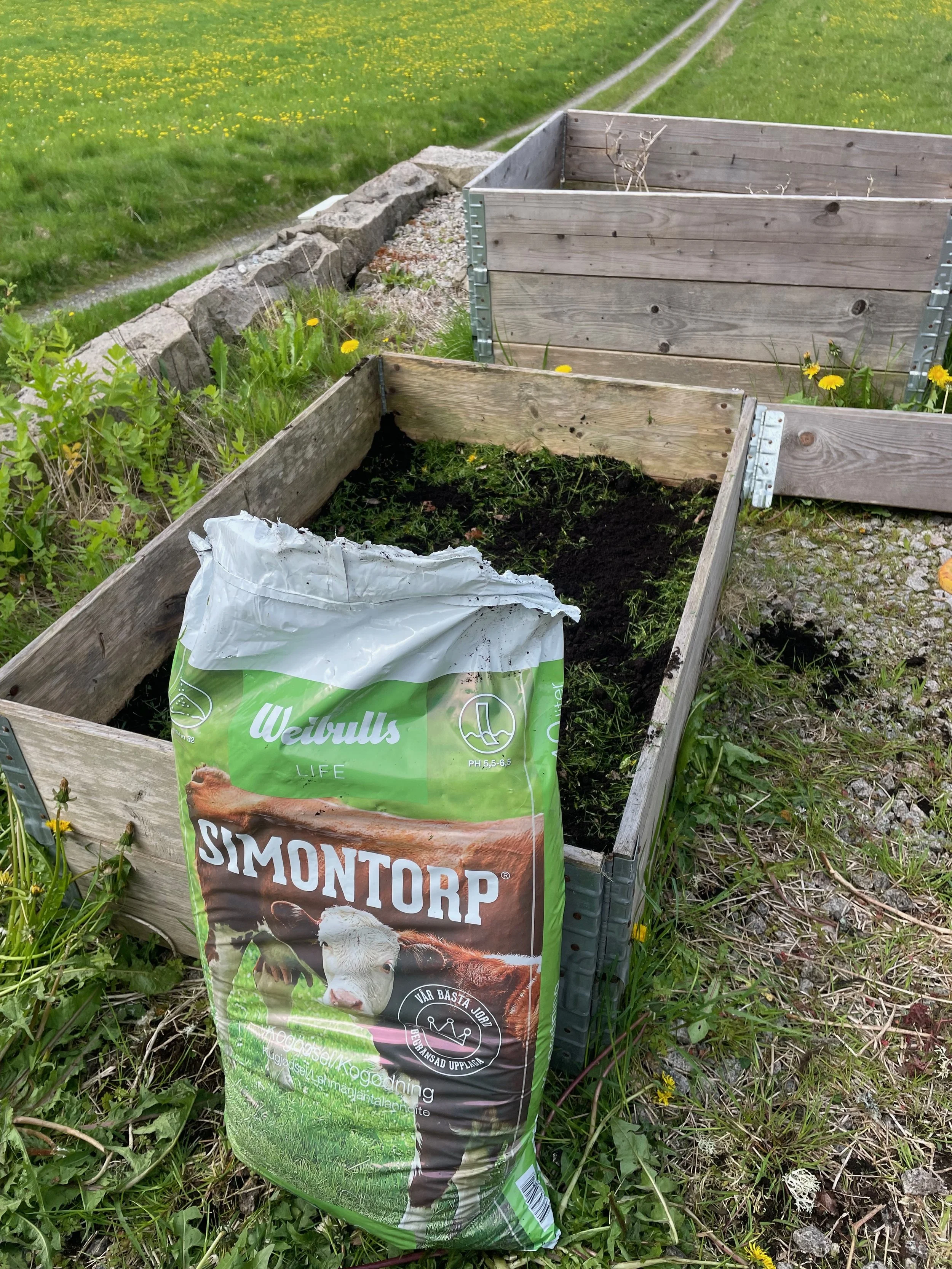
Above this came layers of:
cow manure
chicken manure
fresh soil and compost
The beds were then planted with:
herbs
squash
melon
mini cucumbers
One tomato plant was grown directly in a soil bag placed beside the beds.
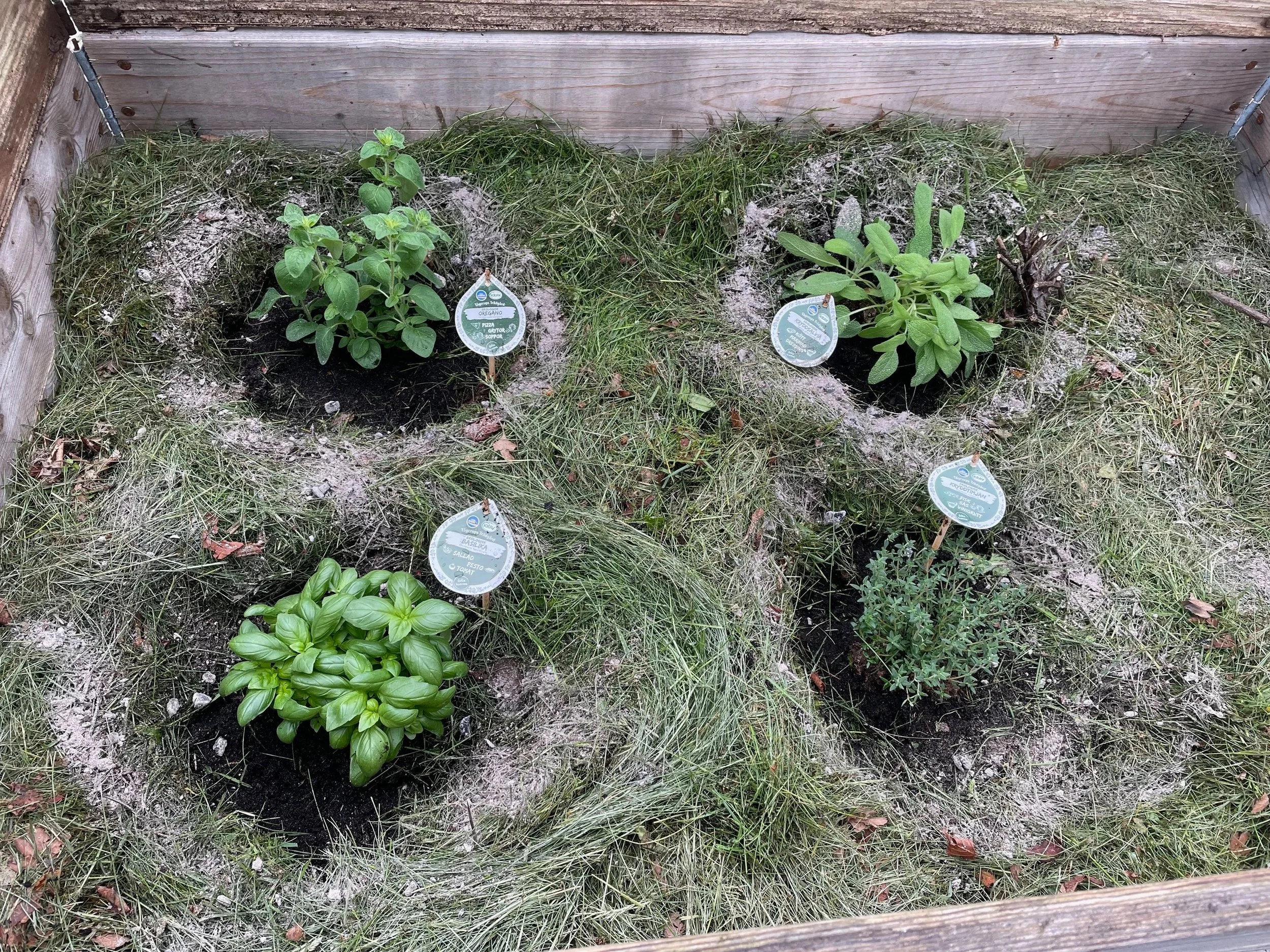
A garden bed with four small plants, basil, oregano, thyme, and sage surrounded by grass and soil, with plant labels indicating the herbs.
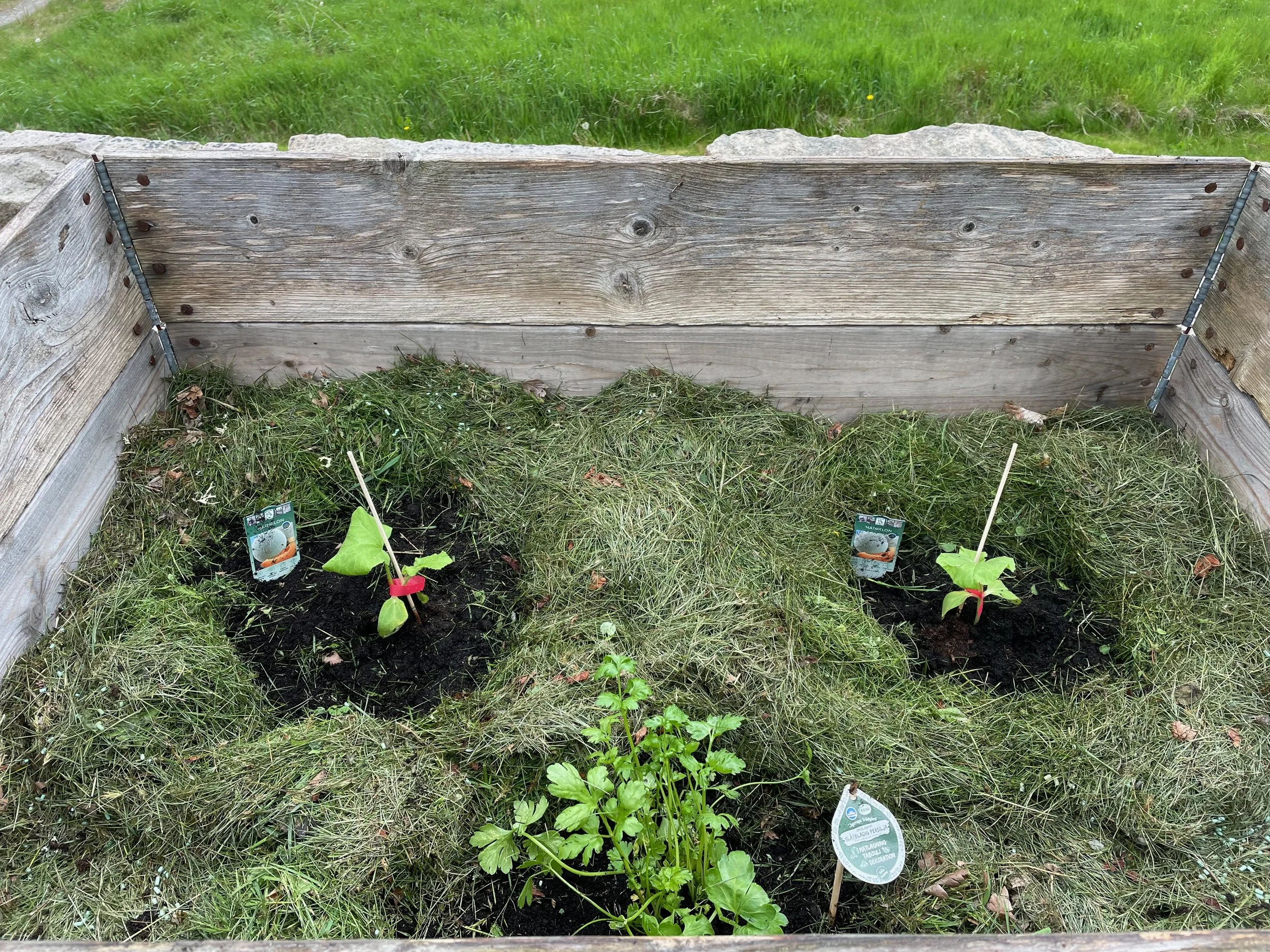
A small garden bed with young plants and plant tags melon and persille, surrounded by grass and a wooden border.
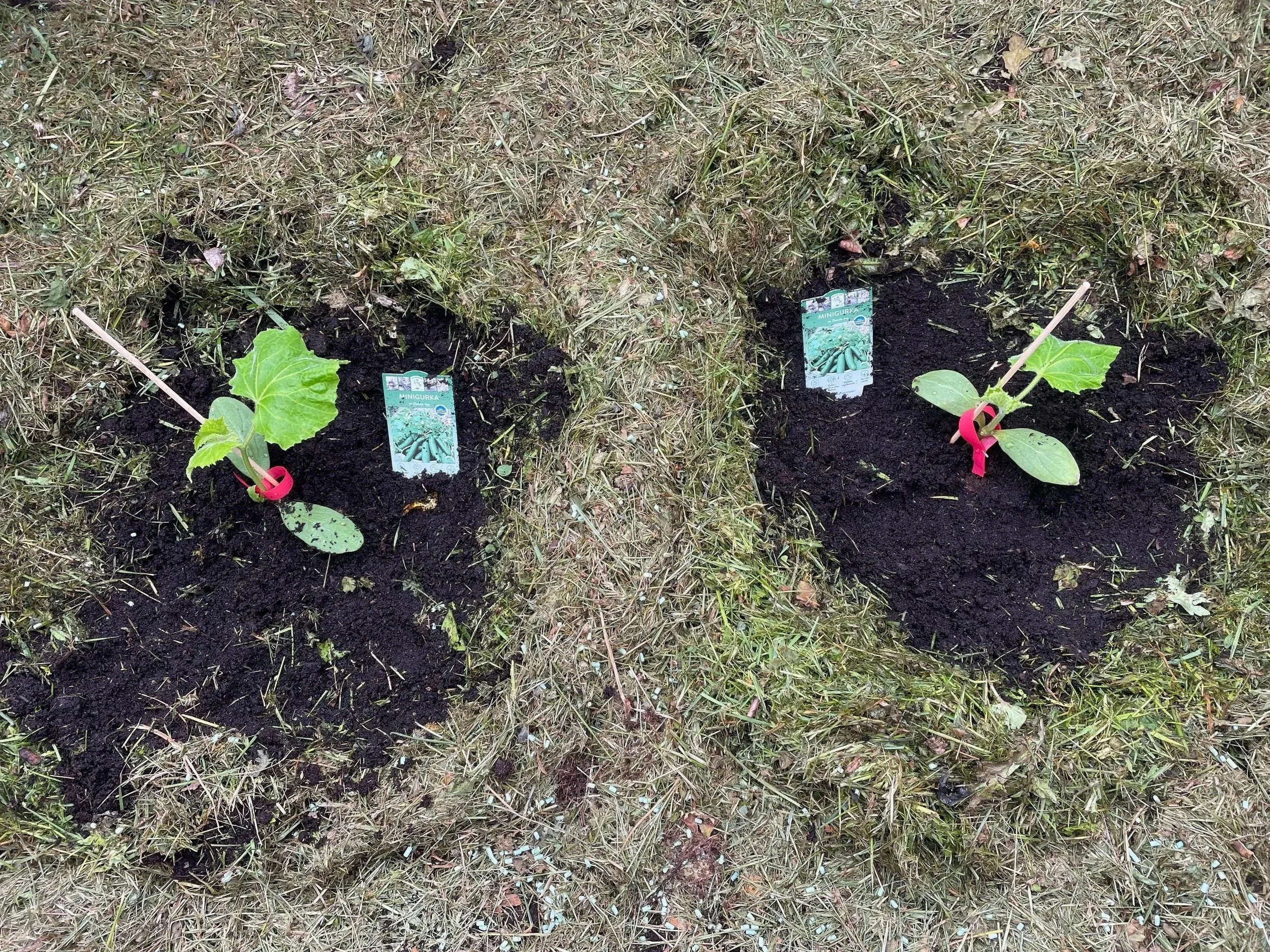
Young cucumber plants in small garden beds with plant labels, placed on grassy ground.
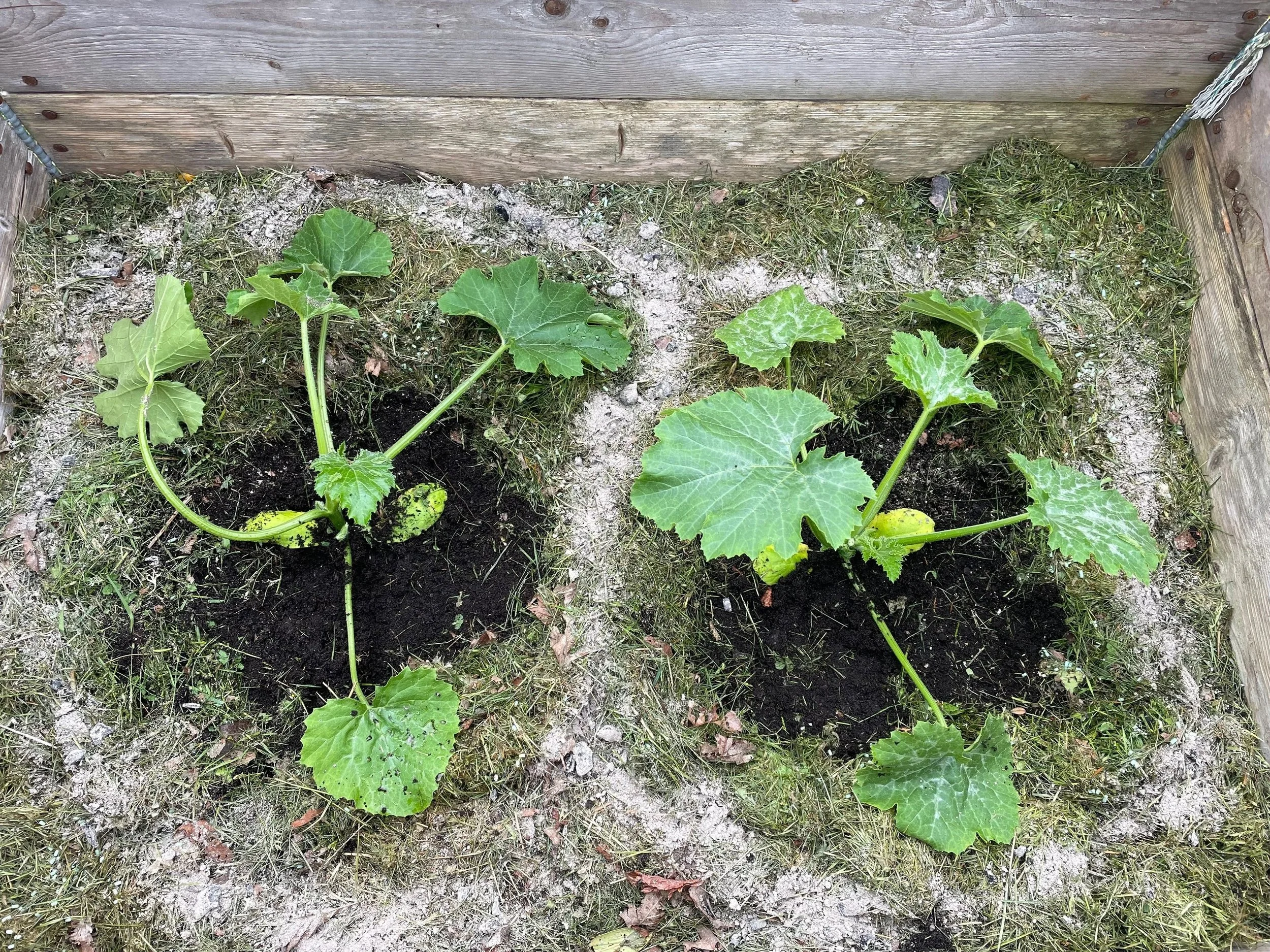
Young squash plants growing in a small garden bed with soil and grass around them, bordered by wooden planks.
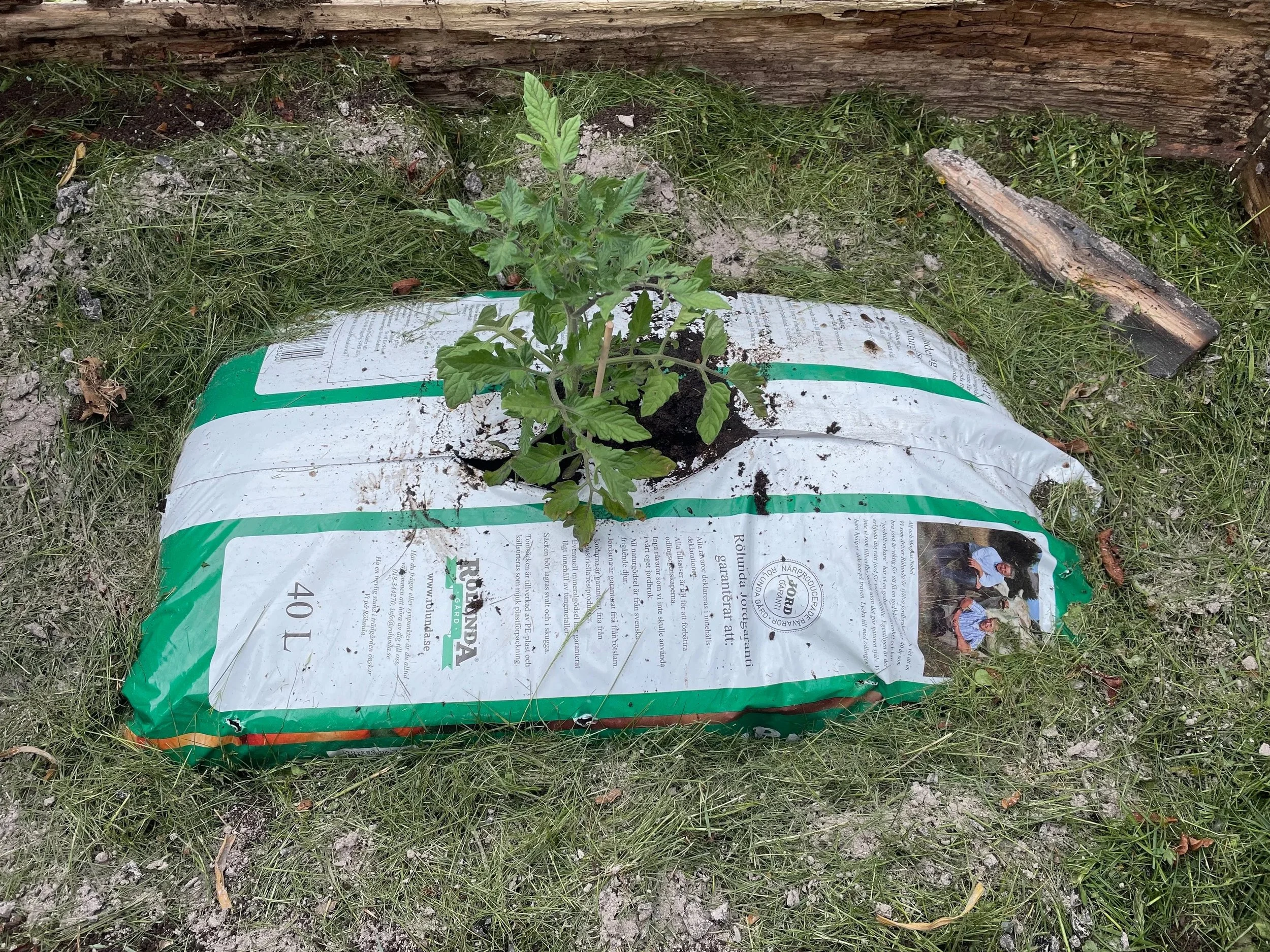
A small tomato plant growing in a bag of potting soil on the ground outdoors, with grass and a wooden log nearby.
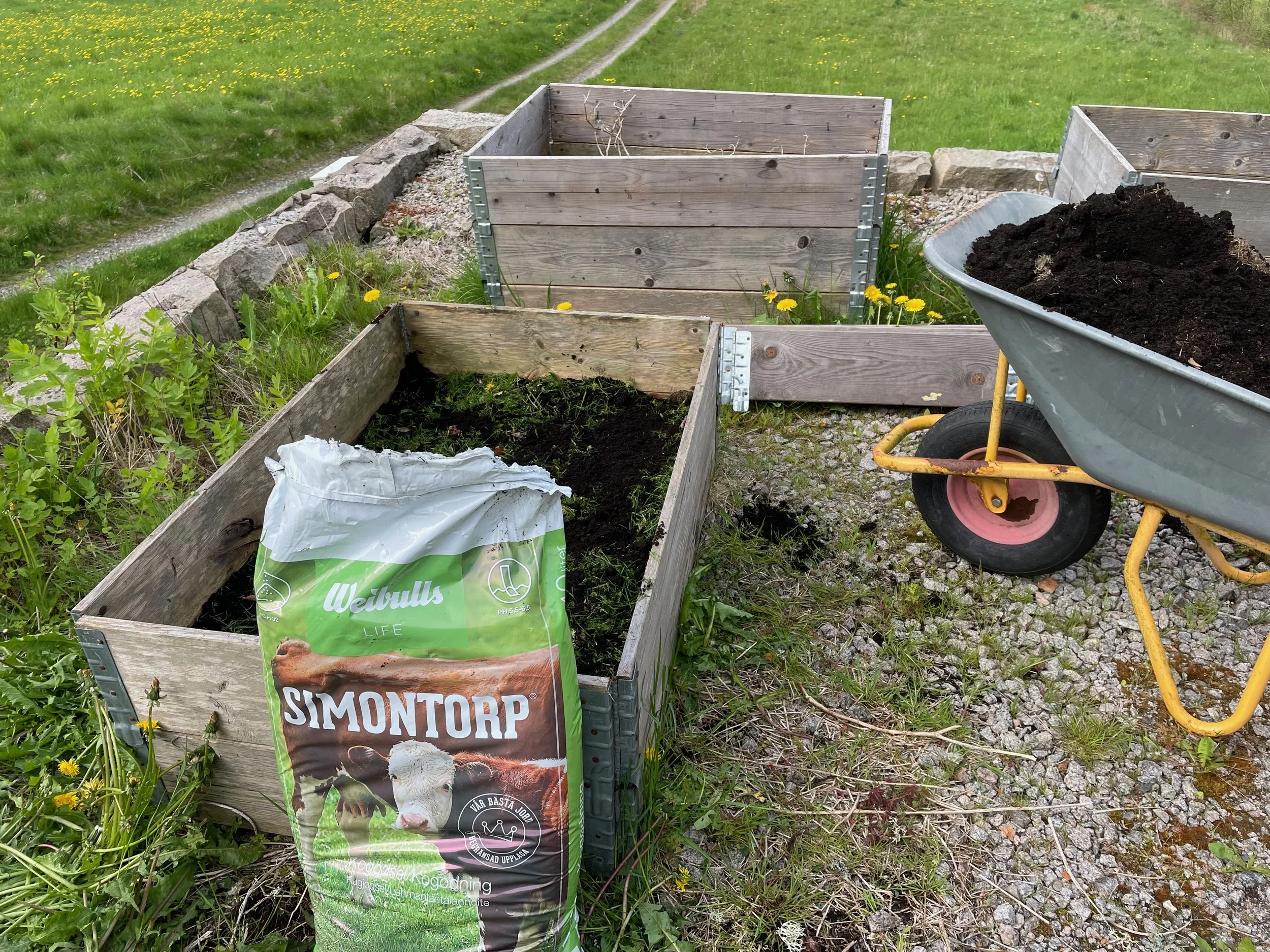
Empty wooden garden beds, a bag of soil labeled 'SimTorp', a wheelbarrow filled with dark soil, and some green plants and yellow flowers surrounding the beds outdoors.
Finally, everything was covered with white garden fibre cloth to:
retain humidity
protect against cold spring nights
soften strong sunlight
create a more stable growing environment during early summer
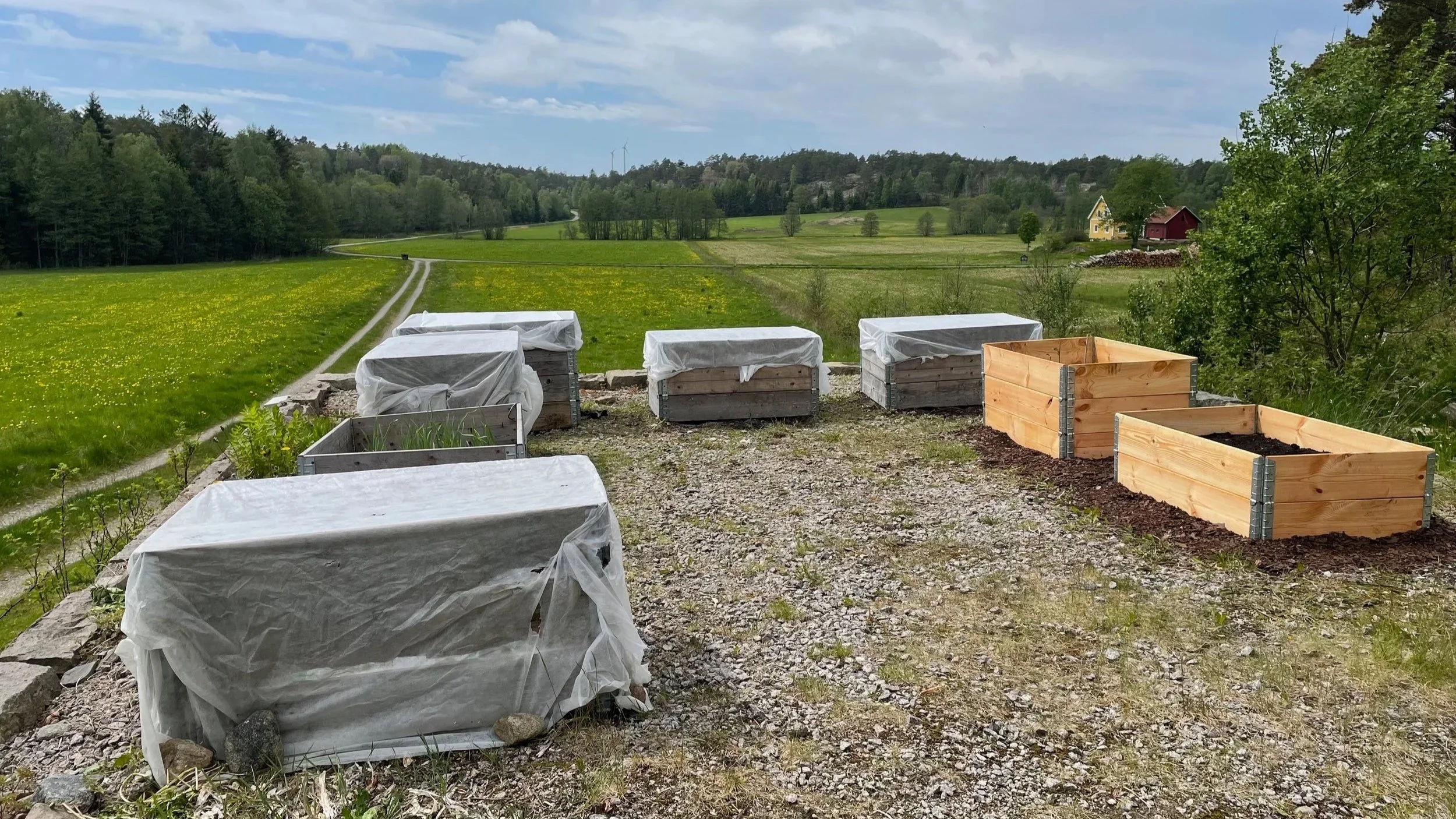
These small systems help reduce watering needs and slowly feed the soil as the organic material breaks down over time.
Test Soil Moisture
Never work soil when it is too wet.
If the earth forms a sticky ball in your hand, wait.
Working wet soil compacts structure and damages long-term soil health.
Patience now prevents problems later.
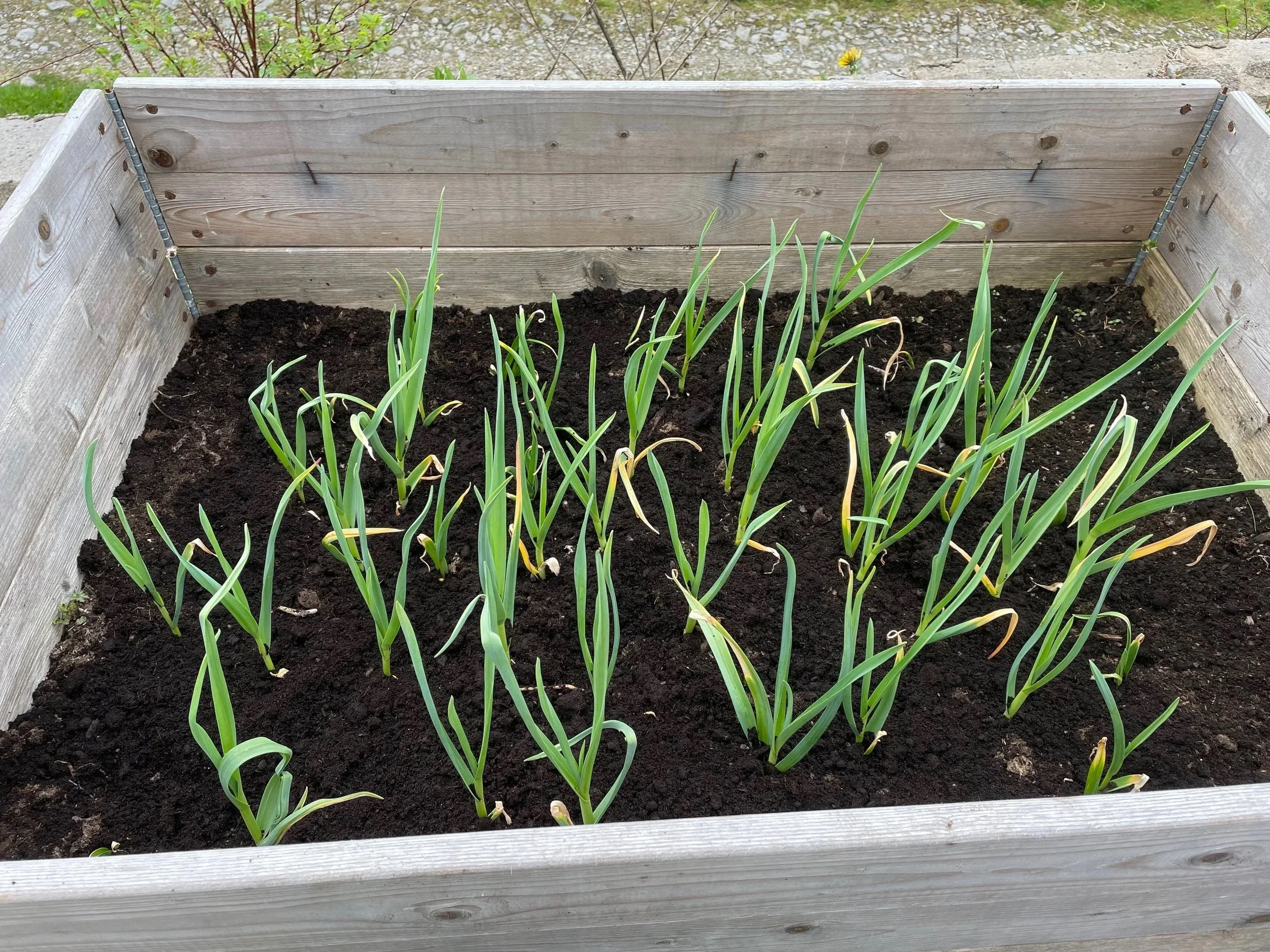
Add Organic Matter
Spring is the ideal moment to feed the soil.
Work in:
compost
aged manure
seaweed compost
leaf mold
Organic matter improves:
drainage
moisture retention
microbial activity
nutrient availability
Good gardeners feed the soil first, plants second.
Plan Before Planting
Map your beds before sowing.
Consider:
crop rotation
sunlight exposure
watering access
companion planting
A little planning prevents midsummer chaos.
→
Explore more: Nordic Garden→