Improving your soil involves a continuous process of adding organic materials and fertilizers.
A high organic matter content is desirable, regardless of your soil type, as it helps the soil retain moisture, fosters the growth of beneficial microorganisms, and aids in nutrient availability for plants.
In a Nordic garden, where seasons are short and growth must be efficient, soil health becomes the foundation of everything that follows.
Grass Clippings as a Resource
One of the most effective and accessible ways to improve soil structure is the use of grass clippings.
Collecting clippings with a lawnmower grass collector provides a steady source of nutrient-rich organic material that can be returned directly to the garden beds.
Grass clippings help build soil fertility over time, suppress weed growth, and reduce the need for external inputs. When used consistently, they contribute to a slow but measurable improvement in soil vitality.
Balanced Use of Fertilizers
To support early growth, organic fertilizers such as chicken manure and blood meal are sometimes used.
These are high in nitrogen and provide a rapid response in plant development, particularly in crops that require strong early establishment.
However, balance is essential. Excess nitrogen can lead to vigorous leaf growth at the expense of flowers, fruits, and overall yield. In a Nordic growing season, where timing is critical, controlled application is more effective than intensity.
Seasonal Fertilization Strategy
Over time, the introduction of grass clippings has significantly improved soil quality and structure in the garden.
Their gradual decomposition builds a stable foundation for continued cultivation.
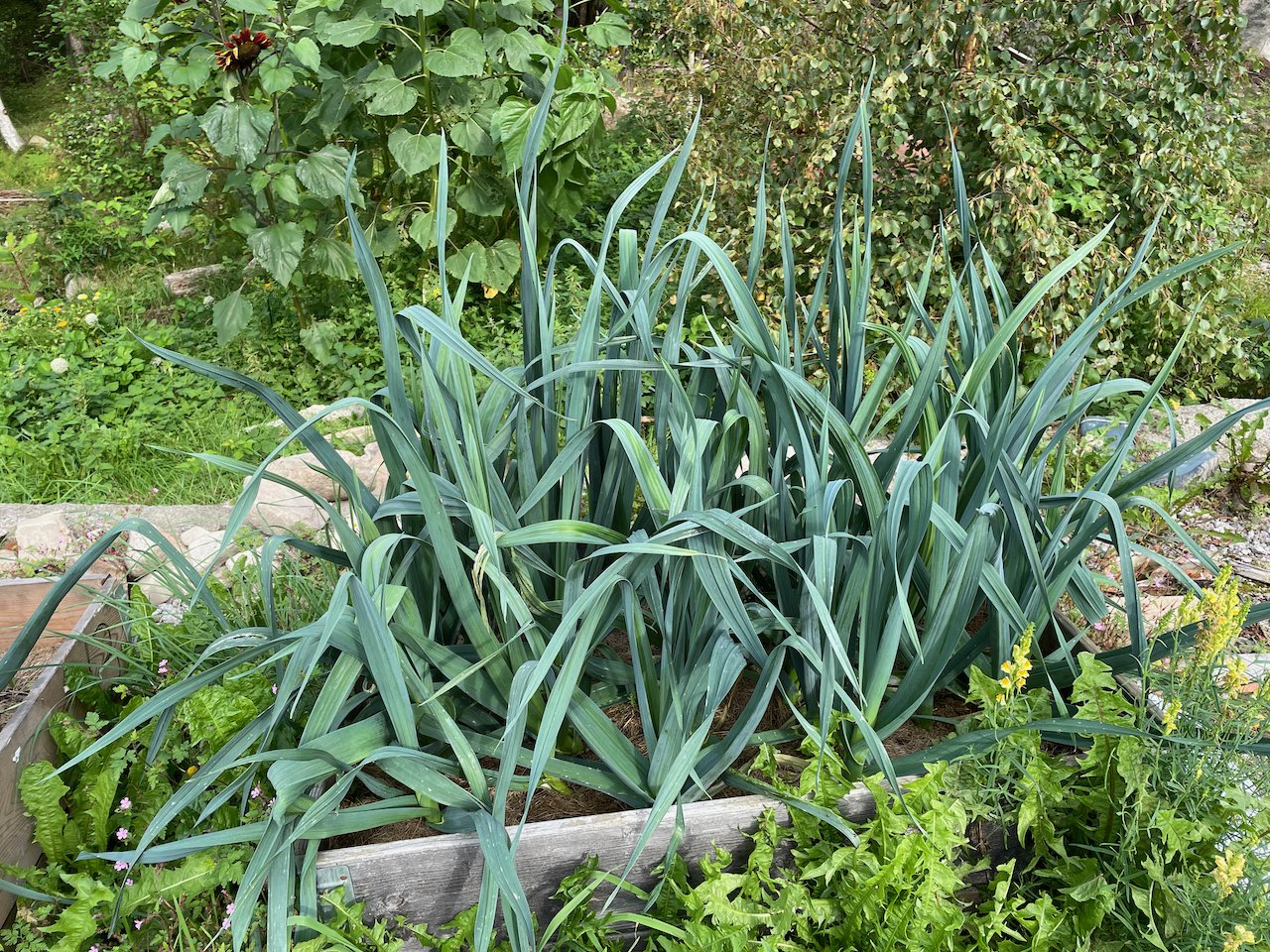
In spring, slow-acting cow manure is applied across vegetable beds, with particular focus on nutrient-demanding crops such as onions and leeks. This supports steady early growth and root development throughout the season.
In autumn, garlic beds are enriched with a combination of well-matured manure and grass clippings. This prepares the soil for overwintering and ensures a strong start the following spring.
Back to: Planting the Nordic Garden→
Back to: Nordic Garden→