The construction of a Retaining Wall and to Open up a Courtyard
A Nordic Garden
Constructing a retaining wall requires both technical precision and long-term commitment, but its impact on the landscape cannot be overstated.
In Nordic garden design, retaining walls are not only structural elements, they are tools for transformation. They reshape terrain, define space, and turn previously unusable slopes into functional and atmospheric outdoor environments.
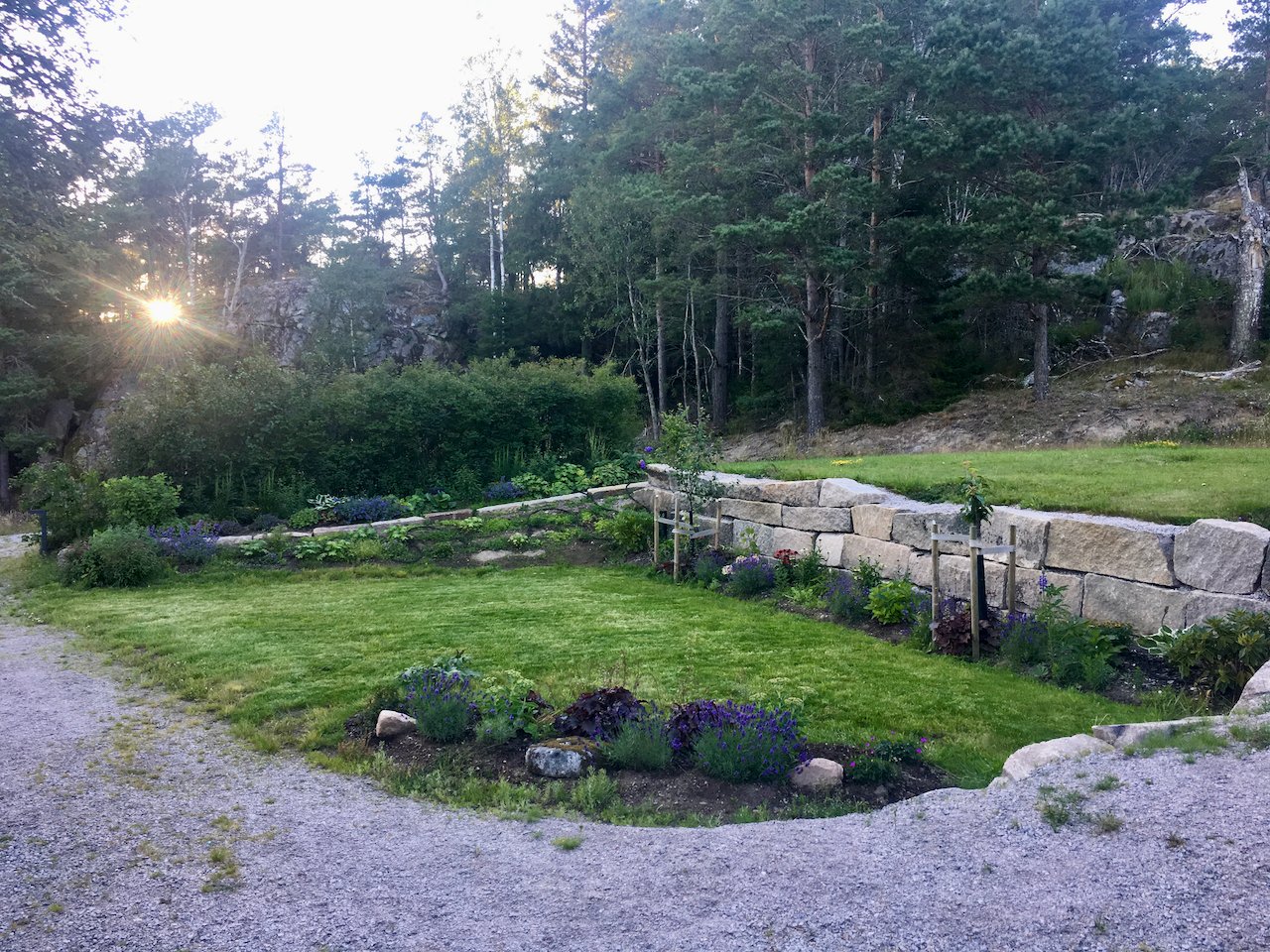
In this project, the retaining wall became a key step in opening up a courtyard space, bringing structure and clarity to the garden while connecting it more closely to the architecture of the house.
Built in granite, the wall reflects the foundation of the house itself, reinforcing a sense of material continuity and permanence, an essential principle in Scandinavian landscape design.
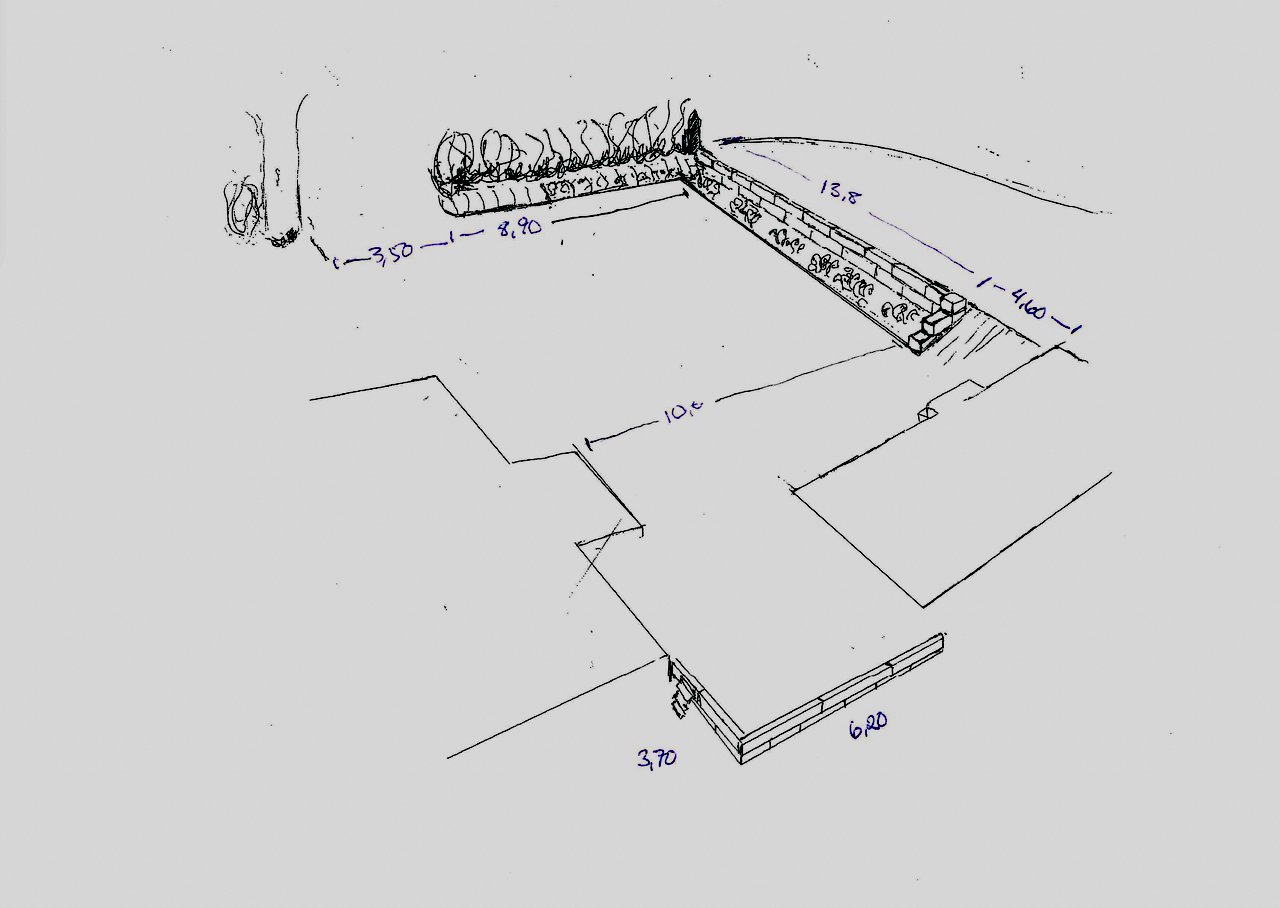
Try to stick to your design plan that you have made in advance. The structure and materials you choose will have an impact for the final result. In this case it was important to create a retaining wall from granite, to mirror the foundation of the house.
A Nordic Garden
1. Planning and Preparation
The process begins with detailed planning and design.
This includes:
Understanding the slope and natural movement of the terrain
Defining the exact function of the wall within the garden
Selecting materials that align with the house and surroundings
Ensuring compliance with any technical requirements or local regulations
A well-considered plan forms the foundation of a retaining wall that will last for decades.
A Nordic Garden
2. Gather Materials
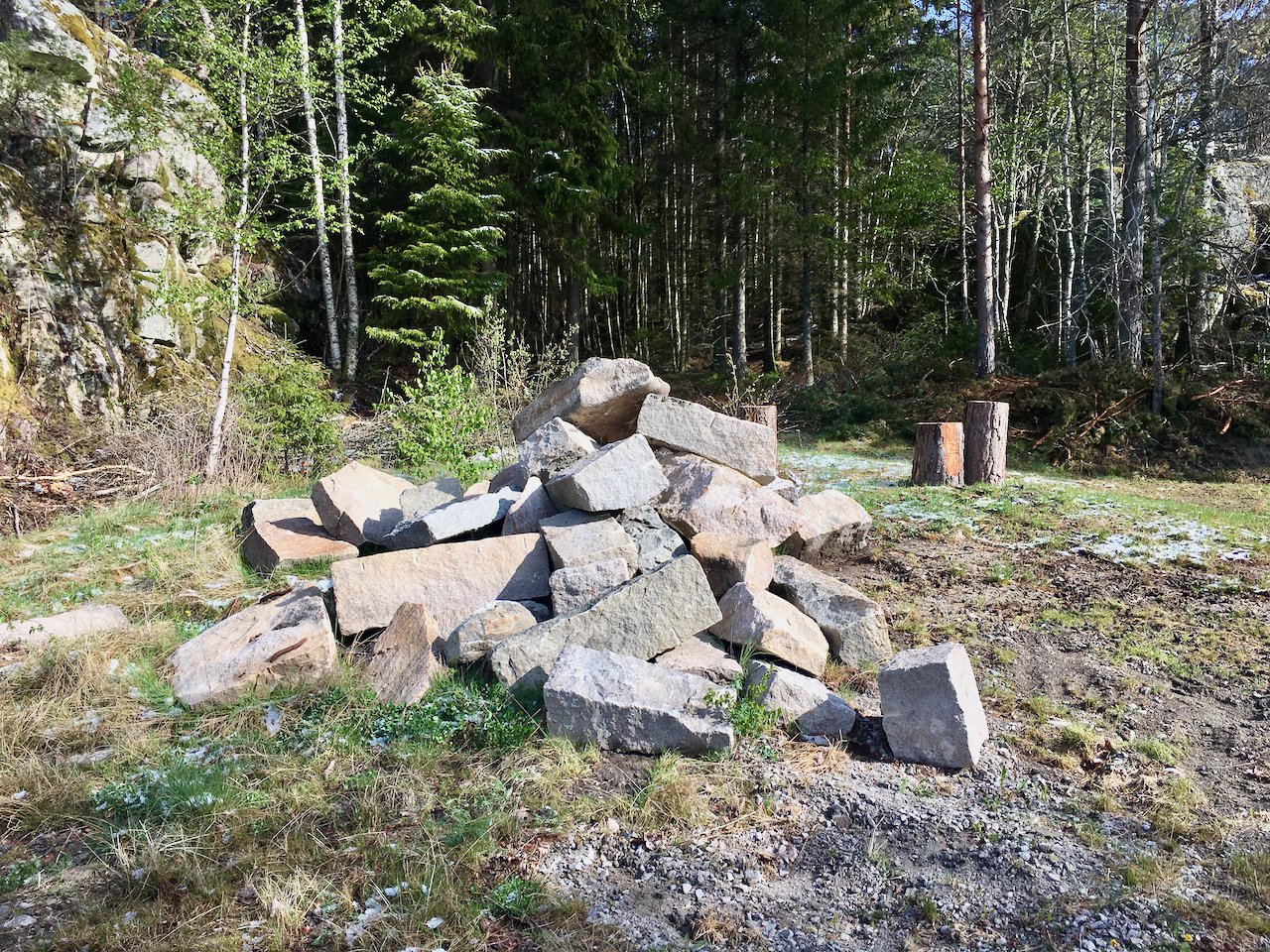
Procure all the necessary materials such as retaining wall blocks, drainage pipes, gravel, and adhesive. Ensure that you have the right tools, safety equipment, and any additional supplies needed for construction.
A Nordic Garden
3. Site Preparation
Before construction begins, the site must be carefully prepared.
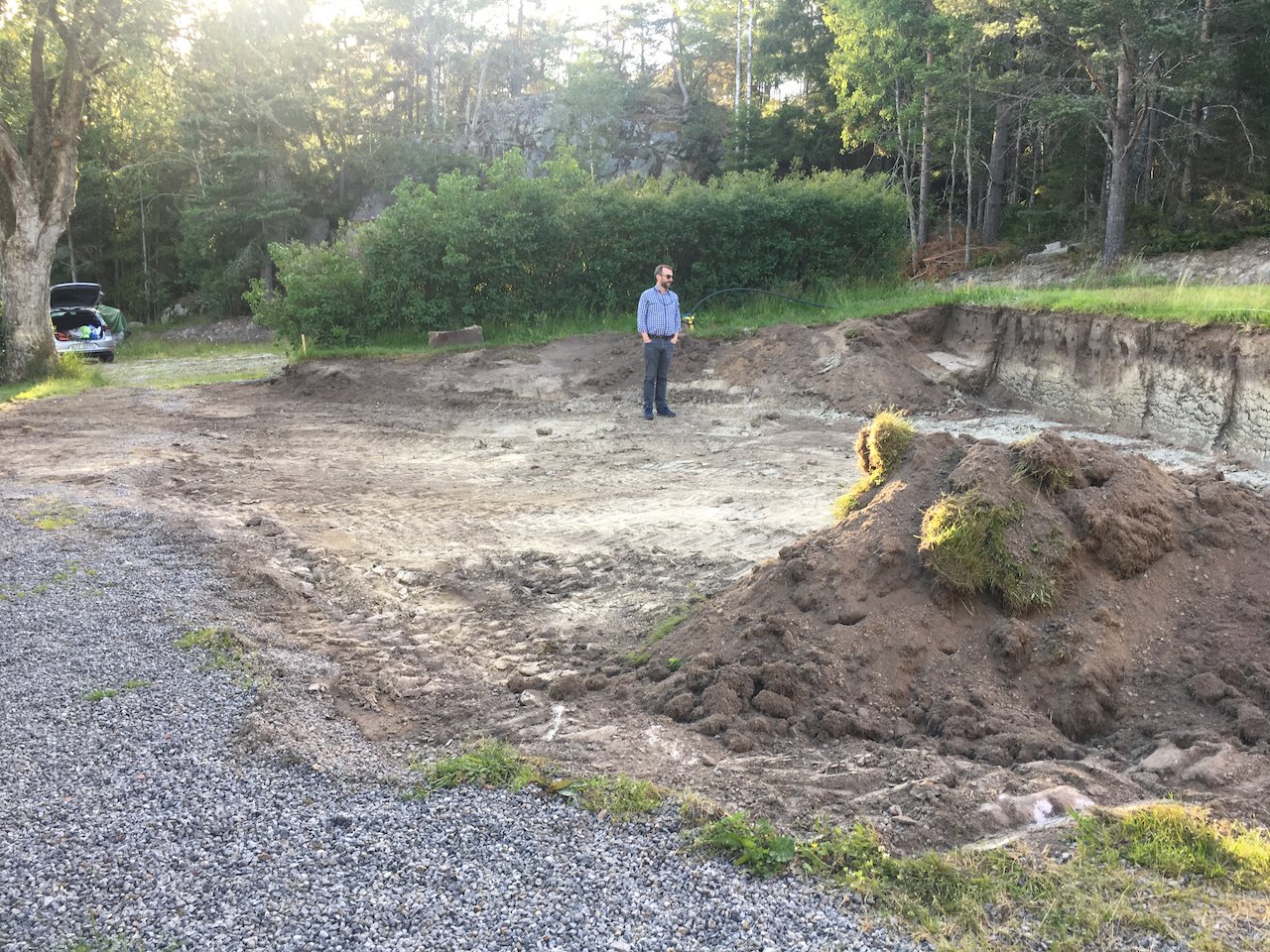
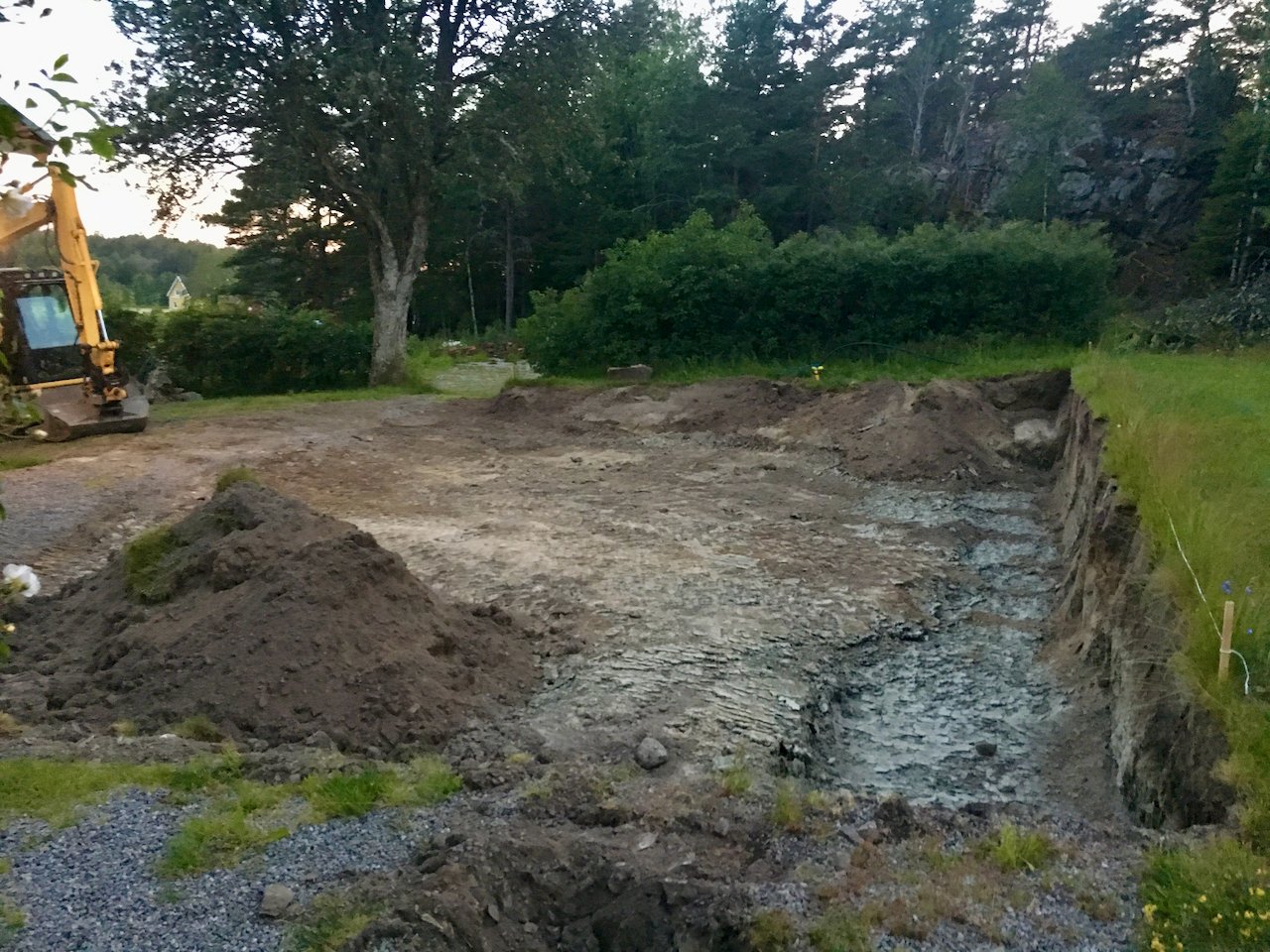
All vegetation, debris, and obstacles are removed to reveal the underlying terrain. A trench is then excavated to establish the first line of the structure.
This stage is crucial, as it defines both the stability and drainage capacity of the finished wall.
A Nordic Garden
4. Foundation and Structural Base
A retaining wall in a Nordic garden relies on a strong foundation.
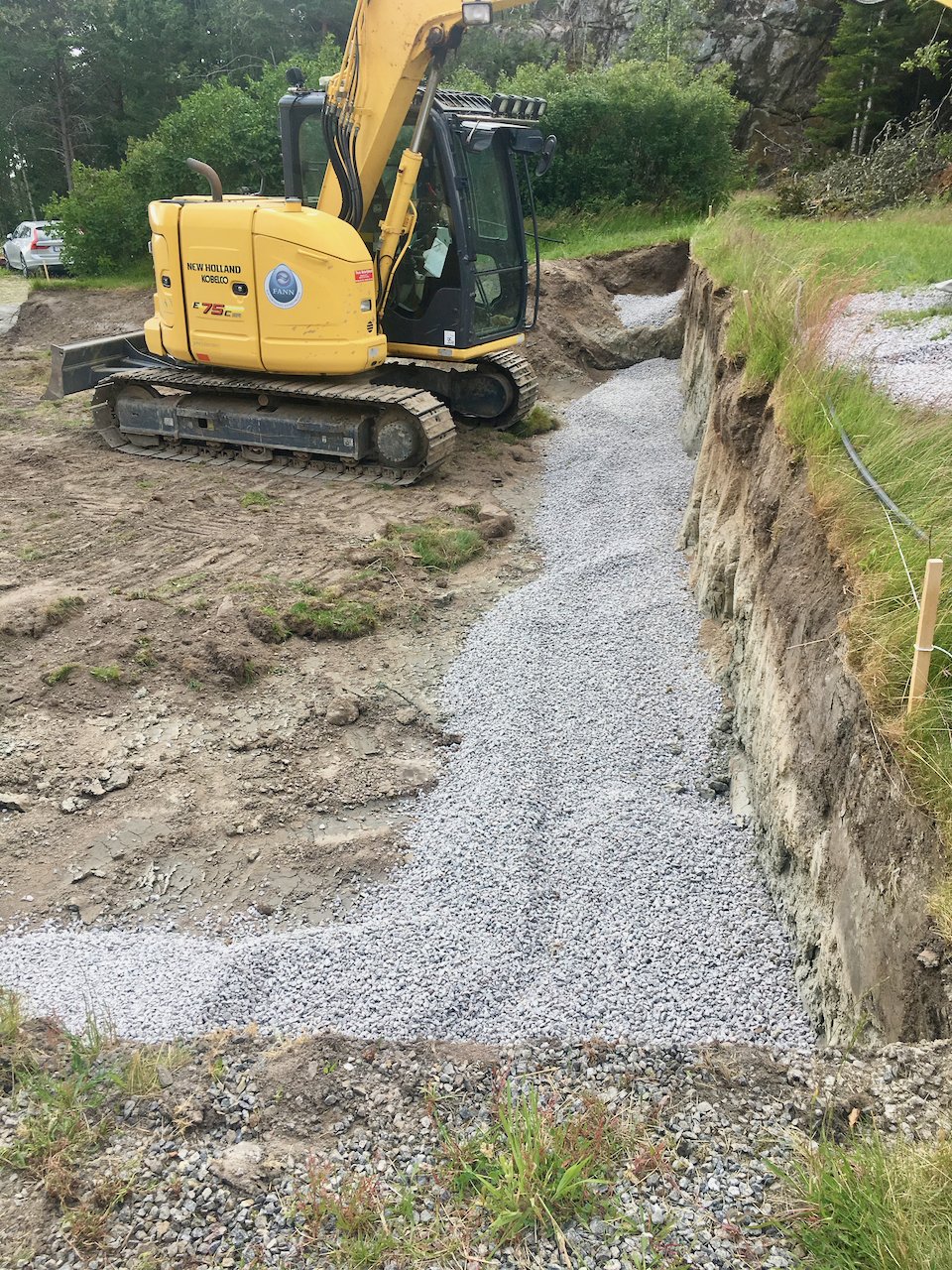
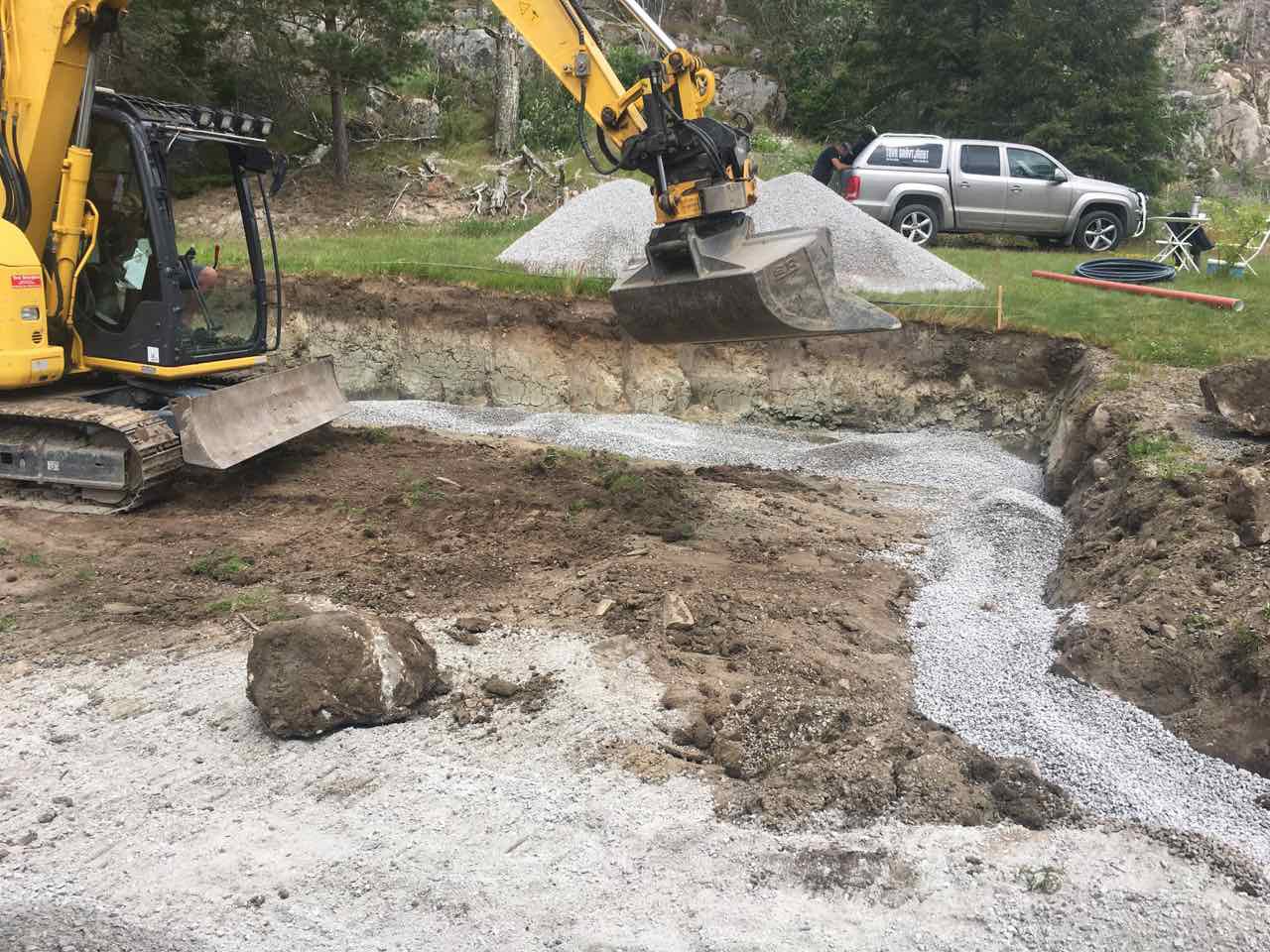
A compacted layer of gravel is laid in the trench to create a stable base. The first course of stone is then carefully positioned, ensuring perfect alignment both horizontally and vertically.
This initial layer determines the precision and longevity of the entire structure.
A Nordic Garden
5. Drainage and Water Management
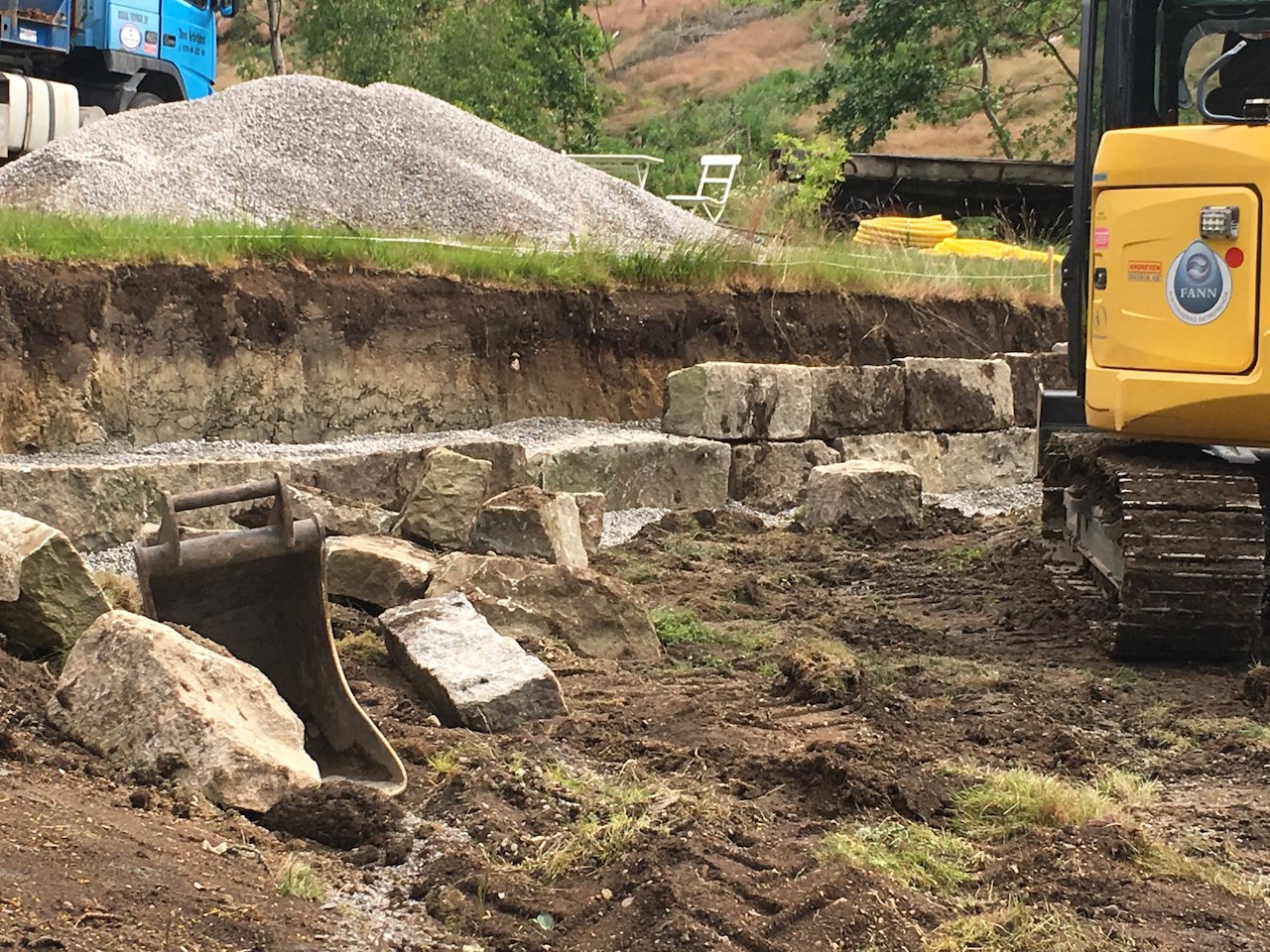
In Nordic climates, water is one of the most important structural forces to consider.
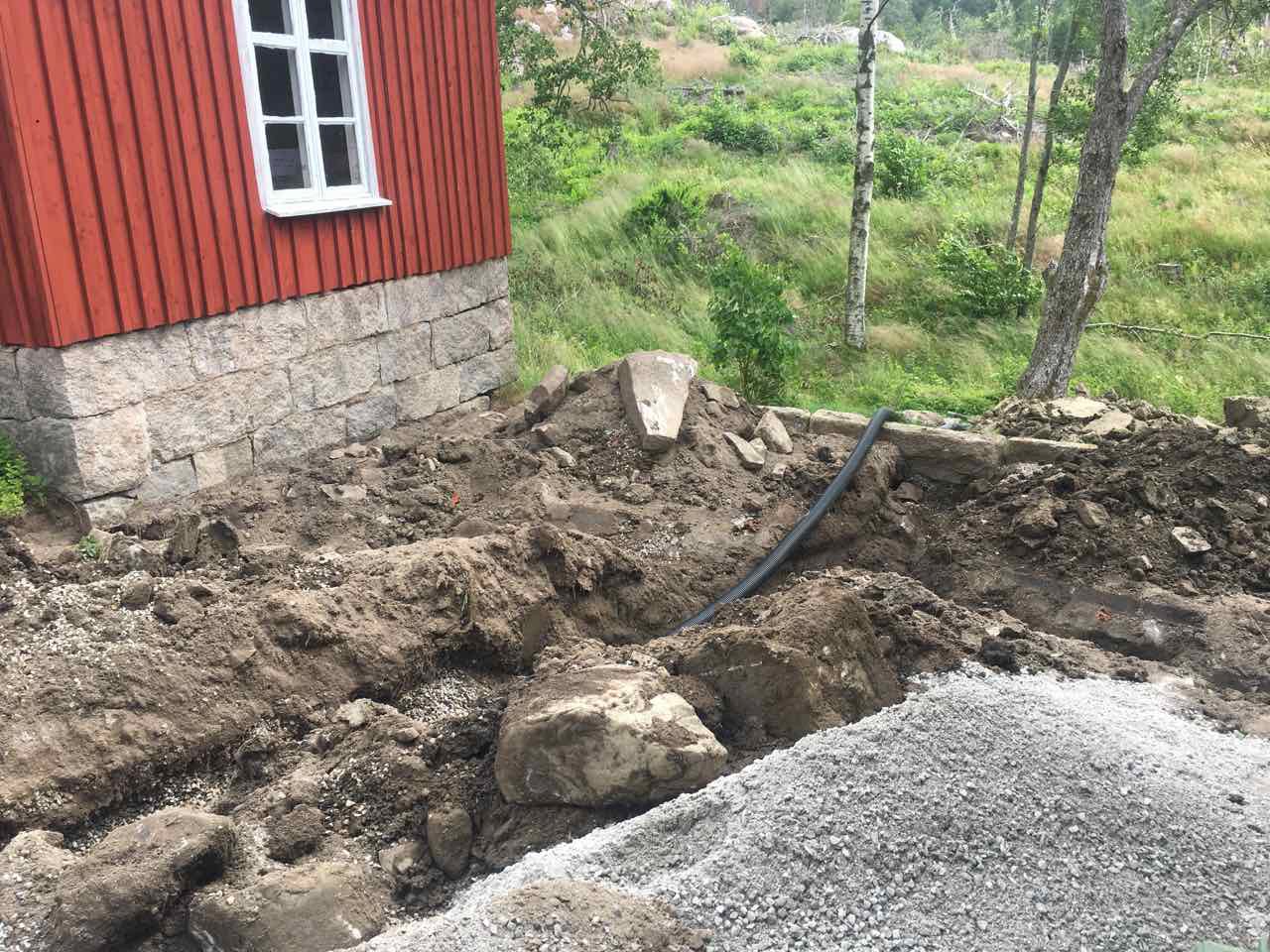
A drainage system is installed behind the wall using perforated pipes and free-draining gravel. This ensures that water is guided away from the structure, preventing pressure buildup and long-term damage.
Proper drainage is essential for the durability of any retaining wall in a Scandinavian landscape.
A Nordic Garden
6. Building the Wall
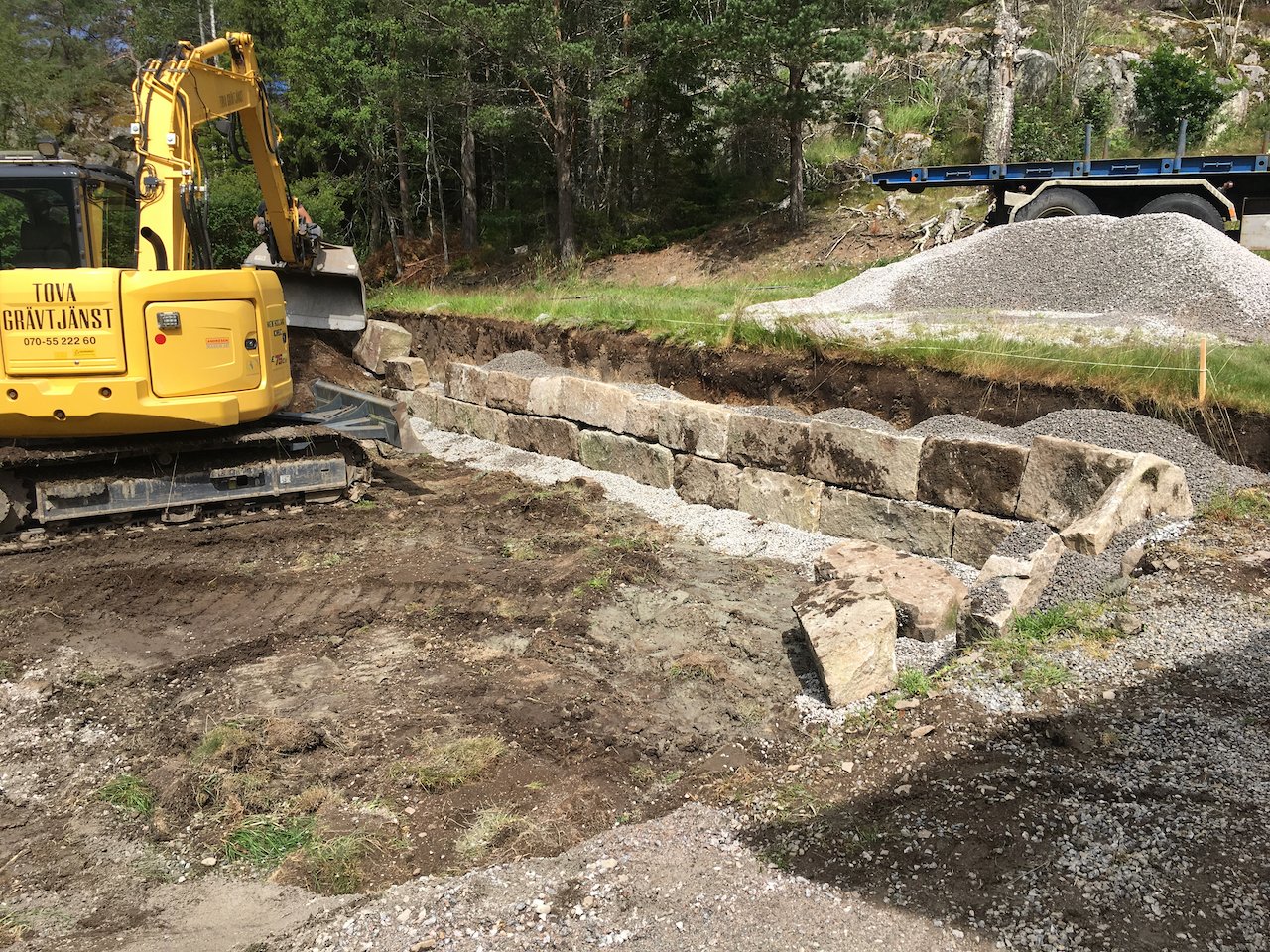
Construction continues layer by layer.
Each stone or block is carefully interlocked with the one beneath it, creating a stable and cohesive structure. The weight and precision of the material contribute to both strength and visual harmony.
As the wall rises, it begins to define new spatial relationships within the garden.
A Nordic Garden
7. Backfilling and Formation
Once the structure is in place, the space behind the wall is gradually backfilled with gravel or crushed stone.
Each layer is compacted carefully to ensure stability and maintain proper drainage.
This process transforms the terrain, gradually shaping new levels within the garden and making previously unusable land functional.
A Nordic Garden
8. Maintenance
Regularly inspect your retaining wall for signs of erosion, shifting, or damage. Address any issues promptly to ensure the wall's long-term stability.
A Nordic Garden
9. Creating a Courtyard Space
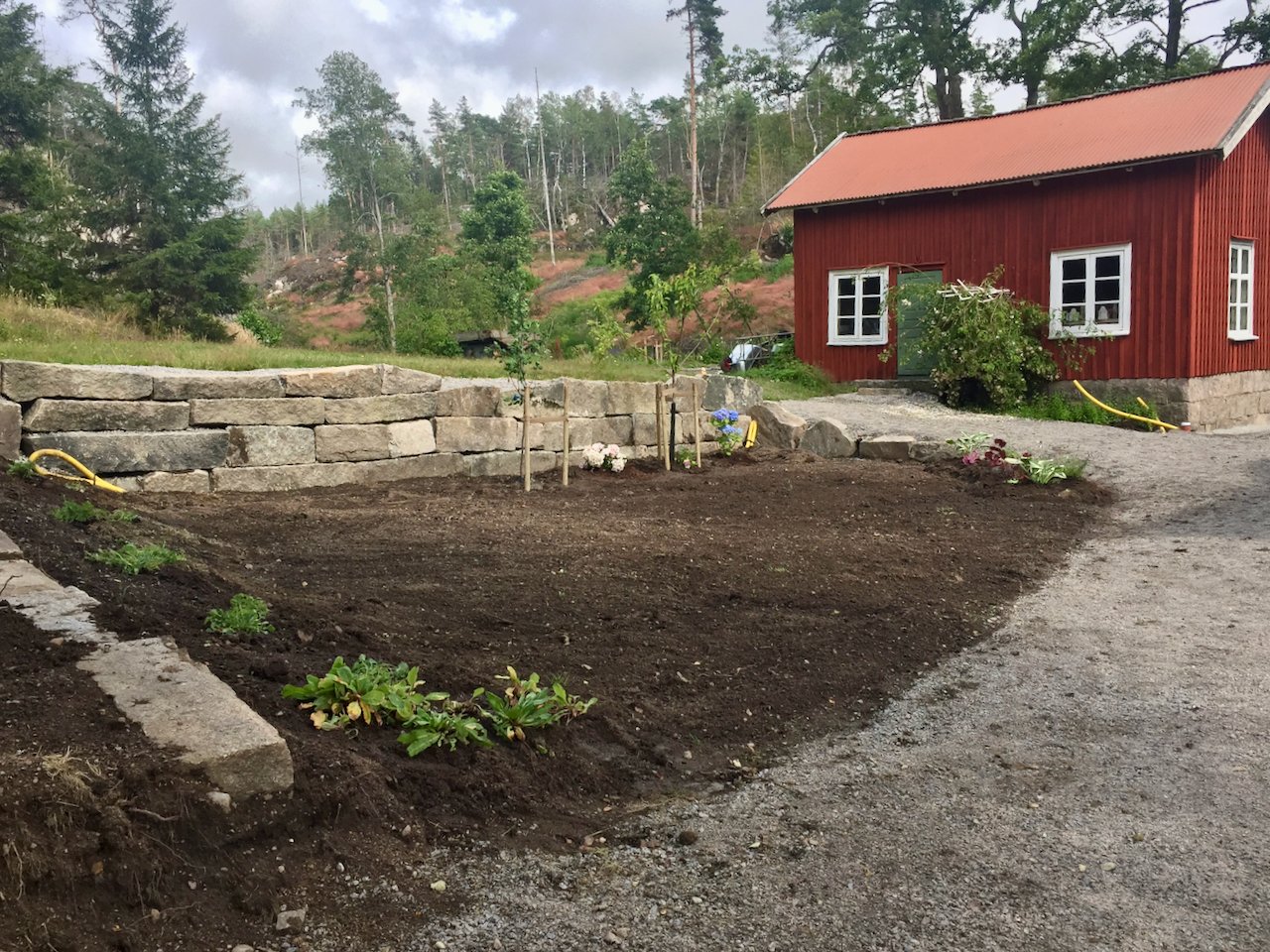
Once your retaining wall is complete, take advantage of the additional usable space it provides and create garden beds.
What was once a continuous slope is now a defined and usable courtyard, an outdoor room shaped by stone, structure, and elevation.
This new space becomes a central part of the Nordic garden, bridging the house and the surrounding landscape.
Articles: Building an Orchard Terrace→
Next step: Planting the Nordic Garden →
Back to: Nordic Garden→