Vintage Kitchen Meets 2026
Where Time Lingers: A Nordic Kitchen Renewal
As part of our ongoing journey to blend history with modern living, the kitchen transformation brought together careful craftsmanship and thoughtful design.
Work done by:
Lustig / Barros
Year
2025 - 2026
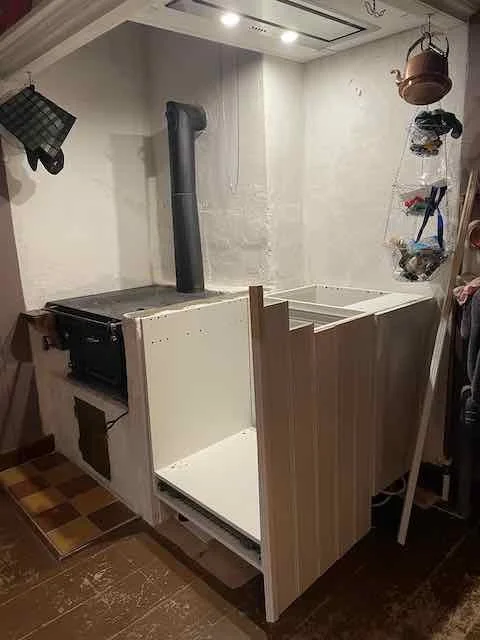
The visible side of the cabinet was custom-made using pearl bead panels, cut precisely to fit.
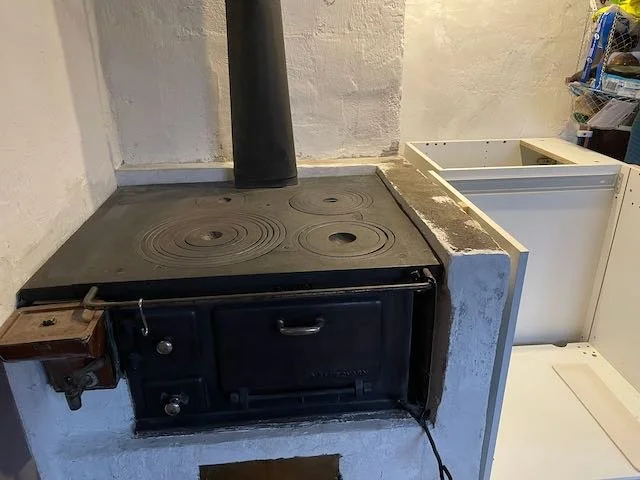
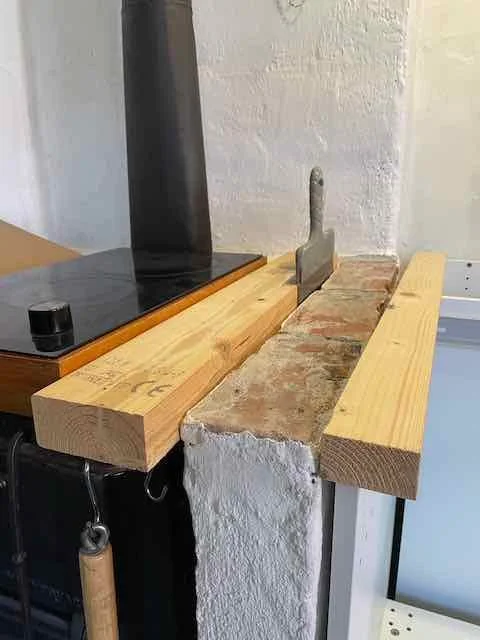
The fireproof wall separating the wood-fired cooker from the new electric installations was leveled.
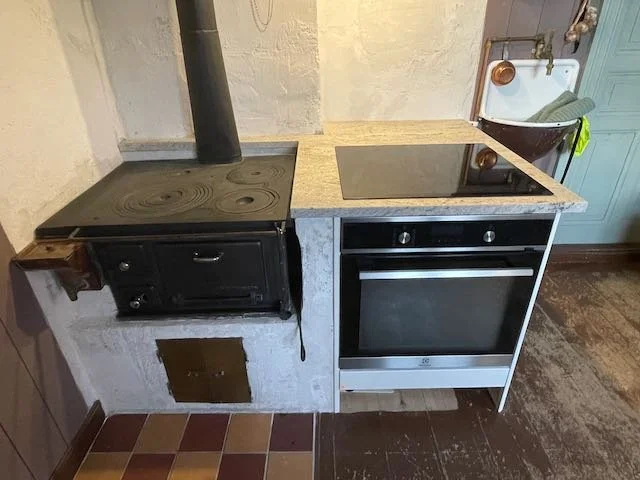
I had no idea there were so many different types of stone available.
To handle the heat from the wood-fired cooker, we selected granite - an Indian Colonial Ivory variety - measured and expertly installed by an Estonian company. Check them out here: www.granitop.se.

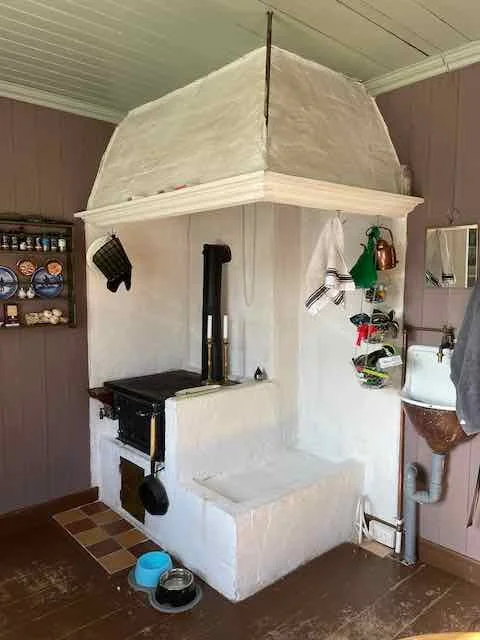
2024
Completing a kitchen where heritage, craftsmanship, and modern living meet.
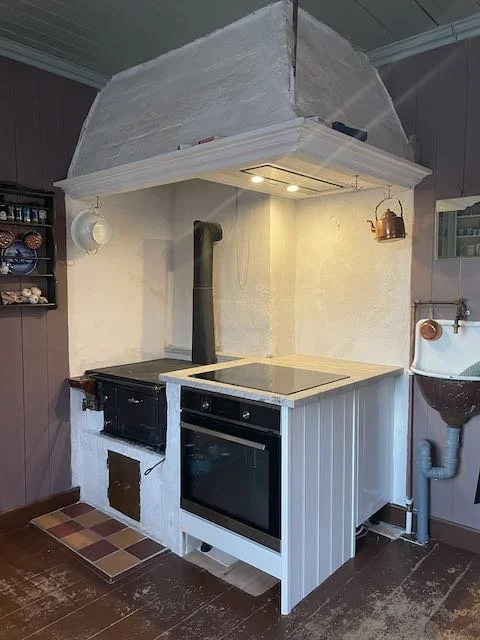
Several materials were considered, including bricks and ceramic tiles, in an effort to reduce costs.
In the end, however, a more expensive solution was selected.
2026
This guide is part of Balancing Old and New→
See where IT STARTED! →
Every renovation reflects a choice made by its owner.
Some update. Others restore.
And that’s exactly why a house that’s more than a century old is never boring - it carries all those decisions with it.
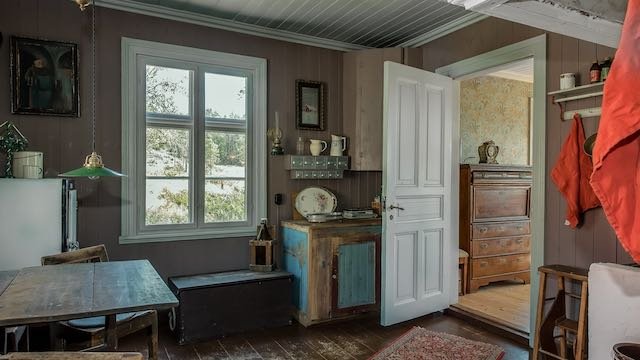
The kitchen has always been the quiet center of the house, a place shaped as much by memory as by function. In its renewal, the intention was not to replace, but to refine; to let the past remain present while gently introducing the comforts of modern Nordic living.
There is a familiarity in this approach, one that echoes through Scandinavian homes, where simplicity is rarely minimal, but instead layered with time. Cabinetry was reimagined with custom pearl bead panels, their rhythm adding a subtle texture to the room, reminiscent of traditional joinery found across coastal Nordic interiors.
There is a familiarity in this approach, one that echoes through Scandinavian homes, where simplicity is rarely minimal, but instead layered with time.
Material choices unfolded slowly. The granite, in a soft Colonial Ivory tone, was chosen for its quiet strength, its presence grounded rather than decorative, much like the natural materials long favored in Northern European kitchens.
Alternatives were explored, weighed, and set aside. In the end, the decision leaned toward longevity rather than economy, toward materials that age with dignity, in keeping with a tradition where craftsmanship is meant to endure.
This is often the nature of old houses. Across Scandinavia, they are not defined by a single moment, but by a series of choices made over time. Some careful, some instinctive. Together, they form a living narrative - one that continues to evolve, yet never loses its sense of place.